Table of Contents
The loft aesthetic without the loft.
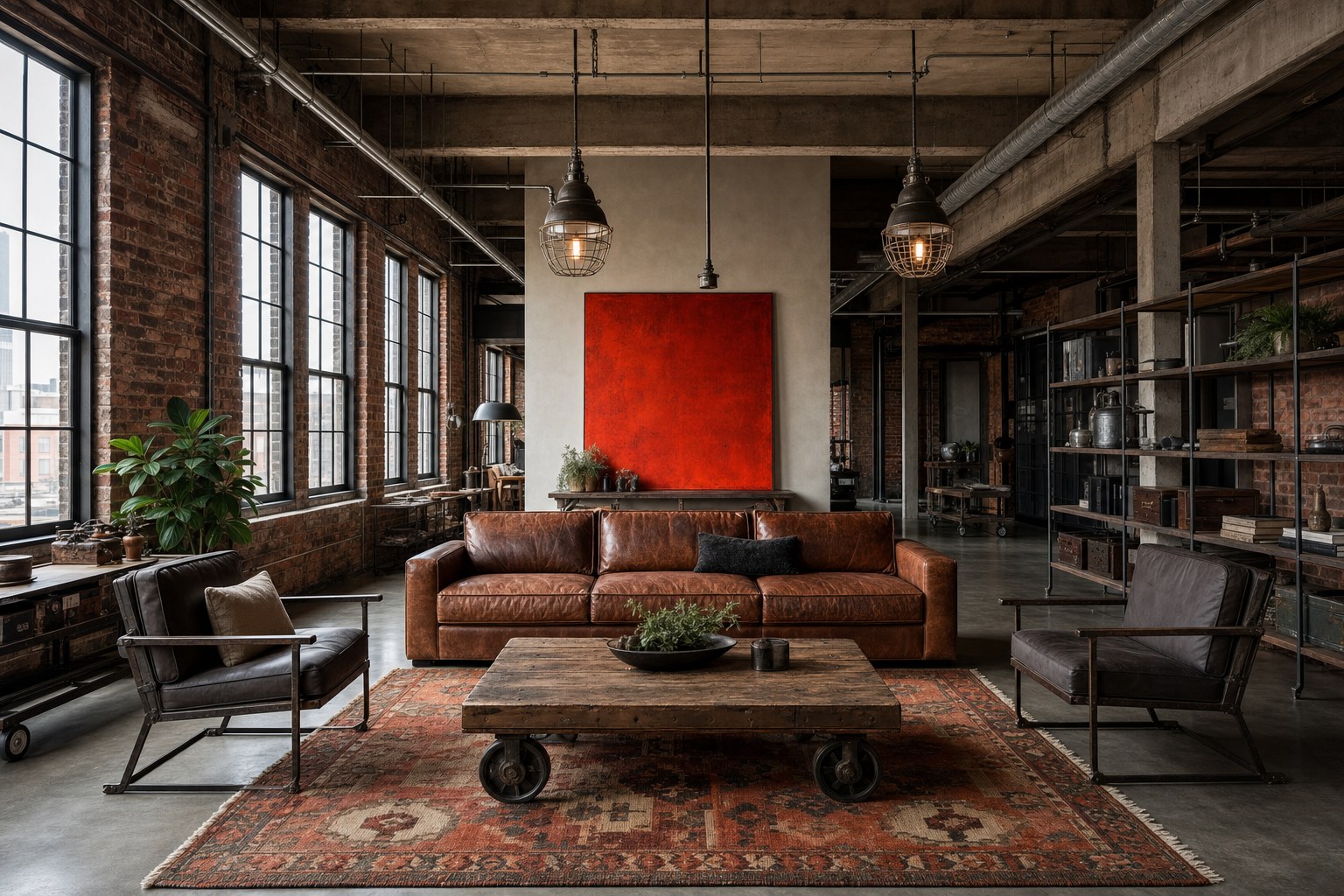
Industrial interior design originated in the 1970s through 1990s when artists and creative workers in New York, Chicago, and London began converting abandoned factory buildings into live/work spaces. The original practitioners were not making a style choice - they were occupying cheap, raw spaces and making them habitable by working with what was already there: exposed brick and concrete, steel pipe infrastructure, factory windows, wood beam ceilings. The style that emerged from that necessity has since become one of the most widely adopted residential aesthetics in the world, and in doing so has generated a problem that Apartment Therapy documents with specific detail: the Airbnb trap.
The style has been so completely absorbed by the short-term rental market that off-the-shelf industrial combinations now feel generic before a room is even complete. The anti-Airbnb checklist is specific: no Edison bulb chandeliers over dining tables (the single most-replicated combination in rental properties nationwide), no pipe shelving in every room (one pipe shelf makes a design statement; pipe shelving in the kitchen, bathroom, bedroom, and living room makes a rental), no all-matte-black-everything (a room where every surface, fixture, and hardware piece is matte black reads as a catalog, not a home). The five elements below are designed to produce industrial design that reads as a considered residential choice rather than an Airbnb amenity list.
The fundamental palette principle that The Spruce documents is the one most commonly violated: warm grey, not cool grey. Industrial grey is the color of aged concrete, weathered steel, and worn factory floor - it has a yellow-brown undertone. Cool grey has a blue undertone. Cool grey reads as corporate office or hospital. Warm grey reads as warehouse loft. Getting that undertone right is the most important color decision in industrial design and the one least often mentioned in shelf-level sourcing guides. The warmth edit - one significant rug, one living plant, one soft textile - is not optional. As House Beautiful documents, steel without wood equals cold industrial bunker. The warmth layer is what makes industrial design livable rather than merely raw.
The Raw Material Anchor · $179.96
The raw material anchor is the element that provides the architectural foundation of industrial design in rooms that do not have the real thing. Apartment Therapy is the most authoritative source on the simulation strategies here, having documented the specific approaches that work for renters and standard apartment dwellers who want industrial style without the raw material lottery of actual loft architecture. The faux brick peel-and-stick panel is the most effective single intervention in this category: the best current products have convincing three-dimensional texture and variation, install without tools, and remove without damage, making them fully renter-friendly. The key is scale - a faux brick panel needs to cover a meaningful portion of a wall to read as architectural rather than decorative. A 20-square-foot panel on a single accent wall is the minimum for the effect to register as intentional. The concrete-effect wall paint works as an accent technique: a single room wall painted in warm concrete grey with subtle aggregate texture creates the industrial atmosphere at a room scale that no single piece of furniture or decor can produce alone. The concrete-look decorative tray and raw brick art print in the receipt serve the secondary function of introducing the material palette at object scale for rooms where wall intervention is not possible.
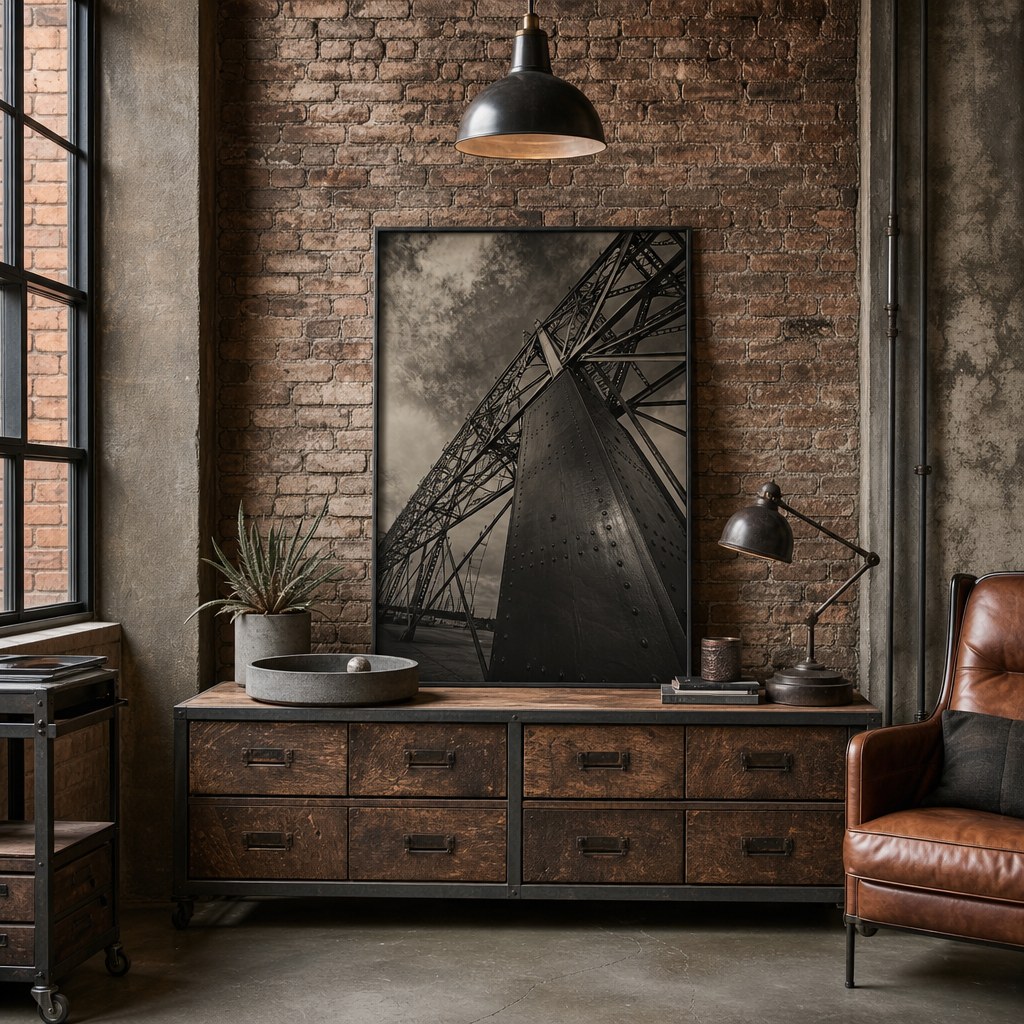
E1 Receipt - The Raw Material Anchor
The Steel Frame Layer · $289.97
The steel frame layer is the structural element that most directly references the factory and warehouse architecture that industrial design originates from. Architectural Digest documents the steel frame system - open shelving with visible pipe or angle iron hardware, metal-frame furniture, and matte black steel fixtures - as the most distinctive visual signature of industrial design at room scale. The industrial steel bookcase is the anchor piece in this element: a 5-shelf etagere in matte black or dark grey steel, with open sides that display their frame construction rather than concealing it. This is the furniture equivalent of exposed infrastructure - the shelf does not pretend to be a built-in or conceal its structural logic. The matte black pipe shelf provides a wall-mounted companion at a different scale, ideal for a kitchen, hallway, or bathroom where the floor-standing bookcase does not fit. Both pieces communicate the same industrial vocabulary: metal, open frame, visible hardware. The matte black cabinet hardware set is the most accessible entry point into the steel frame element: replacing existing hardware throughout a kitchen or bathroom with matte black pulls immediately shifts the material register of the room, requires no tools beyond a screwdriver, and is fully reversible for renters. Note the Airbnb avoidance: the pipe shelf is wall-mounted in one location, not replicated throughout the apartment.
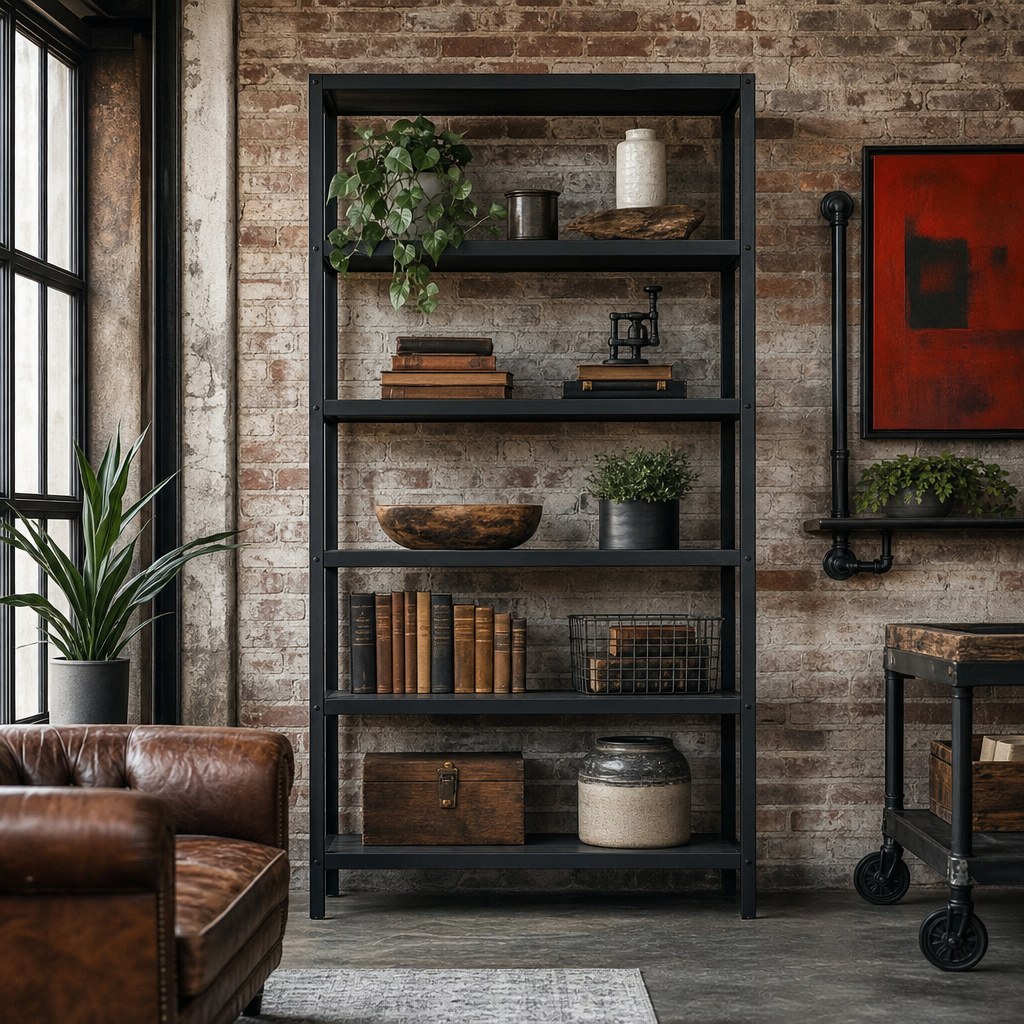
E2 Receipt - The Steel Frame Layer
Reclaimed Wood Warmth · $299.97
Reclaimed wood is the warmth layer that makes industrial design livable. House Beautiful identifies this as the single most important material relationship in industrial interiors: the contrast between the cold hardness of steel and concrete and the warm imperfection of aged or reclaimed wood is not optional - it is the thermal and emotional dynamic that prevents an industrial room from reading as a workspace rather than a home. The reclaimed wood coffee table or solid rustic oak alternative is the anchor piece: it occupies the center of the living space, its surface visible at constant eye level from the sofa, introducing the wood grain, knots, and natural color variation that immediately read as organic warmth against the grey and black of the industrial frame elements. The floating shelf set extends the wood material language to vertical surfaces and provides the display shelf complement to the steel bookcase in Element 2 - one steel, one wood, the same room. The live edge wooden serving board is the kitchen-scale wood element: its irregular natural edge communicates the same organic material logic as the reclaimed coffee table, and its functionality (as a serving or cheese board, as a bread cutting board, as a rolling station) means it earns its presence in a kitchen that otherwise prioritizes industrial materials. The warm brown tones of the wood in every piece in this element should coordinate: the goal is a single warm-brown wood family contrasting against a single cool-warm-grey concrete and steel family.
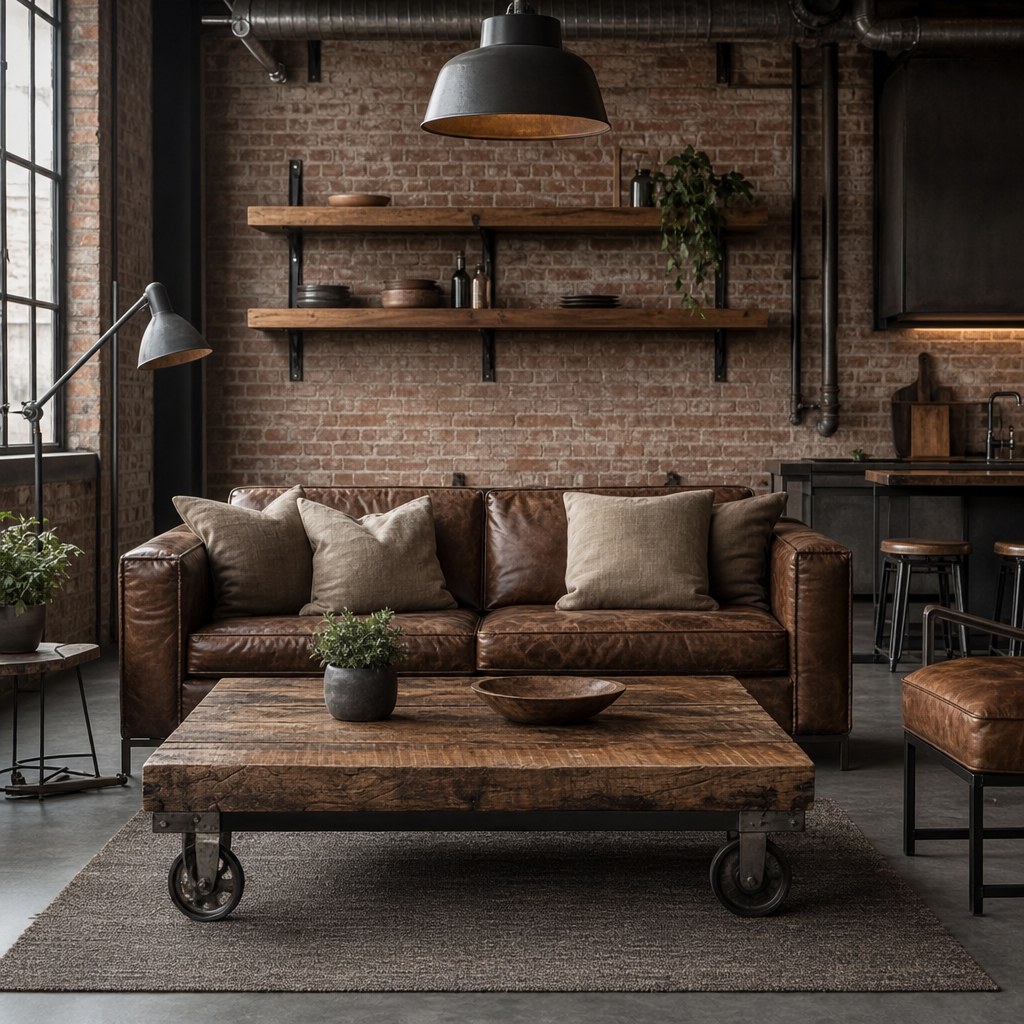
E3 Receipt - Reclaimed Wood Warmth
Factory Lighting · $219.97
Factory lighting is where industrial design's origin is most directly legible. The cage pendant - a metal cage or wire guard over an exposed bulb, suspended from a black pipe or fabric cord - is the direct descendant of workshop and factory task lighting, and it remains the highest-signal single lighting piece in industrial design. It reads as factory-origin immediately because it is designed for protection of a functional bulb in a working environment, not for decoration. The cage pendant avoids the Airbnb trap that the Edison bulb chandelier falls into: a single cage pendant over a reading chair or workspace reads as an intentional design choice; an Edison chandelier over a dining table reads as a rental checklist item. The adjustable black pipe wall sconce pair solves the ambient and task lighting problem in a living room or bedroom without requiring ceiling access - the pipe body, adjustable arm, and industrial materiality communicate the same factory vocabulary as the ceiling pendant. Industrial track lighting is the kitchen solution: a 3-head adjustable track in matte black provides the directional task light that a kitchen actually requires while reading as factory floor on the aesthetic register. The warm-spectrum bulb specification applies throughout: 2700K LED bulbs in all three fixtures ensure the warmth of the wood and textile elements reads correctly against the grey and black of the steel frame.
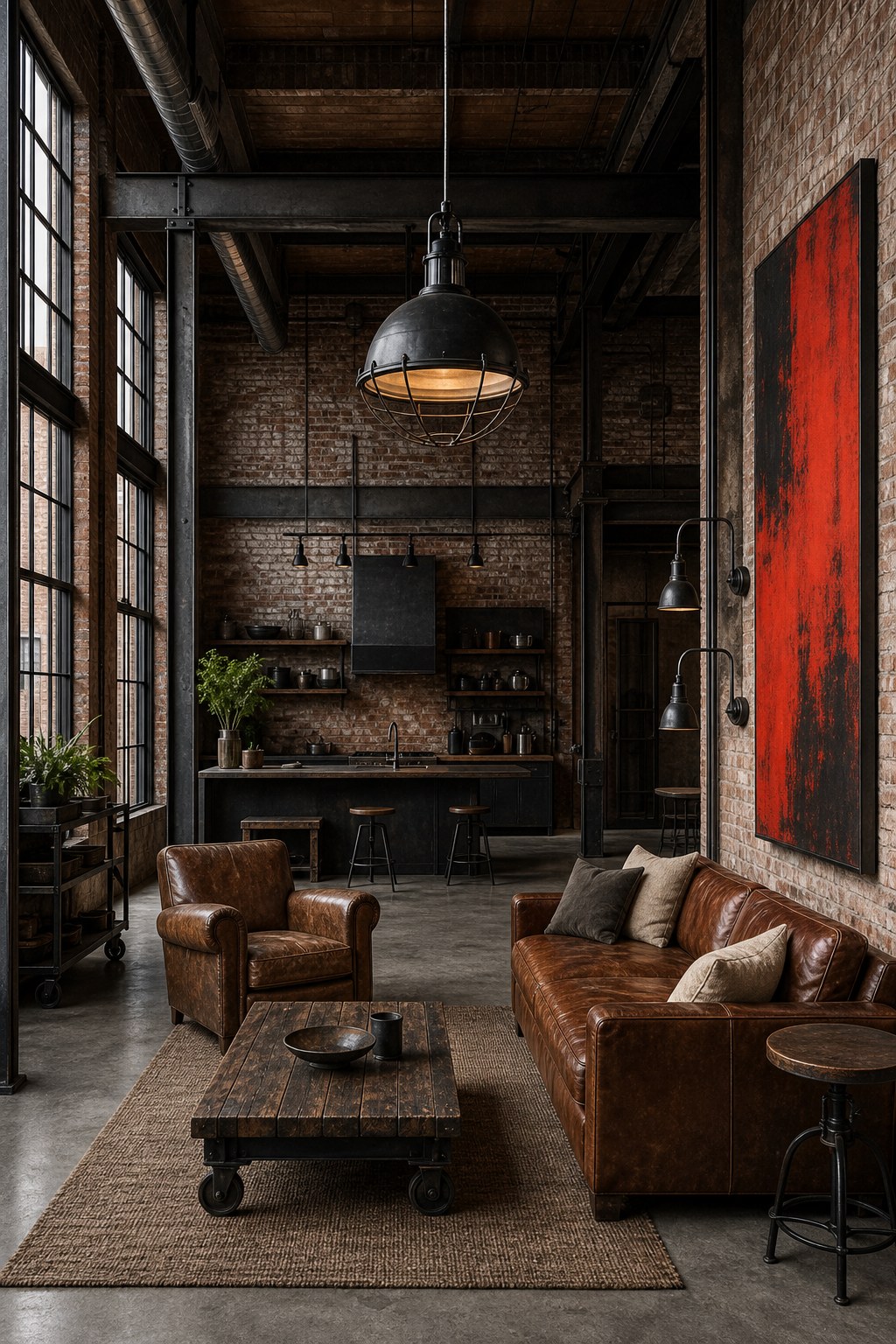
E4 Receipt - Factory Lighting
The Warmth Edit · $254.96
The warmth edit is the element that distinguishes industrial design from industrial ruin. House Beautiful and Apartment Therapy both document the same principle: without the warmth layer, an industrial room reads as unfinished or uninhabited rather than deliberately raw. The warmth edit is mandatory, not optional. The kilim or vintage-look area rug is the highest-impact piece in this element and in the entire five-element system: it covers the largest cold hard surface in the room (the floor), introduces a warm color palette (terracotta, ochre, muted red, navy blue) that the grey-and-black industrial frame cannot provide, and creates the human-scale comfort layer that makes the room feel like a home rather than a space. The rug pattern matters: a kilim or vintage-style geometric rug reads as an intentional counterpoint to the industrial frame - the human-made textile tradition against the factory material tradition. A plain grey or charcoal rug simply extends the industrial palette without adding the warmth contrast. The monstera deliciosa is the plant of choice for industrial rooms: its large, architectural leaves read as organic form against the rectilinear steel and concrete, and its dark green color contrasts effectively with the warm grey palette. The cognac leather or faux-leather accent throw pillows and charcoal wool throw complete the warmth layer at sofa scale - soft textile surface against hard frame, warm cognac tone against neutral grey, inviting against industrial.
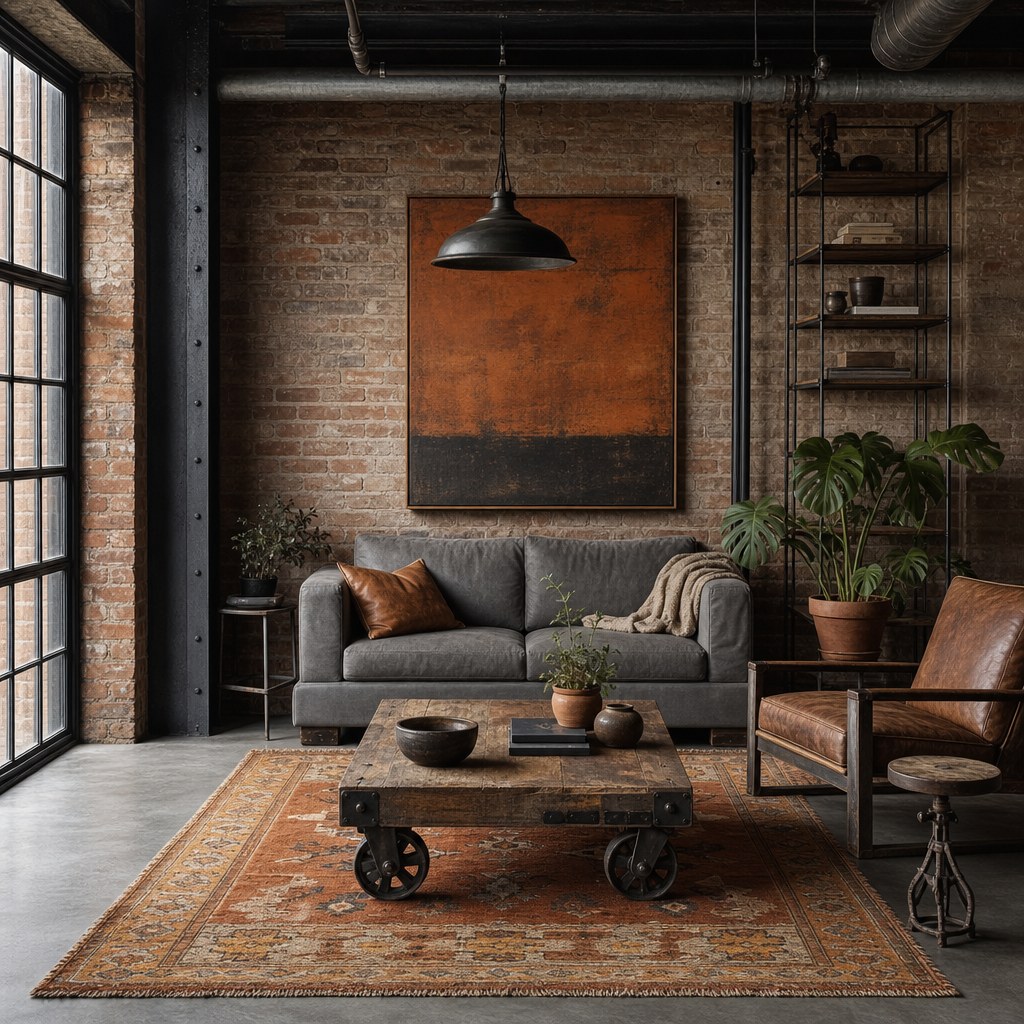
E5 Receipt - The Warmth Edit
Industrial vs. Modern and Contemporary.
Industrial, modern, and contemporary design share a preference for clean lines, functional forms, and restrained decoration. The distinction is in the material logic: modern design is about refined minimalism (clean geometry, premium material, elegant proportion); contemporary design is about current aesthetic (whatever is happening in design right now, which includes boucle, fluted forms, and organic curves); industrial design is about honest rawness (visible structure, aged materials, the factory as the reference rather than the gallery).
| Dimension | Industrial | Modern/Contemporary |
|---|---|---|
| Material logic | Raw honesty -- visible structure, aged patina, functional objects displayed as objects | Refined finish -- clean surfaces, premium material, concealed infrastructure |
| Color palette | Warm grey (yellow-brown undertone), matte black, warm brown wood, cognac leather | Cool white, cool grey, warm white, natural linen, natural wood in lighter tones |
| Frame visibility | Exposed -- open-frame steel shelving, visible pipe hardware, structural elements displayed | Concealed -- floating shelves with hidden brackets, clean wall surfaces, closed storage |
| Warmth layer | Mandatory warmth edit: kilim rug, living plant, leather or wool textile to prevent cold-bunker read | Integrated warmth: warm wood tones, boucle upholstery, and organic form serve the warmth function |
| Reference point | Converted factory, warehouse, loft -- the building as found rather than designed | Gallery, high-end residential, Scandinavian furniture tradition -- the designed space |
| Airbnb trap | Edison chandelier over dining table, pipe shelving everywhere, all-matte-black-everything | Identical boucle sofa-and-coffee-table combination in identical floor plan |
The $299 entry path.
A room-scale industrial shift for under $300. Establishes the vocabulary: raw material, steel frame, factory lighting, one plant. Fully renter-friendly except the faux brick panel -- verify adhesive compatibility before installing.
Frequently asked questions.
What is industrial interior design?
Industrial interior design is a residential style that draws from the aesthetics of converted factories, warehouses, and loft buildings. It originated in 1970s-1990s New York, Chicago, and London when artists began converting abandoned industrial buildings into live/work spaces. The style is defined by its honest display of structural and functional elements: exposed brick walls, concrete floors and ceilings, steel pipe shelving, factory pendant lighting, and reclaimed wood surfaces. The palette is warm grey (yellow-brown undertone, not cool blue-grey), matte black steel, weathered natural wood, and warm leather or kilim textile accents. The warmth edit - rug, plants, and one soft textile - is mandatory; without it, hard industrial surfaces read as unfinished or cold rather than deliberately raw. Industrial design has more range than most people realize: the same raw architecture can support a maximalist expression (gallery walls, warm textiles, collected objects, plants) or a minimalist expression (bare concrete, steel furniture, nothing soft), and both are unambiguously industrial.
How do I get industrial style without exposed brick?
The three most effective simulation strategies: faux brick peel-and-stick panels (the best products have convincing three-dimensional texture, install without tools, and remove without damage - fully renter-friendly), concrete-effect wall paint on an accent wall (a single wall in warm concrete grey with subtle aggregate texture reads as industrial at room scale), and raw brick texture art prints at large format (a 24x30-in print creates the visual signal at wall scale with zero installation). The key principle: industrial style is not exclusively dependent on exposed brick. Steel shelving, matte black hardware, cage pendant lighting, and a kilim rug create industrial style in a standard apartment with smooth drywall walls. The architecture provides the raw material lottery; the design decisions create the industrial quality.
What colors are used in industrial interior design?
The industrial palette is built on a critical distinction: warm grey, not cool grey. Cool grey (blue-grey undertone) reads as corporate office. Warm grey (yellow-brown undertone, like aged concrete or weathered steel) reads as industrial. The base palette is warm grey, aged concrete, and natural weathered wood - all warm, all slightly brown-toned. Matte black is the accent color: hardware, pipe shelving brackets, cage pendant lights. The warmth layer adds cognac leather or tan leather, kilim rug colors (warm terracotta, ochre, muted red), and the dark greens and terracotta of plants and pots. Stark white fights the industrial palette. Bright or saturated colors are only acceptable in industrial rooms as small accent objects - a single red book on a shelf, one vintage poster, not as painted surfaces or upholstery.
How do I make an industrial room feel warm instead of cold?
The warmth formula for industrial design: steel without wood equals cold industrial bunker. Reclaimed wood is the primary warmth layer. The four-element warmth edit: one significant reclaimed or solid wood piece (coffee table, floating shelf set, or dining surface), one textile with pattern and warmth (kilim or vintage-look area rug in warm terracotta and ochre tones), one living plant (monstera or fiddle leaf fig adds organic form to a hard-surface room), and one soft textile accent (cognac leather throw pillow or charcoal wool throw). The kilim rug is the highest-impact piece: it covers the largest cold surface in the room and introduces the warm palette that the industrial frame cannot provide. Without the rug, an industrial room feels unfinished. With it, the same room reads as deliberately designed.
What lighting works best for industrial interior design?
The canonical industrial lighting is the cage pendant: a metal cage or wire guard over an exposed bulb, suspended from a black pipe or fabric cord. It reads as factory-origin immediately and avoids the Airbnb trap that Edison bulb chandeliers fall into. For wall lighting: the adjustable black pipe wall sconce pair is the next most industrial-native form - pipe body, adjustable arm, shade-free or minimal. Industrial track lighting - a 3-head adjustable matte black track system - is the most practical option for kitchens and home offices. One critical warning: the Edison bulb chandelier over a dining table has become so associated with Airbnb rentals that it now reads as generic rather than authentic. The cage pendant avoids this. Use 2700K warm-spectrum LED bulbs throughout - warm light reads correctly against wood and leather; cool light fights the palette.
Can industrial design work in a kitchen?
Yes - industrial kitchen is one of the highest-searched industrial design keywords at approximately 27,100 searches per month. The four industrial kitchen signatures: subway tile backsplash (the utilitarian material most likely already present in an older apartment), open steel shelving (the matte black pipe shelf system that replaced upper cabinets in the original loft conversions), factory pendant lighting (cage pendant above the kitchen island or peninsula), and concrete or concrete-look countertops. For renters without permanent installation rights: replace cabinet hardware with matte black pulls (fully reversible), add a plug-in cage pendant as a swing-arm sconce (no ceiling work), install one open steel pipe shelf on a bare wall, and place a cast iron skillet on visible display rather than in storage - a cast iron pan on a steel rack communicates industrial kitchen immediately.