Table of Contents
The distinction that changes everything you buy.
Modern interior design is a historical period: approximately 1920 to 1960, encompassing the Bauhaus movement, Scandinavian functionalism, and the mid-century American design of Eames, Saarinen, and Knoll. Contemporary interior design is not a period - it is whatever is happening right now, in the studios of the designers whose work the industry considers current. This is not a semantic difference. Modern design has fixed material signatures: walnut and teak solid wood, tapered legs, Tulip chairs, Eames loungers, Noguchi tables. Contemporary design's material signatures change: in 2015, they were grey sofas and polished chrome; in 2025, they are boucle, warm neutrals, mixed metals, and statement art with breathing space.
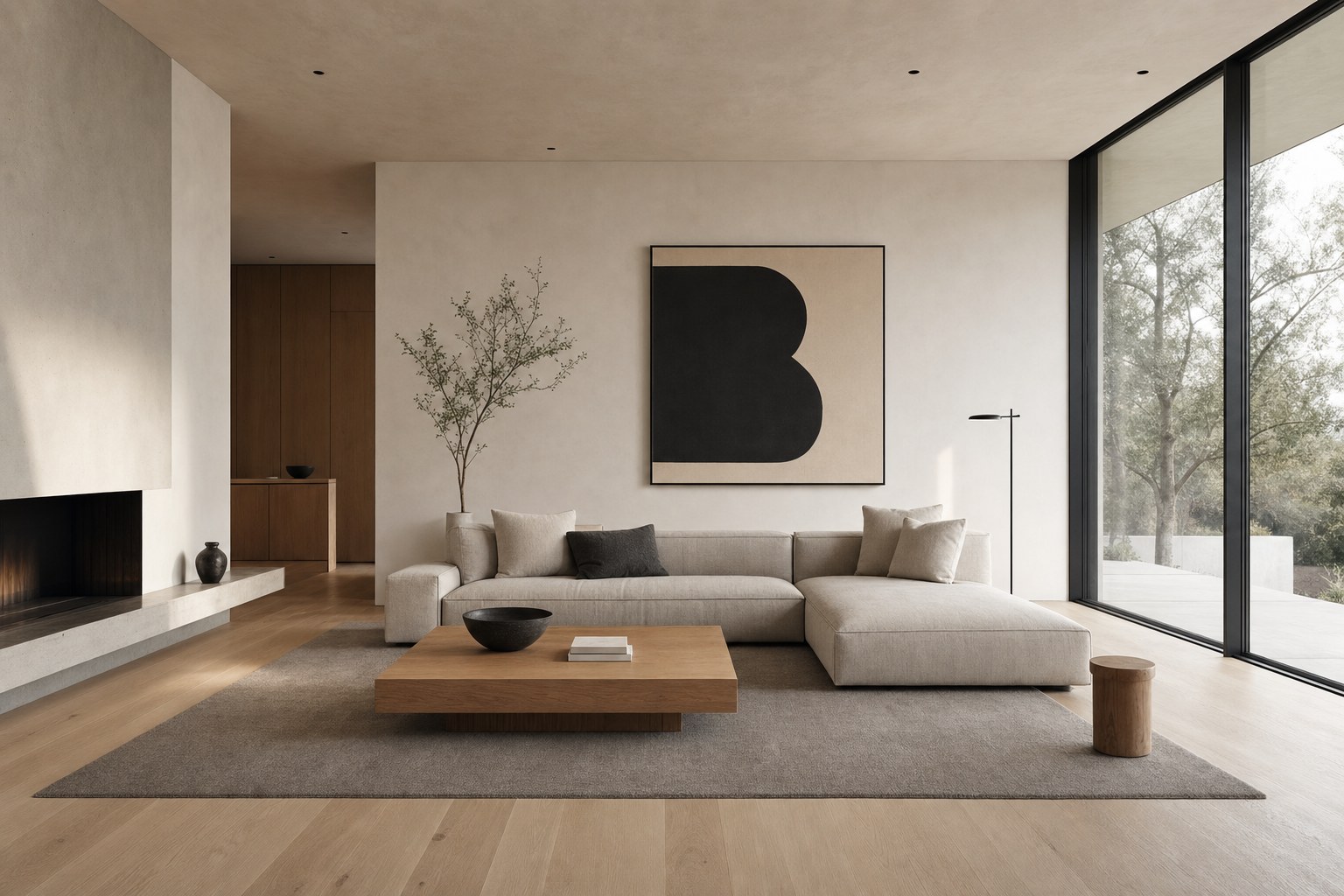
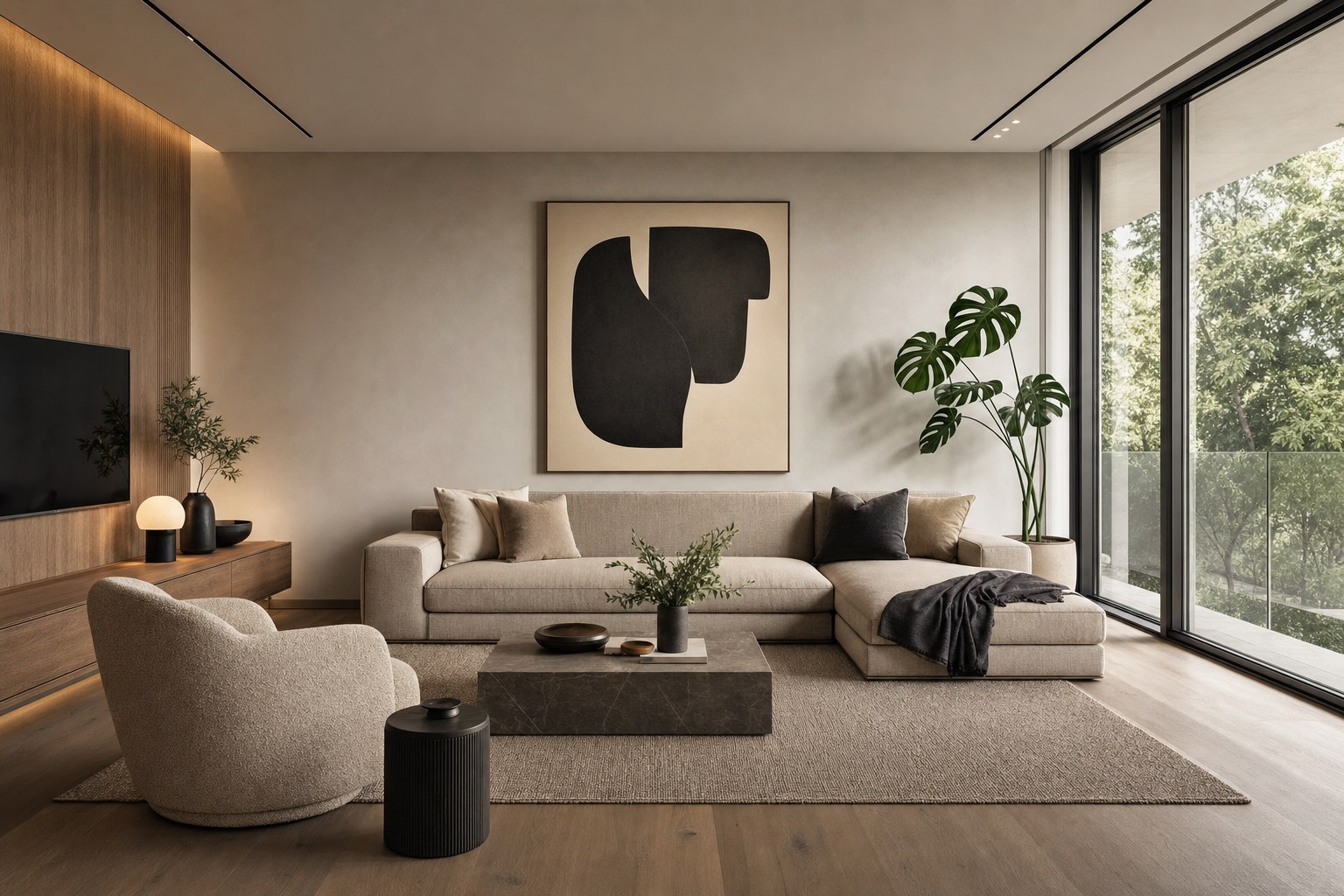
The five principles of 2025 contemporary design are: clean lines that read as warm rather than cold; a neutral palette built on warm (yellow-based) tones rather than cool (blue-based) tones; deliberately mixed metals (brushed brass + matte black rather than matching chrome); statement pieces with breathing space around them rather than maximalist density; and smart material contrasts - marble against warm wood, matte black metal against cream upholstery, terrazzo against natural fiber. The warmth checklist is the most important operating constraint: at least one warm-tone wood surface, one tactile texture (boucle is the 2023-2025 contemporary signature textile), one area rug, two or more plants, and 2700K-3000K lighting throughout.
The failure mode that surfaces consistently is "too cold, too stiff, too corporate" - a grey sofa on a bare floor under cool-white light next to white walls. Contemporary design done well looks like a warmer, more livable version of that grey-sofa baseline. Contemporary done poorly looks like a hotel lobby that nobody sleeps in. The five elements below are the warmth-first system for executing the style correctly, starting with the clean-line foundation that defines the room's architecture and working through to the material contrasts that give it depth.
The Clean Line Foundation · $1,289.97
The clean line foundation establishes the architectural vocabulary of the contemporary room - the large-scale furniture decisions whose silhouettes define whether the space reads as contemporary, as transitional, or as something else entirely. The linen sofa is the most important single purchase in a contemporary room: its profile (low-to-mid height, straight arm, clean base) sets the style signal more powerfully than any accent choice. The upholstery specification is equally important: the 2025 contemporary sofa is linen or linen-blend in warm cream, warm greige, or oat - not grey, not charcoal, not velvet, not leather. Contemporary neutrals must be warm (yellow-based), not cool (blue-based), because a cool-neutral sofa under warm-neutral walls creates the grey-on-greige fight that makes rooms read as unresolved rather than intentional. The walnut-finish media console introduces warm wood grain at a long horizontal surface - the most effective single warm-anchor placement in the room. The floating shelves provide the secondary warm wood presence at wall height and create the vertical layering that prevents the clean horizontal lines of the sofa and console from making the room feel flat.
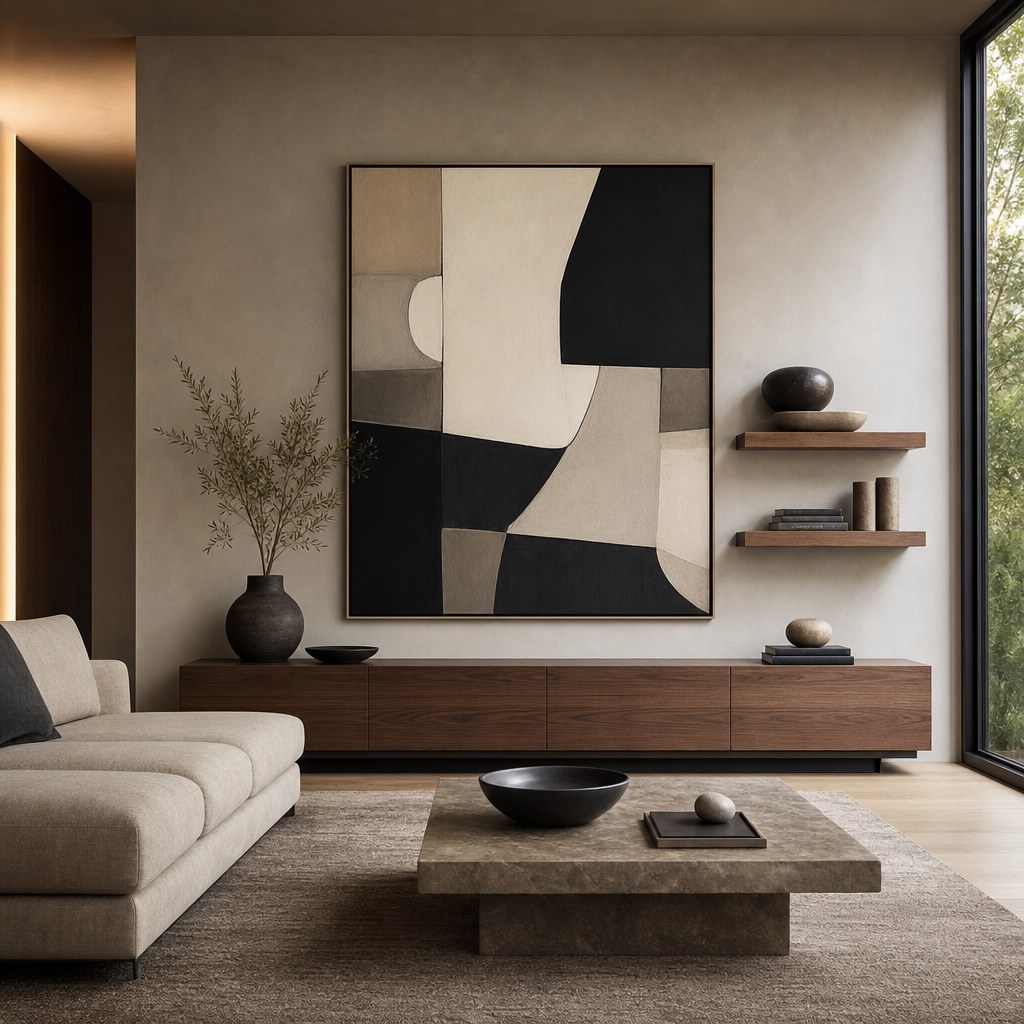
E1 Receipt - The Clean Line Foundation
The Neutral Stack · $269.97
The neutral stack establishes the room's background warmth - the area rug, wall paint, and lighting color temperature that determine whether the clean-line foundation reads as contemporary-warm or contemporary-cold. The area rug is the most critical single warmth decision after the sofa: a bare floor reads cold regardless of how warm every other element is, and the contemporary area rug in 2025 is warm grey, warm stone, or warm sand - not charcoal, not cool grey, not pure white. The warm-white or greige paint specification is equally consequential: contemporary neutrals must be warm-based (Benjamin Moore White Dove OC-17, Sherwin-Williams Alabaster SW 7008, or similar warm off-whites) rather than cool-based (BM Chantilly Lace, which reads stark and clinical in contemporary residential spaces). Cool-white walls create the "hotel lobby" effect that makes contemporary interiors feel soulless - the most common complaint about the style. The 2700K Edison filament LED specification for warm-spectrum light is not an aesthetic preference: it is the closest residential bulb equivalent to golden-hour natural light, which is the light temperature the nervous system associates with relaxation and warmth. Daylight-spectrum bulbs (4000K-5000K) actively fight the warmth decisions in every other element.
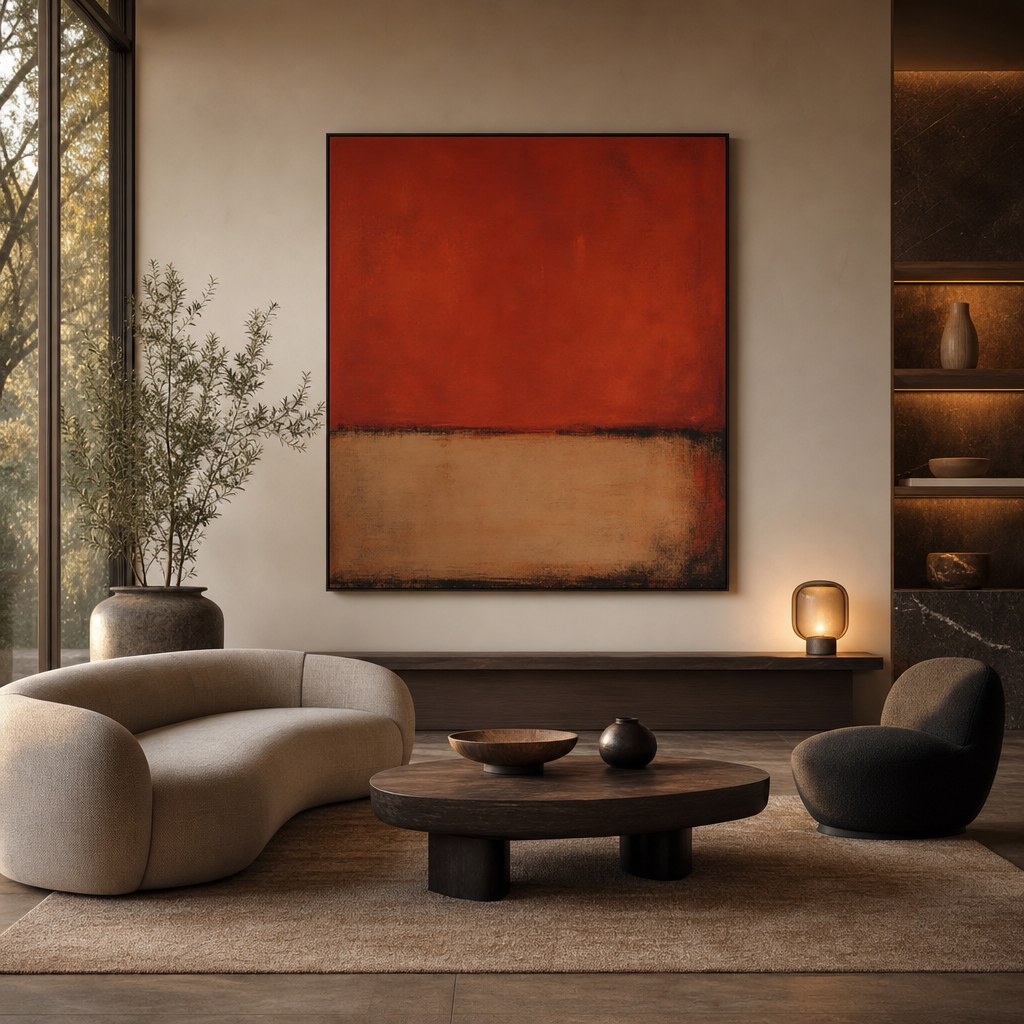
E2 Receipt - The Neutral Stack
The Warmth Layer · $389.97
The warmth layer is the element that most directly addresses the contemporary style's primary failure mode. Boucle is the 2023-2025 contemporary signature textile - cited in Elle Decor, House Beautiful, and Architectural Digest as the defining material of the current design moment. A boucle accent chair in warm white or oat does three things simultaneously: it introduces tactile texture that contrasts with the clean linen sofa; it introduces an organic curved silhouette that contrasts with the sofa's clean linear form; and it anchors a second seating position that makes the room feel inhabited rather than staged. The monstera plant is the contemporary greenery choice at this scale - its bold split leaf form at medium height introduces the living element that every contemporary room requires to avoid the "hotel lobby" effect. Plants are not optional in contemporary residential design: the warmth checklist requires two or more, and the monstera is the most architecturally appropriate first plant for a clean-line room. The chunky knit linen-cotton throw in cream introduces the third tactile texture - after linen sofa and boucle chair - at the lowest price point of any element in this list.
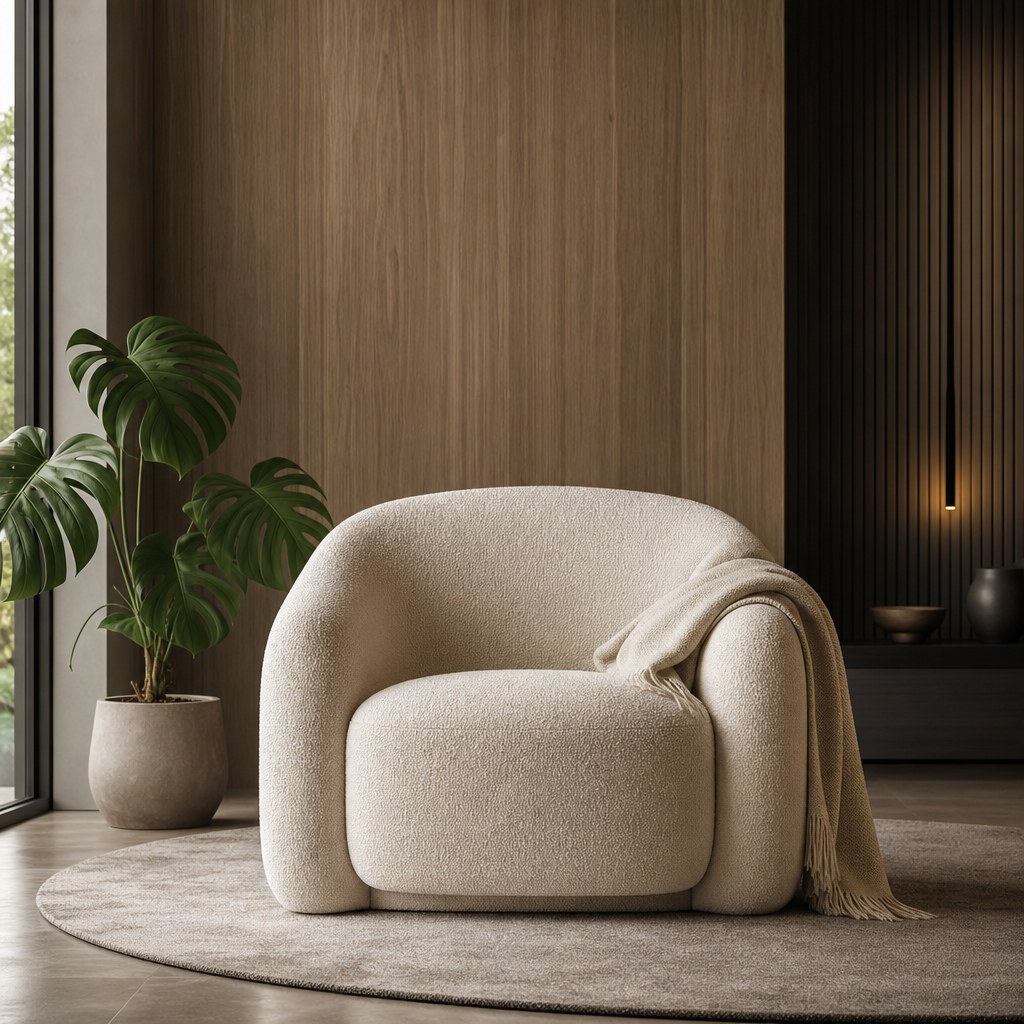
E3 Receipt - The Warmth Layer
The Statement Piece · $349.97
The statement piece is the element that distinguishes a well-executed contemporary room from a well-upholstered one. Contemporary design's principle of "statement pieces with breathing space" means one large-scale item in each visual field that is allowed to read clearly at room scale - not surrounded by other items at similar size and visual weight. The large abstract print at 24x36-in framed fills the visual field at sofa height without competing with other wall-mounted elements. The specification is abstract rather than figurative: figurative art in a contemporary room reads as transitional or eclectic; geometric and abstract prints in warm neutrals or bold single-color fields read specifically contemporary. The warm brass or matte black architectural table lamp introduces the deliberate mixed-metal principle - if the media console hardware is matte black, the lamp is warm brass; if the shelf brackets are brass, the lamp is matte black. Mixed metals in contemporary design are intentional contrast, not a mistake. The sculptural brass bowl on the coffee table closes the composition at the lowest level and introduces warm reflective light at the surface scale.
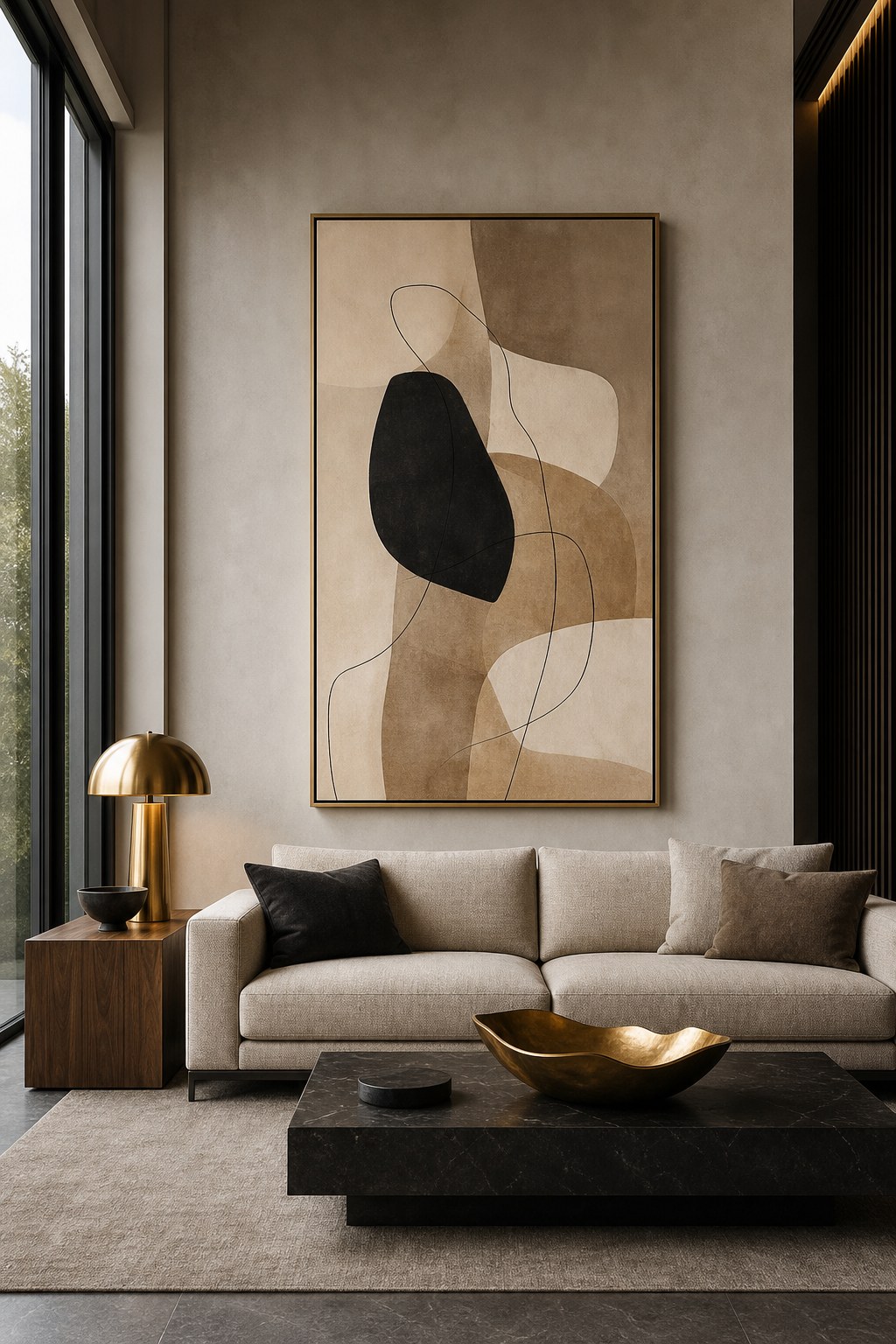
E4 Receipt - The Statement Piece
The Material Contrast · $219.97
The material contrast element addresses the fifth principle of contemporary design: smart material contrasts that give a room visual depth without adding clutter. The principle works by juxtaposing materials that have different surface qualities at the same scale - the cold-smooth of marble against the warm-grain of wood, the hard-flat of matte black metal against the soft-curve of upholstery, the rough-speckled of terrazzo against the clean-neutral of a painted surface. The marble-look coffee table tray introduces the cold-smooth material at the most-viewed horizontal surface in the room - it creates a micro-contrast within the warmth layer that prevents the room from reading as uniformly soft. The matte black side table is the metal contrast element: a contemporary room with zero black reads as beige-on-beige, which is transitional rather than contemporary. The matte black metal accent - one table, one lamp base, or one shelf bracket - provides the visual punctuation that gives the clean lines their definition. The terrazzo small object (bowl, tray, or object) introduces the most sophisticated material contrast in the set: terrazzo's speckled aggregate surface at small scale references both the marble family and the organic material family simultaneously, which is exactly the ambiguity that contemporary design uses as a signature material gesture.
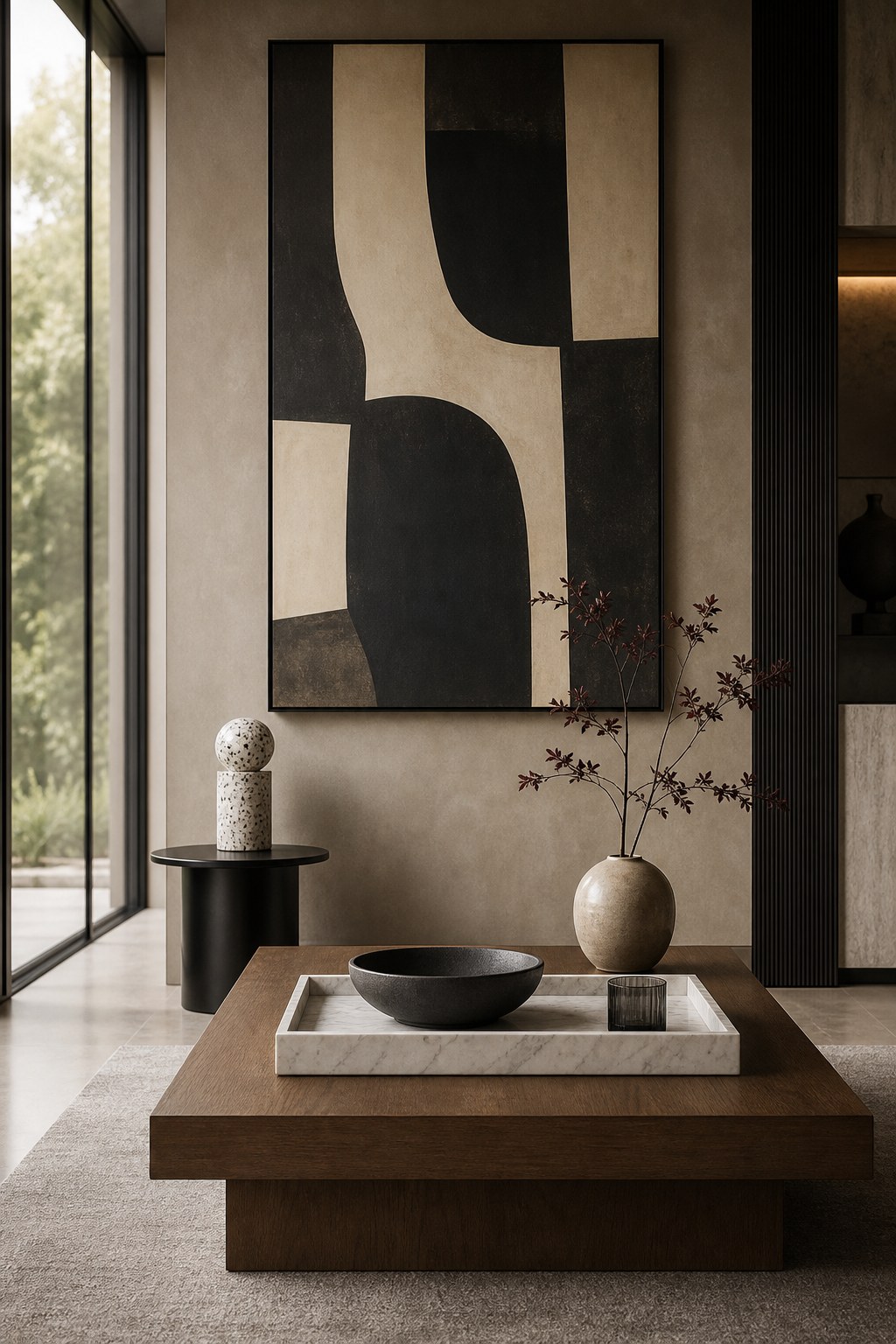
E5 Receipt - The Material Contrast
Contemporary vs. Modern (MCM).
These two styles share clean lines and warm wood tones -- which is why they are so frequently confused and why so many rooms attempting one accidentally produce the other. The distinction is temporal: modern is a period (1920s-1960s); contemporary is now. The material signatures differ specifically enough that a side-by-side comparison resolves the confusion for every buying decision.
| Dimension | Contemporary Interior Design | Modern (Mid-Century) Interior Design |
|---|---|---|
| Time period | Not a period -- it is whatever the best designers are producing right now; changes every 5-10 years | Specific historical period: approximately 1920-1960 (Bauhaus, Eames, Scandinavian functionalism) |
| Sofa profile | Clean profile, low-to-mid height, straight arm, platform or simple base -- no taper legs | Taper legs (walnut or teak), tight-back cushion, lower seat height, organic curved arms |
| Signature textile | Boucle (2025 signature), linen, warm cotton weaves in oat/cream/warm greige | Wool tweed, leather, warm-toned fabrics in earthy ochres and warm creams; no boucle |
| Metal finish | Deliberately mixed: warm brass + matte black in the same room; brushed nickel as neutral bridge | Consistent chrome or brushed steel; warm brass only in period-accurate pieces (not mixed) |
| Wood tone | Warm oak or walnut in horizontal surfaces (console, shelf); warm but lighter than MCM | Walnut and teak dominant, darker warm tones, often as sofa/chair legs as well as surfaces |
| The test | Would the piece look at home in a 2024 Architectural Digest feature? If yes, likely contemporary. | Does it have taper legs, is it teak/walnut, does it reference Eames/Knoll/Saarinen? If yes, MCM. |
The $899 entry path.
Three items that establish a contemporary foundation. The sofa defines the style; the rug prevents the cold-floor failure mode; the coffee table introduces the warm wood grain that anchors both.
Frequently asked questions.
What is contemporary interior design?
Contemporary interior design is a living style category defined as whatever the best designers are producing right now - it is not a historical period, not a fixed aesthetic, and not the same as "modern." The 2025 contemporary vocabulary is built on five principles: clean lines that read as warm rather than cold; warm neutral palette (not cool grey); deliberately mixed metals (brass + matte black rather than matched chrome); focal pieces with breathing space around them; and smart material contrasts (marble, warm wood, matte black metal). The most common failure mode: grey sofa + white walls + minimal decor = soulless corporate lobby, not contemporary. Contemporary design requires explicit warmth decisions - boucle, warm neutrals, living plants, 2700K lighting - as actively as it requires clean-line decisions.
What is the difference between modern and contemporary interior design?
Modern interior design refers to a specific historical period: approximately 1920-1960, encompassing Bauhaus, Scandinavian functionalism, and the mid-century American design of Eames, Saarinen, and Knoll. Modern design has fixed material signatures: walnut and teak solid wood, taper legs, organic curves within a rational grid, warm earthy palette. Contemporary design is not a period - it is whatever is happening right now. The simplest test: modern sofa has taper legs and a walnut base; contemporary sofa has a platform or simple base and no taper legs. Modern uses consistent metals (chrome or brushed steel); contemporary deliberately mixes metals (warm brass + matte black). The confusion is consequential - it changes sofa silhouette, metal finish, textile choice, and price point on every piece you buy.
What colors are used in contemporary interior design?
Contemporary interior design uses warm neutrals - not cool neutrals. This is the most commonly violated color rule in the style. The contemporary neutrals of 2025 are warm-based: greige (grey-beige), warm sand, warm cream, oat, and warm off-white. Cool grey - the dominant palette of 2015-2020 - is now the single most dated choice in contemporary design. The accent palette: warm wood tones (walnut, oak) as the primary warm contrast; warm brass or aged gold as the secondary accent; deep navy, forest green, or warm charcoal as an optional single bold note. Boucle in warm white or oat is the 2023-2025 signature textile. The warmth checklist: warm-tone wood surface + tactile textile (boucle/linen) + area rug + 2+ plants + 2700K-3000K lighting. All five must be present.
What furniture is best for contemporary interior design?
Contemporary furniture is characterized by clean profiles with warmth built into the material choices. The foundational piece: a clean-profile sofa in linen, boucle, or warm fabric - not leather, not velvet, not grey microfiber. Profile: low-to-mid height, straight arm, platform base or simple feet (not taper legs, not hairpin legs - those are MCM signals). The secondary piece: a warm-finish media console or sideboard in walnut veneer or solid oak, horizontal and low. The accent chair: this is where contemporary design allows the most expressive choice - a boucle accent chair in warm white or oat is the 2025 signature. Furniture to avoid: glass-and-chrome combinations (1990s), highly polished lacquered surfaces (corporate), decorative carving or turned legs (traditional).
How do I make a contemporary room feel warm instead of cold?
The cold-and-sterile failure mode is the #1 contemporary design complaint. The warmth checklist has five items - all five must be present. 1: Swap cool neutrals for warm neutrals. Replace grey with greige or warm sand; replace plain white walls with warm off-white (Benjamin Moore White Dove, Sherwin-Williams Alabaster). 2: Add one warm-tone wood surface (walnut console, oak shelf, or natural wood coffee table). 3: Introduce one boucle or textured fabric piece - a boucle accent chair is the highest-impact single addition. 4: Put down a rug - a bare floor reads cold regardless of every other element. 5: Set all lighting to 2700K-3000K. Daylight-spectrum bulbs are the single biggest enemy of contemporary residential warmth - they make every surface read clinical.
Can contemporary and mid-century modern be mixed?
Yes - and this combination is one of the most successful in current residential design. Both styles share clean lines, warm wood tones, and rejection of ornamentation. The mixing rule: anchor with one dominant style and introduce the other as accent. A contemporary room with MCM accents works well: clean-profile linen sofa (contemporary), walnut taper-leg side table (MCM), boucle accent chair (contemporary), Eames-era inspired floor lamp (MCM). The dominant language is contemporary - the MCM pieces read as collected vintage. The reverse is harder: a strict MCM room with contemporary boucle and mixed metals tends to feel confused, because MCM has a strong period identity. The furniture silhouette is the anchor - taper legs and organic curved shells read MCM regardless of fabric; clean-profile bases without taper legs read contemporary. Use silhouette as the style signal; use material as the warmth decision.
Want yours next?
One issue every Sunday. We'll plan your room with your city + salary.