Table of Contents
The Core Difference: A Period vs. The Present
The cleanest way to separate the two is by definition. Mid-century modern is a fixed historical period, roughly 1945 to 1969, with a specific vocabulary of designers, pieces, and materials.[1] Contemporary is not a period at all, it is whatever is current. Contemporary in 1990 looked different from contemporary today, and contemporary in ten years will look different again.
That single distinction explains most of the rest. MCM is fixed, so it has rules: warm wood, organic forms, tapered legs, low profile, one bold accent. Contemporary is fluid, so it follows trends: right now that means higher-profile furniture, more cool-tone neutrals, mixed metals, and softer organic-modern curves. When a retailer calls a brand-new sofa mid-century modern, they mean it references the 1945 to 1969 period. When they call it contemporary, they just mean it is current.
The Furniture Tells
Stand in front of a piece and four things tell you which style it belongs to.
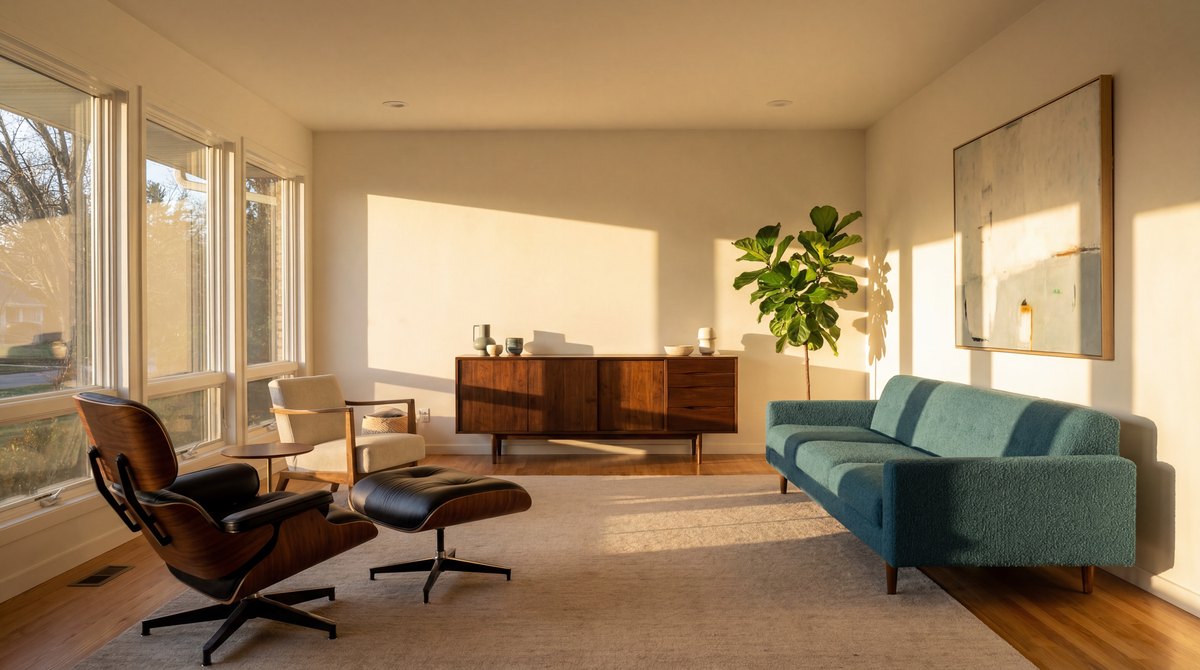
Profile and height. MCM sits low, with a strong horizontal emphasis, closer to the floor.[2] Contemporary furniture generally sits higher, with more visual weight off the ground.
Legs. MCM shows its legs, tapered or splayed wood, the piece is lifted and the legs are part of the design. Contemporary often hides the legs, with skirted bases, plinth bases, or very short minimal feet.
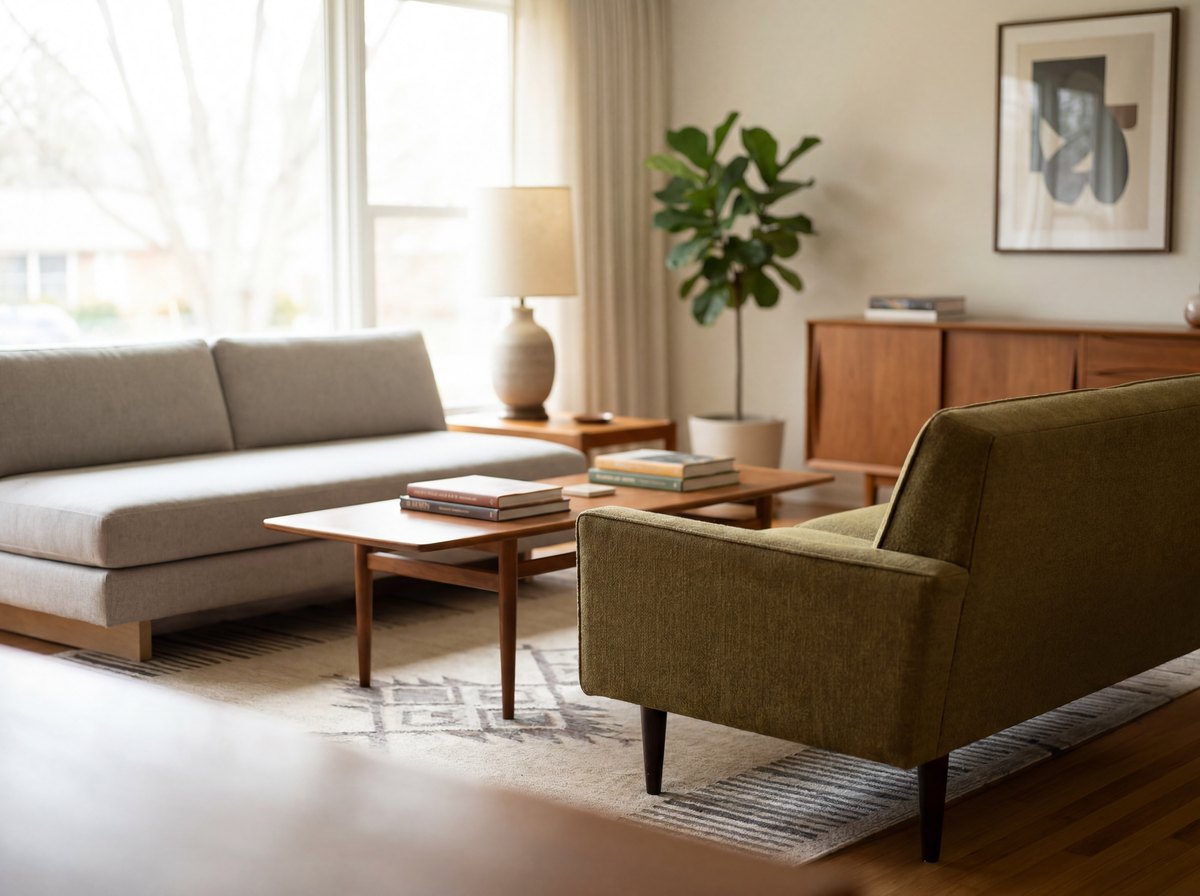
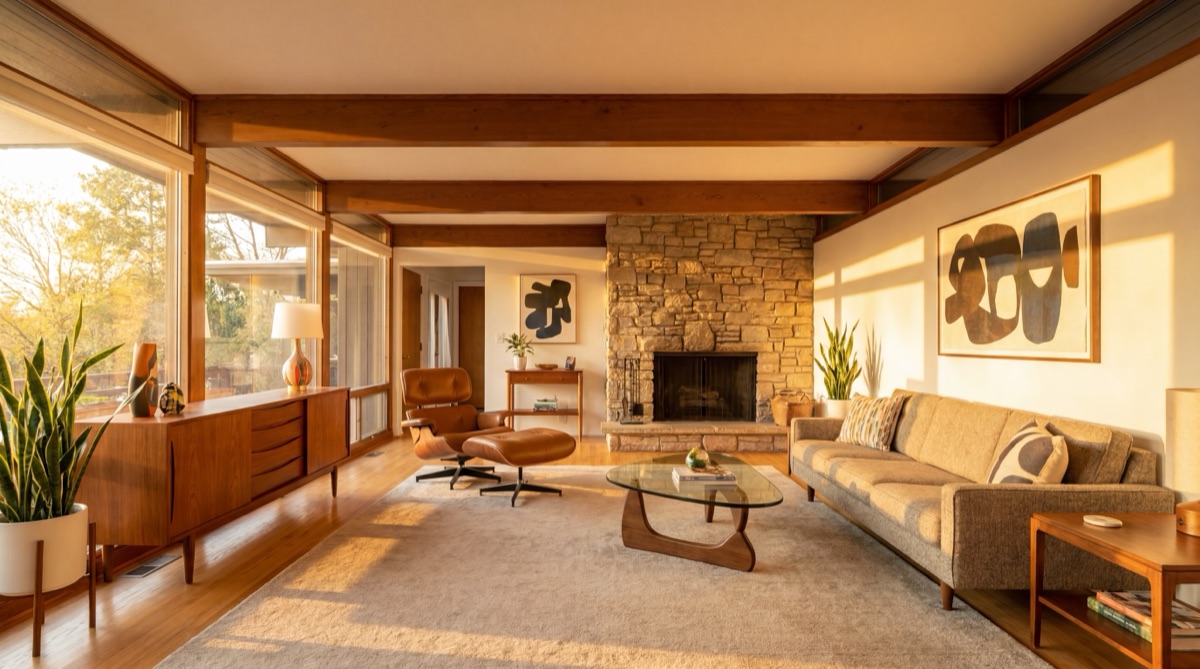
Materials and finish. MCM uses warm wood with visible grain, leather, wool, and honest materials. Contemporary leans on lacquer, glass, chrome and mixed metals, and high-gloss finishes. Visible warm wood grain is the single fastest MCM tell.
Form language. MCM pairs organic curves with flat planes, an Eames shell against a rectangular credenza, a Tulip base against a slab top. Contemporary tends toward one or the other, either very soft all-over curves in the current organic-modern direction, or very hard rectilinear minimalism. The deliberate curve-meets-line contrast is specifically mid-century. If a piece is all curve or all rectangle, it is probably reading contemporary.
The Palette Split
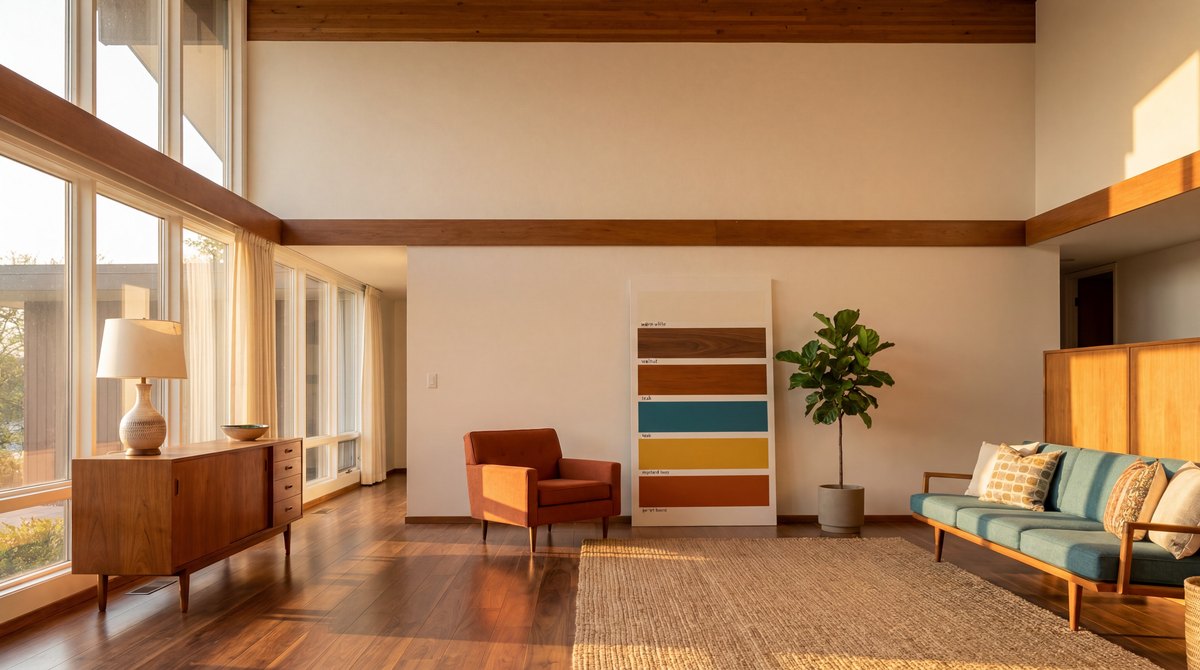
The palettes diverge clearly. MCM is warm neutrals, warm white, warm cream, walnut and teak tones, plus one bold accent in teal, mustard, or burnt orange.[3] The whole scheme runs warm.
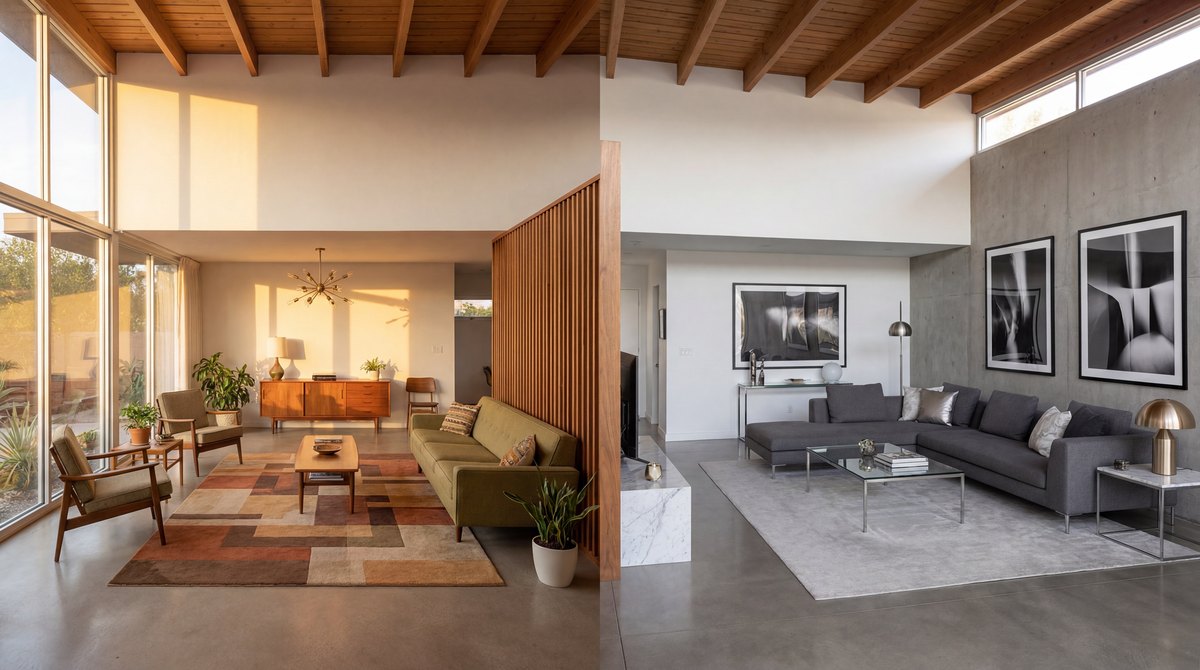
Contemporary trends cooler and more monochromatic, gray-based neutrals, white, black, and a more restrained or tonal accent strategy. A contemporary room is more likely to be a tonal study in grays and creams. An MCM room is more likely to have one genuinely bold warm color doing real work. If the room is warm with one bold accent, it leans MCM. If it is cool and tonal, it leans contemporary.
Which One Fits Your Space
Scale is where the two styles stop being interchangeable. MCM furniture is low and horizontal, designed for the open-plan, single-story California homes of its period. It works beautifully in rooms with normal ceiling heights and open layouts. In a very tall loft, low MCM pieces can look lost unless you scale up and add height elsewhere with art and lighting.
Contemporary is more adaptable to current architecture because it is current by definition, including tall lofts and compact modern apartments. If your space is a period or mid-century-style home, MCM will feel native. If it is a brand-new build with tall ceilings, contemporary, or a careful MCM-contemporary blend, may sit more naturally. The two also blend well, which is its own decision and gets its own section below.
There is also a longevity argument worth weighing. Because mid-century modern is a fixed period, it does not go out of date the way a trend does, it was already old when it was revived, and it will read the same in ten years. Contemporary, by definition, will look different in ten years, because contemporary always tracks the present. That is not a reason to avoid contemporary, plenty of people want their home to feel current. But if you are furnishing for the long term and you do not want to re-buy in a decade, the fixed nature of MCM is an advantage. The pieces you buy now will still be correct later, which is part of why authentic MCM holds its value while trend furniture does not.
The Difference at a Glance
Set against each other trait by trait, the split is cleaner than it looks in a showroom.
| Trait | Mid-Century Modern | Contemporary |
|---|---|---|
| Definition | Fixed period, roughly 1945 to 1969 | Whatever is current, always shifting |
| Profile | Low, long, strong horizontal emphasis | Higher, more visual weight off the floor |
| Legs | Visible tapered or splayed wood legs | Often hidden, plinth or skirted bases |
| Materials | Warm wood with visible grain, leather, wool | Lacquer, glass, chrome, mixed metals, high gloss |
| Color | Warm neutrals plus one bold warm accent | Cooler gray-based neutrals, tonal accents |
Read down the column that matches the piece in front of you. If it lands mostly in the left column, it is mid-century modern. If it lands mostly in the right, it is contemporary. The single fastest tell is still the wood, visible warm grain almost always means MCM, and high-gloss or chrome almost always means contemporary.
How to Blend the Two Without Losing Both
Because the styles share a modernist root, they do blend, and a deliberate blend often reads better than a strict single-style room. The rule is base and accent, never an even split. Pick one style as the base, the one that matches the architecture, and let the other appear only in small, intentional doses.
An MCM base with a contemporary accent might mean a warm walnut, low-profile, tapered-leg room that picks up one contemporary note, a sculptural organic-modern lamp, a single high-gloss surface, a cooler tonal artwork. A contemporary base with an MCM accent might mean a cool, higher-profile current room anchored by one genuine MCM piece, an authentic lounge chair or a vintage credenza, as the warm focal point. Either way, one style is clearly in charge. The half-and-half room, equal parts walnut and chrome, equal parts low and high, is the one that reads as neither, and it is the most common blending mistake.
A Quick Decision Test
If you are still unsure which way a room should go, three questions usually settle it. First: what is the architecture? A period or open-plan home leans MCM. A tall new build leans contemporary. Second, what is your color instinct, if you are drawn to warm walnut and one bold color you want MCM, if you are drawn to cool tonal grays you want contemporary. Third, what is your time horizon, furnishing for the long haul favors the fixed MCM vocabulary, furnishing to feel current favors contemporary. Answer those three honestly and the room usually picks itself, and whichever you land on, commit to it as the base rather than hedging into a half-and-half room that reads as neither.
See Also: More Mid-Century Modern Guides
- the mid-century modern color palette breakdown
- 10 mid-century modern decorating mistakes
- The complete Mid-Century Modern guide
Where to Go Next
If you only remember one test: look at the legs and the wood. Tapered and warm is mid-century. Anything else is probably contemporary borrowing from it. The Complete Mid-Century Modern Interior Design Guide covers the whole style room by room, including the palette and the common mistakes.
Sources.
- [1] architecturaldigest.com: What Is Mid-Century Modern Design?
- [2] thespruce.com: Mid-Century Modern Style: A Complete Guide
- [3] housebeautiful.com: Mid-Century Modern Room Ideas
Frequently asked
What is the difference between mid-century modern and contemporary?
Mid-century modern is a fixed historical period, 1945 to 1969, with set rules: warm wood, organic forms, tapered legs, low profile, one bold accent. Contemporary is not a period, it is whatever is current, so it follows present-day trends.
Is mid-century modern the same as contemporary?
No. MCM is fixed and rule-based. Contemporary is fluid and trend-driven. A new sofa called MCM references the mid-century period, while a new sofa called contemporary just means it is current.
How can I tell if furniture is mid-century modern or contemporary?
Check three things. MCM sits low with visible tapered or splayed wood legs and warm wood grain. Contemporary sits higher, often hides its legs with plinth or skirted bases, and leans on lacquer, glass, and mixed metals.
Which is better for a tall loft, mid-century modern or contemporary?
Contemporary often adapts more easily to tall ceilings. Low MCM pieces can look lost in a tall loft unless you scale them up and add height with art and lighting. MCM feels most native in normal-ceiling, open-plan rooms.
Can you mix mid-century modern and contemporary?
Yes, and they blend well. The honest approach is to pick one as the base and let the other appear only as a light accent, rather than splitting a room evenly between the two.
There are 15 more Mid-Century Modern guides.
This is one room of the set. The pillar links to all of them, and new guides go out by email first.
Read the Mid-Century Modern guide