Table of Contents
The intentionality test.
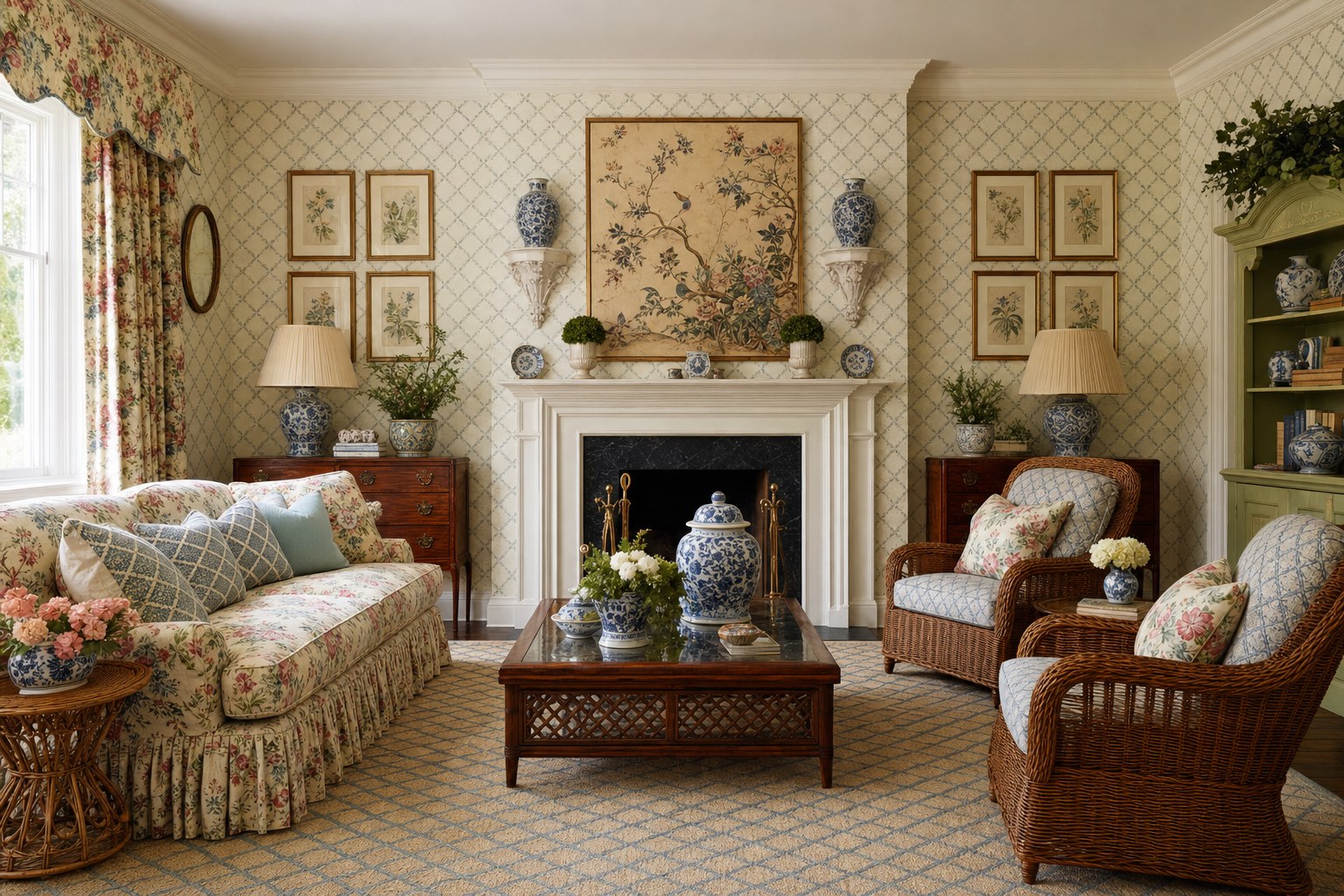
House Beautiful coined the term grandmillennial in 2019 to describe millennials who were rejecting the all-white minimalist trend in favor of something warmer, more decorative, and deeply personal. The material vocabulary it named had been accumulating in apartments for years before the label arrived: florals and chintz, needlepoint, blue-and-white porcelain, botanical prints, pleated lampshades, skirted furniture, and vintage wood with visible patina. People who already lived this way recognized themselves immediately. The most common response was not "this is my aesthetic" - it was "I didn't know there was a word for this."
The community's most useful observation is also the most important design rule: grandmillennial is not the same as grandma's house. The difference is editing. A grandmotherly interior has every surface occupied because every object is inherited and none removed. A grandmillennial room has every surface occupied because every object was chosen. The floral cushion was picked for its color story. The ginger jar was placed, not piled. The inherited armchair stays because it earns its place in the room's palette - not because no one moved it. The intentionality test - would this item stay if the room were designed from scratch? - is the operating principle of the style.
The failure modes that come up consistently are three: pattern overload (all five pattern sources visible simultaneously with no neutral rest zone), era mixing without a through-line (Victorian floral beside 1970s macrame beside farmhouse shiplap - no material logic connecting them), and all-inherited with nothing edited out (the room reads as storage, not design). The five elements below address all three failure modes directly. The entry path - Elements 1 and 3 - is $279.92.
Blue-and-White Display Layer · $149.96
Blue-and-white is the load-bearing color signal in grandmillennial design - the specific combination of cobalt or navy on cream porcelain that connects the style to Chinese export ceramics, Dutch Delft, and the English tradition of collecting both. It is not just a color preference; it is a material tradition with specific object types: the ginger jar (lidded, apothecary-shaped, typically 8--12 inches), the transferware plate (English countryside or willow pattern), the Delft-style vase (blue botanical, bulbous form), and the botanical print in a navy or blue frame. A grouping of three objects in varying heights - one tall jar, one mid-height vase, one small dish - reads as a considered display rather than a shelf of inherited objects. This is the cheapest grandmillennial signal to install and the fastest to read at room scale.
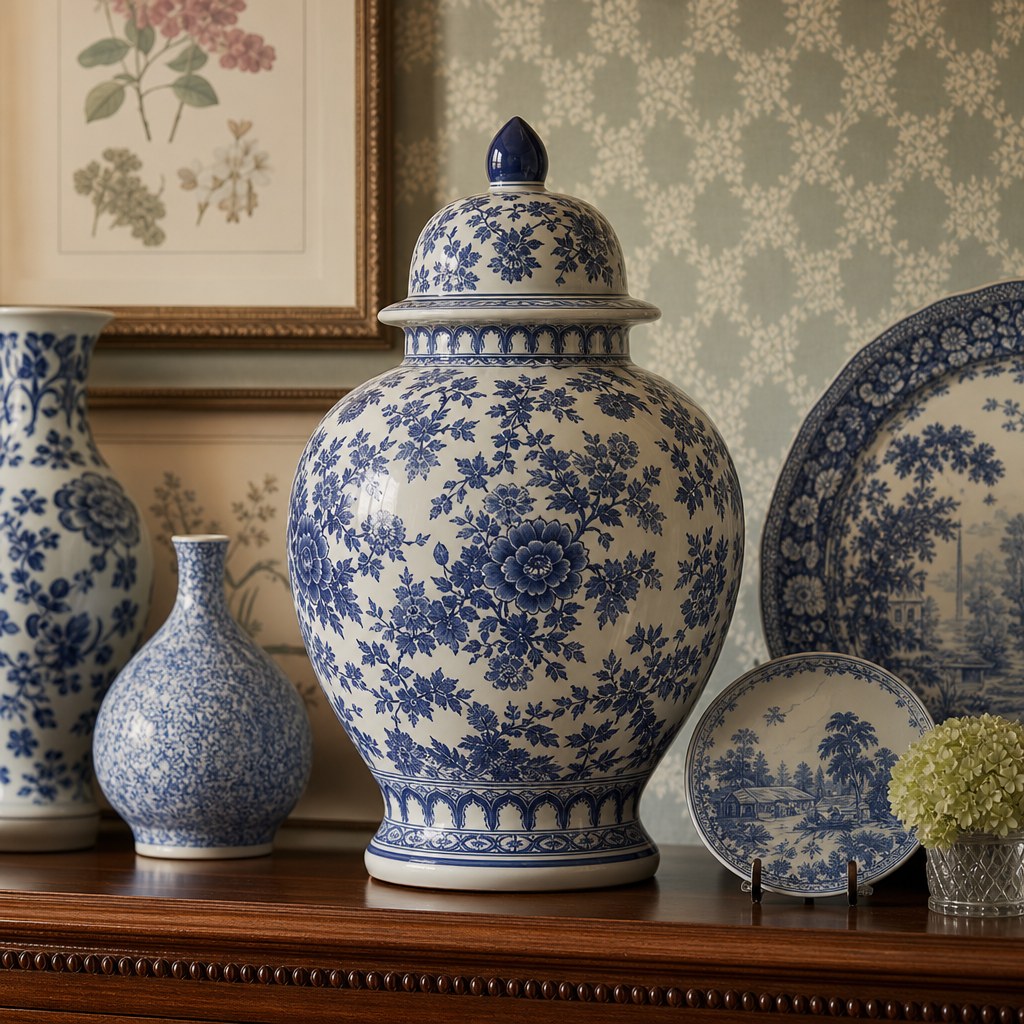
Estate sales, thrift stores, and eBay lots are the best sources for blue-and-white ceramics at $5--30 per piece - Spode, Royal Doulton, Wedgwood, and unbranded export porcelain all work. The object grouping rule: vary height (one tall, one mid, one low), hold the blue-and-white color story consistent, and allow one piece to be slightly modern (a simple cobalt bud vase from CB2 or West Elm reads fine beside a vintage ginger jar). Display the plates on a small plate rack or hang them on the wall in a cluster of three to five - grouped plates read as a collection rather than random china. Avoid the matching-set look: three identical pieces of the same pattern read as tableware, not display.
Floral Textile Layer · $179.96
Chintz is the grandmillennial textile - the glazed, floral-printed cotton fabric imported from India and later produced in English mills that defined English country-house interiors from the 18th century through the 1980s. The grandmillennial revival of chintz is specific: not any floral, but the large-scale, multi-colored botanical that reads formal and English rather than loose and casual. A chintz duvet or pillow set introduces the style's primary pattern at the scale where it works best (large repeat, multiple colors reading across distance). For renters without wallpaper access: a large fabric panel - a yard of floral chintz or a vintage piece stretched across a curtain rod or pinned flat to the wall - achieves the same density of pattern at less cost and zero damage. Peel-and-stick botanical wallpaper covers an accent wall in under two hours and removes cleanly.
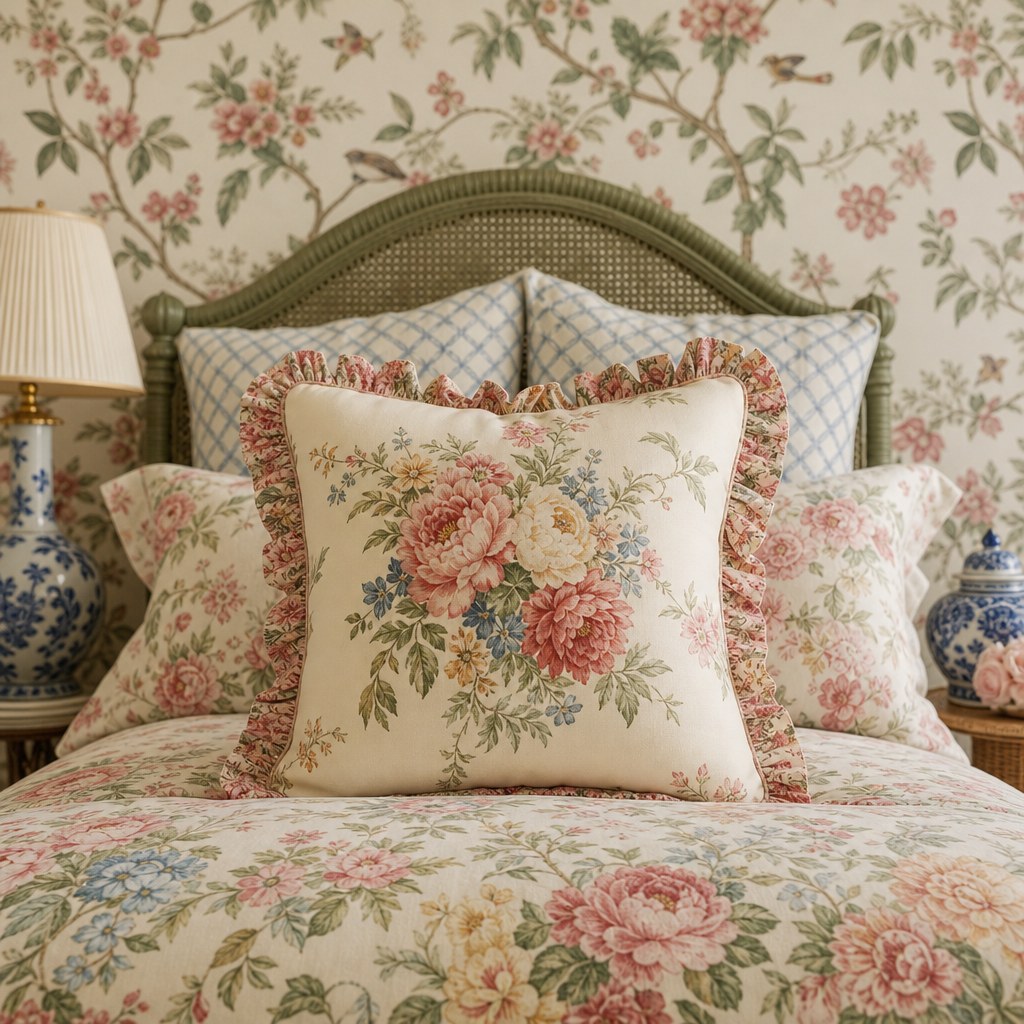
The three-pattern maximum applies to this element directly: if you introduce chintz on the duvet (pattern 1), floral on the cushion covers (pattern 2), and botanical wallpaper or a print on the wall (pattern 3), those are your three - hold there. The rug, sofa, and curtains should be solid or very low-key. Vintage chintz yardage from Etsy shops and thrift stores runs $5--15 per yard and often has the large-repeat English print that new fabric collections rarely reproduce accurately. A half-yard stretched flat in a simple frame reads as a textile print and works as art above the sofa or headboard.
Needlepoint and Handmade Detail · $129.96
Needlepoint is the grandmillennial handmade layer - the cross-stitch or tent-stitch embroidery tradition that produces florals, animals, and geometric motifs in wool on canvas, connecting the style's aesthetic to a specifically domestic handmade tradition. A needlepoint pillow reads immediately as grandmillennial; it is the single highest-signal item in the style's material vocabulary. The handmade dimension is what most clearly separates grandmillennial from generic vintage-floral: the presence of something made by hand - stitched, embroidered, or hand-painted - signals that the room's decorative density comes from accumulation over time rather than a single shopping session. This element also includes the embroidered textile (table runner, cushion border, tray cloth) and the botanical ceramic (Spode-style trinket dish, blue-and-white tea set piece), which carry the same handmade-and-collected reading at smaller scale.
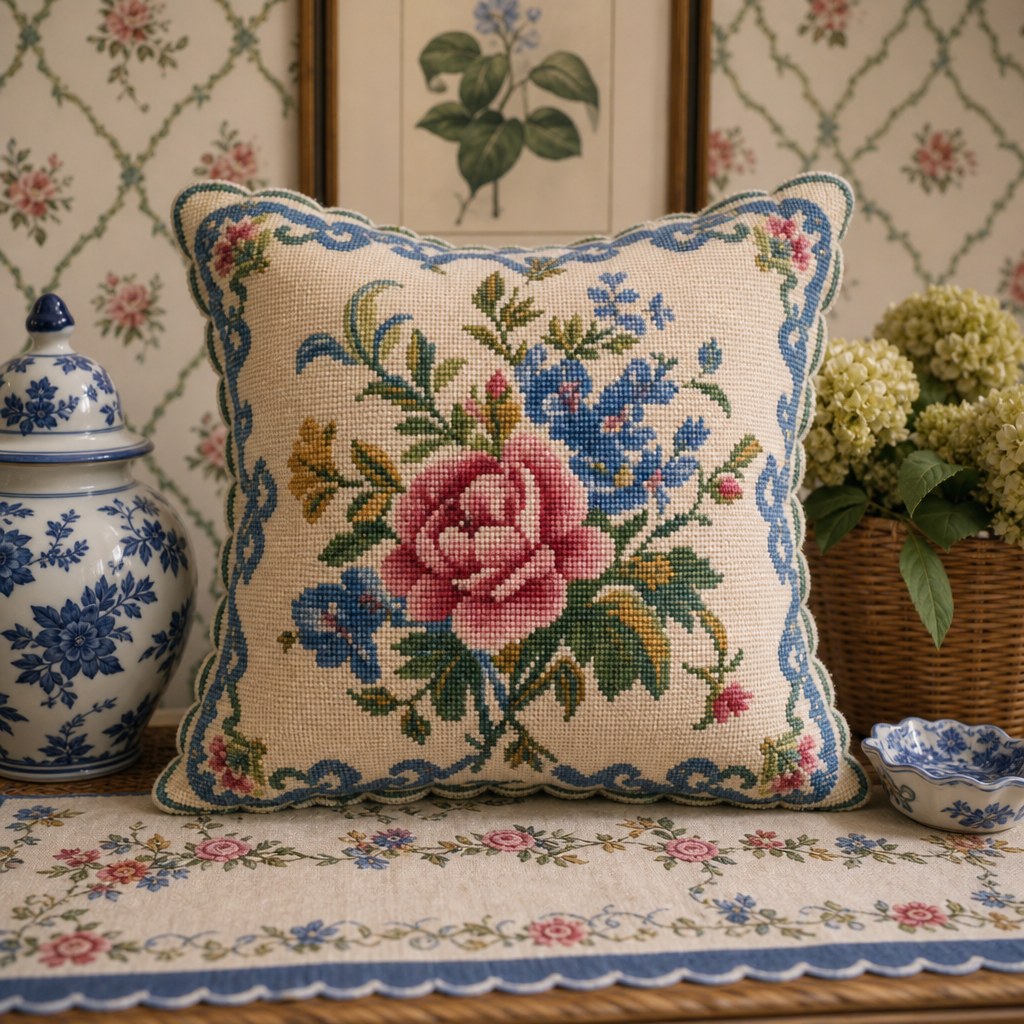
Vintage needlepoint pieces from eBay, Etsy, and estate sales run $10--40 for a finished pillow and $5--15 for a framed canvas - the quality and character of a piece genuinely made by hand decades ago is immediately distinct from a new machine-woven approximation. Look for wool on canvas (not synthetic), tight stitching, and a floral, animal, or botanical motif rather than a geometric. A needlepoint piece that needs cleaning or has a small worn section can be spot-cleaned and displayed as-is; the age is part of the signal. The ceramic trinket dish reads correctly in Spode Blue Italian, Wedgwood, Royal Crown Derby, or any blue-and-white botanical pattern - original thrifted pieces at $3--8 work exactly as well as new reproductions at $20+.
Antique Wood Anchor · $194.96
Every grandmillennial room needs one piece of older wood - the kind that has a history visible in its patina, turned legs, carved detail, or brass fitting. This is not decorator-antique wood; it is the specific warm walnut, cherry, or mahogany of English and American traditional furniture from the 1880s--1960s, often sourced at estate sales, thrift stores, or from inherited pieces that pass the intentionality test. The walnut side table with turned legs anchors the room's material register at a scale that reads across the room. A carved wood frame around a botanical print or mirror adds the detail dimension. The brass-and-wood combination - a letter tray, a small desk accessory - introduces the metal note the style shares with Dark Academia and French Country without pulling the room out of its material lane. The scalloped wood tray organizes the display surface and contributes the handmade edge that manufactured furniture rarely provides.
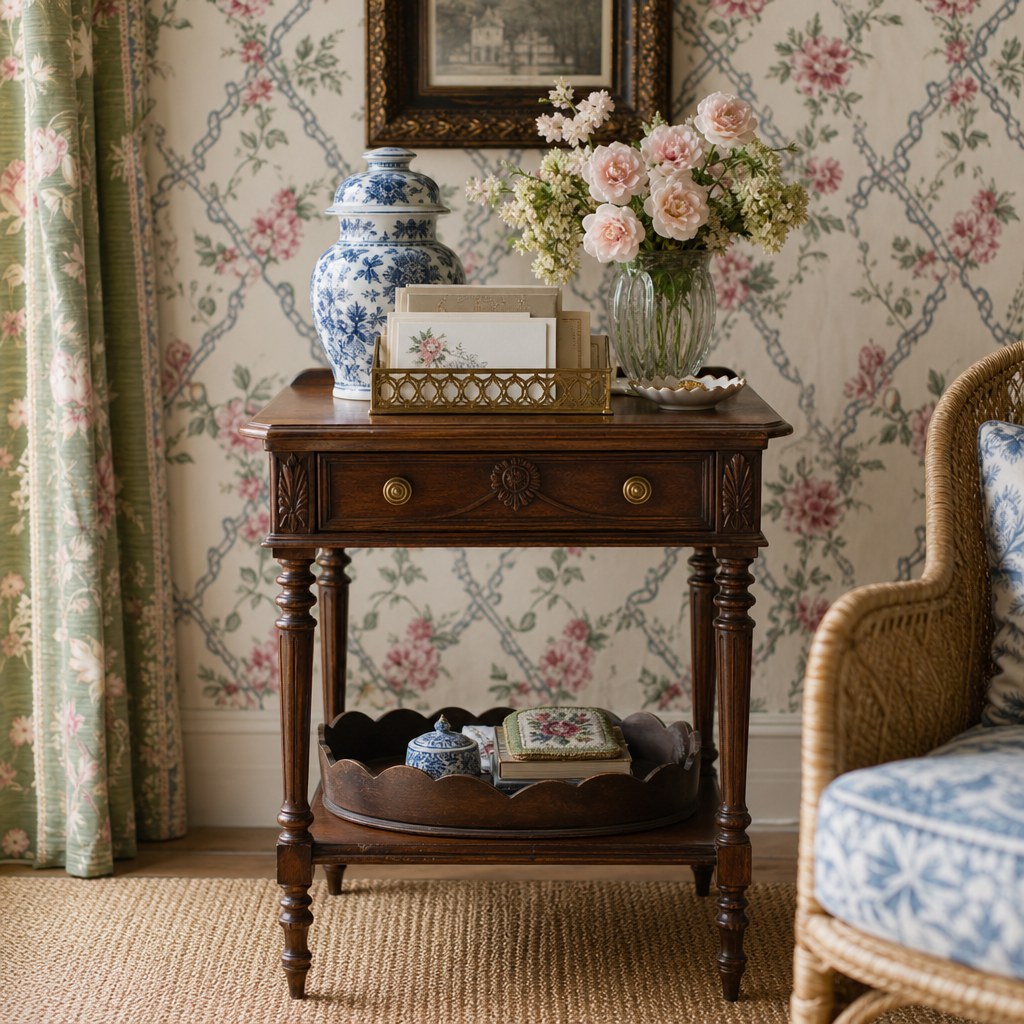
Facebook Marketplace and estate sales in suburban areas consistently produce the correct grandmillennial wood pieces at $20--80: small side tables with turned legs, occasional chairs in faded chintz that can be recovered, carved wood mirrors, and mahogany or cherry occasional furniture from the 1940s--60s. A genuine piece from that era has wood weight and patina that no new reproduction at $150 matches. The walnut side table here is the one item in this list where sourcing used is strongly preferred over buying new - the difference in material quality is visible immediately and the price at estate sale is often a third of the equivalent new piece.
Warm Light Layer · $189.96
Grandmillennial lighting is table-lamp-dominant, not overhead. The ceramic lamp with a pleated shade in cream or ivory is the definitive grandmillennial light source - it produces the warm, directed, low-intensity light that makes a decorated room feel inhabited rather than staged. A pleated shade swap is the single fastest transformation in this style: replace any standard drum shade with a cream pleated version ($35--60) and the lamp reads grandmillennial immediately, regardless of the base. The chinoiserie ceramic lamp base (blue-and-white painted porcelain, ginger jar form) combines the blue-and-white and lighting layers in one object. The velvet throw in dusty rose, sage, or navy adds textile warmth at soft-furnishing scale without introducing a new pattern. The brass candlestick pair adds the ceremonial lighting note the style shares with French Country and Traditional - white or cream taper candles only.
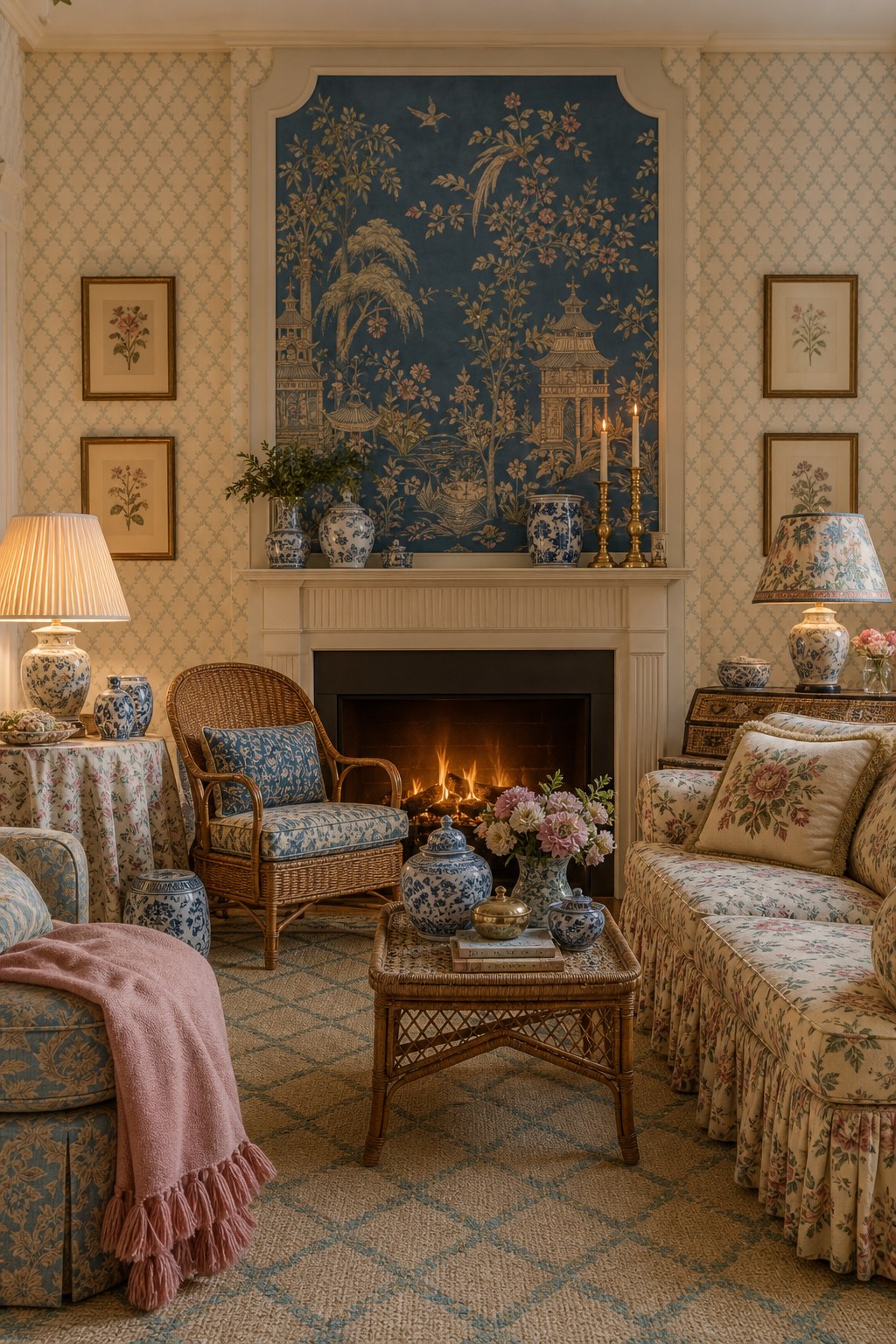
The overhead light in a grandmillennial room is almost never the main event - it should be on a dimmer and used as fill, not as the primary source. The character lamp - a ceramic base with an interesting shape, a blue-and-white pattern, or a sculptural profile - paired with a pleated shade does the lighting work. Vintage ceramic lamp bases at thrift stores run $5--20 and accept standard harp-and-shade fittings; a $40 pleated shade converts any thrifted base into the correct grandmillennial reading. The velvet throw is the one textile in this element that should be solid, not patterned - it serves as the rest zone against the floral and needlepoint pattern already present from Elements 2 and 3.
Grandmillennial vs Grandma's Attic.
The question that comes up in every community thread on the subject. The distinction is real, consistent, and applies at the level of individual decisions - not just overall rooms.
| Factor | Grandmillennial | Grandma's Attic |
|---|---|---|
| Pattern rule | Max 3 patterns at once, intentionally mixed, one dominant | Every surface covered, no neutral rest zone, no hierarchy |
| Shopping strategy | Strategic thrift + one or two hero pieces bought new | All inherited, nothing edited out, no deliberate additions |
| Modern note | Always one clean-lined modern piece (linen sofa, simple chair) | Zero modern contrast -- every piece is old or inherited |
| Antique share | 30--40% vintage or antique, rest contemporary or thrifted | 90%+ inherited, untouched since original placement |
| Color palette | Cream, dusty rose, sage, navy -- chosen and coordinated | Faded gold, hunter green -- whatever accumulated, unedited |
| Failure mode | Pattern overload -- fourth simultaneous pattern tips to noise | The full room -- too much to edit, nothing to anchor |
Frequently asked questions.
What is grandmillennial style?
Grandmillennial style is an interior design aesthetic coined by House Beautiful in 2019 to describe millennials who were rejecting the all-white minimalist trend in favor of something warmer, more decorative, and more personal. Its material vocabulary is specific: florals and chintz, needlepoint, blue-and-white porcelain (ginger jars, transferware, Delft), botanical prints, pleated lampshades, skirted furniture, and vintage wood with visible patina. The key distinction from a grandmotherly interior is editorial discipline: a grandmillennial room has every surface occupied because every object was chosen, not merely inherited. The intentionality test - would this item stay if the room were designed from scratch? - is the operating principle. Pattern layering follows a three-pattern maximum across the room: if the cushion is floral chintz, the rug is geometric, and the curtains are a second floral, those are your three. The fourth pattern tips the room into visual noise. "Grandmillennial style" runs 1,900 searches per month; "grandmillennial decor" runs 1,000/mo.
How is grandmillennial different from cottagecore?
Both styles are decorative and nature-adjacent, but their material language diverges significantly. Cottagecore runs on linen, natural fibers, dried botanicals, hand-thrown pottery, and an outdoor-informal feeling - it reads rural, pastoral, and artisanal. Grandmillennial runs on chintz, formal china patterns, lacquerware, and collected porcelain - it reads interior, studied, and historically informed. Cottagecore's florals are loose, organic, and painterly; grandmillennial's florals are formal and fabric-based, often drawn from specific historical patterns such as English chintz, blue-and-white Delft, or willow-pattern transferware. The cottagecore room feels like someone brought the garden inside; the grandmillennial room feels like three generations of a considered aesthetic are present and edited. Color palette also separates them: cottagecore favors sage, wheat, and muted terracotta; grandmillennial more often reaches for dusty rose, navy, and cream with cobalt accents from the blue-and-white collection.
What are the must-haves for a grandmillennial bedroom?
Five elements define a grandmillennial bedroom. First: a skirted bed or a bed with visible fabric at the base - the skirt is the fastest single grandmillennial signal in a bedroom. Second: a floral or botanical print on the wall, above or beside the bed - framed, fabric-mounted, or wallpapered. Third: one needlepoint piece - a pillow on the bed or a framed canvas on the wall - which reads immediately as grandmillennial and connects to the style's handmade tradition. Fourth: one blue-and-white ceramic object on the dresser or nightstand anchoring the color story. Fifth: a table lamp with a pleated or drum shade in cream or ivory for warm, directed light. The bedroom mistake: a floral duvet with nothing else. Without the needlepoint, the ceramic, or the lamp detail, a floral duvet reads as generic vintage-feminine rather than grandmillennial. The style requires the handmade and the collected to be present alongside the textile.
How do I do grandmillennial style in a rental without using wallpaper?
Three no-damage routes to the grandmillennial wallpaper effect. First: peel-and-stick removable wallpaper - a single accent wall behind the bed or sofa in a botanical or floral pattern reads at room scale and removes cleanly. Second: a large fabric panel - a yard of floral chintz or a vintage piece stretched across a curtain rod or pinned flat to the wall achieves the same density of pattern at less cost and zero damage. Third: a gallery wall of botanical and floral prints in similar frames - six to nine prints in consistent frames reads as pattern-adjacent at room scale and disassembles cleanly at move-out. The peel-and-stick option is the easiest for renters who want the effect without the commitment, and the quality and pattern range of removable wallpaper has improved significantly. The gallery wall is the most reversible and the most photographable for social content. Any of the three substitutes for wallpaper at a fraction of the installation risk.
What is dark grandmillennial?
Dark grandmillennial applies grandmillennial's decorative density to a deeper, richer palette: forest green, navy, burgundy, and dark plum as the dominant background tones rather than cream and dusty rose. The same material vocabulary applies - chintz, needlepoint, ginger jars, pleated shades, botanical prints - but the background deepens to library-dark rather than parlor-light. Navy walls with cream chintz reads dark grandmillennial; cream walls with navy chintz reads traditional grandmillennial. The moody, jewel-toned version performs well in algorithm-driven social content because the high contrast and decorative density read clearly in a thumbnail. Dark grandmillennial intersects with Dark Academia in the book-forward, library-adjacent reading nooks: the shared territory is wood tones and the density of objects, not the material palette. Dark grandmillennial keeps the florals and porcelain; Dark Academia drops them for leather, brass, and aged paper.
What is the most common grandmillennial decorating mistake?
Pattern overload without a neutral rest zone. Grandmillennial rooms that look crowded rather than decorative share one failure mode: every surface carries pattern simultaneously, with no breathing room between them. The three-pattern maximum applies across the room (not a single item): if the sofa cushion is floral chintz, the rug is geometric, and the curtains are a second floral, those three are at capacity - the fourth pattern (wallpaper, another cushion, a patterned lampshade) tips the room into visual noise. The fix is a neutral anchor large enough to provide rest: a solid linen sofa, a solid-color rug, or a bare wall section. The second mistake is all-inherited with nothing edited: grandmillennial rooms that feel dated rather than vintage usually have no modern note - no clean-lined chair, no simple linen element - to signal that the decorative density was chosen. One modern contrast item tells the room it was designed, not accumulated.
Want yours next?
One issue every Sunday. We'll plan your room with your city + salary.