Table of Contents
The Layering Blueprint.
Bohemian interior design traces to 19th-century European artists who rejected bourgeois aesthetics - they built spaces that looked collected, not purchased, assembled from travels and markets rather than from a furniture showroom. That origin story is the entire operating principle: a bohemian room should appear to have arrived over time, piece by piece, each object carrying a different provenance. The five-layer approach is the blueprint for building that appearance intentionally. You start with a neutral base that disappears under the layers, then build the textile story, then the natural material foundation, then the global accent collection, and finally the wall composition that ties everything together vertically.
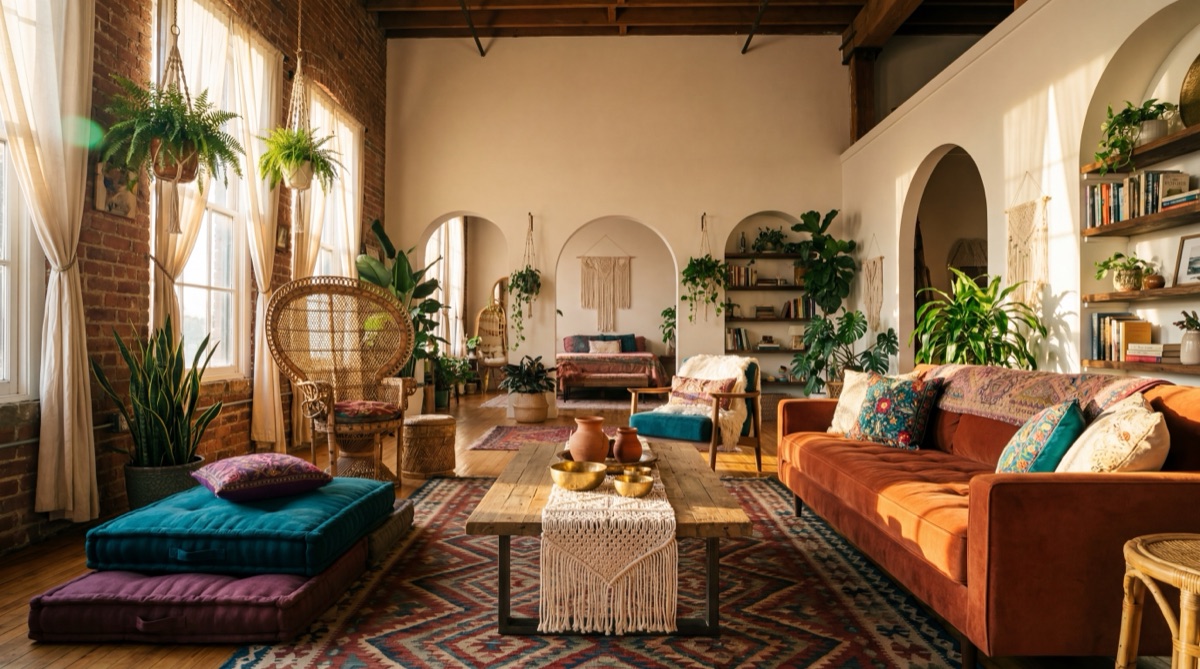
The style's #1 fear - the one that surfaces constantly in design forums and comments - is "it looks cluttered." Negative space is the invisible rule of bohemian design. Rattan is the single most identifiable boho material, and a room built around a rattan accent chair, a kilim-style area rug, and a macrame wall hanging with deliberate negative space between each element will read as curated boho rather than chaotic accumulation. The 20% edit rule operationalizes this: after you have fully styled a bohemian room, remove 20% of the items. The room will look more bohemian, not less. What remains is what was curated; what was removed was filling space.
Budget sourcing for bohemian design follows a specific logic: thrift stores and estate sales for kilim rugs, brass objects, and carved wood pieces (these gain authenticity from age and patina); IKEA and Target for the neutral base furniture that disappears under the layers; Amazon and Etsy for macrame, terracotta, and plant hangers where the product category has matured into reliable quality at accessible prices. The five elements below build the full bohemian room from foundation to wall layer, starting with the item category that carries the most visual weight and working outward to the wall.
The Textile Foundation Layer · $249.96
The textile foundation layer is the first decision in the bohemian layering blueprint, and it carries the most visual weight of any single element in the room. This is where the kilim pattern, the chunky cotton texture, and the boho color palette are introduced. The critical sequencing principle: the textile layer is built before any accent objects, plants, or wall art are added, because every subsequent layer must respond to the palette the textiles establish. A kilim-style area rug with terracotta, rust, and cream will anchor the entire room's color story -- everything added later references those tones. The pattern mixing rule for the textile layer: vary scale, unify color. A kilim-style area rug (geometric, small-to-medium pattern) pairs with a chunky cotton throw (organic texture, no pattern) and a boho pillow set (organic shapes, medium-scale pattern) because the scales differ and all three share the warm earth tone family. The cotton woven fringe throw introduces a third textile texture -- the fringed edge -- that is one of bohemian design's most identifiable material signatures and one of the cheapest ways to add bohemian signal to a room that already has a neutral sofa.
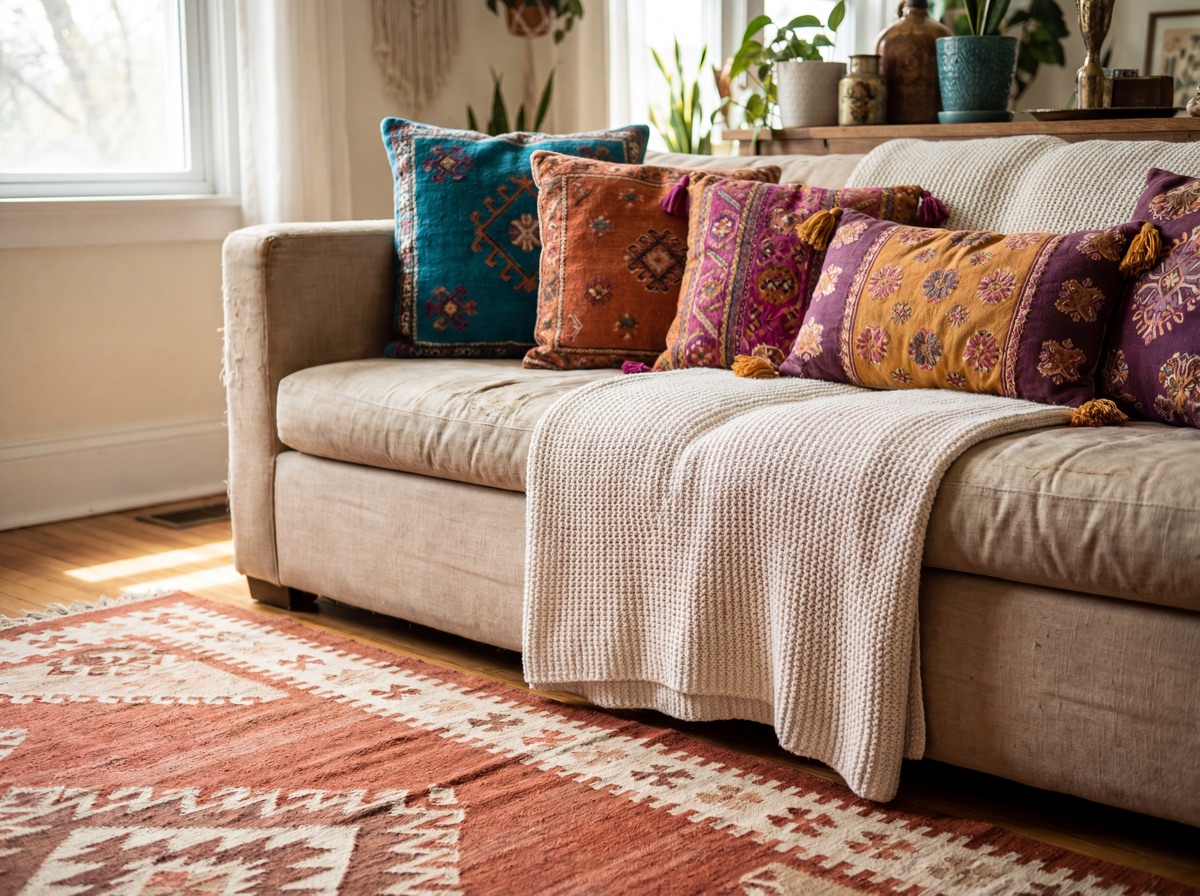
E1 Receipt - The Textile Foundation Layer
Natural Material Core · $344.97
Rattan is the single most identifiable bohemian furniture material. Every major source in this research -- from The Spruce's bohemian style guide to Architectural Digest's bohemian room breakdowns -- identifies rattan as the non-negotiable furniture core of the style. The natural material core is where the room gains its three-dimensional structural bohemian identity: rattan introduces woven organic texture at furniture scale, macrame introduces handcrafted fiber art at wall or ceiling scale, and a jute rug layered over the kilim rug establishes multi-layer floor depth that is one of the most distinctive visual signatures of advanced bohemian styling. The layered rug technique -- placing a jute rug at an angle over a kilim-style rug -- is referenced consistently in House Beautiful's and BHG's bohemian decorating guides as the clearest indicator of intentional bohemian layering rather than basic bohemian purchasing. The macrame wall hanging is the second most identifiable bohemian material after rattan -- its handcrafted knot pattern references the artisan textile tradition that defines the style's global sourcing logic and distinguishes a bohemian room from an organic modern one.
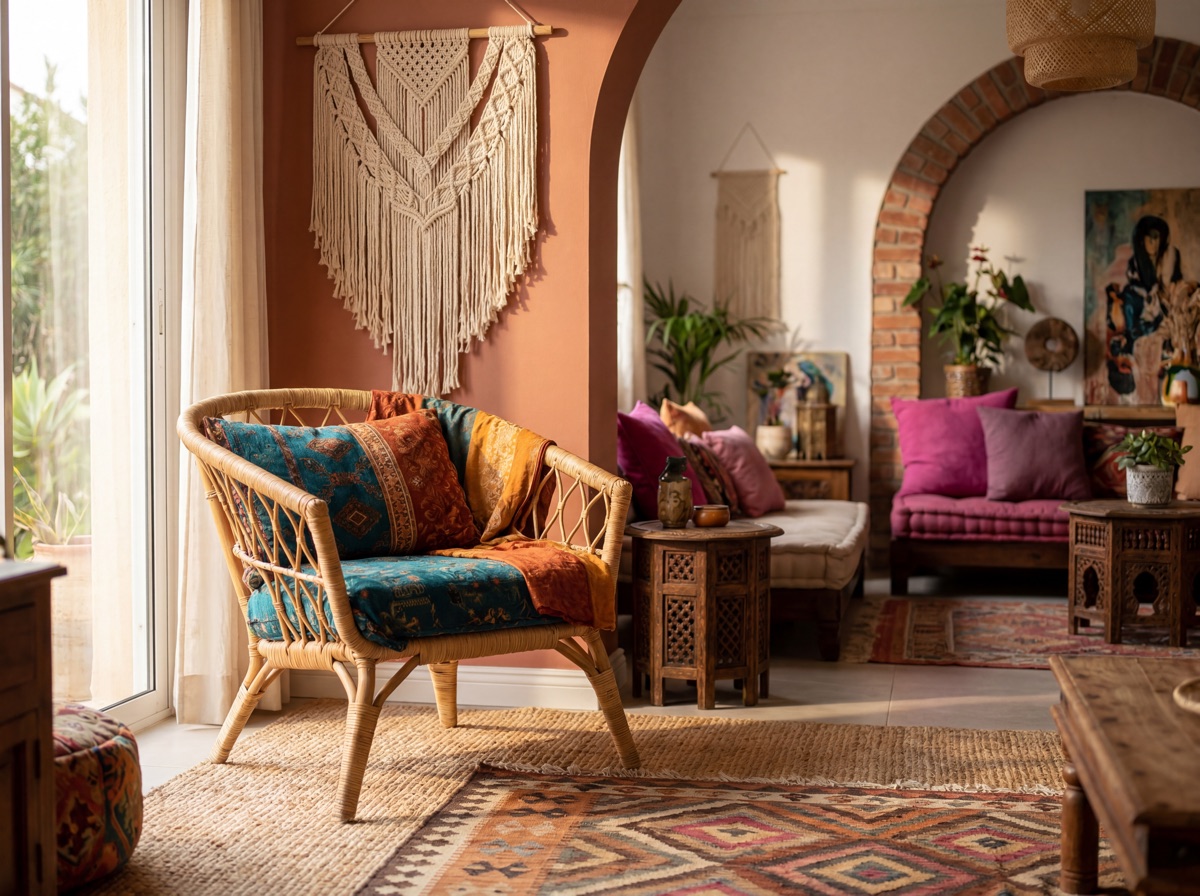
E2 Receipt - Natural Material Core
Plant Statement Layer · $179.96
Plants in bohemian design function as a visual layer rather than a biophilic intervention -- the distinction matters for sourcing decisions. Bohemian plants are chosen for architectural drama (monstera deliciosa for bold leaf form and scale), for height variation (the rattan tiered plant stand creates three planting levels in the footprint of one), and for the terracotta pot system that ties all plants into the warm earth tone palette established in the textile foundation layer. The macrame plant hanger set introduces plants at eye level and ceiling level -- a vertical plant composition above the rattan chair is one of bohemian design's most distinctive configurations, referenced in both the Design Insider YouTube guide and Apartment Therapy's boho sourcing features. The terracotta pot set is not an accent object in bohemian design -- it is a palette tool. A set of five unglazed terracotta pots in graduated sizes, placed across multiple rooms and surfaces, creates color continuity that ties the plant layer to the global accent collection in Element 4. The result: plants do not feel added; they feel native to the room's material logic.
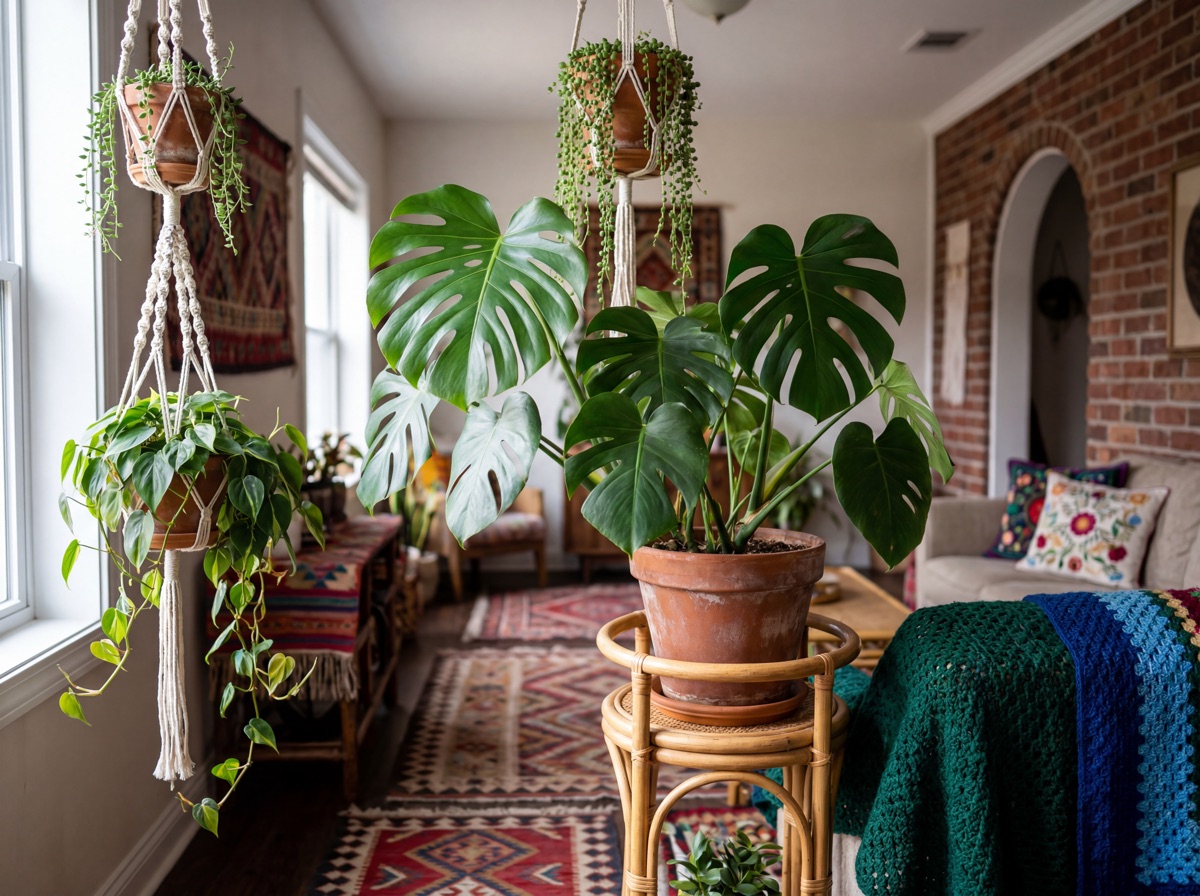
E3 Receipt - Plant Statement Layer
The Global Accent Collection · $149.96
The global accent collection is the layer that most directly references bohemian design's origin: the 19th-century artists whose rooms were filled with objects sourced from Moroccan markets, Turkish bazaars, and Indian artisan workshops. In contemporary bohemian design, these objects are available at accessible price points without international travel. The sourcing hierarchy for the global accent layer: thrift first (estate sales and consignment shops reliably yield authentic kilim-patterned pillows, hammered brass vessels, and carved wood objects at 20-40% of retail), Anthropologie and similar retailers second, Amazon third for baseline pieces while hunting for better alternatives. The brass hammered vase set is the highest-impact single purchase in this element: brass reads as globally-sourced regardless of its actual origin, it reflects warm light in a way that reinforces the earth tone warmth of the textile and terracotta layer, and a set of two provides the visual grouping that decorators call a vignette -- a small curated arrangement that reads as intentional from across the room. The carved mango wood bowl reinforces the global artisan narrative, and the woven seagrass baskets introduce a third fiber texture at storage scale.
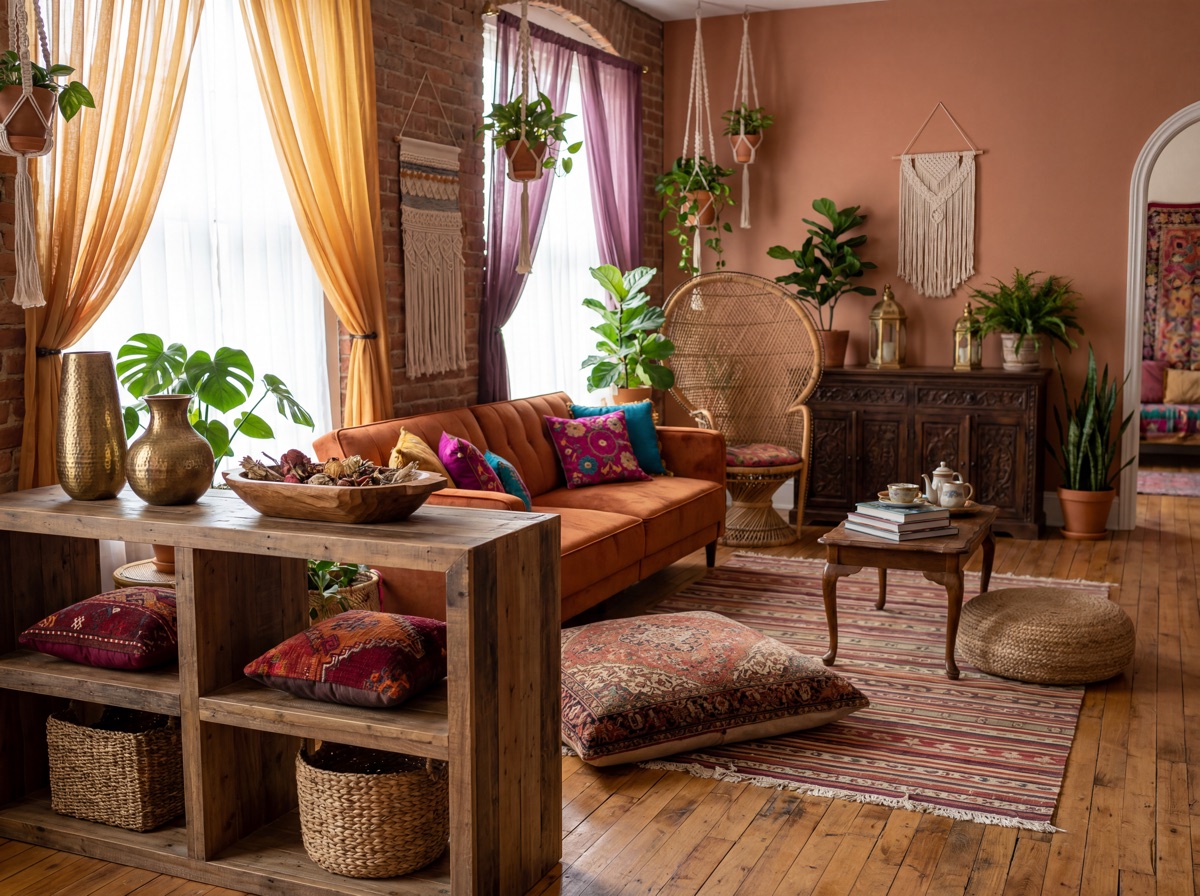
E4 Receipt - The Global Accent Collection
The Wall Composition · $199.97
The wall composition is the last layer added and the one that most clearly distinguishes an advanced bohemian room from an entry-level one. It is applied last for a specific reason: the gallery wall and macrame anchor respond to the colors, materials, and scale of the four layers below them -- they do not set those parameters. A gallery wall in a bohemian room is not an art installation. It is a curated collection of mixed-scale frames, botanical prints, and handcrafted elements that reference the global, natural, and layered materials already present in the room. The gallery wall frame set provides the structural grid; the botanical print set provides visual content that bridges the plant layer (Element 3) and the wall composition. The large macrame wall hanging above or adjacent to the gallery wall introduces a vertical fiber anchor that is specifically bohemian -- no other style uses a macrame piece at this scale and placement as a primary wall element. The wall composition is also where the 20% edit rule is most critical: a gallery wall with 8 pieces at proper spacing reads as curated; the same 8 pieces squeezed together reads as covered. After hanging, step back six feet and remove anything that makes your eye stop for the wrong reason.
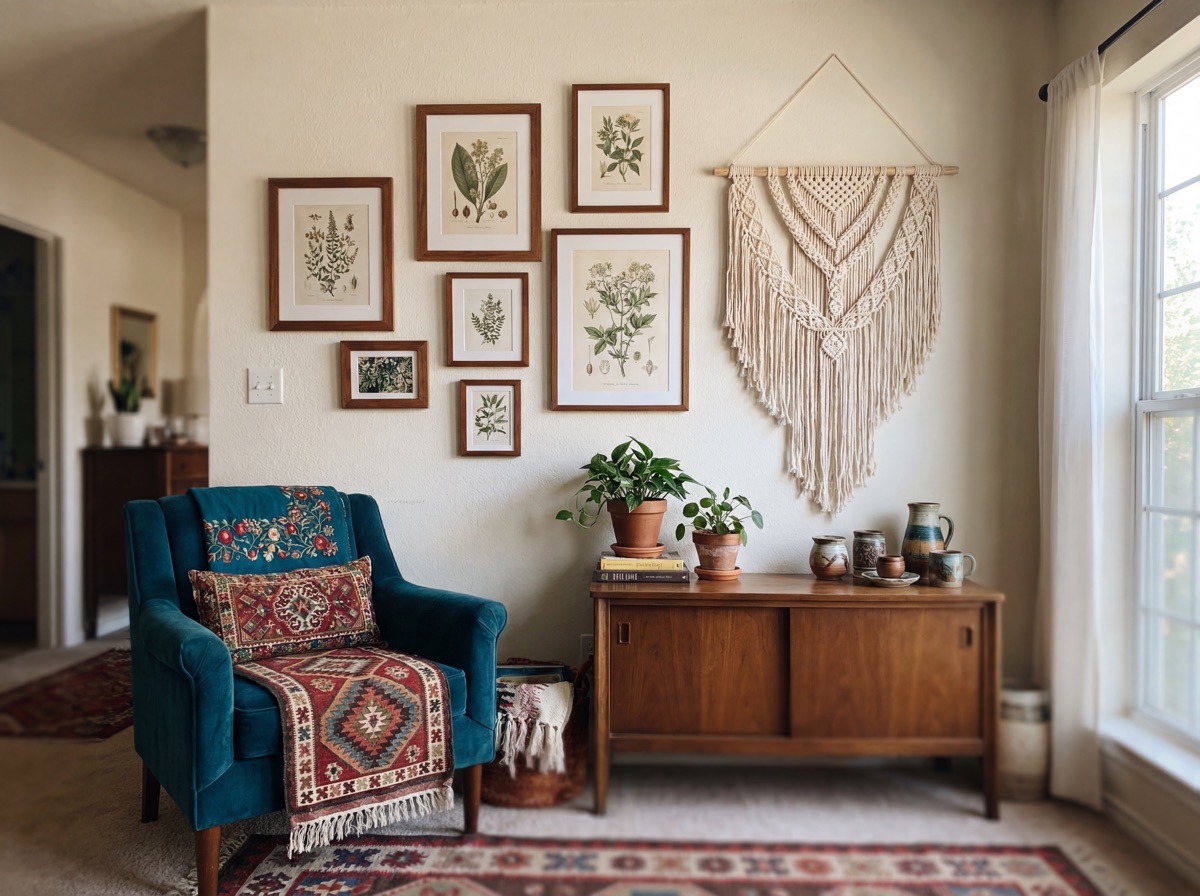
E5 Receipt - The Wall Composition
Bohemian vs. Eclectic.
Both styles accept pattern mixing, global influences, and layered objects -- which is why they are so frequently confused. The distinction is source logic. Bohemian draws specifically from the global textile and artisan tradition: kilim, macrame, rattan, brass, carved wood, terracotta. Eclectic has no single tradition; it samples freely from any era or culture. A bohemian room is identifiable by its materials alone. An eclectic room is not.
| Dimension | Bohemian Interior Design | Eclectic Interior Design |
|---|---|---|
| Source logic | Draws from global textile and artisan cultures: kilim, macrame, rattan, brass, carved wood, terracotta | Samples freely from any era, style, or culture -- no single tradition, driven by curation alone |
| Identifiability | Identifiable by materials alone: rattan + kilim + macrame = bohemian without any other context | Identified only by the feel of intentional curation -- no material set makes a room eclectic |
| Pattern mixing rule | Unify through one color thread; vary scale; anchor patterned surfaces with adjacent solids | Broader tolerance -- the unifying principle can be period, silhouette, or mood rather than color |
| Furniture sourcing | Thrift for kilim/brass/carved wood + IKEA neutral base + artisan sources for macrame/rattan | No sourcing constraint -- vintage, high-end designer, and flat-pack can coexist |
| Living plants | Essential -- bohemian rooms without plants read as incomplete; terracotta pots are palette, not decor | Optional -- eclectic rooms may have plants or not; no palette logic depends on terracotta |
| The 20% edit rule | Critical discipline -- boho rooms look effortless because editing happened, not because more was added | Edit is important but a fully-loaded eclectic room can succeed where a fully-loaded boho room reads as cluttered |
The $199 entry path.
Four items that establish a bohemian foundation in any room. Built in layering order: floor first, wall second, vertical third, plant fourth.
Frequently asked questions.
What is bohemian interior design?
Bohemian interior design is a layered, globally-inspired style rooted in the 19th-century movement where artists rejected bourgeois aesthetics and built spaces that looked collected over time rather than purchased from a single store. In practice, it is defined by five layers applied in sequence: a neutral textile foundation, natural material core (rattan, macrame, jute), a plant statement layer in terracotta pots, a global accent collection (kilim patterns, brass, carved wood), and a wall composition. The 20% edit rule - removing 20% of styled items after layering - is what separates a curated boho room from a chaotic one.
What colors are used in bohemian interior design?
Bohemian design uses a warm palette in three tiers. The foundation is warm neutrals: cream, warm white, oat, warm sand - the base that makes pattern mixing readable. The mid-tone tier draws from global textile traditions: terracotta, rust, warm ochre, mustard yellow, paprika, earthy burgundy. The accent tier introduces deeper tones: forest green, cobalt, deep teal, warm purple - typically in one pillow or ceramic vase. The rule: identify one unifying color thread running through all pattern choices. Pattern scale matters as much as color: small geometric + large botanical + organic texture creates rhythm without visual conflict.
How do I mix patterns in bohemian interior design?
Three rules. Rule 1: vary scale - never mix two patterns of the same scale in the same visual field. Rule 2: unify through color - every pattern should share at least one color with the others. Rule 3: anchor with solids - every patterned surface needs an adjacent solid as a visual resting point. The 20% edit rule applies directly: after styling, identify the pattern fighting the others and remove it. Boho rooms look effortless because editing happened, not because more was added.
What is the difference between bohemian and eclectic interior design?
Both accept pattern mixing and layered objects, but the distinction is source logic. Bohemian draws from 19th-century global artisan traditions: kilim rugs, macrame, rattan, brass hammered vessels, carved mango wood. A bohemian room is identifiable from its materials alone. Eclectic has no single tradition - it samples freely from any era or culture. An eclectic room with bohemian elements is not a bohemian room. The practical test: can you identify the style from a photo showing only the materials? Bohemian yes; eclectic no.
Can bohemian interior design work in a small apartment?
Yes - bohemian design scales to small apartments because its primary resource is layering strategy, not square footage. Execute vertically: macrame at ceiling height, rattan planter at eye level, gallery wall above the sofa, jute rug at floor scale. The 20% edit rule must be applied more aggressively in small spaces. The $199 entry path - terracotta pots, jute rug, macrame, two plants - is sized specifically for small apartments. Build the foundation, then add layers sequentially, applying the edit rule after each addition.
Want yours next?
One issue every Sunday. We'll plan your room with your city + salary.