New Scandinavian guide series, pillar + 15 deep-dive cluster posts · Free Scandinavian color palette card, download below · Real apartment sourcing, real budget tiers, real renter angles · New Scandinavian guide series, pillar + 15 deep-dive cluster posts · Free Scandinavian color palette card, download below · Real apartment sourcing, real budget tiers, real renter angles ·

This post contains affiliate links. If you purchase through our links, we earn a small commission at no extra cost to you.

Scandinavian · Cluster Guide

What Is Japandi? (And How It's Different from Scandinavian)

A side-by-side split composition showing a Scandinavian living room on the left in warm off-white and pale oak with linen sofa, and a Japandi living room on the right with darker walnut and cooler greige tones with wabi-sabi ceramics

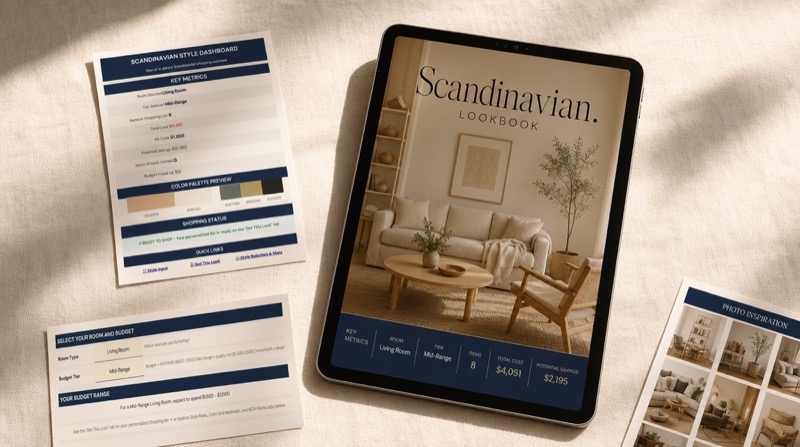
The most-upvoted Scandinavian-vs-Japandi clarification on Reddit is one comment with 167 upvotes that nails the whole distinction in one sentence: "Coastal Scandinavian. Definitely NOT japandi because it lacks organic shapes, tonal earthy colors, and the imperfection of wabi sabi." That's the fastest Japandi definition anyone has ever written. This cluster is the full comparison, what Japandi actually is, where it came from, how it differs from Scandinavian in palette, materials, silhouette, and philosophy, and how to tell them apart in under 10 seconds when you're scrolling Pinterest. For the full Scandinavian style context, our Complete Scandinavian Interior Design Guide covers the parent style end to end.

What Japandi Actually Is

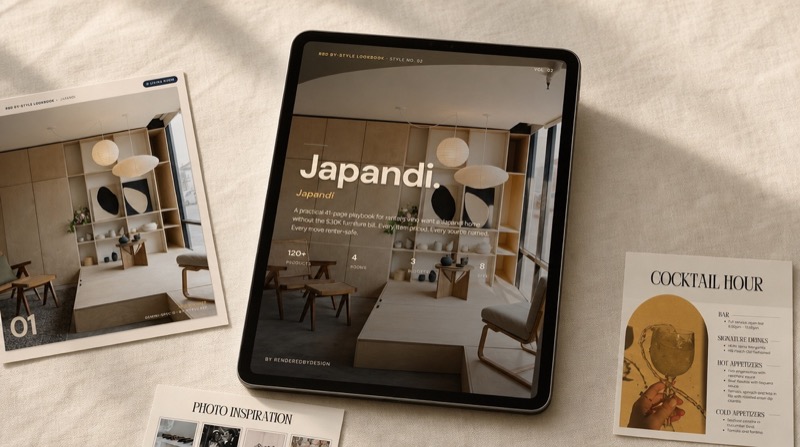
Japandi is a hybrid interior design style that combines Scandinavian functionalism with Japanese wabi-sabi, the aesthetic philosophy that embraces imperfection, impermanence, and incompleteness. The term was coined around 2016 by interior designers looking for a name for the growing convergence between Nordic minimalism and traditional Japanese design, and it exploded on Pinterest between 2018 and 2020. By 2024 Japandi had 18,100 monthly U.S. Google searches, roughly three times the volume of "scandinavian interior design", which tells you how quickly it overtook its parent in the search share.

The cultural logic of the combination isn't arbitrary. Scandinavian and Japanese design both descend from traditions that prize craftsmanship, natural materials, minimal ornament, and a reverence for light and space. Where they diverge is in temperature and imperfection. Scandinavian is warm and symmetrical; Japanese (and therefore Japandi) is cooler, earthier, and actively embraces the asymmetric and the worn. A pristine Wegner Wishbone chair is Scandinavian; a slightly weather-worn walnut stool with a chipped edge and a hand-thrown ceramic bowl next to it is Japandi.

The Seven Rules of Japandi Home Style

PAA data shows "what are the 7 rules of Japandi home style?" is one of the top FAQ queries around the style. The common rule set, assembled across Japandi blog posts and Pinterest guides, looks like this:

  1. Natural materials, always. Wood (darker walnuts and walnut-stained oak), stone, linen, cotton, wool, paper.
  2. Low-profile furniture. Beds, sofas, and seating sit lower to the ground than their Scandinavian equivalents, the Japanese influence.
  3. Neutral palette with more depth. Cooler greige, warm beige, walnut, matte black. More contrast between light and dark than Scandinavian.
  4. Negative space as a feature. Empty surfaces are not unfinished, they're the design. Japanese ma (interval/space) applied to Western rooms.
  5. Wabi-sabi imperfection. Hand-thrown ceramics, visible wood grain, linen that looks used, natural irregularities embraced rather than hidden.
  6. Functionalism first. The Scandinavian contribution, every piece earns its place through use.
  7. Craftsmanship and singular objects. Fewer objects, each one hand-made or hand-selected, each one meaningful. The opposite of decorative abundance.

Note that rules 1, 6, and 7 overlap entirely with Scandinavian. The actual differences are rules 2, 3, 4, and 5.

Japandi vs Scandinavian, The Side-by-Side

Element Scandinavian Japandi
Primary wood Pale oak, ash, birch Walnut, dark-stained oak, walnut-veneer
Wall color Warm off-white (#F6F2ED) Cooler greige or warm beige
Palette temperature Warm Cooler, earthier
Furniture silhouette Tapered legs, visible under furniture, mid-height Low-profile, close to the floor
Pattern Rare, geometric when used Essentially none, pattern is texture
Ceramics Clean, matte, symmetrical Hand-thrown, irregular, wabi-sabi
Textile feel Linen, wool, sheepskin, soft layered Linen and cotton, fewer layers, rougher weaves
Lighting Plural warm table lamps, tripod floor lamp Paper lanterns, low-hanging pendants, rice-paper shades
Typical origin pieces Wegner Wishbone, Jacobsen Egg, PH 5 pendant George Nakashima tables, Ariake Collection, noguchi-adjacent
Mood Warm, cozy, uncluttered Calm, meditative, deliberately spare

The shortest way to tell them apart: Scandinavian rooms feel cozy and warm; Japandi rooms feel still and quiet.

The Most Common Confusion

The reason so many American shoppers blur the two is that both show up on the same Pinterest moodboards. If you search "minimalist apartment" on Pinterest, you'll get a mix of both, and they share enough DNA (light wood, neutral palette, uncluttered space) that they read as the same style at first glance.

The Reddit tut3ef thread has another instructive comment with 97 upvotes, "Gentrification Japandi farmhouse.", where a commenter is mocking a style that blurs Japandi, Scandinavian, and Modern Farmhouse into a single commercially-safe aesthetic. That blur is real, and it's what competitor blog content sells as "Scandinavian" without committing to any actual style discipline. A legitimate Scandinavian room has warmer wood and more textile layering than Japandi; a legitimate Japandi room has darker wood and more space than Scandinavian. The blur in between isn't either style, it's generic.

Which Should You Pick?

The fastest decision tree:

If you genuinely can't decide, most interior designers recommend picking Scandinavian first, it's more forgiving of mistakes, more commercially available at the budget tier, and it's easier to shift toward Japandi later (by adding a walnut piece or two) than it is to shift from Japandi back to Scandinavian.

Can You Mix Them?

Yes, carefully. A Scandinavian base room with one walnut accent piece (a small side table, a pair of walnut-framed picture frames) reads as deliberately warmed-toward-Japandi without losing Scandinavian identity. A Japandi base room with one Wegner Wishbone chair in pale oak reads as Japandi warmed-toward-Scandinavian. The key is one element crossing the line, not three or four. Mix beyond one accent and you're back in the "gentrification Japandi farmhouse" zone.

Get notified when the Scandinavian Lookbook launches
Plus grab the free Scandinavian palette card now

Shop the Comparison

Ten pieces that show up across both styles, the shared canon, plus the ones that belong to only one. Useful if you're still deciding between them.

Product
Coming at launch
Affiliate link pending
Product
Coming at launch
Affiliate link pending
Product
Coming at launch
Affiliate link pending
Product
Coming at launch
Affiliate link pending
Product
Coming at launch
Affiliate link pending
Product
Coming at launch
Affiliate link pending
Product
Coming at launch
Affiliate link pending
Product
Coming at launch
Affiliate link pending
Product
Coming at launch
Affiliate link pending
Product
Coming at launch
Affiliate link pending

See Also

Frequently Asked Questions

What is the concept of Japandi?

Japandi is a hybrid interior design style combining Scandinavian functionalism with Japanese wabi-sabi, the aesthetic philosophy that embraces imperfection, impermanence, and incompleteness. It emerged around 2016 and peaked on Pinterest 2018-2020.

Is Japandi still trendy?

Yes, as of 2026, Japandi search volume (18,100/month U.S.) is about three times higher than "scandinavian interior design" (6,600/month). The style has moved from trending to established.

What are the 7 rules of Japandi home style?

Natural materials (wood, stone, linen); low-profile furniture close to the floor; a neutral palette with cooler greige and walnut; negative space as a feature; wabi-sabi imperfection; functionalism first; craftsmanship and singular objects.

What's the difference between Scandinavian and Japandi?

Scandinavian uses pale oak, warmer whites, and more textile layering; Japandi uses walnut, cooler greige, and more negative space. Scandinavian feels cozy and warm; Japandi feels calm and meditative. Reddit puts it bluntly: Japandi requires "organic shapes, tonal earthy colors, and the imperfection of wabi sabi."

Can you mix Scandinavian and Japandi?

Yes, but only with one crossover element, a single walnut accent in a Scandinavian base room, or one pale oak Wishbone chair in a Japandi base room. Mixing more than one element blurs the styles into "gentrification Japandi farmhouse" territory.

Back to the Pillar

For the full Scandinavian style in context, palette, history, room-by-room, common mistakes, loop back to the Complete Scandinavian Interior Design Guide.

Free download: Scandinavian palette card

RenderedbyDesign is a participant in affiliate programs including Amazon Associates and others. Links on this page may earn us a commission at no extra cost to you. We only recommend products we'd put in our own apartments.