Table of Contents
The Italian countryside blueprint.
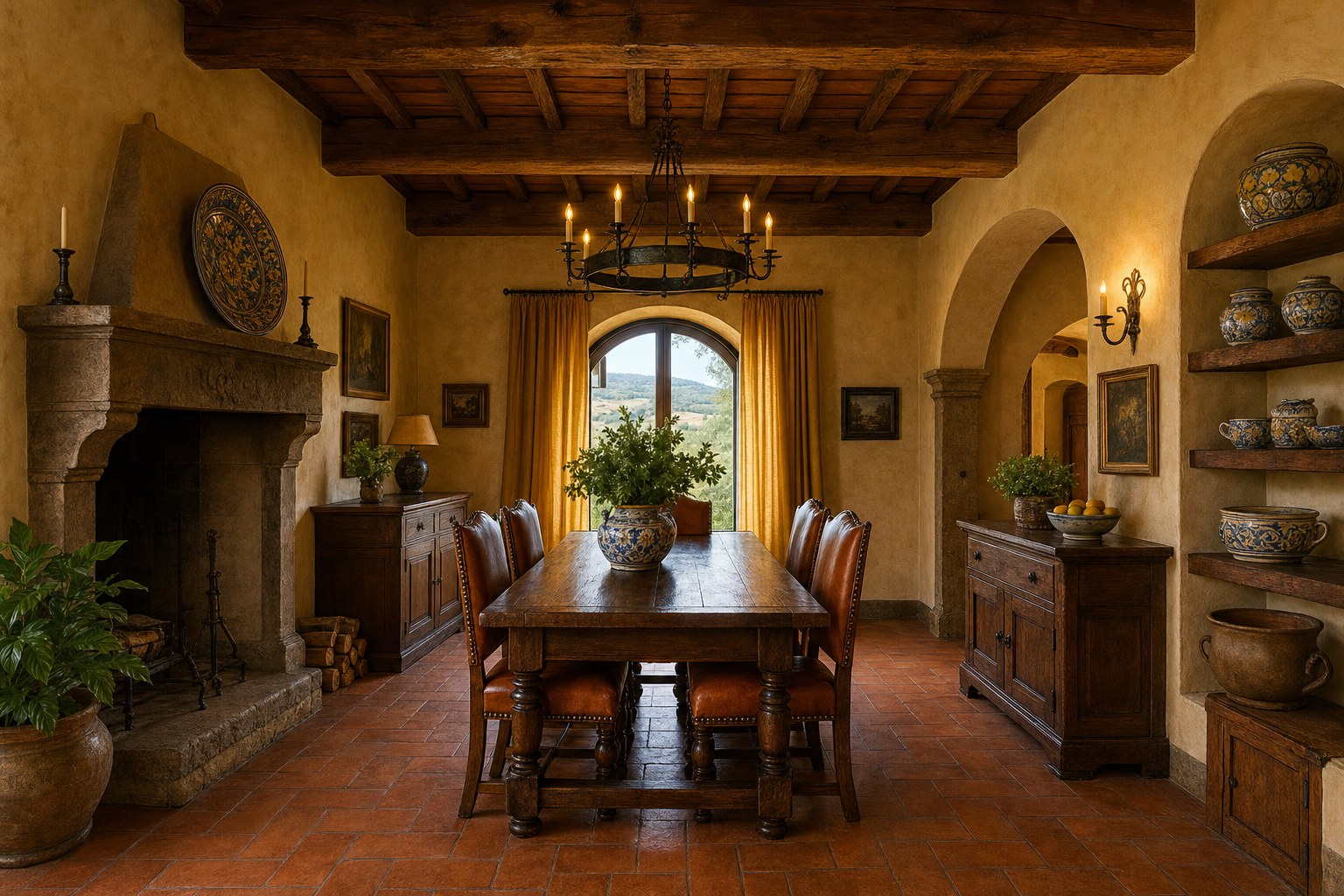
Tuscan interior design is not a theme. It is a material logic derived from a specific place: the stone farmhouses, terracotta-roofed villages, vineyard estates, and olive grove kitchens of the Italian region between Florence, Siena, and Arezzo. Every element in an authentic Tuscan interior has a direct reference in that landscape. The terracotta tile floor mirrors the rooftops of Impruneta, the hill town near Florence whose clay deposits have supplied the world's finest fired terracotta since the Roman period. The wrought iron chandelier is the interior version of the hand-forged ironwork on Tuscan balconies and garden gates. The carved walnut dining table reflects the tradition of Italian furniture makers in the Chianti region who built tables intended to last three generations. The majolica ceramics on the open shelf are from the centuries-old painted pottery workshops of Deruta, whose artisans hand-paint each piece with grapes, olive branches, and vine tendrils in cobalt blue, warm ochre, and terracotta.
The style's current revival is driven by two forces. One is nostalgia. The 12,770-upvote thread on 2000s Tuscan homes reveals the core emotional signal: "Tuscan was the last style that made a house feel like a HOUSE" and "My parents had Tuscan and I hated it at 16. Now I want it back." The second force is a design-culture correction. A decade of grey-and-white minimalism created warmth deprivation. The Tuscan material kit is precise: stucco and stone for walls, terracotta tiles for roofs, wood timbers for architectural detailing, and wrought iron as a defining trademark. Tuscan style understood structural warmth before the concept had a name. The terracotta-wrought iron-carved wood trinity is not decoration layered onto a room - it is the room's structural identity, built into the floor, the ceiling, and the primary piece of furniture before a single ceramic or textile arrives.
The five elements below build the Tuscan room in the order that prevents the look from tipping into a theme-park Italian restaurant. The terracotta floor layer - or its accessible equivalent in terracotta-toned area rug and tiles - arrives first, because every other material decision responds to the floor's color temperature. The wrought iron light fixture comes second, establishing the metalwork character of the room. The rustic carved wood dining table or console arrives third as the primary furniture anchor. The majolica pottery collection builds the decorative story on the open shelf or kitchen wall. The drapery in linen or velvet gold closes the room's warmth envelope last. In that order, the room reads as the Italian countryside. Out of that order, it risks becoming a collection of Tuscan-coded objects without a cohesive identity.
Terracotta Floor Layer · $139.97
The terracotta floor is the non-negotiable foundation of Tuscan style. It is not one element among many but the material from which every other decision radiates. Terracotta tiles with worn edges "tell tales of generations past," and the best examples are the unglazed, handmade tiles from Impruneta, near Florence, whose clay produces the warm salmon-to-brick color range that defines the Tuscan interior floor. For renters or those who cannot tile, the entry-level approach builds the terracotta material story in three accessible layers: a large terracotta-toned sisal or jute area rug (which provides the warm clay color at floor level without permanent installation), terracotta stone tile coasters or trivets arranged as a vignette on the dining table or coffee table (which introduces the authentic fired-clay material at accessory scale), and a set of unglazed terracotta plant pots grouped in a floor cluster (which reinforces the color at the room's perimeter and introduces the natural material directly). Terracotta is the first and most important signal in the Tuscan room: terracotta, warm ochre, and aged stone. That is the Tuscan trinity. The warm clay color sets the floor's temperature, and the wrought iron and carved wood elements above it respond to that warmth rather than working against it.
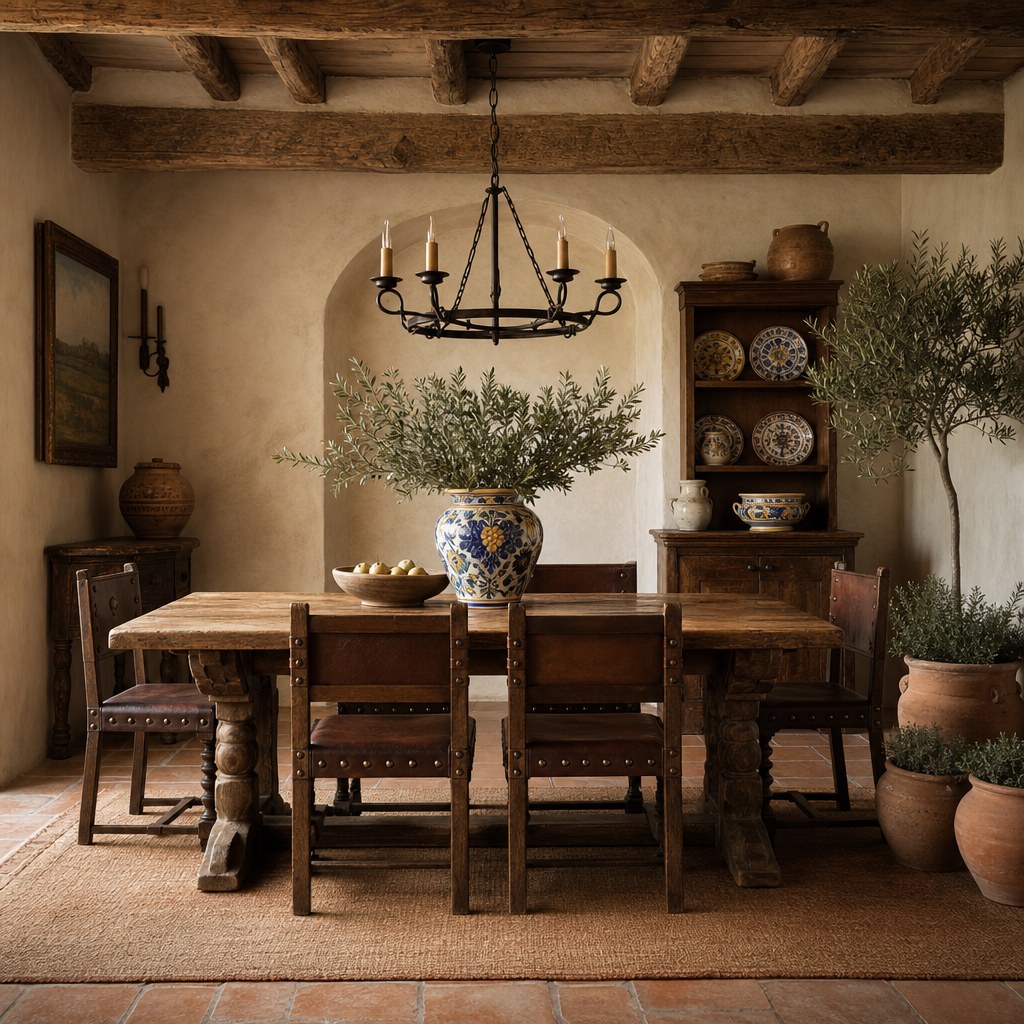
E1 Receipt - Terracotta Floor Layer
Wrought Iron Chandelier · $229.99
Wrought iron is the Tuscan room's metalwork signature. And its most historically grounded material choice. Hand-forged iron appeared in Tuscan architecture as window grills, balcony railings, garden gates, pot racks, and candle-holders before it appeared in interior lighting, and the chandelier brings that exterior craft language into the heart of the dining room or kitchen. The canonical Tuscan wrought iron chandelier is a ring or multi-arm form in flat matte black or dark bronze, with candle-style bulb sockets arranged to mimic the original candle-ring chandeliers that hung in Italian villa dining rooms. Warm ambient lighting from wrought iron chandeliers is one of the five defining Tuscan interior elements alongside limestone floors, exposed beam ceilings, heavy solid wood furniture, and plush seating in natural fabrics. The wall sconces pair with the chandelier to create the warm layered lighting that Tuscan interiors depend on. A single overhead source never achieves the amber-pool ambience that two or three wrought iron fixtures produce together. Both pieces should use warm-toned Edison or amber bulbs at 2700K or lower to preserve the candlelit effect that makes the terracotta floor and carved wood surfaces glow rather than flatten.
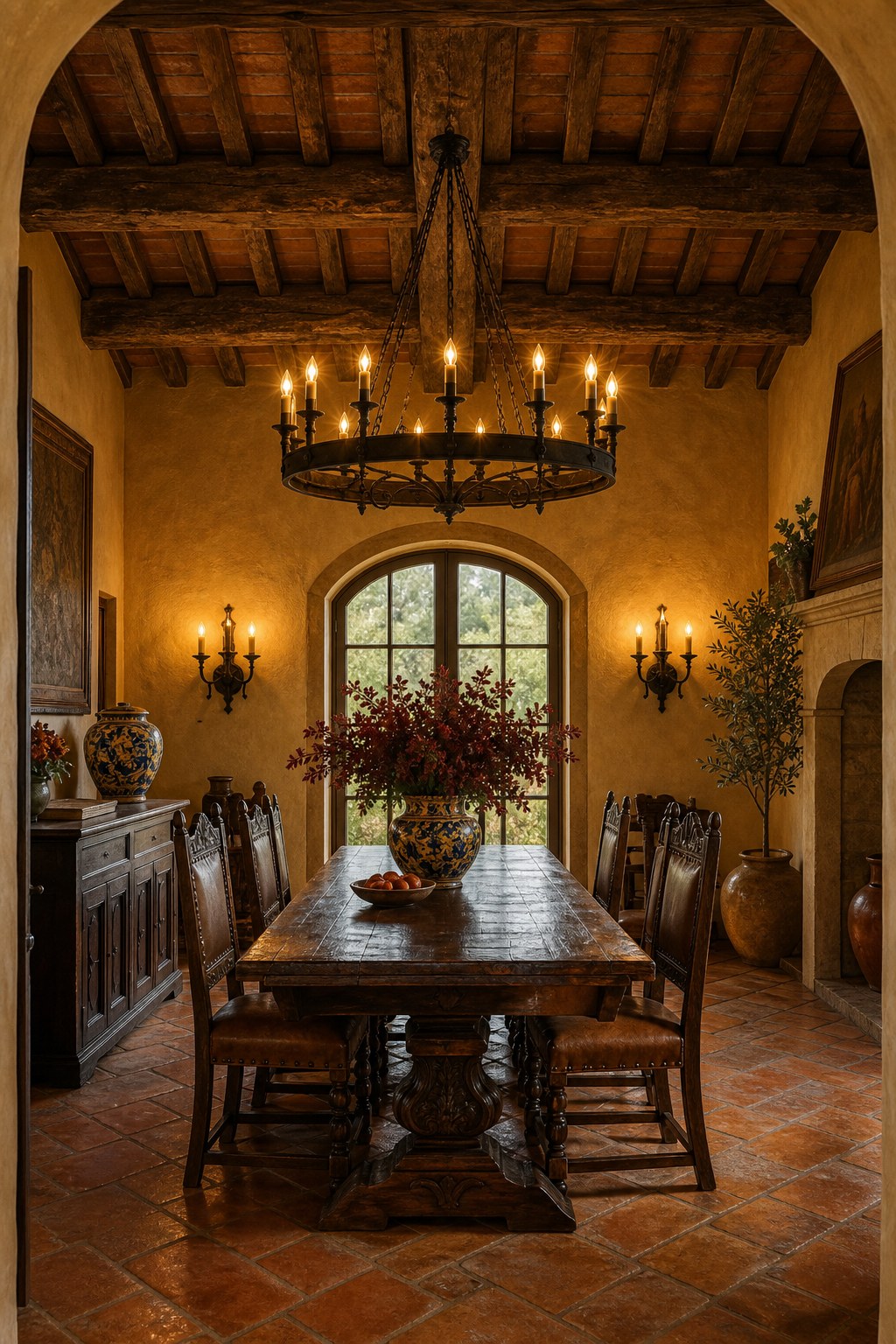
E2 Receipt - Wrought Iron Chandelier
Rustic Wood Dining Table · $389.99
Tuscan furniture centers on substance and simplicity. Distressed wood finishes and a comfortable, lived-in aesthetic rather than ornate styling for display. The primary furniture piece in a Tuscan room is a heavy solid wood dining table in walnut or chestnut, with turned or carved legs, a deliberately rough-hewn top surface that shows grain and age, and dimensions generous enough to seat six or eight: the Italian countryside tradition of the long communal table, laden with food, olive oil, and wine, is the Tuscan dining table's cultural identity. Tuscan furniture emphasizes substance over ornament, with distressed finishes hinting at a life well-lived rather than pristine perfection. The bench seating that accompanies a heavy Tuscan table is as important as the table itself. Long solid wood benches with carved or turned legs provide the communal seating logic that sets Tuscan dining apart from the individual upholstered-chair format of more formal European styles. The olive wood cutting board or serving plank, a smaller piece, placed on the table or kitchen counter, is the affordable entry into Tuscan's most distinctive material: olive wood, with its wild grain patterns and natural green-grey tones, is the Tuscan equivalent of burl wood in the 70s revival, a natural material that no two pieces share.
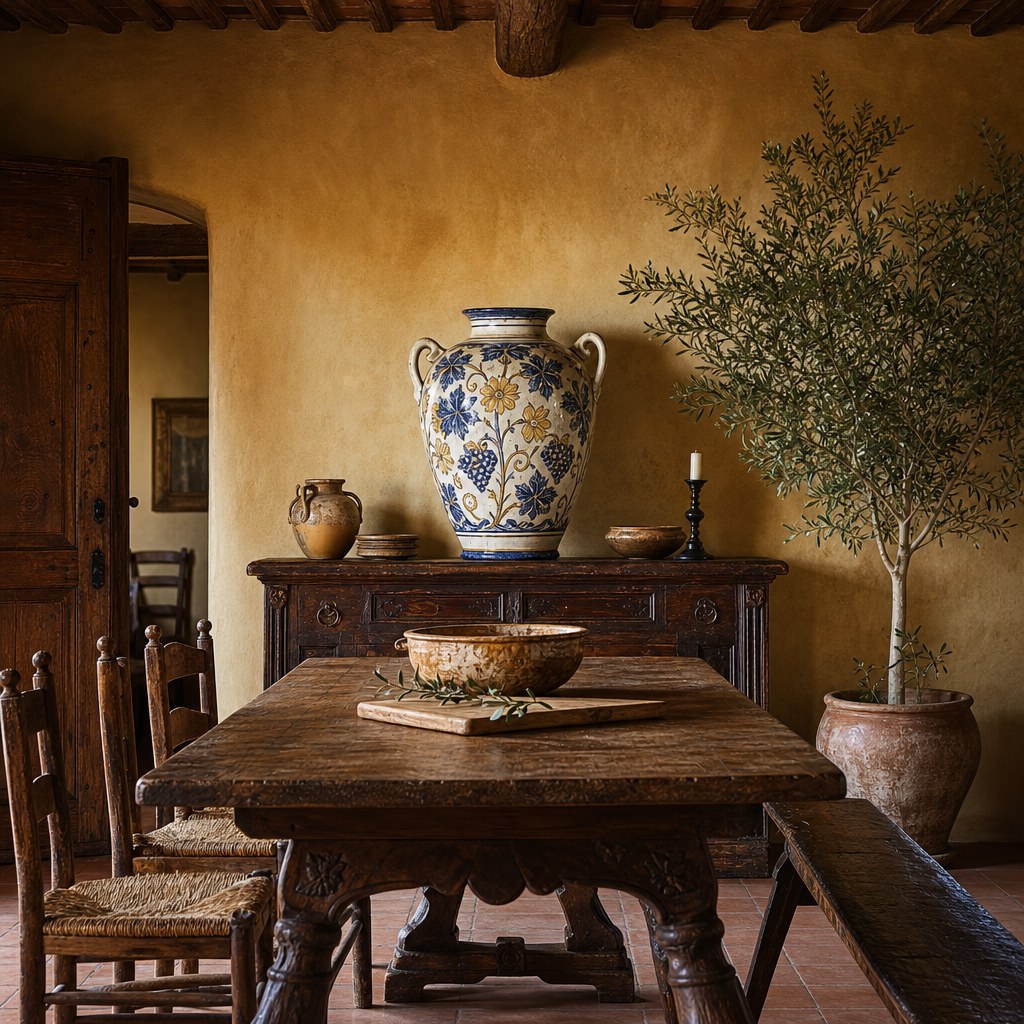
E3 Receipt - Rustic Wood Dining Table
Majolica Pottery Collection · $174.97
Majolica is the decorative element that makes a Tuscan room unmistakably Italian rather than generically Mediterranean or Spanish. It is tin-glazed earthenware with hand-painted decoration, produced in Italy since the Renaissance. The most recognized center is Deruta, a small Umbrian hill town whose workshops have painted ceramic continuously since the 15th century. The canonical Deruta motifs are grapes, olive branches, roosters, geometric vine scrollwork, and the blue-and-white rooster pattern (il gallo) that appears on kitchen tiles, serving platters, and decorative vases throughout the Tuscany and Umbria regions. In a Tuscan-inspired room, majolica appears in three strategic locations: the wall-plate cluster (three to five decorative plates hung on the kitchen or dining room wall, overlapping in a loose arrangement), the vase moment (a single large hand-painted Italian ceramic vase on the open shelf or sideboard), and the tableware set (majolica-style dinner plates, bowls, or serving vessels on the dining table or in open kitchen shelving). The decorative wall plate cluster is the fastest Tuscan signal in the kitchen. Arched doorways, wrought iron, and hand-painted ceramics are the three shortcuts to Tuscan in a non-Tuscan house, and the plate cluster is the one achievable at the lowest cost and zero structural work.
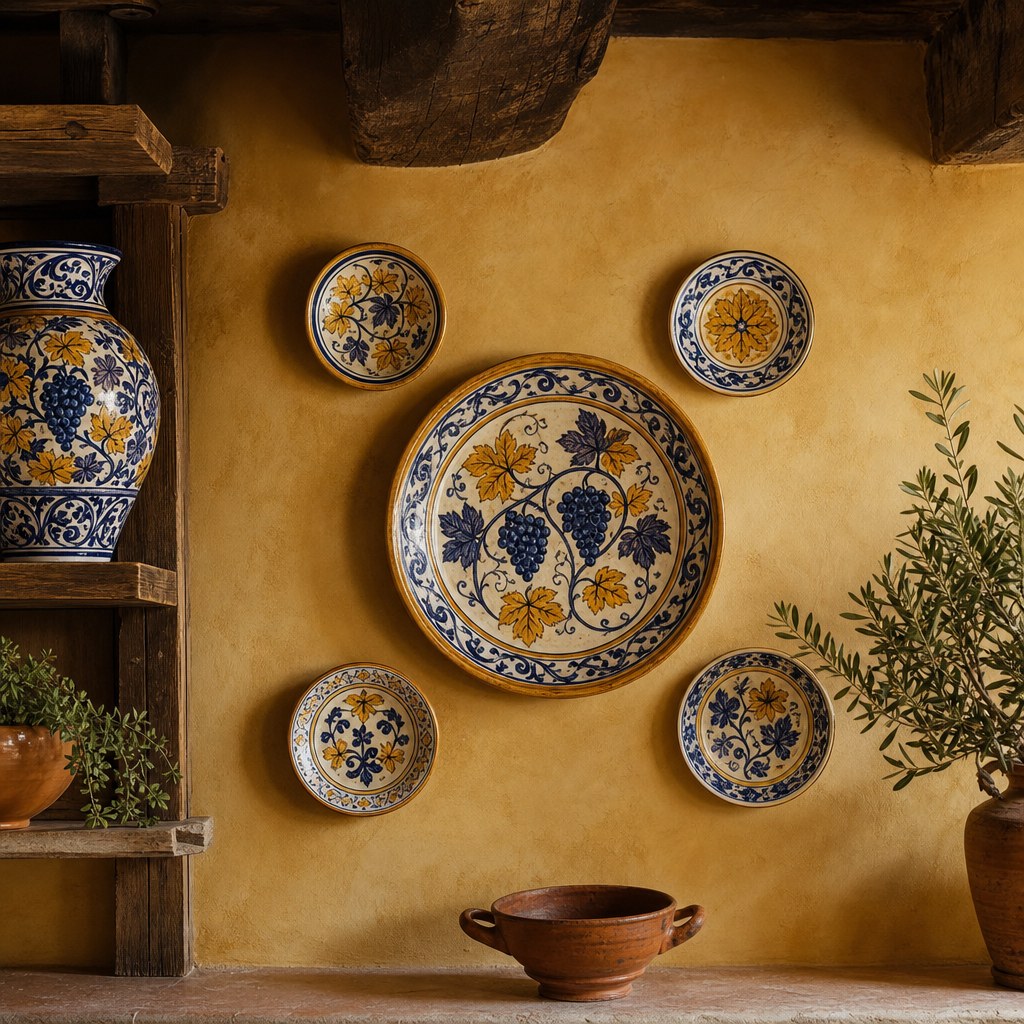
E4 Receipt - Majolica Pottery Collection
Linen or Velvet Drapery · $352.98
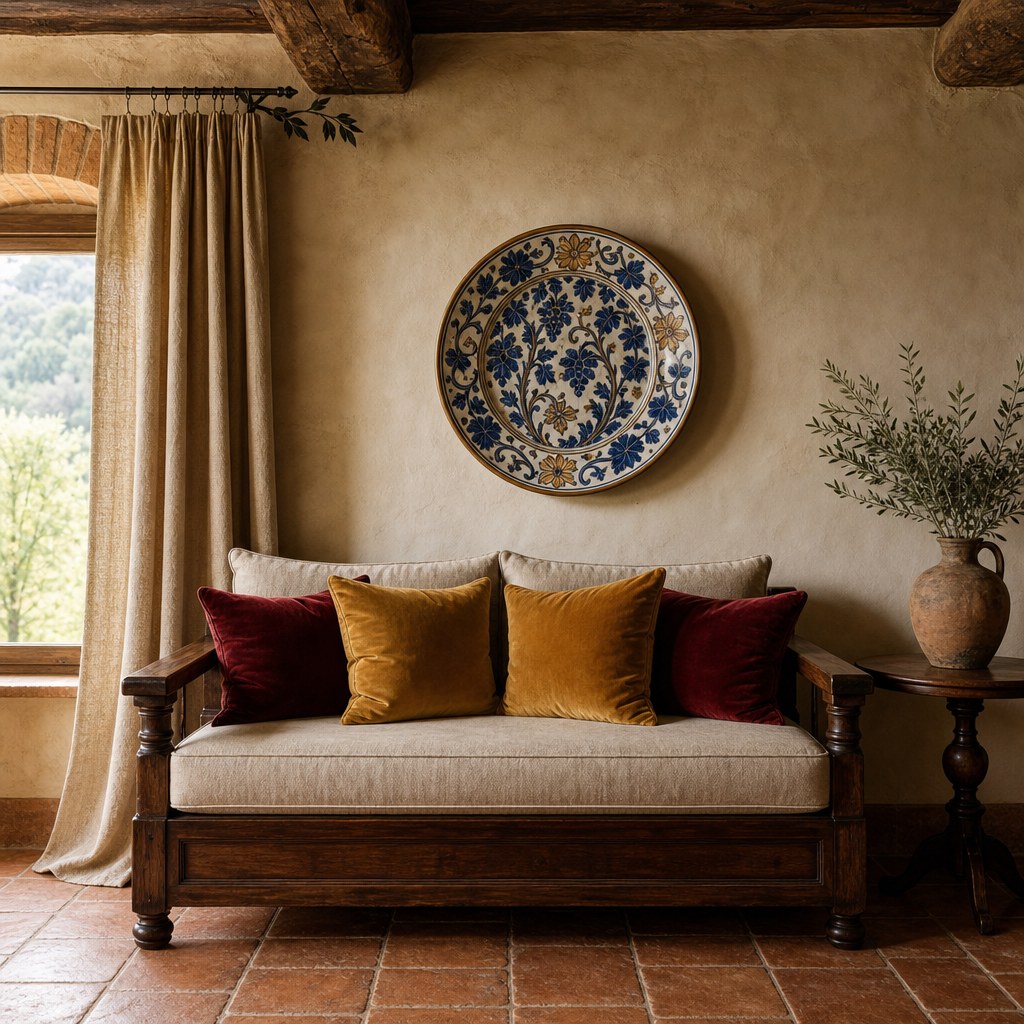
The drapery layer is added last because it responds to the warmth story established by the floor, the metalwork, the wood, and the ceramics. And it is the element that closes the room's thermal envelope. Tuscan drapery runs in two authentic colorways: natural linen in sand, oat, or warm ivory (which reads as the undyed fabric hanging in a Tuscan farmhouse before the harvest, unassuming and warm), and velvet in gold ochre or deep burgundy-wine (which reads as the richer, more formal textile of the Italian villa's piano nobile, heavy and warm-light-catching). Both are period-accurate; the choice is a function of the room's formality level. Linen drapery in a Tuscan kitchen or living room; velvet in a dining room or bedroom. The drapery rod is as important as the fabric: a forged iron or aged bronze curtain rod with scrollwork or leaf-motif finials continues the wrought iron metalwork story that the chandelier and sconces established, creating a consistent metal language from ceiling to window. The throw pillow covers in gold and wine complete the textile layer: linen throw covers in ochre or terracotta on the sofa reinforce the palette at seating height and provide the tactile warmth that Tuscan interiors depend on.
E5 Receipt - Linen or Velvet Drapery
Tuscan vs. Mediterranean.
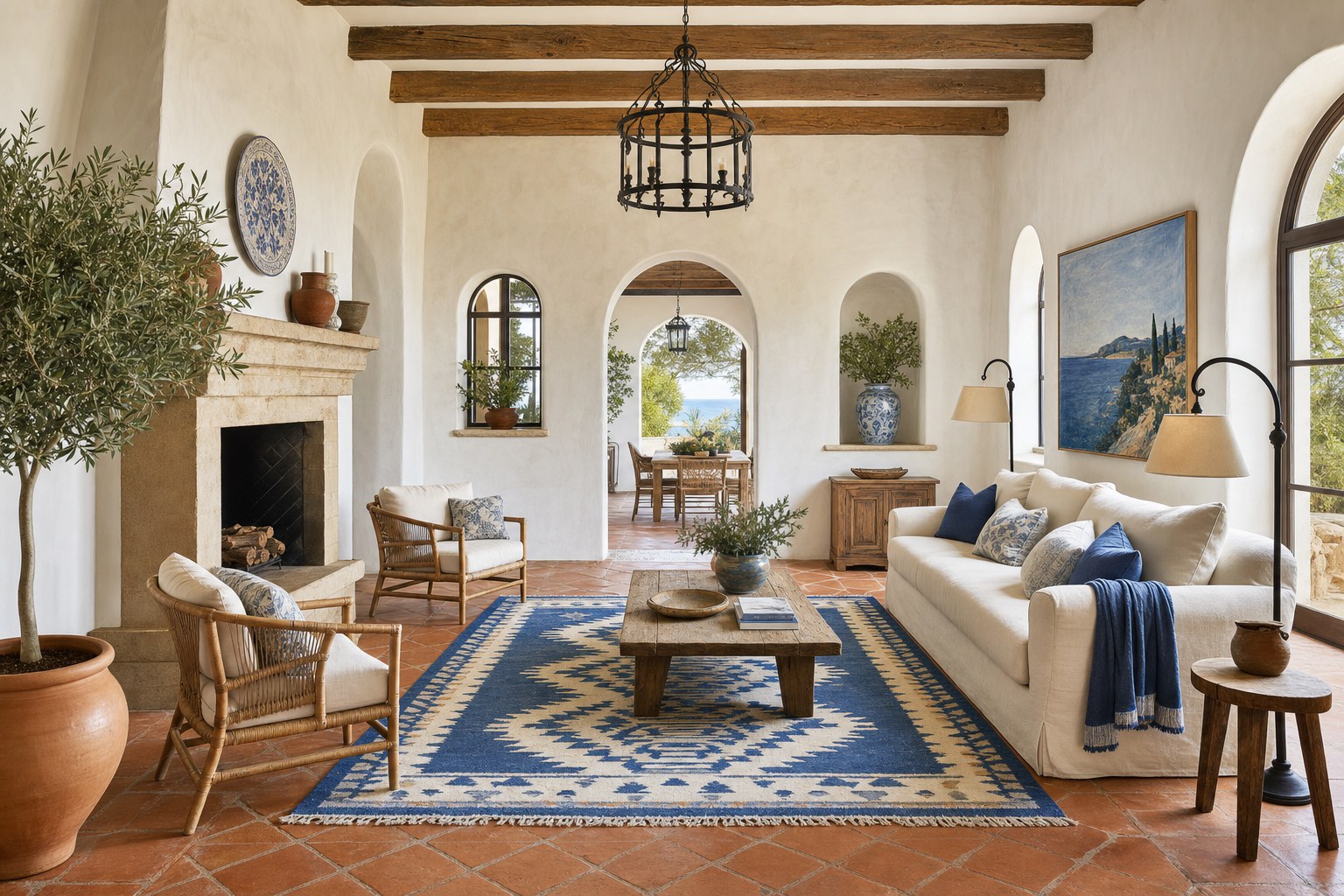
Both styles deploy terracotta tile, warm earthy palettes, and arched architectural details, which is why they appear interchangeable in search results and on Pinterest boards. The distinction is in cultural specificity and material weight. Mediterranean style casts a wide geographic net, Spanish, Greek, Moroccan, and French coastal traditions all contribute, and tends toward lighter, brighter expressions with whitewashed walls and blue accents oriented toward the sea. Tuscan style is specifically Italian and specifically inland: heavier, darker, more forest than coast, built from timber beams and carved walnut and wrought iron rather than whitewash and mosaic. The quickest test: blue accents and white walls point to Mediterranean; carved dark wood and a wrought iron chandelier over a terracotta floor point to Tuscan.
| Dimension | Tuscan Interior Design | Mediterranean Interior Design |
|---|---|---|
| Geographic reference | Inland Italian countryside. Florence, Siena, Chianti wine region; stone farmhouse and vineyard estate | Coastal Mediterranean basin. Spanish, Greek, Moroccan, Southern French influences; seaside villa orientation |
| Wall treatment | Warm plaster in golden ochre, sandy beige, or terracotta, textured surface, sun-faded appearance | Whitewashed or bright white stucco. Clean, bright, reflective of coastal light and sea air |
| Metalwork | Wrought iron. Chandeliers, sconces, pot racks, curtain rods; hand-forged, matte black or dark bronze | Aged bronze, weathered iron, or ceramic; Moroccan lanterns and ornate mosaic accents in some subsets |
| Accent color | Wine red, deep burgundy, gold ochre. The colors of Chianti, aged copper, and Italian frescoes | Cobalt blue, turquoise, sea green. The colors of the Mediterranean sea and Aegean sky |
| Ceramics tradition | Italian majolica. Deruta hand-painted pottery with grape, vine, and rooster motifs in ochre and cobalt | Spanish Talavera, Greek blue-and-white, Moroccan zellige tile, broader regional ceramic tradition |
| The quick test | Wrought iron chandelier + carved walnut table + terracotta floor = Tuscan farmhouse, full stop | White walls + blue accents + open-to-outdoors orientation = Mediterranean coastal villa |
The $139 entry path.
Three items that establish the terracotta floor color story in any room. No tile work, no furniture replacement, no structural changes required.
Frequently asked questions.
What is Tuscan interior design?
Tuscan interior design is a warm, handcraft-forward residential style rooted in the architecture and landscape of the Italian countryside between Florence, Siena, and the Chianti wine region. Its defining characteristics are terracotta tile or stone floors, wrought iron fixtures, heavy rustic wood furniture with carved detailing, hand-painted majolica ceramics, and drapery in gold, burgundy, or natural linen tones. The authentic Tuscan palette runs on ochres, terracottas, burnt siennas, rusty reds, golden yellows, olive greens, and warm chocolaty browns - always with a sun-faded, desaturated appearance rather than high-saturation primaries. The style peaked in American homes during the 2000s and is now experiencing a nostalgia-driven revival - described by those rediscovering it as "the last style that made a house feel like a HOUSE."
What colors define Tuscan interior design?
The Tuscan color palette runs on three tiers drawn from the Italian countryside. The foundation is warm sandy neutrals - cream plaster, aged linen white, warm beige - that serve as the base and make the saturated earthy tones readable. The signature mid-tones are golden ochre (the color of Siena's historic buildings), terracotta red (the color of the clay tile rooftops and floors), burnt sienna, and olive green from the surrounding groves. The accent tier adds wine red, deep burgundy, and aged bronze through drapery textiles, wrought iron metalwork, and ceramics. The critical color rule: Tuscan hues should appear sun-faded and aged rather than fresh and saturated. Tuscan gold reads as ancient honey; Tuscan terracotta reads as worn clay fired over centuries, not fresh-from-the-paint-store orange.
What is majolica pottery and how is it used in Tuscan design?
Majolica is tin-glazed earthenware with hand-painted decoration, produced in Italy since the Renaissance period. The most recognized production center is Deruta, an Umbrian hill town whose workshops have made hand-painted ceramics continuously since the 15th century. The canonical Deruta motifs include grapes, olive branches, roosters, and geometric vine scrollwork painted in cobalt blue, warm ochre, and terracotta. In Tuscan-inspired rooms, majolica appears as decorative wall plates clustered on the kitchen or dining room wall, as a large decorative vase on an open shelf or sideboard, and as serving platters or tableware on the dining table. The decorative plate cluster is the highest-signal Tuscan element in a kitchen - it is achievable without structural work and reads immediately as Italian.
How is Tuscan interior design different from Mediterranean style?
Tuscan and Mediterranean interior design share terracotta tile, warm earthy palettes, and arched architectural details, which is why they are consistently confused. The distinction is in cultural specificity and material weight. Mediterranean style casts a wide geographic net - Spanish, Greek, Moroccan, and French coastal traditions - and tends toward lighter, brighter expressions: whitewashed walls, blue accents, and rooms oriented toward outdoor coastal living. Tuscan style is specifically Italian and specifically inland: heavier, darker, more forested in its material story. Tuscan rooms feature exposed timber beams, wrought iron chandeliers, deep wine and gold drapery tones, and the hand-painted majolica ceramic tradition that is uniquely Italian. The fastest distinction test: blue accents and white walls point to Mediterranean; carved walnut and a wrought iron chandelier over terracotta floor point to Tuscan.
How do you add Tuscan style to a modern home without a full renovation?
Three no-structural-work entry paths. First, hang a wrought iron chandelier: it is the fastest Tuscan signal in any room, available starting around $80 on Amazon, and requiring only standard ceiling box installation. Second, add a majolica plate cluster: three to five hand-painted Italian ceramic decorative plates on the kitchen or dining room wall costs under $75 and reads immediately as Tuscan. Third, introduce the terracotta floor color through a large terracotta-toned jute or sisal area rug and a floor cluster of unglazed terracotta pots. The terracotta-wrought iron combination is the two-element shorthand that makes any room read Tuscan, even when arched doorways and stone floors are not possible. Source wrought iron fixtures vintage when possible for authentic patina; source drapery and textiles new.
More rooms like this
No spam. Unsubscribe anytime.