Table of Contents
The Tiki Bar Test.
Tropical interior design traces its origins to the 1800s British Colonial era, which blended coastal and bohemian influences into a style defined by nature abundance inside a home. The style has been through multiple iterations - the mid-20th century tiki bar period, the 1980s Miami Vice tropical excess, and the 2010s Pinterest-tropical of turquoise walls and pineapple motifs - and the 2025 evolution represents the cleanest version yet. The trend report confirmation: modern tropical is a neutral base plus a single bold botanical statement. "The only color that really pops is the bright green from the large plant. Everything else finished in neutral, earthy colors."
The Tiki Bar Test is the filter that makes this evolution navigable at the point of purchase. Every tropical item you are considering buying either could or could not be sold at a tiki bar. A real rattan chair: passes - it would look equally correct in a Bali villa lobby and a tiki bar, but only one of those is the correct reference. A bamboo tiki torch: fails immediately - it exists only in the beach-bar context and has no residential design application. A bird of paradise plant: passes. A pineapple-print curtain: fails. A teak coffee table: passes. A ceramic vessel shaped like a coconut: fails. The test is not about whether an item has tropical associations - it is about whether those associations are specific to the kitsch context (tiki bar) or whether the item belongs to the broader vocabulary of tropical natural materials and architecture.
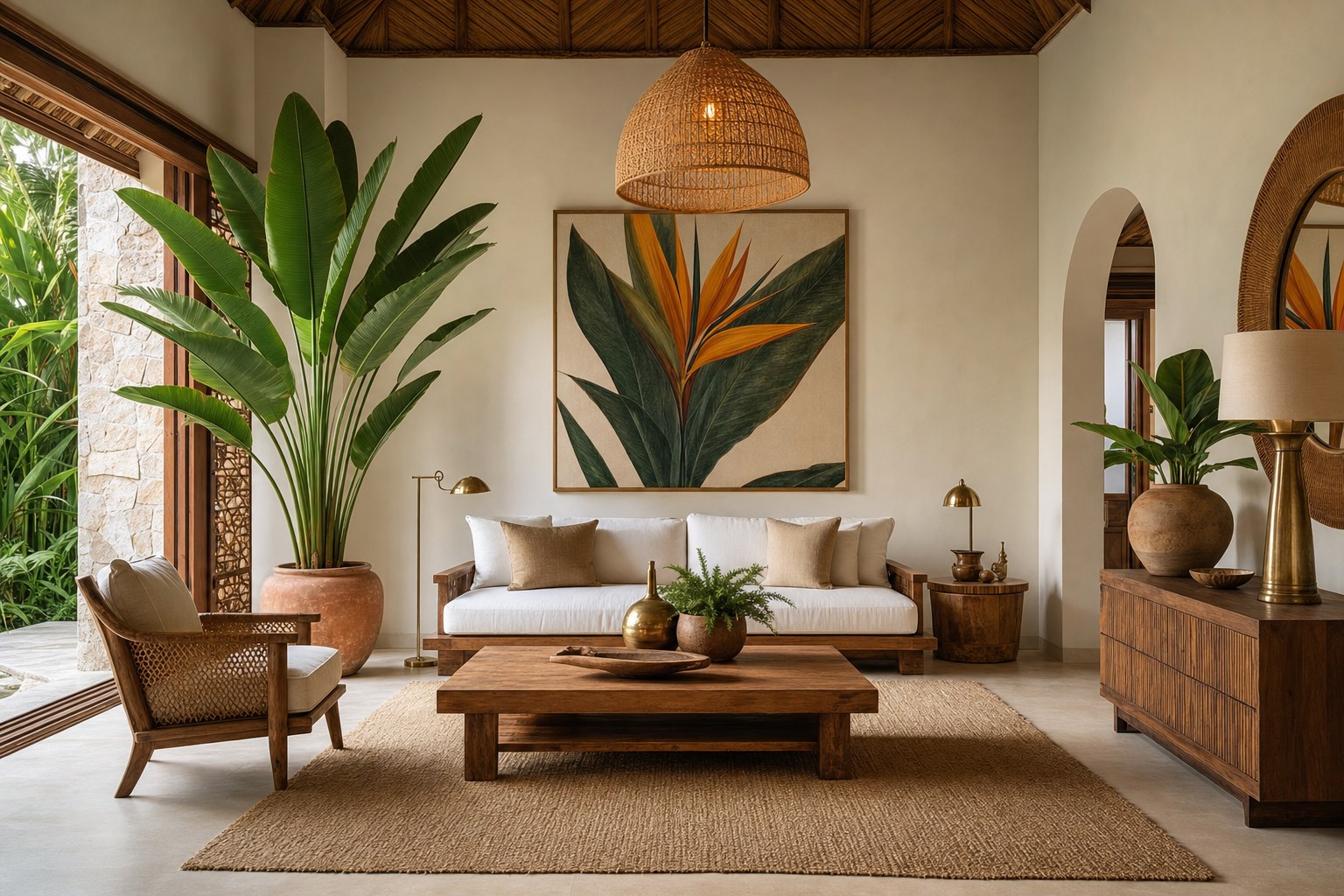
The Bali resort model is the correct reference for the 2025 approach. Bali resort design: warm neutrals (beige, sand, off-white plaster walls), rich wooden tones (teak, mango wood, reclaimed timber), muted botanical greens (from live plants), natural fiber textures (rattan, jute, seagrass, woven pendant lamps), one or two architectural statement plants, and brass or copper hardware. Zero kitsch, zero explicit tropical motifs, zero turquoise. The community's "I want to live in this forever" response is specifically to this version - not to the bright tropical of beach bars.
The Plant Statement Layer · $219.95
The plant statement layer is the most important element in tropical interior design - the one decision that separates a room with rattan furniture from a genuinely tropical space. A large architectural plant at height is the tropical equivalent of a fireplace in a traditional room: it is the room's focal point, its source of organic movement, and the element that every other piece orbits. The bird of paradise is the canonical choice - its large paddle-shaped leaves and vertical height create the most architecturally impactful tropical presence available in a single plant purchase. The critical rule for plant selection: light conditions first, aesthetics second. Bird of paradise requires several hours of bright indirect light daily - a south or west-facing window is ideal. In medium-light apartments, the areca palm is the correct alternative: full, lush, and tropical without the high light demands. The trailing pothos in a hanging planter introduces the cascading dimension at a lower investment and lower care commitment, and the terracotta pots and rattan hanging holder ensure that every plant's container is part of the composition rather than an afterthought.
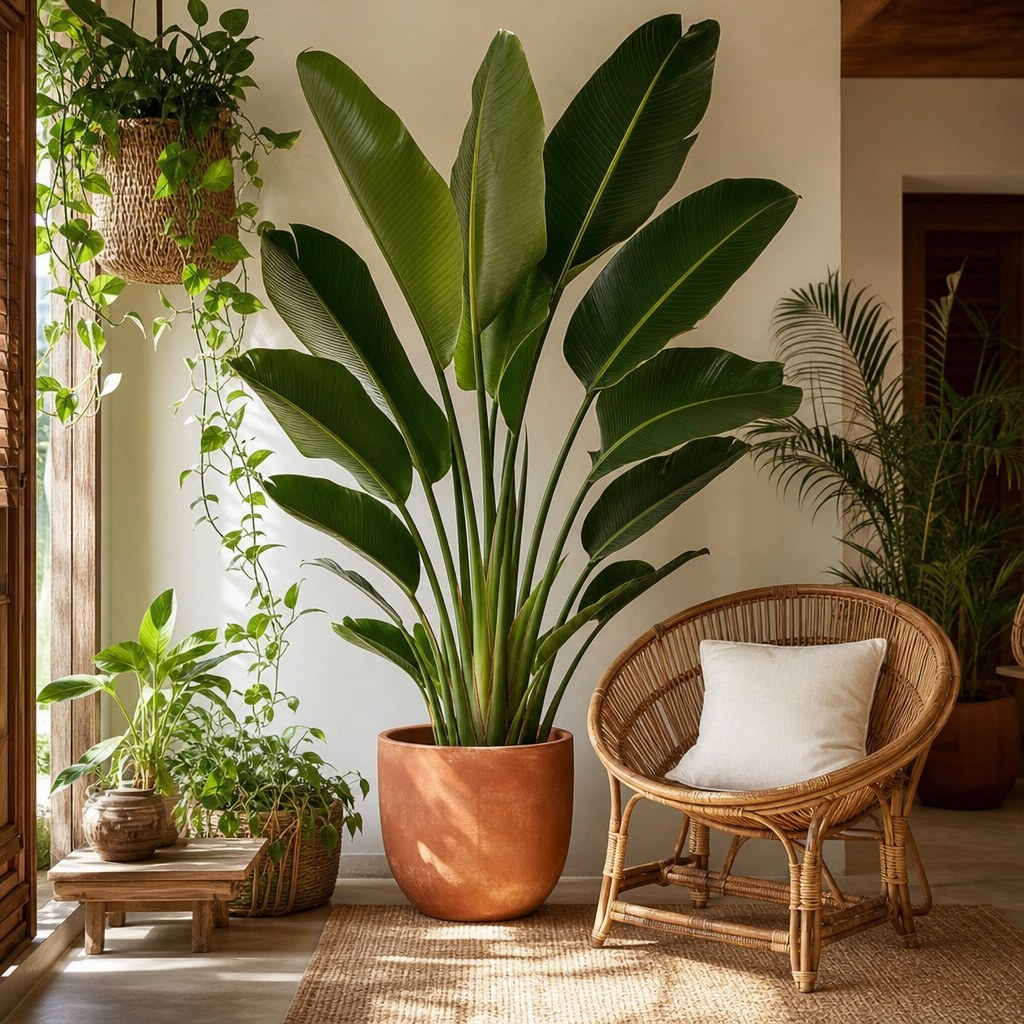
E1 Receipt - The Plant Statement Layer
The Rattan Foundation · $349.96
Rattan is the structural material of tropical interior design - the element that immediately establishes the style's character and passes the Tiki Bar Test completely. A rattan armchair with a natural cushion is the single most impactful tropical furniture purchase: it combines material authenticity (natural rattan), form authenticity (the rounded, woven silhouette that references tropical vernacular architecture), and functional warmth (a real seat that reads differently from any synthetic or upholstered alternative). The rattan pendant light at 18-in diameter introduces the material at ceiling scale, where its woven texture creates the dappled light quality specific to tropical environments. The woven seagrass baskets contribute at floor and shelf scale while providing practical storage - in a tropical room, storage baskets are always more appropriate than plastic bins or cardboard boxes. The bamboo curtain rod is a small detail with a disproportionate impact: it replaces the thin metal curtain rod that would otherwise fight the natural material story at window scale with one that reinforces it.
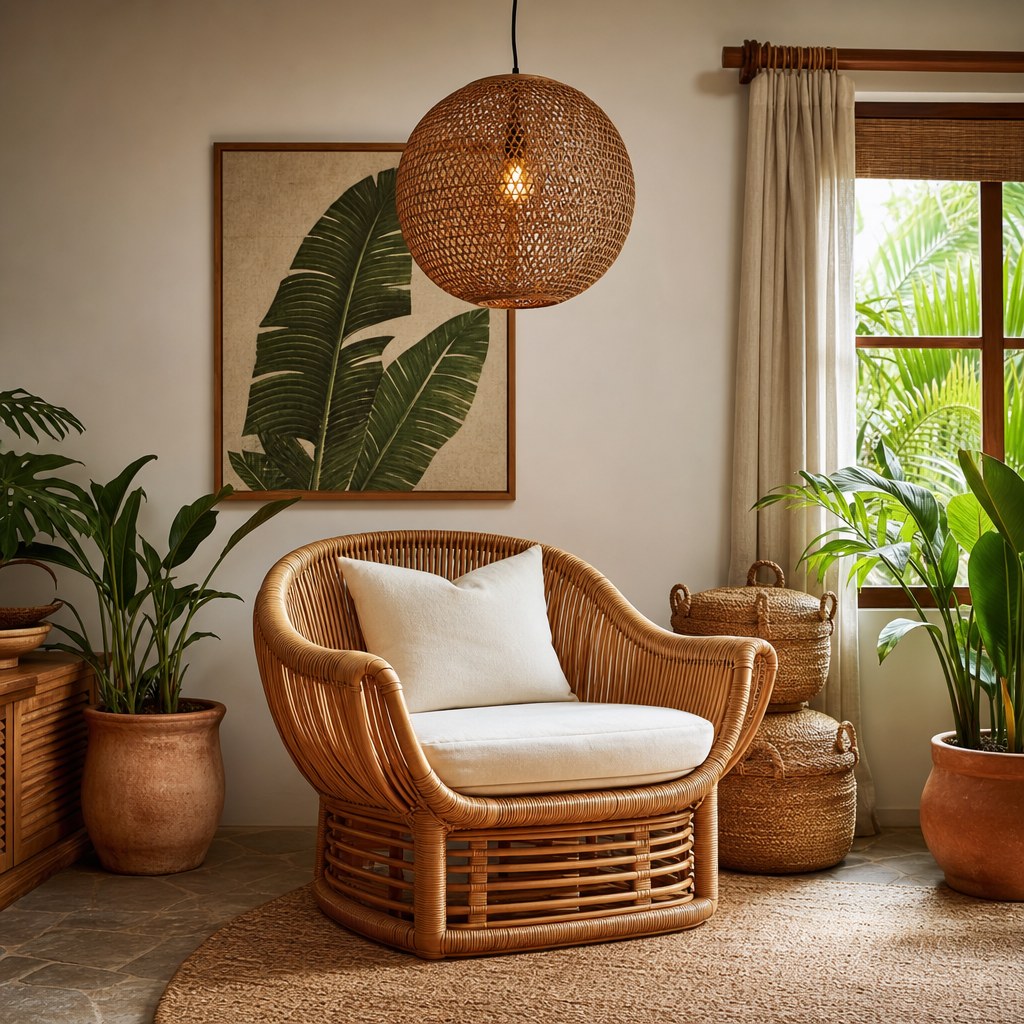
E2 Receipt - The Rattan Foundation
The Botanical Print Layer · $189.97
The botanical print layer introduces pattern and color to a tropical room without relying on kitsch motifs - and this is where the Tiki Bar Test's print clause becomes critical. Botanical prints (banana leaf, palm leaf, bird of paradise leaf silhouettes) on a cream or natural ground pass the test because they are literal representations of the plants that tropical interior design celebrates. The same leaf print on a turquoise or coral ground fails - the colored ground makes the print seasonal, and seasonal tropical decor is the path back to the beach bar. The throw pillow set with botanical prints is the most flexible tropical textile purchase: four pillows in banana leaf print on a cream base can move from sofa to floor seating, can be swapped for solids in winter, and introduce the tropical color story at the most visible surface in the room. The tropical curtain panels at 84-in height extend the botanical print to window scale - critical for rooms where the curtains are the first thing you see - and the framed botanical art set gives the wall layer a permanent tropical anchor that is editorial (artwork) rather than decorative-kitsch.
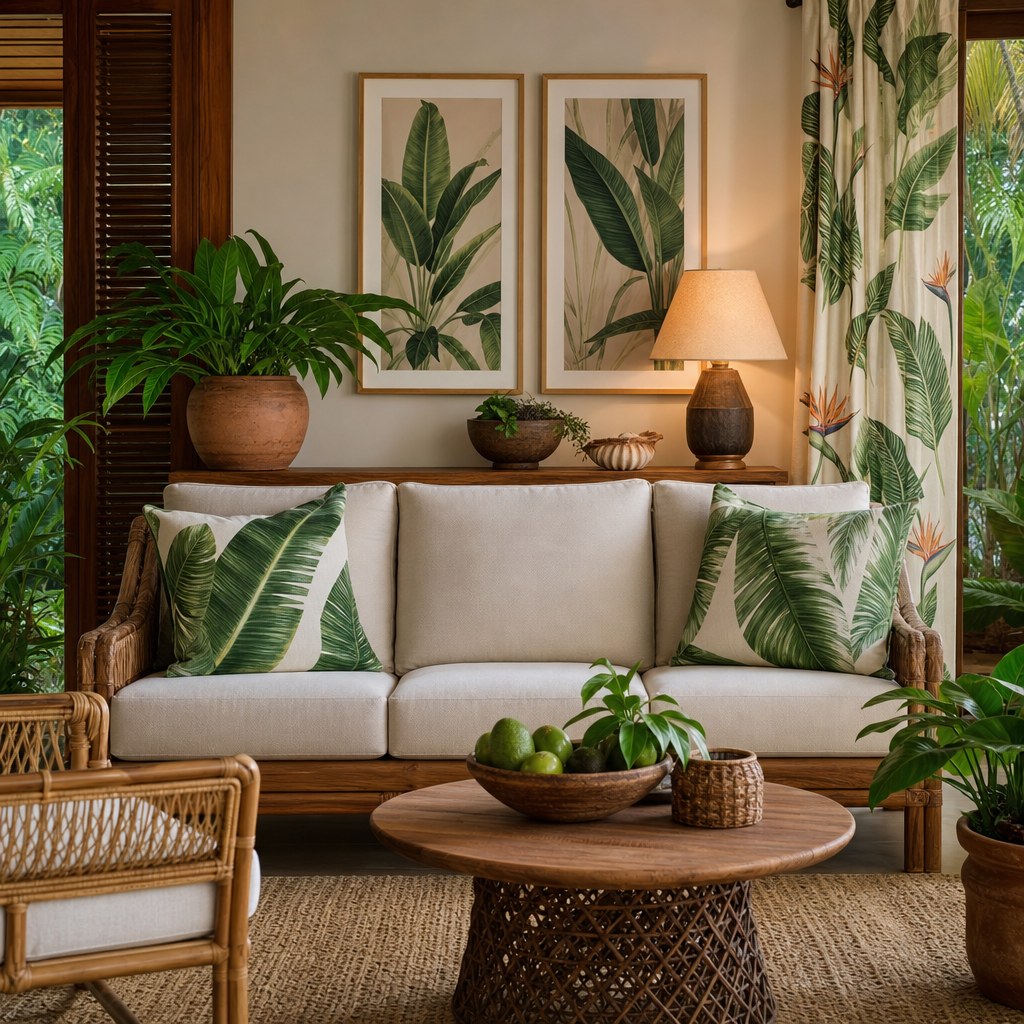
E3 Receipt - The Botanical Print Layer
Tropical Lighting · $189.97
Tropical lighting follows the same natural-material principle as the rest of the style: fixtures in natural woven fiber or bamboo that pass the Tiki Bar Test, at warm color temperatures that reinforce the earthy palette. The woven natural fiber pendant at 16-in diameter is the signature tropical ceiling fixture: its irregular handwoven surface creates the dappled light quality that is specifically associated with tropical environments (light filtering through woven palm fronds, through rattan screens, through bamboo lattice). This is the fixture that most immediately makes a room read as resort-tropical rather than neutral-contemporary. The bamboo table lamp with a warm linen shade introduces the material at eye-level height - the lamp base itself becomes a natural object in the composition, reinforcing the rattan and jute story at a scale that is noticeable at sitting height. The warm 2700K LED Edison bulbs are the same non-negotiable as in every warm-material style: cool-spectrum bulbs fight the warm neutral and natural material story and produce the cold flat quality that makes tropical rooms look like hotel lobbies rather than resorts.
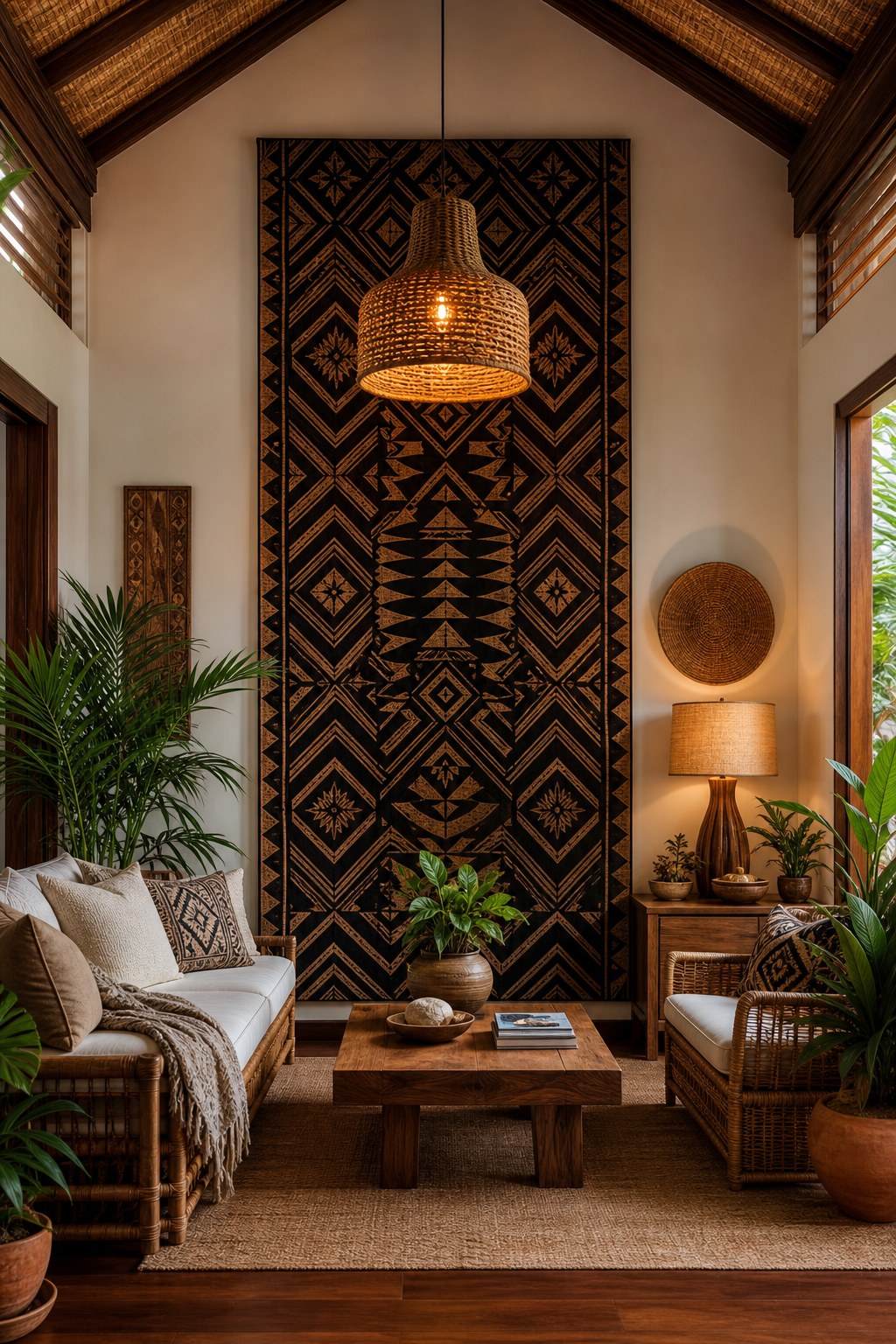
E4 Receipt - Tropical Lighting
The Resort Finish · $249.97
The resort finish is the layer that elevates a tropical room from "nice rattan and plants" to "I want to live in this forever." The teak or mango wood coffee table is the anchor of this layer: solid tropical hardwood at the room's center, with the warm honey tone of teak or the darker grain of mango wood, positioned on a neutral jute or seagrass rug that grounds the seating area and introduces additional natural fiber texture at floor scale. The brass hammered vase set contributes the warm metallic accent that Bali resort design uses consistently - hammered brass objects (vases, bowls, trays) read as handcrafted and collected, and they introduce warm metallic warmth at object scale without the coldness of chrome or the artificiality of gold-plated finishes. The cream linen throw blanket is the softness layer: in a room of hard natural materials (teak, rattan, terracotta, seagrass), a cream linen throw on the sofa or rattan chair introduces the tactile softness that makes the room feel habitable rather than museum-staged. Together, the three pieces in this receipt constitute the Bali resort finish that makes the Tiki Bar Test response unanimous: this is not a beach bar. This is somewhere you would stay.
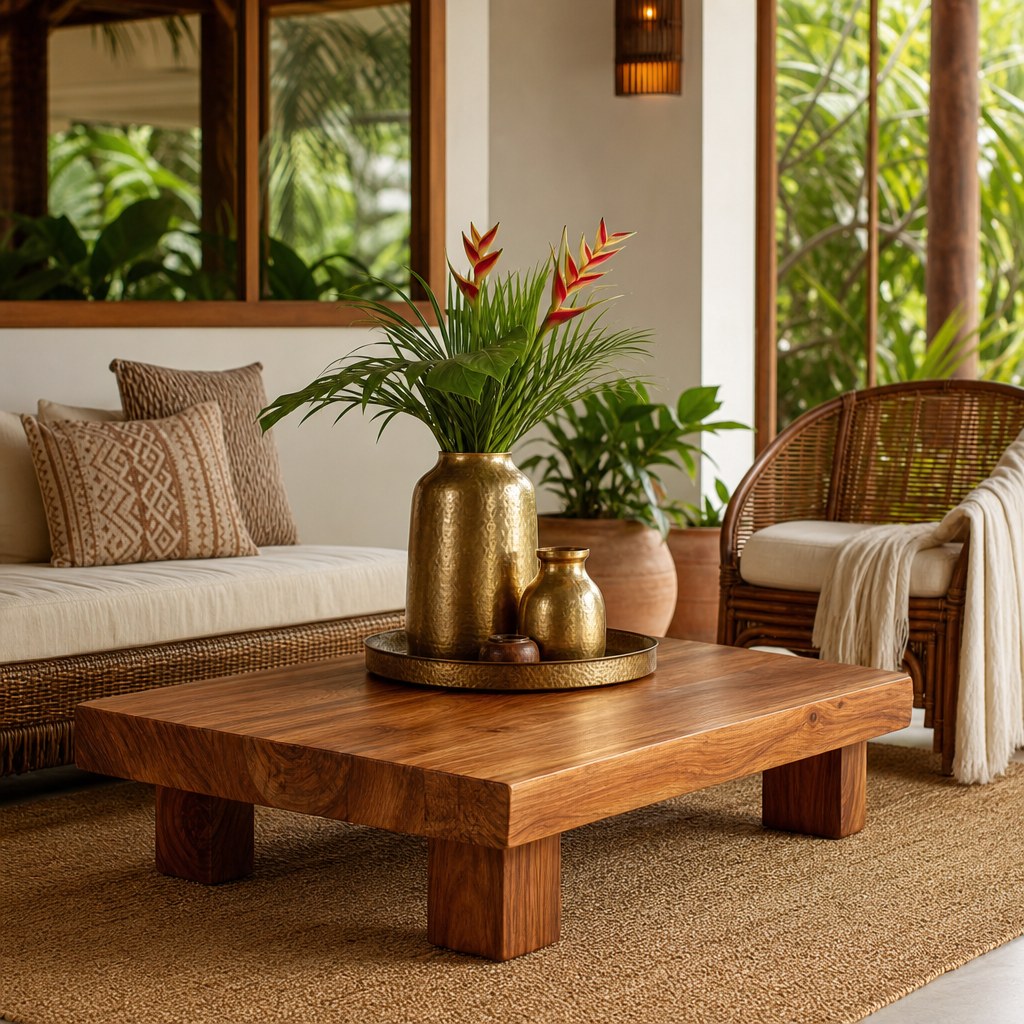
E5 Receipt - The Resort Finish
Tropical vs. Coastal.
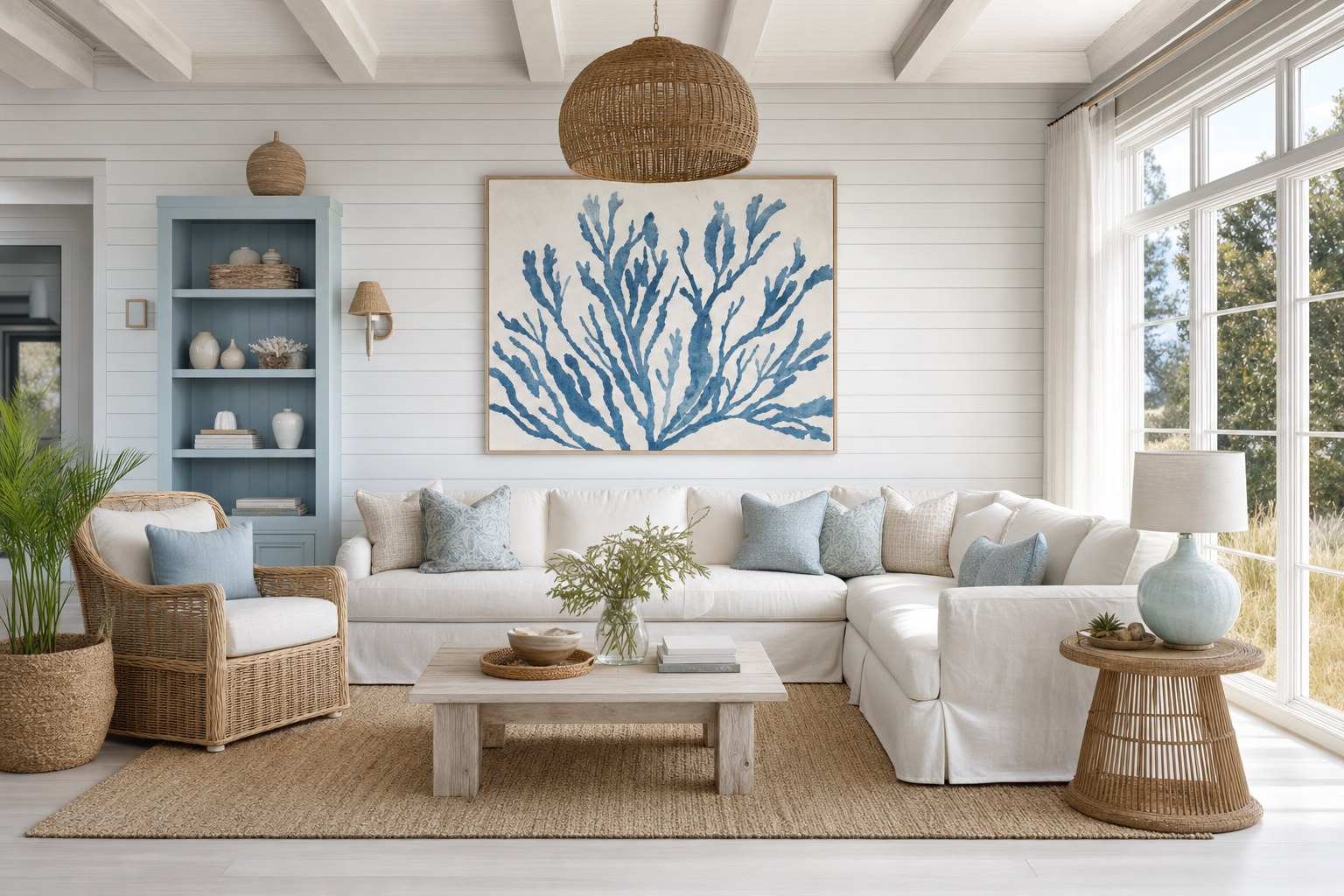
Tropical and coastal design share natural materials (rattan, jute, seagrass) and a nature-abundance philosophy. The distinction is the reference environment and the resulting design language. Coastal design references the seaside. Bleached driftwood, whitewashed finishes, sea glass, linen in natural and navy. Tropical design references the jungle and the resort. Dense plant life, warm wood tones (teak, mango wood), botanical prints, and brass or copper hardware. A room can be both, but the reference environments produce distinct material and color decisions that are easy to separate once identified.
| Dimension | Tropical Interior Design | Coastal Interior Design |
|---|---|---|
| Reference environment | Jungle, Bali resort, tropical garden, warm, dense, botanical | Seaside cottage, beach house, bleached, light, airy |
| Wood tone | Warm honey teak, dark mango wood, tropical hardwoods with visible grain | Bleached, whitewashed, driftwood grey, light and weathered |
| Plant approach | Dense, architectural, multiple statement plants, bird of paradise, banana leaf | Restrained. One or two plants, often simple succulents or small arrangements |
| Hardware metal | Hammered brass and copper, warm, handcrafted, Bali resort accent | Brushed nickel, chrome, or aged brass, lighter and more seafaring |
| Pattern language | Botanical prints (banana leaf, bird of paradise leaf) on cream or natural ground | No motif rule. Natural materials without ocean references (souvenir shop test) |
| Failure mode | The Tiki Bar. Kitschy motifs (pineapple, flamingo, toucan) over material authenticity | The souvenir shop. Explicit ocean motifs (anchors, starfish, ship wheels) over material purity |
The $249 entry path.
A Bali-resort tropical start for under $250. Establishes the natural material foundation and botanical density without redecorating the entire room.
Frequently asked questions.
What is tropical interior design?
Tropical interior design is an interior style that brings the abundance, warmth, and natural materials of tropical and resort environments into residential spaces. Its origins trace to the 1800s British Colonial era. Modern tropical design uses warm neutrals (beige, sand, cream) as a base, rich natural wood tones (teak, mango wood), natural fiber materials (rattan, jute, seagrass), architectural statement plants (bird of paradise, banana leaf, monstera), and brass or copper hardware. The correct reference is a Bali resort - warm, earthy, lush, and entirely free of beach-bar motifs. The Tiki Bar Test filters every purchase: materials pass, motifs fail.
How do I do tropical decor without it looking like a tiki bar?
Apply the Tiki Bar Test before every purchase: could this item be sold at a tiki bar? A real rattan chair: passes. A bamboo tiki torch: fails. A bird of paradise plant: passes. A pineapple-print curtain: fails. A teak coffee table: passes. A shell-shaped vessel: fails. The practical rule: materials pass, motifs fail. Rattan as a material passes. A rattan item shaped like a flamingo fails. The other filter: if the item references a tropical thing (pineapple, flamingo, toucan, palm tree motif print), it probably fails. If the item IS a natural material from a tropical environment (rattan furniture, teak wood, live bird of paradise, jute rug), it passes. Stick to the Bali resort reference, not the Hawaiian bar.
What colors are used in tropical interior design?
Modern tropical uses a neutral base with one botanical accent. The base: warm neutrals - beige, sand, off-white, warm cream. These provide year-round stability and let natural materials read clearly. The accent: muted botanical green from the plants themselves, and warm wood tones from teak and rattan furniture. The 2025 trend confirms: "the only color that really pops is the bright green from the large plant. Everything else finished in neutral, earthy colors." Botanical prints on cream read year-round; prints on turquoise read summer-only. Avoid turquoise, bright aqua, and coral - they convert tropical from permanent to seasonal. The warm neutral base is the key to making tropical decor feel like a design choice rather than summer decorating.
What plants work best for a tropical interior?
Light conditions first, aesthetics second. For bright indirect light (south or west window): bird of paradise ($79-120, architectural focal point, several hours bright light needed), banana leaf plant (large dramatic foliage, high light needs). For medium indirect light: areca palm ($49-60, lush tropical fullness, more forgiving), monstera deliciosa ($40-80, architectural split-leaf, medium light tolerant). For low-light apartments: trailing pothos in a rattan hanging planter ($15-25, trails naturally, nearly unkillable), snake plant in a tropical ceramic planter (contributes height, thrives in low light). The rule: a thriving areca palm in medium light is more tropical than a dying bird of paradise in a dark corner. Confirm your window direction before purchasing any statement plant.
Can tropical interior design work in a small apartment or cold climate?
Yes - the neutral base strategy makes both possible. For small apartments: vertical plant density is more effective than floor coverage - a bird of paradise beside a rattan chair occupies one corner but creates the full tropical impression. Rattan furniture takes less visual weight than upholstered pieces, which helps in small rooms. For cold climates: the indoor tropical garden effect works specifically because the contrast between cold exterior and lush interior is the appeal. The adaptation: choose cold-climate-apartment-tolerant plants (areca palm, pothos, monstera) over high-light specimens. The concern about tropical rooms feeling "too summer-y" is solved entirely by the neutral base - cream walls and beige sofa make the tropical layer year-round rather than seasonal.
How do I make tropical decor feel year-round instead of just summer?
The year-round solution is the neutral base. Botanical prints on cream read year-round; prints on turquoise read summer-only. Rattan furniture on cream and beige reads year-round; rattan furniture on turquoise and coral reads summer-only. The checklist: replace turquoise, bright aqua, or coral accents with warm neutrals (sand, beige, cream). Keep rattan and teak pieces - permanent materials with no season. Keep plants - live plants have no season. Replace seasonal-print textiles (bright pineapples on coral) with botanical prints on cream or natural fiber solids. Add one warm textile layer for winter - a jute rug and a linen throw in warm sand make the tropical room feel cozy in December. The goal: a room that photographs as intentional tropical in January, not as leftover summer decor.