Table of Contents
Southern traditional explained.
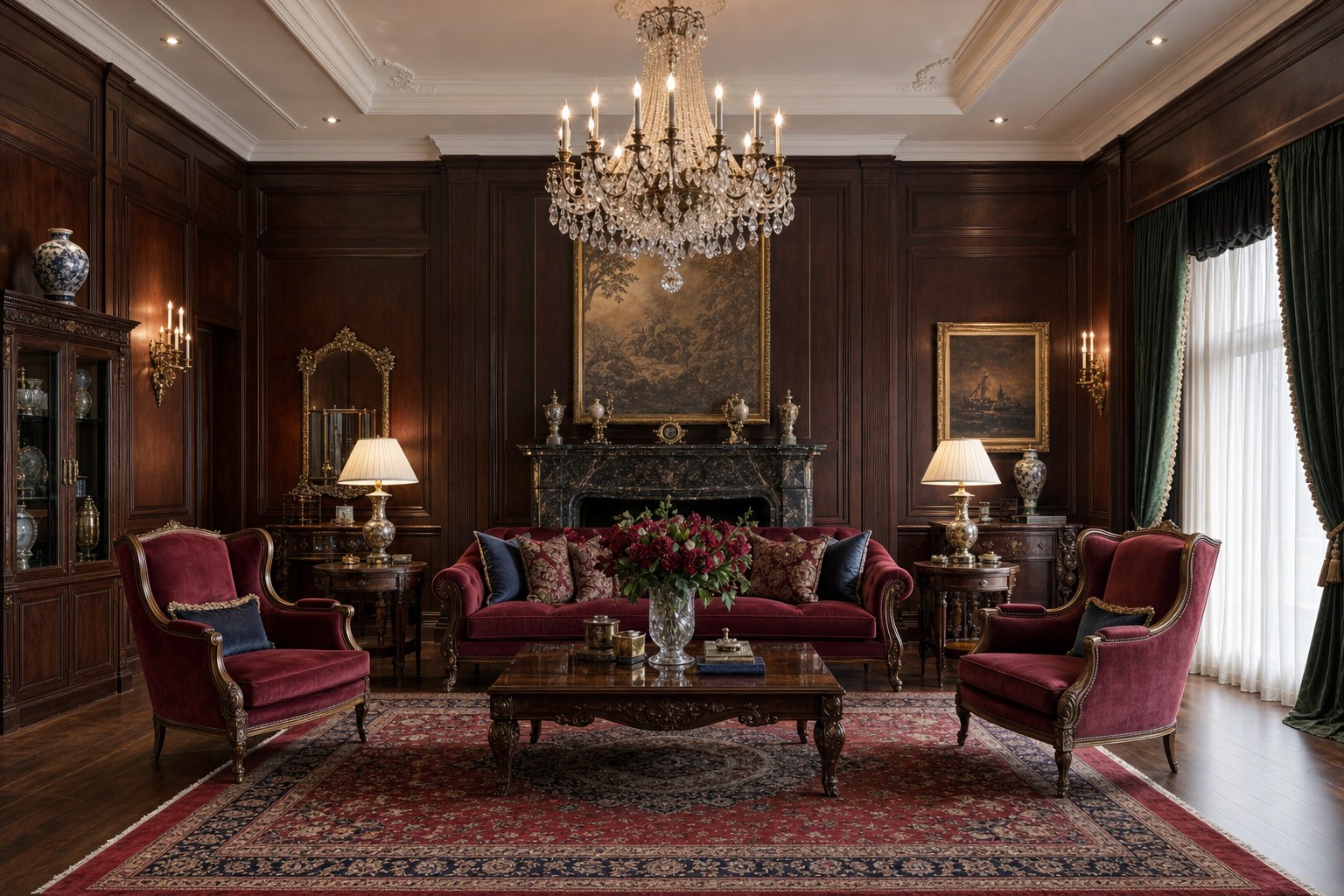
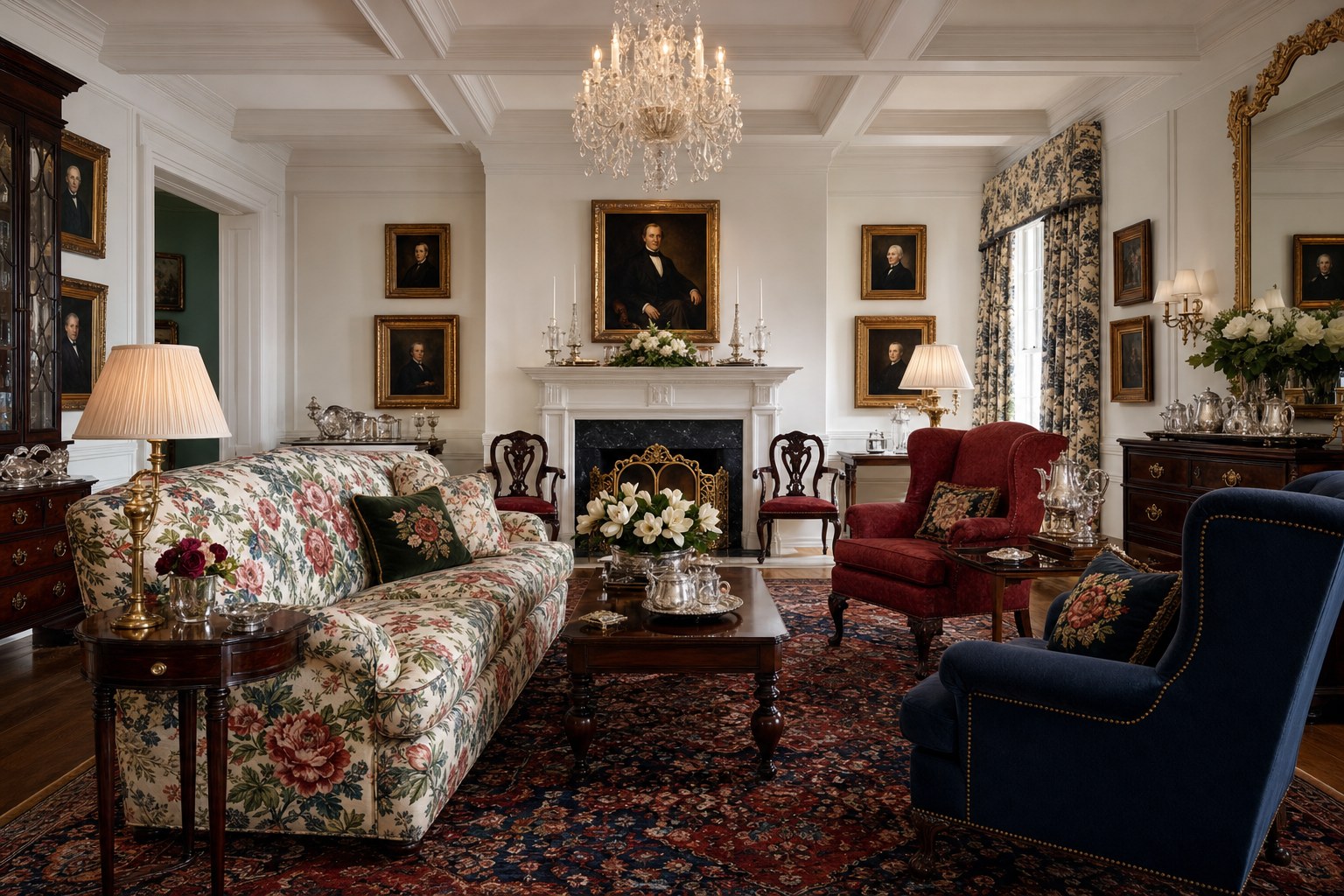
Southern traditional interior design is not simply traditional design with a regional accent. It is a specific visual language rooted in the antebellum plantation house - the formal receiving rooms, parlors, and dining halls of 18th- and 19th-century Charleston, Savannah, and New Orleans - and it carries a distinct set of material commitments that generic traditional design does not. Where generic traditional reaches for neutral upholstery and restrained ornament, southern traditional leans into jewel-toned fabrics, heavily carved dark wood, layered textiles, and the kind of chinoiserie accents that signal access to 18th-century trade routes. Southern interiors tend to be colorful and layered with floral prints, chinoiserie accents, and personal touches - a contrast with Northern traditional design's darker and cooler tones and more utilitarian approach.
The architectural markers come first. Southern traditional homes feature tall ceilings, wide porches, ornate crown molding, large windows, heart pine floors, and symmetrical layouts - elements designed for both elegance and practical heat management before air conditioning existed. Inside, the entry hall functions as the receiving area for guests and shows off wealth and grandeur, with a staircase serving as a dramatic focal point. Almost every formal room has a fireplace, and the main doors are frequently French doors that facilitate air circulation while contributing to the visual formality of the facade. The three architectural signals that identify the style instantly: wainscoting, crown molding, and chair rails.
The sourcing logic for southern traditional follows a specific hierarchy. Source the mahogany furniture and antique-style occasional pieces from estate sales, Chairish, and Facebook Marketplace - the age and patina of genuine antique or antique-reproduction pieces reinforces the style's authenticity in ways that new furniture cannot replicate. Source the drapery hardware, pillow covers, and accessory-scale chinoiserie pieces new (Amazon, Pottery Barn, One Kings Lane) - these categories have reliable quality at accessible price points. The Persian rug is the most important single investment: buy the best quality the budget allows, because it is the floor-level anchor that every other element in the room reads against.
Antique Mahogany Furniture · $189.97
Mahogany is the defining furniture material of southern traditional design, and it is the first decision in the blueprint because every other element reads against it. Mahogany is the most common material used in cabinetry and furniture in 18th-century American furniture design, which is the backbone of the southern traditional style. The Chippendale style. With its carved ball-and-claw feet, cabriole legs, and intricate back splats, is the primary furniture vocabulary, alongside the Hepplewhite shield-back chair and the Queen Anne cabriole leg with pad foot. The material reads dark and warm: a rich reddish-brown that deepens with age and patina, which is why antique and antique-reproduction pieces are strongly preferred over new furniture in this style. The three-piece entry set builds the mahogany furniture layer at the accessory and accent-furniture scale: a carved mahogany-finish console table provides the hall or dining room anchor, a brass-hardware trinket box in dark wood tones establishes the material on the tabletop, and a set of dark wood picture frames signals the art-collecting identity of the style before the paintings arrive in Element 4. Warm wood tones, traditional furniture, and layered textiles. That is what the style looks like done right.
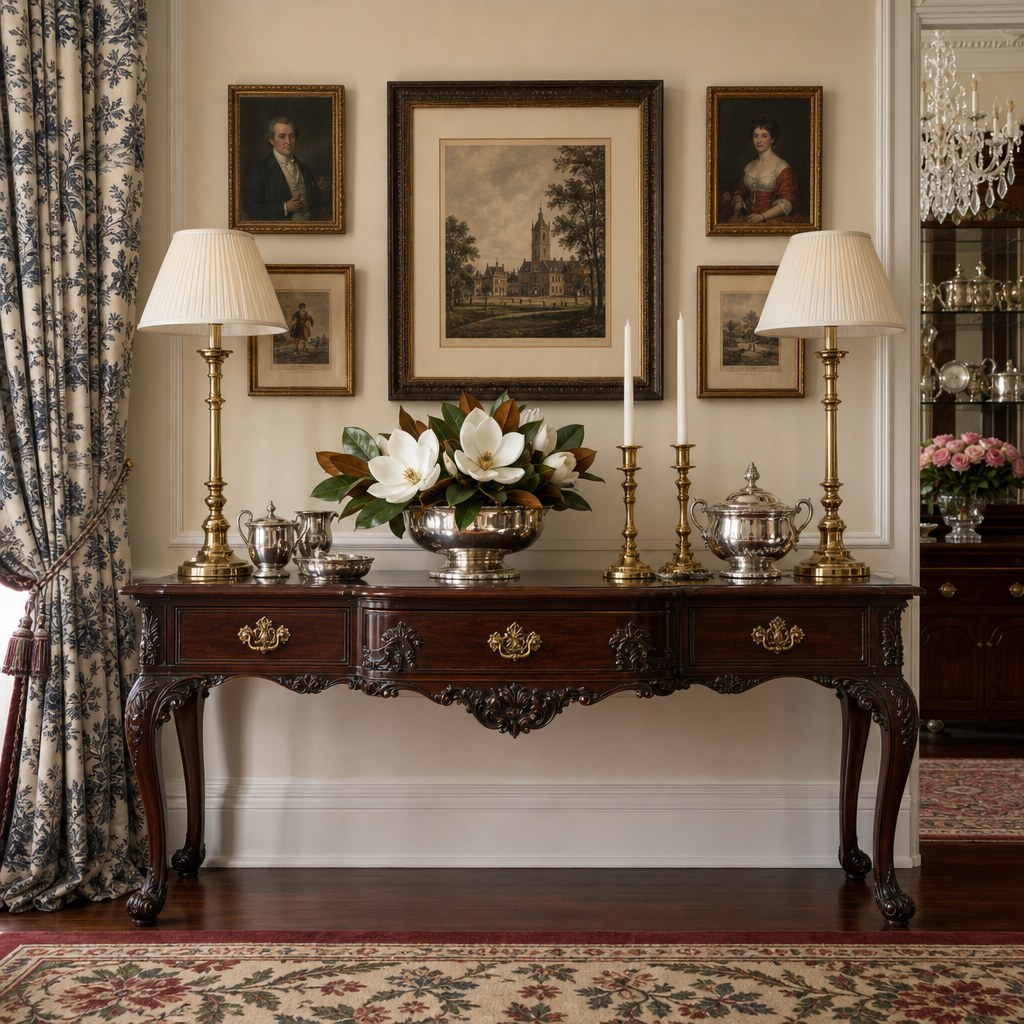
E1 Receipt - Antique Mahogany Furniture
Formal Drapes with Jabots and Swags · $279.97
Window treatments are the element that most immediately separates southern traditional from every adjacent style. Heavy drapes with tiebacks, valances, and lace sheers enhance the regal aesthetic and frame natural light in a way that softens the overall look of the space. The technical vocabulary of the southern traditional window: a pair of floor-length panels in silk damask or velvet, hung from a carved cornice with gold inlay, finished with decorative jabots (the pleated fabric tails that frame the draped swag) and tasseled tiebacks that hold the panels back to let light in while maintaining the formal silhouette. The canonical fabric choice is silk damask for curtains paired with carved cornices. A combination that appears consistently in design descriptions of formal southern rooms. The practical version for renters and budget-conscious renovators: navy or hunter green velvet curtain panels at 96 or 108 inches with gold tassel tiebacks achieve the essential visual logic of the full treatment at a fraction of the installed drapery cost. The lace sheer underneath, a traditional southern layering technique, softens the transition between the formal outer panel and the daylight coming through the glass, and is the detail that most reliably signals to observers that the window treatment is intentionally formal rather than simply a curtain panel.
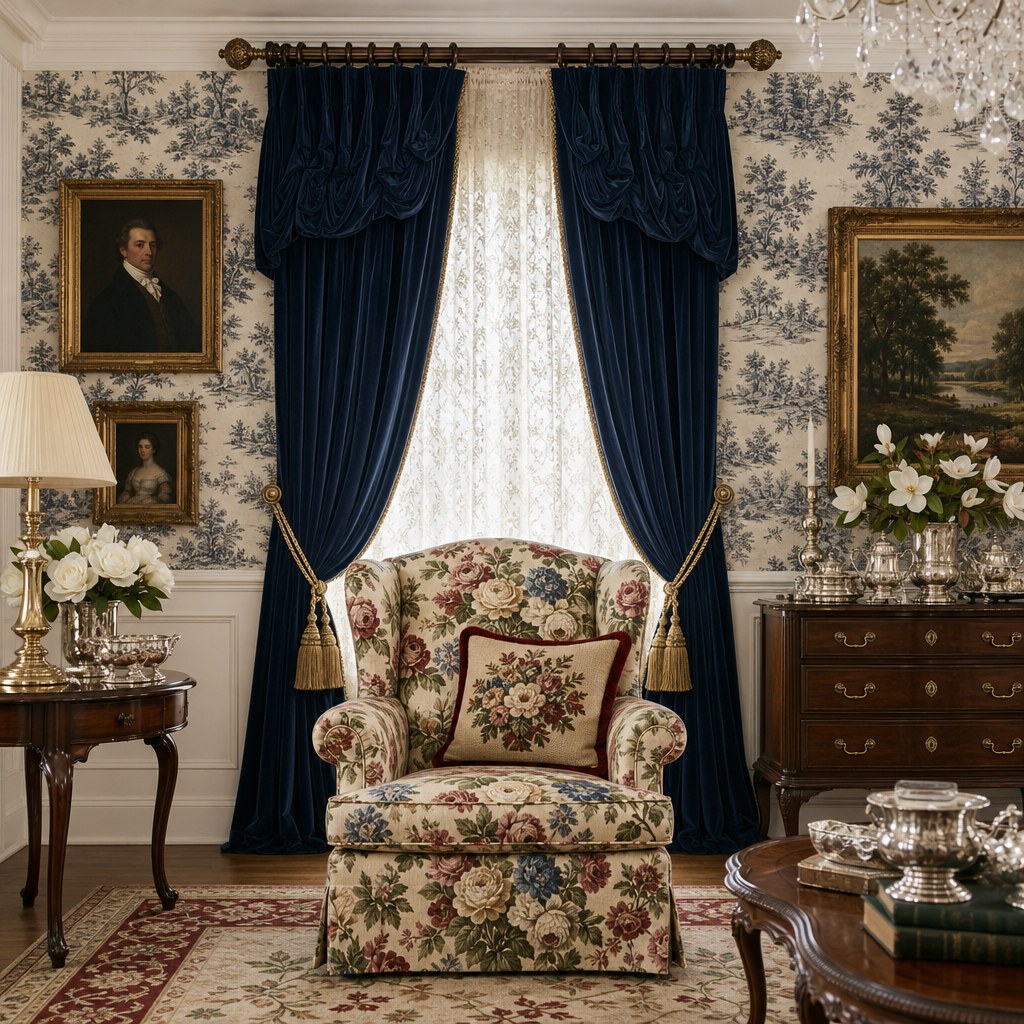
E2 Receipt - Formal Drapes with Jabots
Persian or Oriental Area Rug · $189.99
The Persian or oriental area rug is the floor-level anchor of the southern traditional room and the element that does the most work per dollar in establishing the style's identity. It is one of the three immediate identifiers of the style: the wainscoting, the warm wood, the layered rugs. The canonical layering technique pairs a jute or sisal base rug with an antique-style Persian or floral on top. Not an accident, it is the whole aesthetic. The pattern vocabulary of the southern traditional rug is specific: medallion center with scrolling border, in a palette of deep red, navy, cream, and gold that reinforces the room's color story at the floor plane. A 8x10-foot rug in these dimensions and this palette anchors the formal seating arrangement around it and provides the visual weight that the mahogany furniture and crystal chandelier need at floor level to balance the room vertically. The sourcing strategy: a machine-made Turkish or Persian-style rug at $150-$250 delivers the essential pattern and color signal; a hand-knotted antique or semi-antique piece found through estate sales or Chairish at $400-$800 is the investment version that ages with the room.
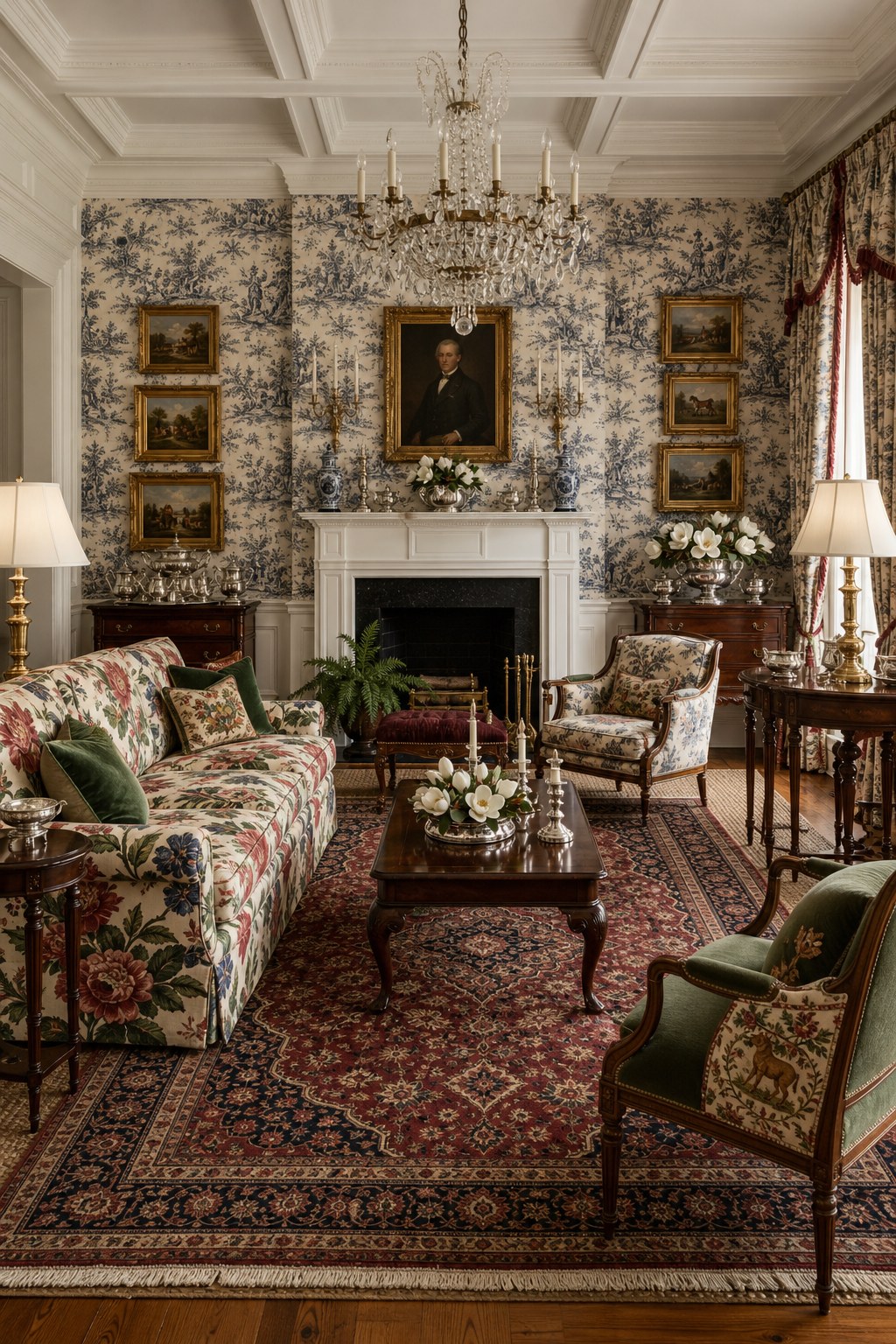
E3 Receipt - Persian or Oriental Area Rug
Portrait Oil Paintings or Hunt Prints · $224.97
The art program in a southern traditional room is one of its most distinctive signatures, and it separates the style most sharply from generic traditional or farmhouse. Southern traditional rooms hang portrait oil paintings. Equestrian portraits, formal family portraits, ancestor portraits in period dress. Alongside hunt scenes and botanical prints, all in ornate gold frames hung picture-rail style with visible cord or chain. The portrait establishes the room's lived-in elegance quality: the sense that the furnishings and art are inherited rather than purchased, that the home has a history. Southern traditional means things that look like they were handed down. And the portrait oil painting is the most direct material expression of that identity. The chinoiserie print is the secondary art category in southern traditional: pagoda vases, bird-and-branch compositions, and blue-and-white ceramic scenes that reference the 18th-century trade-route aesthetic that influenced southern decorating. The three-piece art program. An equestrian portrait print in an ornate gold frame, a paired set of hunt or botanical prints, and a chinoiserie bird print in blue and white. Builds the gallery wall identity at the print scale before any investment in original oil canvases. These pieces are available on Amazon, Etsy, and Art.com as high-quality reproductions or giclees.
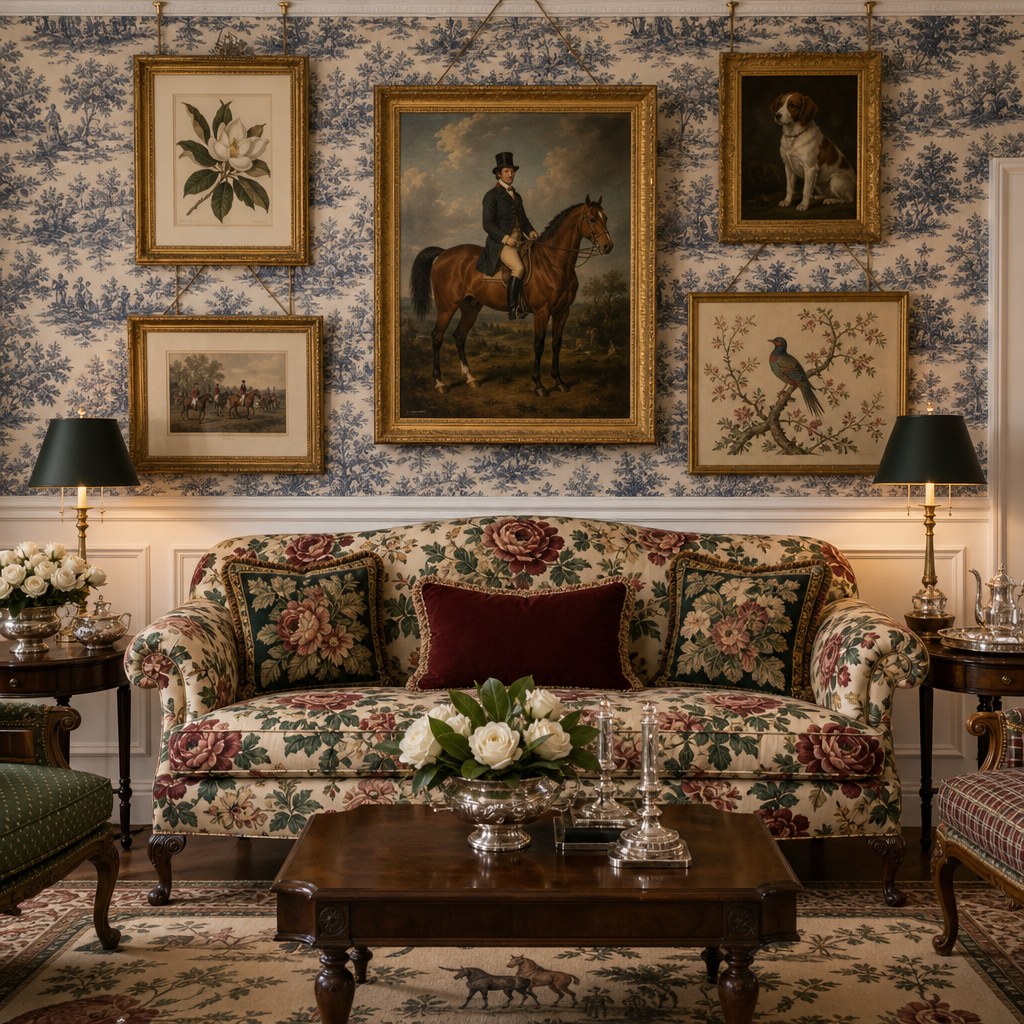
E4 Receipt - Portrait Paintings and Hunt Prints
Crystal or Brass Chandelier · $457.99
The chandelier is the overhead punctuation mark in a southern traditional room. The element that ties the formal furniture arrangement, the heavy drapes, the layered rugs, and the portrait wall into a single vertical statement. A grand chandelier in the foyer or dining room contributes to the sense of grandeur that is central to the southern traditional identity, and aged brass doorknobs, sconces, and chandeliers enhance that authenticity. The two canonical forms: the crystal chandelier (faceted crystal drops on brass arms, casting prismatic light across the room) and the brass-arm chandelier (candelabra-style arms in antique or satin brass with chandelier shades or bare candelabra bulbs). Both are period-appropriate; the crystal chandelier is associated with the formal drawing room and dining room while the brass-arm version is more versatile across rooms. The three-piece lighting program builds the chandelier layer at the primary fixture plus complementary brass accent scale: the crystal or brass chandelier provides the overhead statement, brass candlestick holders on the sideboard or mantel extend the metallic vocabulary at tabletop level, and a pair of brass wall sconces in a candelabra style complete the formal lighting language of the room. Southern traditional lighting runs warm, 2700K or warmer bulbs, which allows the crystal drops to catch the amber light and project it across the room in the way the formal interior was designed to receive it.
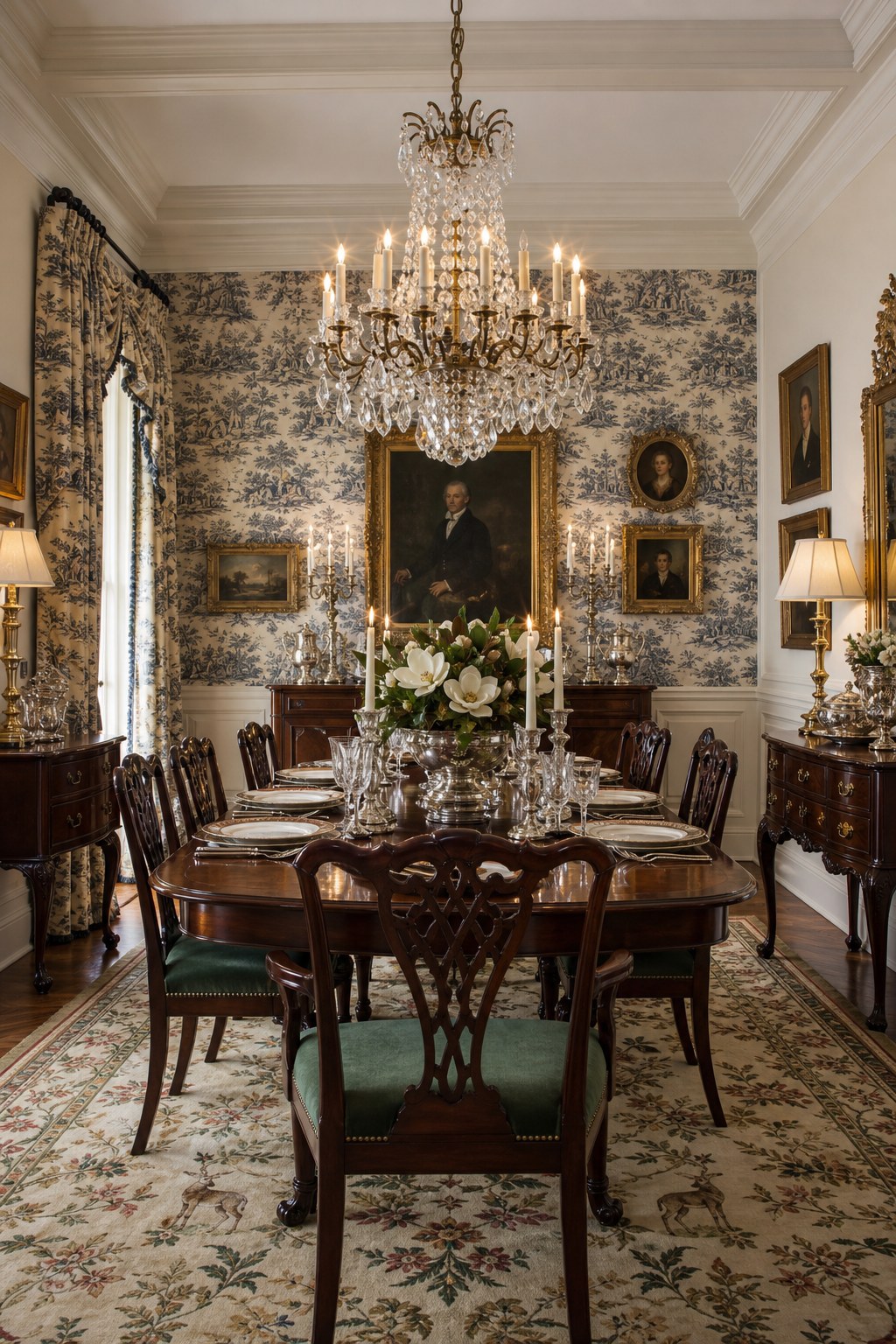
E5 Receipt - Crystal or Brass Chandelier
Southern Traditional vs. Farmhouse.
Both styles are native to the American South, which is why they are consistently confused. The distinction is the social register each style references. Southern traditional is the formal parlor register of antebellum plantation-house entertaining. Dark mahogany, silk drapes, crystal overhead, portrait paintings, silver on the sideboard. Farmhouse is the working-land register. White shiplap, galvanized metal, linen slipcovers, and the aesthetic of a kitchen that feeds a family rather than a dining room that receives guests. The palette test is the fastest separator: southern traditional runs on navy, hunter green, burgundy, and gold; farmhouse runs on cream, warm white, soft gray, and black iron. The furniture test is equally reliable: if the leg has a carved cabriole curve and a ball-and-claw foot, it is southern traditional; if it is turned, raw, or painted white, it is farmhouse.
| Dimension | Southern Traditional Interior Design | Farmhouse Interior Design |
|---|---|---|
| Color palette | Navy, hunter green, burgundy, cream, gold, jewel-toned and formally saturated | Cream, warm white, soft gray, black iron, neutral and casually layered |
| Furniture material | Dark mahogany, cherry, walnut with carved detailing, Chippendale, Hepplewhite, Queen Anne styles | Reclaimed pine, painted wood, raw wood. Turned legs, simple construction, distressed finishes |
| Window treatment | Silk or velvet floor-length drapes with jabots, swags, tassel tiebacks, and lace sheer underlayer | Linen panels, roman shades, or simple rod-pocket cotton, light and unfussy |
| Art program | Portrait oil paintings, hunt prints, chinoiserie in ornate gold frames, picture-rail hung | Botanical prints, vintage signs, family photos in simple wood or black frames |
| Overhead lighting | Crystal or brass chandelier, candelabra wall sconces, formal and prismatic | Wagon-wheel chandelier, pendant lights, Edison bulbs, casual and rustic |
| The register test | Feels like a Charleston parlor receiving guests on a Saturday evening | Feels like a farmhouse kitchen ready for Sunday morning breakfast |
The $189 entry path.
Three items that establish the southern traditional direction in any room. No structural work, no new furniture required. The Persian rug is the single highest-leverage piece: it sets the palette, the formality level, and the room arrangement simultaneously.
Frequently asked questions.
What is southern traditional interior design?
Southern traditional interior design is a formal residential style rooted in the antebellum plantation-house aesthetic of the American South. It is defined by five material decisions: rich dark wood furniture in mahogany, cherry, or walnut with carved detailing; heavily draped windows with silk or damask panels finished with jabots, swags, and tassels; Persian or oriental area rugs anchoring formal seating arrangements; portrait oil paintings or hunt prints in ornate gold frames; and crystal or brass chandeliers overhead. The style evolved from British Colonial, French, and Classical Revival influences as cities like Charleston and Savannah developed in the 18th and 19th centuries. Southern traditional is distinguished from generic traditional by its specific palette of navy, hunter green, burgundy, cream, and gold, and by the presence of chinoiserie accents and wainscoting or crown molding in nearly every room.
What colors are used in southern traditional interior design?
Southern traditional runs on a deep, jewel-toned palette anchored by navy, hunter green, and burgundy as primary wall or upholstery colors, with cream and warm white as the canvas that makes the saturated tones readable. Gold appears as the metallic accent throughout - in drapery trim, frame finishes, hardware, and chandelier arms. The full palette tier: deep foundation tones (navy, hunter green, burgundy, walnut brown) for walls and upholstery; warm neutrals (cream, ivory, warm white) for trim and ceilings; and accent metals (brass, gold, antique bronze) for hardware and light fixtures. Chinoiserie-influenced accents in soft blue-and-white porcelain complete the color story at the accessory level. Unlike the warmer earth tones of farmhouse or the cool grays of contemporary traditional, southern traditional commits to saturated, historically rooted jewel tones that read as formal rather than rustic.
What furniture styles are used in southern traditional design?
Southern traditional furniture draws from 18th-century American and British cabinet-making traditions. Mahogany is the most commonly used material, appearing in dining tables, sideboards, secretary desks, and armoires - it is the most common material used in cabinetry and furniture in 18th-century American furniture design. The dominant styles are Chippendale (carved ball-and-claw feet, cabriole legs, intricate back splats), Hepplewhite (shield-back chairs, tapered legs, inlaid decoration), and Queen Anne (graceful cabriole legs, pad feet, restrained carved ornament). Sofas and settees feature rolled arms and tufted backs in silk, damask, or velvet upholstery. Formal symmetry in furniture arrangement is a defining characteristic: paired armchairs flank a fireplace, matching end tables bracket a sofa, and the dining room centers on a table that can seat eight or more.
What is the difference between southern traditional and farmhouse interior design?
Southern traditional and farmhouse are both rooted in the American South but represent opposite social registers of southern living. Southern traditional is the formal parlor register: dark mahogany furniture, silk drapes with jabots, crystal chandeliers, portrait paintings, Persian rugs, and wainscoting designed for entertaining. Farmhouse is the working-land register: white-painted shiplap, reclaimed wood, linen slipcovers, galvanized metal accents, and the aesthetic of a working kitchen. The color palettes diverge sharply: southern traditional favors navy, hunter green, and burgundy with gold accents; farmhouse favors cream, warm white, and soft gray with black iron hardware. The furniture silhouette test: if the leg has a cabriole curve and a ball-and-claw foot, it belongs in southern traditional; if it is turned, tapered, or raw-wood, it belongs in farmhouse.
How do you add southern traditional style on a budget?
The southern traditional entry path is the Persian or oriental area rug, because it is the element that carries the most style information per dollar. A machine-made oriental rug in navy, burgundy, and cream at $150 to $190 establishes the palette, the formality level, and the symmetrical furniture arrangement around it. The next investment is portrait art: a framed oil-style portrait print in an ornate gold frame signals the style's art-collecting identity at $45 to $80 rather than the $2,000-plus cost of a vintage oil canvas. Add brass candlestick holders in a graduated set for the mantel or sideboard, and the three items together read as a deliberate southern traditional direction for under $340. Estate sales, Facebook Marketplace, and Chairish are the right sourcing channels for mahogany furniture - genuine antique or antique-reproduction Chippendale or Queen Anne pieces are consistently available at prices below new retail, and the age of the piece reinforces the style's authenticity.
More rooms like this
No spam. Unsubscribe anytime.