Table of Contents
The one rule. Curation.
An 8,397-vote post on r/maximalism is not a mood board. It is a photograph of a person's apartment surrounded by objects they have collected, and a caption that begins: "7 years ago I was in a homeless shelter, 6 years ago I was living on housing assistance." For some people, maximalism is not aesthetic preference. It is survival evidence. Objects mean something. The abundance is the point. The design culture critique that this is "clutter" misunderstands what is happening entirely.
The Garden of Eden bathroom earned 8,295 upvotes and criticism from design gatekeepers who called it overwhelming. The community's response was defiance and celebration. The plant-covered, color-saturated, texture-dense room was exactly what its creator intended - and the people who responded viscerally to it recognized the intent. Maximalism, when it is working, has nothing to do with accident. The one rule that distinguishes it from hoarding is deceptively simple: every object must be chosen, not accumulated. Density by design requires editing, not adding.
The curated chaos framework operates on five axes: color coherence (even adventurous maximalist rooms have a palette anchor that ties the diversity together), scale hierarchy (a dominant focal point that organizes the room's visual energy), texture rule (vary texture when mixing patterns to resolve conflicts), the 20% edit (remove 20% after styling and see if the room breathes better - if it does, those objects were accumulation not curation), and intentional breathing surfaces (clear negative space per zone that lets the eye rest between composed moments). The five elements below are the scaffold for building maximalism that passes every one of these axes.
The Bold Foundation · $269.97
The bold foundation is where maximalism announces itself and where most people hesitate. The white-wall instinct is strong - it feels safe, reversible, and easy to layer over. But maximalism cannot be built on a neutral base the way biophilic or coastal design can. The foundation has to commit or the layering that comes on top of it reads as clutter piled against a blank wall rather than a composed room with intentional character. Three options are in the receipt, designed for different commitment levels: deep-color paint in emerald, cobalt, or terracotta is the highest-commitment choice and the one with the highest reward - a jewel-tone painted room is the difference between a maximalist room that photographs and one that surprises. Peel-and-stick bold wallpaper is the renter's alternative: a 2-roll accent wall that can be removed without damage and creates an immediate pattern foundation that everything else layers against. Large-scale patterned curtains at 96-in height are the lowest-commitment bold foundation - they add drama and pattern at window scale without touching the walls at all, and they create the vertical emphasis that makes a maximalist room feel intentional rather than crowded.
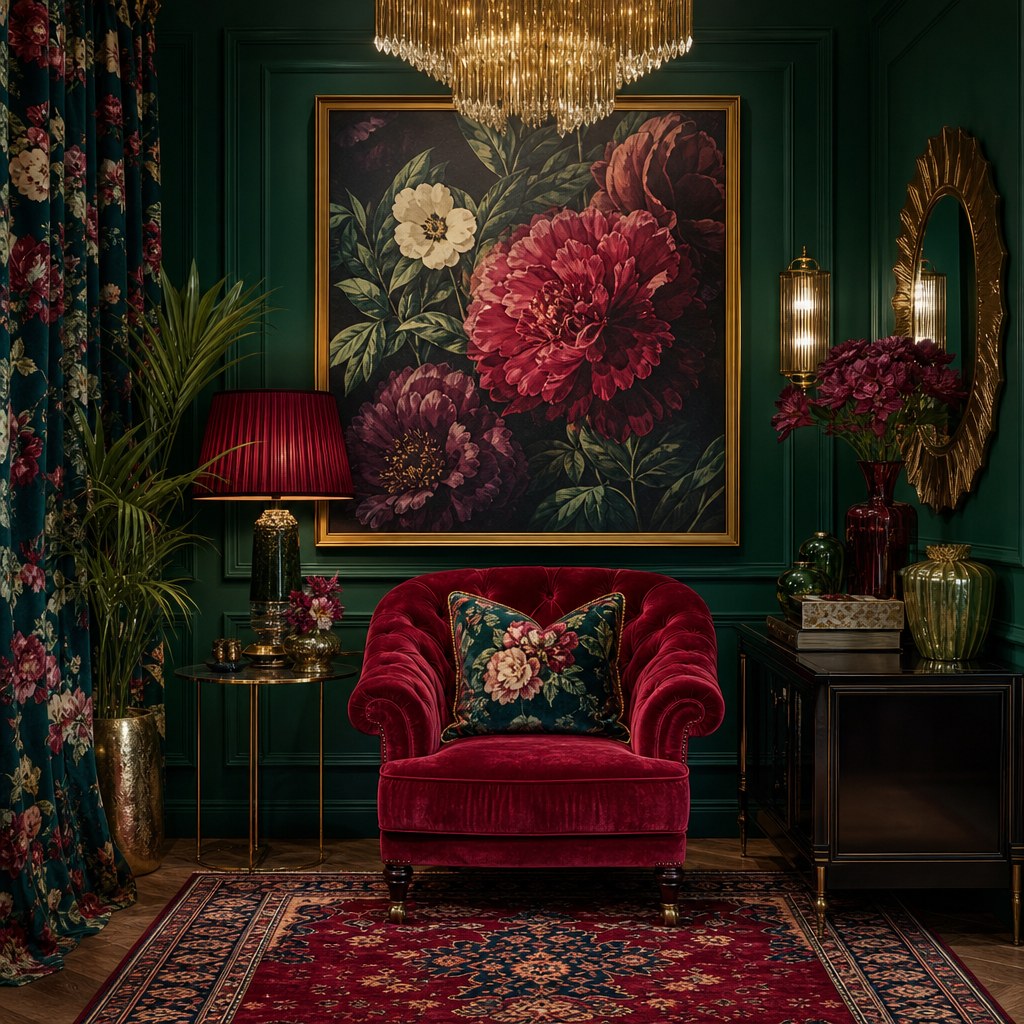
E1 Receipt - The Bold Foundation
The Textile Stack · $339.96
The textile stack is where maximalism's layering principle manifests most physically. Maximalism does not use one rug - it layers two. The base rug (8x10, neutral or geometric) anchors the seating arrangement and defines the room's central zone. The kilim or vintage-look rug layered on top at 5x7 introduces pattern, color, and the visual complexity that is the textile stack's purpose: depth. Layered rugs create the same sense of accumulated history that aged stone or worn wood surfaces create, achievable in an apartment in a single afternoon. The jewel-tone velvet throw pillow cluster (set of 6) is the highest-density textile decision in the room: six pillows in rich burgundy, cobalt, emerald, and mustard introduce the palette's full saturation at sofa scale. The chunky oversized knit throw in a bold accent color - not cream, not natural - completes the textile story. Every textile surface in a maximalist room has a specific job in the composition.
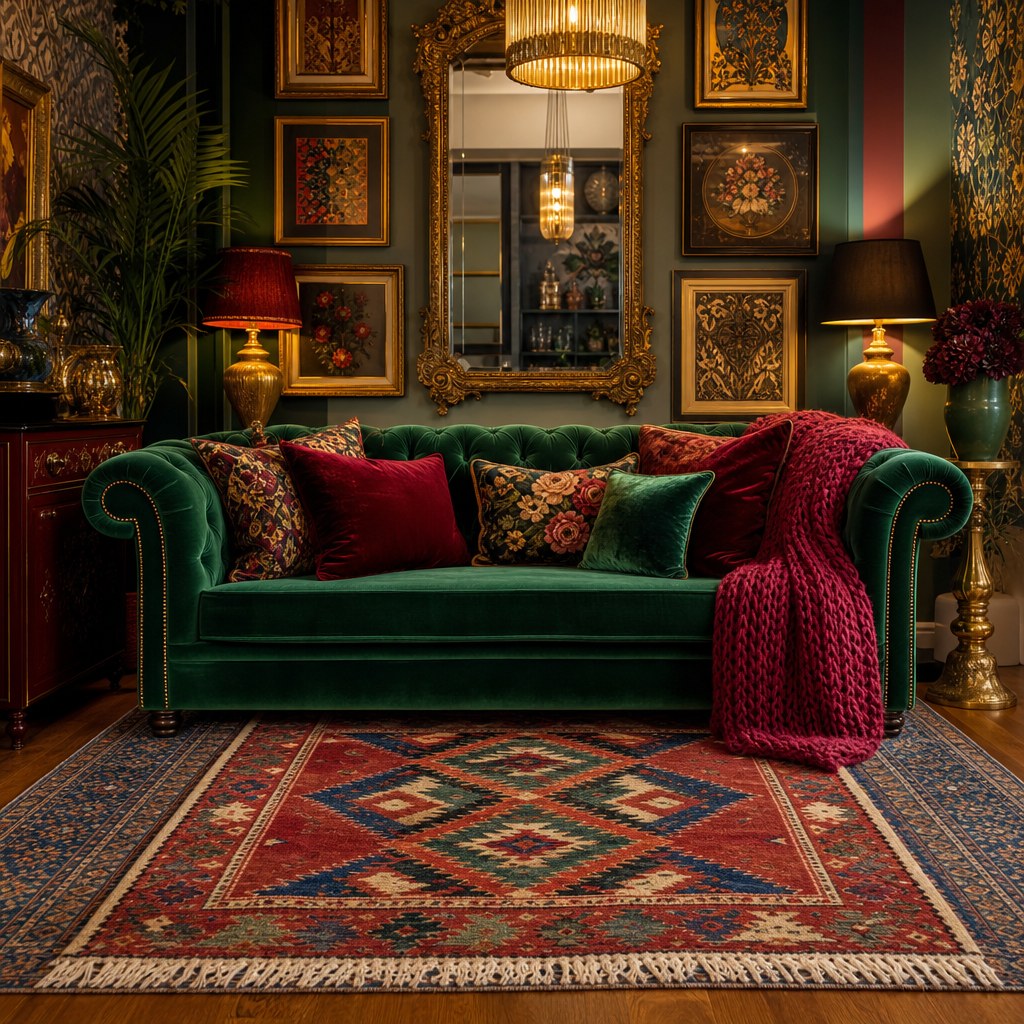
E2 Receipt - The Textile Stack
The Gallery Wall Architecture · $249.96
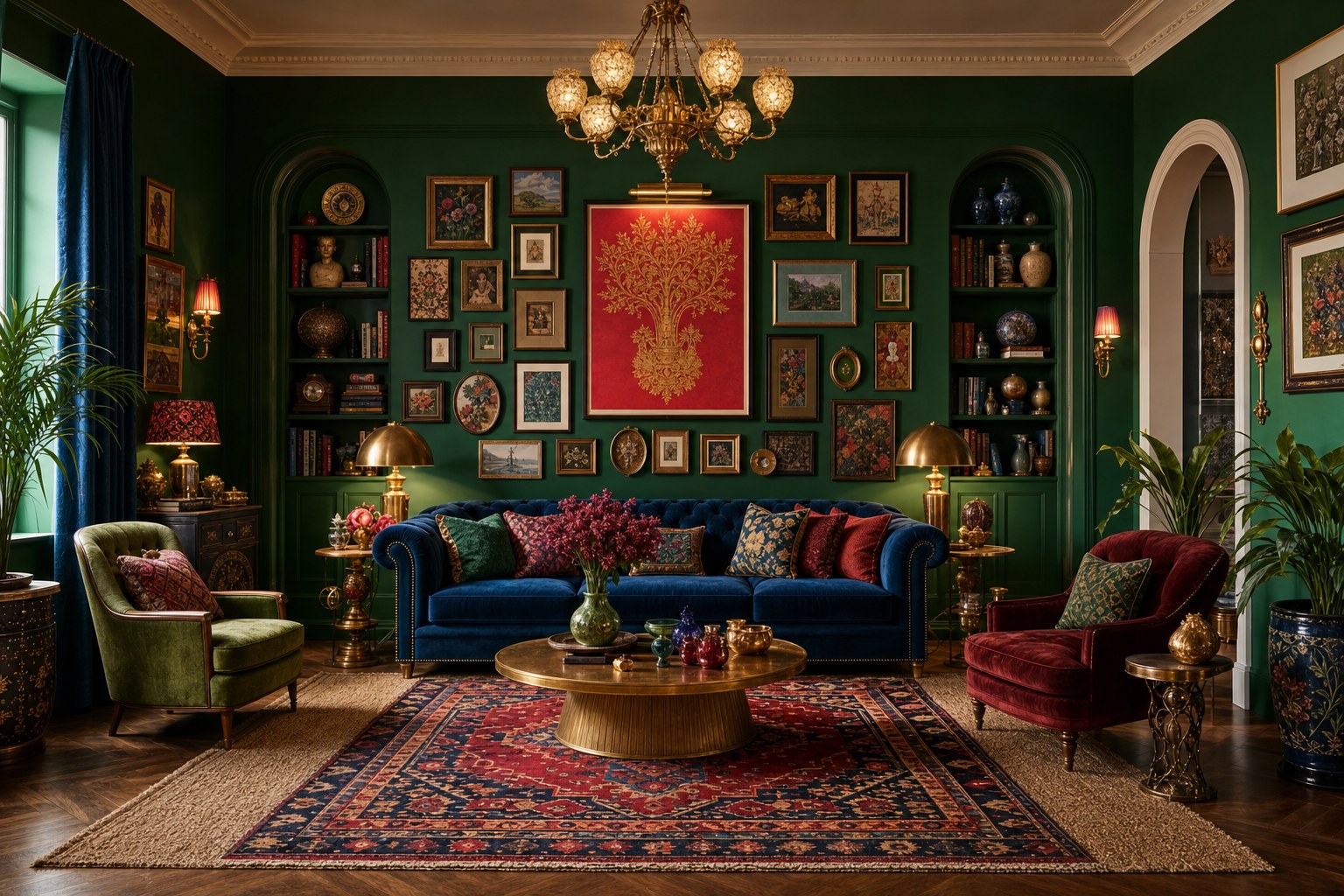
The gallery wall is the signature visual statement of maximalist interior design - the one element that distinguishes a maximalist room immediately, and the one that requires the most architectural thinking to execute. A gallery wall that reads as intentional follows the canonical execution framework: plan on floor first (lay every frame and art piece on the floor in front of the target wall and arrange horizontally before committing to any hardware), mix frame sizes not metals (combining 5x7, 11x14, and 24x30 frames in the same matte finish family), use the center anchor rule (the largest piece hangs at eye level at the approximate center of the installation and every other frame orbits it), fill to edges (a gallery wall that trails off reads as unfinished - the collection should reach confidently toward both sides), and mix media (prints, photographs, small mirrors, and sculptural wall objects create dimensional depth that a grid of identical frames cannot achieve). The 12-piece mixed-sizes frame set in matte black is the structural skeleton. The 30x40 canvas is the anchor. The 3-print digital art set fills the mid-size positions and introduces the room's color story at wall scale.
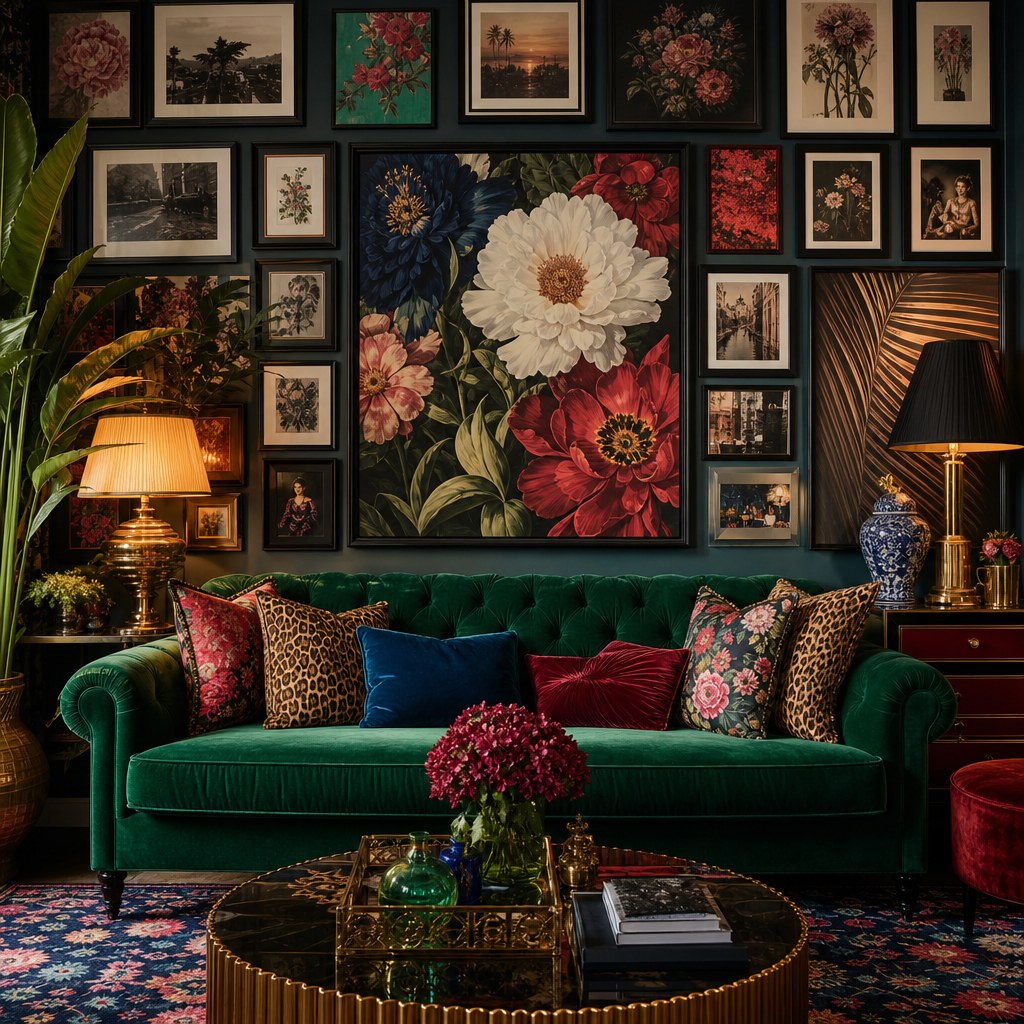
E3 Receipt - The Gallery Wall Architecture
The Collected Objects Layer · $199.96
The collected objects layer is the element that most clearly separates maximalism from every other design style. Minimalism omits objects. Coastal and biophilic design restrain them. Maximalism displays them - with a compositional intelligence that distinguishes a curated collection from a shelf of things. The vocabulary of maximalist object groupings follows a specific height logic: objects grouped in odd numbers (three or five), mixed across three heights (tall, medium, short), with at least one object in each group that carries a different material from the others. A tall ceramic vase, a medium wooden object, and a short metallic piece read as a composed grouping even if the objects are stylistically diverse - the height variation and material contrast create the visual structure that turns objects into a collection. The vintage-look book stack display is a maximalist staple: books are objects with color and typography that contribute to the room's visual density while also signaling the personal library character specific to maximalism. The sculptural ceramic set and woven basket collection provide material diversity that distinguishes a maximalist shelf from a store display.
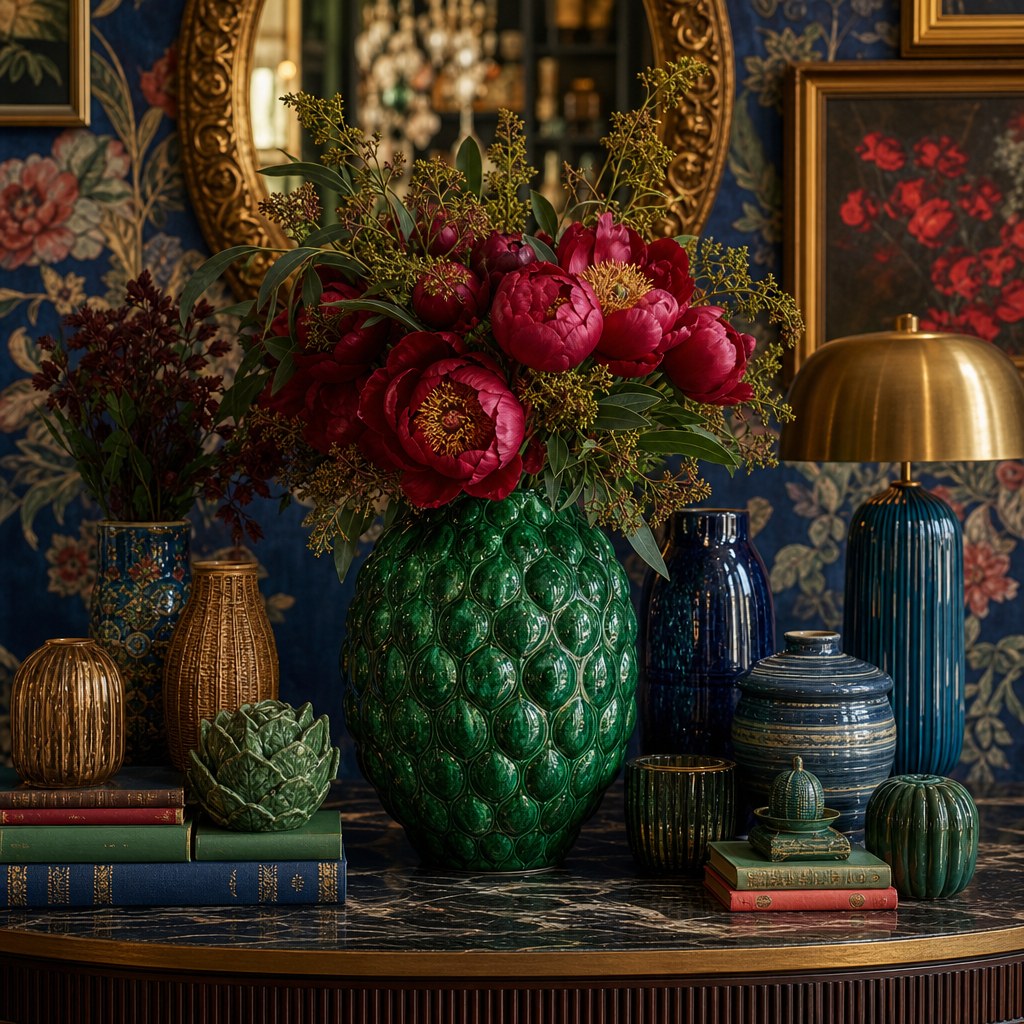
E4 Receipt - The Collected Objects Layer
The Plant Density · $169.96
Maximalism and plants share the same underlying logic: more is more, when every element is intentional. The plant density layer in a maximalist room is not the restrained biophilic approach of one statement plant per zone - it is the garden-indoors approach of multiple large specimens competing happily for light and visual territory. The monstera and bird of paradise together occupy the room's upper vertical zone; the trailing pothos at hanging height introduces the cascading dimension that fills the gap between the tall statement plants and the lower object layer. The difference between maximalist plant density and a neglected houseplant collection is the same as the rest of maximalism: every plant is healthy, every plant is in a container that is part of the composition, and every plant's position is deliberate. Bold-color ceramic planters - cobalt, terracotta, emerald - contribute the plant density layer's color story at pot scale. The plant container is as much a part of the composition as the plant itself.
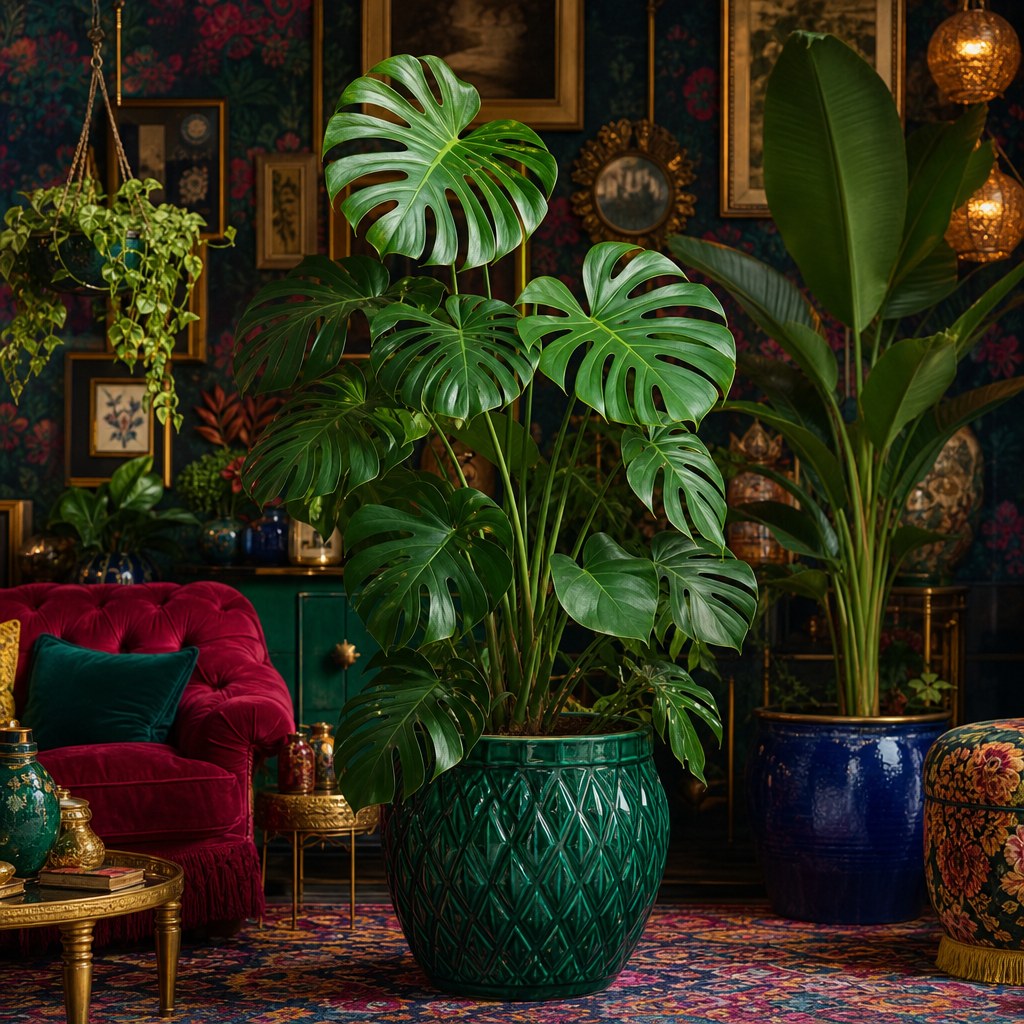
E5 Receipt - The Plant Density
Maximalist vs. Bohemian.
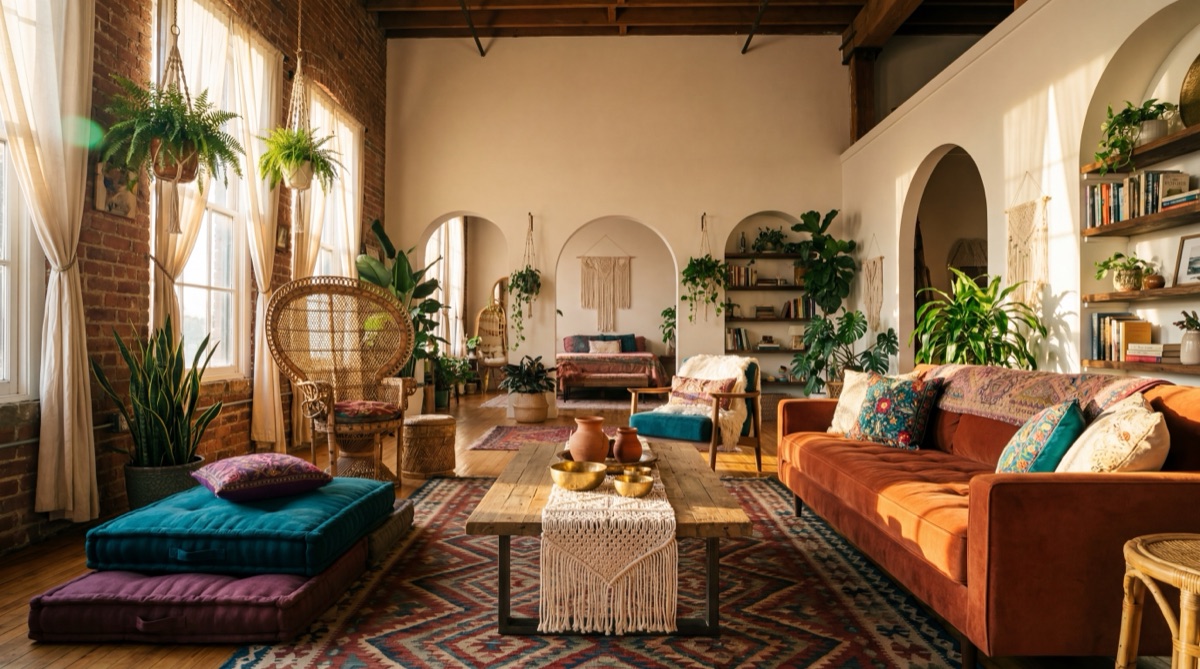
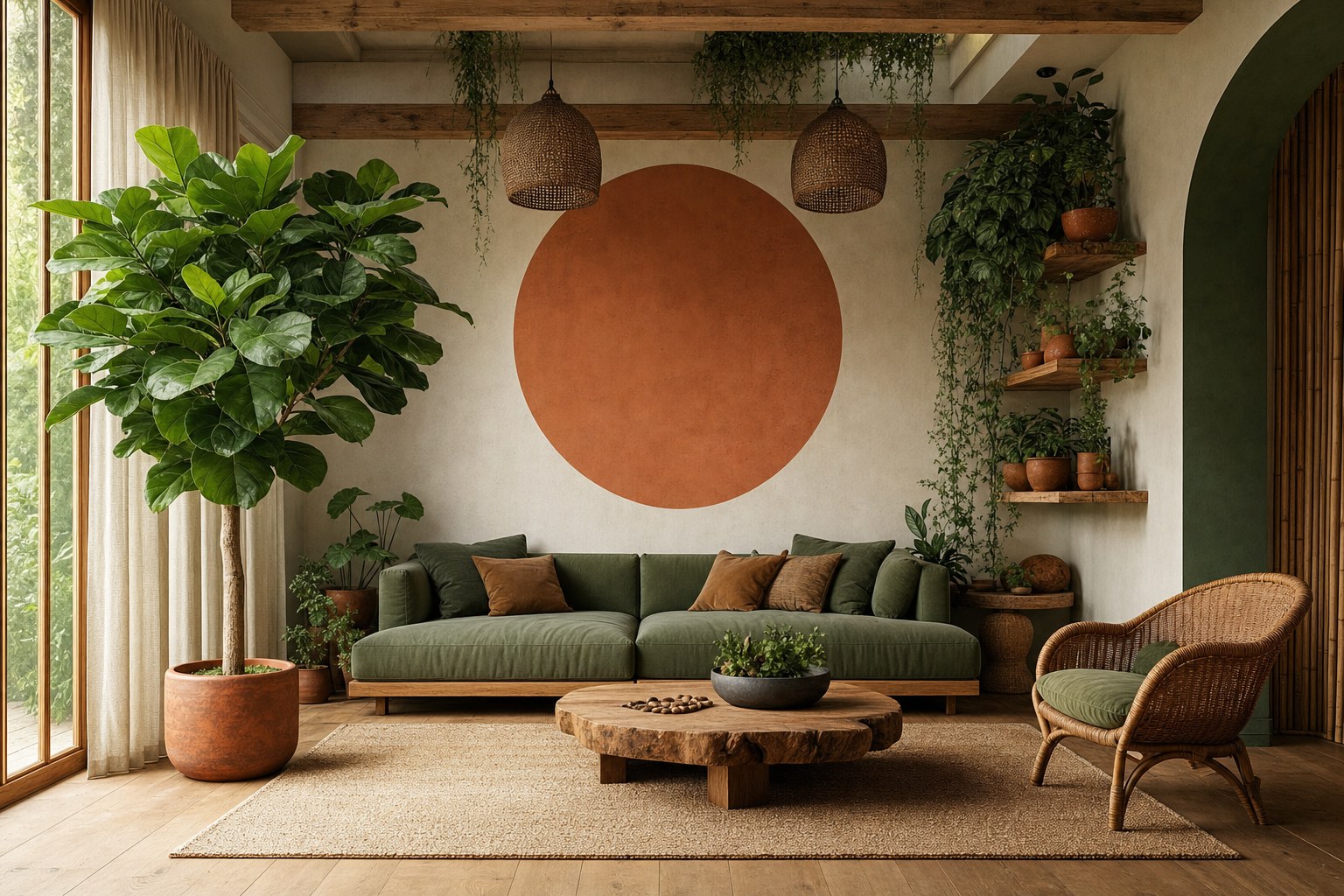
These two styles are frequently confused. Both embrace abundance, pattern, global textiles, and layered objects. The distinction is emotional intent. Bohemian design celebrates the global, the nomadic, and the handmade as a coherent worldview. Maximalist design celebrates personal accumulation and display as a right. A room can be both. But they do not have to be: a maximalist room with a strict jewel-tone Victorian palette and no global textile references is not bohemian. A bohemian room with a restrained object layer and careful negative space is not maximalist.
| Dimension | Maximalist Interior Design | Bohemian Interior Design |
|---|---|---|
| Core motivation | Personal abundance and the right to display, maximalism as proof of life | Global cultural celebration. Textiles, objects, and materials sourced with travel intent |
| Color palette | Jewel tones, deep walls, bold saturated anchors with palette coherence | Warm earthy tones, terracotta, cream, with global textile color pops |
| Pattern approach | Bold, saturated, mixed aggressively, patterns compete and coexist | Global-sourced patterns (ikat, block-print, kilim) layered softly against earthy neutrals |
| Object layer | Curated collections displayed at density. Gallery walls, vase clusters, book stacks | Handmade and globally-sourced objects. Macrame, woven wall art, rattan, brass trinkets |
| Wall treatment | Bold paint (emerald, cobalt, terracotta) or statement wallpaper, the foundation is dramatic | Typically warm neutral walls with tapestries, woven wall art, or macrame as the wall layer |
| Failure mode | Accumulation without palette anchor. Multiple competing focal points with no hierarchy | Costume rather than room. Global objects without personal integration reads as theme |
The $189 entry path.
A maximalist transformation for under $190. Introduces gallery wall density, layered rug depth, and bold textile character without repainting a wall or committing to wallpaper.
Frequently asked questions.
What is maximalist interior design?
Maximalist interior design is a philosophy of intentional abundance - the deliberate display of objects, patterns, colors, and textures as a design statement. It is the direct counterpoint to minimalism, and its 2020s resurgence is partly a cultural response to fifteen years of all-white Instagram design culture. The distinction that separates maximalism from hoarding is curation: every object in a maximalist room is chosen, every surface is considered, every grouping is composed. Maximalism draws from multiple periods, cultures, and materials simultaneously - mixing Victorian furniture with contemporary art, global textiles with bold paint colors, and curated collections with architectural wallpaper. The emotional core of modern maximalism is permission: the right to own things that matter to you and surround yourself with them visibly.
What is the difference between maximalist and cluttered?
The difference is one rule: curation. Clutter is accumulated without intention - things arrived and had nowhere specific to go. Maximalism is density with intent - every object placed, every surface considered, every grouping composed. The practical markers: maximalist rooms have palette coherence (a dominant color family that ties diverse objects together), scale hierarchy (a dominant focal point that organizes visual energy), intentional negative space (at least one clear surface per zone where the eye can rest), and the 20% edit (remove 20% after styling; if the room breathes better, those were accumulation not curation). The test: can you explain why each object is there? In a maximalist room, the answer is yes.
How do I mix patterns in a maximalist room?
Three rules: vary scale, share a color, and change texture. Scale variation: never place two patterns of similar size next to each other - a large botanical curtain pairs with a medium geometric rug and a small-scale stripe pillow. Shared color: every pattern should share at least one color from the room's palette anchor - this is the invisible thread that makes diverse patterns read as cohesive rather than chaotic. The color doesn't have to be identical; a deep emerald botanical and a dusty sage geometric both belong to the green family. Texture change: when two patterns fight each other, changing the texture of one resolves the conflict - a matte velvet pillow with one pattern pairs with a woven kilim with another, even at similar scales. The final rule: commit. Timid pattern mixing reads as indecision rather than maximalism.
How do I create a gallery wall for a maximalist room?
Five steps: First, plan on the floor - lay every frame and art piece in front of the wall and arrange horizontally before making any holes. Second, identify your anchor - the largest piece hangs at eye level, approximately center, and everything else orbits it. Third, mix sizes not metals - vary frame dimensions (5x7, 11x14, 24x30) within one frame finish family (all matte black, all brass, all natural wood). Fourth, fill to edges - a gallery wall that trails off on one side reads as unfinished. Fifth, mix media - prints, photographs, small mirrors, and three-dimensional wall objects create dimensional depth that a flat grid of matching frames cannot. The entry path approach: thrift 8-12 frames in mixed sizes, print your own art at FedEx Office or CVS, and plan the layout on the floor first. Total cost under $50 for a full gallery wall.
What colors work best for maximalist interior design?
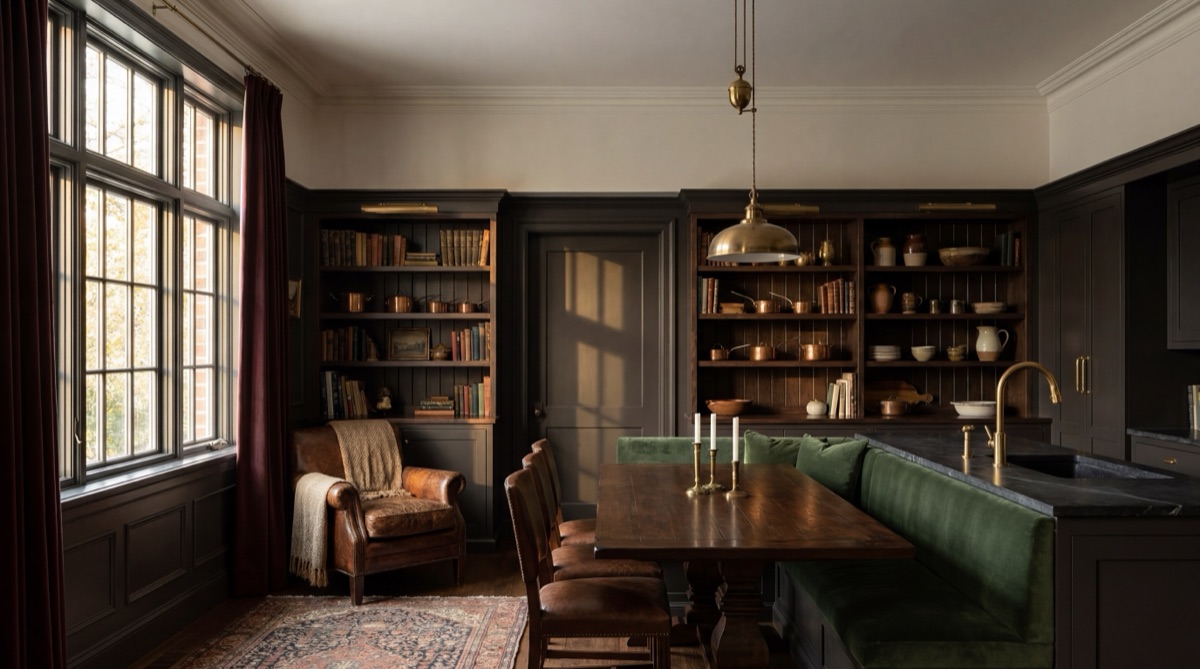
Maximalist interior design works with bold, saturated colors anchored by a coherent palette framework. The most successful approaches: the jewel-tone palette (emerald, cobalt, sapphire, amethyst, burgundy - deep, rich, and historically resonant), the earthy richness palette (terracotta, ochre, deep olive, warm burgundy), and the dark drama palette (deep forest green or navy walls that make every object and textile pop against them). The failure mode is not boldness - it is lack of anchor. The rule: choose one dominant color family for the largest surfaces (walls and primary sofa or rug) and then layer every other color within two or three families of it. Deliberate contrast works; arbitrary contrast does not.
Can maximalist design work in a small apartment?
Yes - small maximalist apartments are often more successful than large ones because constraint forces better curation. Go vertical rather than horizontal: a floor-to-ceiling gallery wall on one surface creates maximalist density without consuming floor area. Bold paint on a single accent wall does more visual work in a small room than multiple accent pieces competing for attention. One large-scale pattern - bold wallpaper on a reading nook back wall, or an oversized vintage rug - makes a stronger statement than five smaller patterns competing in the same square footage. For furniture, use low-profile silhouettes to keep maximalist density in objects and surfaces rather than furniture bulk. The entry path at $189 is specifically designed for a small-apartment maximalist start: gallery wall, layered rug, and bold throw pillows introduce maximalist character without overwhelming the room's proportions.
More rooms like this
No spam. Unsubscribe anytime.