Table of Contents
The Natural Materials Blueprint.
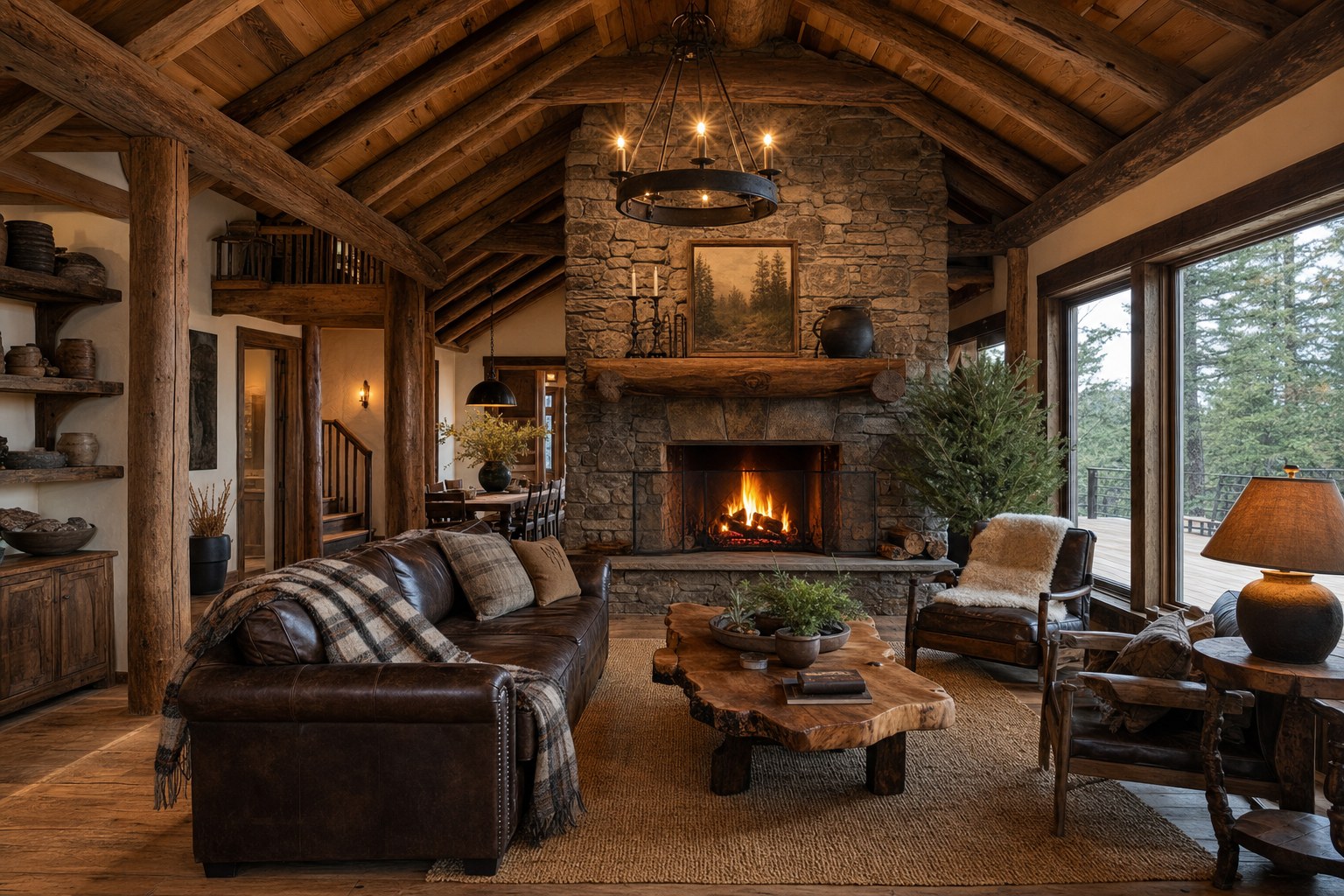
Rustic interior design is not a trend that arrives and departs with the seasons. It is a materials philosophy: the celebration of wood, stone, leather, wool, and iron in their least-processed, most authentic state. The rooms that accumulate the most attention share a single characteristic: they look earned. A Colorado log cabin with a stone fireplace and leather furniture. A mountain home in Whistler with timber beams and exposed stone walls. A 1930s lakeside cabin with authentic timber construction that has been lived in and worn in over decades. The style rewards authenticity over purchase.
Rustic is not one look but a material family - it embraces a broader range of influences, drawing inspiration from various rugged and weathered materials. The key phrase is "broader range" - rustic is not one look but a material family. Mountain rustic, lodge rustic, cabin rustic, Pacific Northwest rustic, and Appalachian rustic share the same five material families (wood, stone, leather, natural fiber, forged metal) but express them in regional dialects. The guide below works with the underlying material logic rather than any one regional variant, which makes it applicable to a suburban living room in Dallas as much as to an actual cabin in Vermont.
The failure mode matters here. "Dark-on-dark-on-dark" - all-dark wood plus stone plus leather with no warmth relief - produces a cave, not a cabin. "Antler overload" and novelty items like mason jar pendants and pallet-wood furniture signal Cracker Barrel, not mountain design. The five-element sequence below is ordered specifically to prevent these failure modes: start with the warm-toned reclaimed wood surface (which establishes the palette), add stone for geological weight, introduce leather at one key piece rather than wall-to-wall, layer plaid textiles last, and hold the lighting and antler accents to a single deliberate moment. The restraint is the skill.
Reclaimed Wood Layer · $189.97
Reclaimed wood is the first element because it is the rustic style's primary palette-setter and surface material, and it must be established before anything else, stone, leather, or textiles, can make sense in the room. The design principle here is replacement: every "refined, sanded wood" surface in the room is a candidate for a reclaimed or unfinished counterpart. A floating barn wood shelf above a console table, a reclaimed beam above a doorway, or shiplap planks on a single accent wall behind the sofa. Each of these moves the room's wood tone from generic to intentional. The specific character of reclaimed wood is what makes it irreplaceable in this style: weathered grain, nail holes, saw marks, color variation from years of exposure. These imperfections are the material's primary value. Woodland greens, oaky browns, and dusted grays encompass the ideal color palette. Add a bit of cream or white to bring out the textures of the other colors. The four items in the reclaimed wood layer build this material story at the accessory and surface level without requiring any structural work: barn wood floating shelves for the walls, a live-edge serving board for the coffee table, a reclaimed wood tray for the side table, and a shiplap-look peel-and-stick panel for one accent wall section.
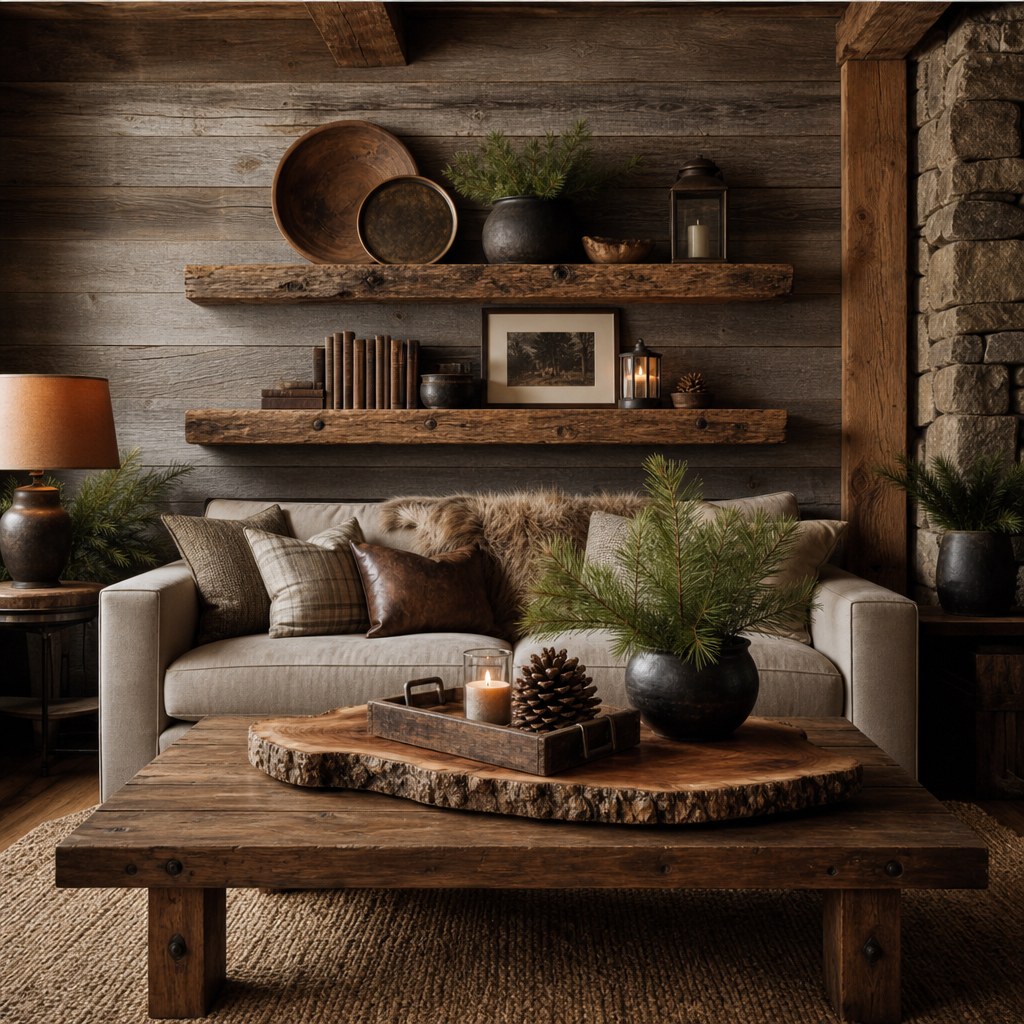
E1 Receipt - Reclaimed Wood Layer
Stone Fireplace Surround · $174.97
The stone fireplace is the rustic room's structural focal point and the single element that most reliably signals mountain-home authenticity over generic cabin decor. A stone fireplace with naturally accented fragments of tans and rich grays creates the foundation of rustic living rooms. Natural stacked stone gives the room an earthy, outdoor feel, and the choice between river rock, fieldstone, and slate shifts the regional dialect of the rustic style. River rock reads Pacific Northwest and lakehouse; fieldstone reads Appalachian and Northeastern cabin; flat stacked slate reads contemporary mountain modern. For homes without an actual stone fireplace, the same visual weight can be established through two moves: a stone-look porcelain tile surround applied over an existing brick or drywall surround, and an electric fireplace insert with realistic flame effect for rooms without a working hearth. The three items in this element layer the stone material into the room's mantel moment: a faux stone panel creates the visual surround, a cast-iron candle holder (the fireplace's accessible stand-in) delivers the focal-point warmth, and a set of raw stone coasters carries the geological material to the coffee table level as a repeating detail.
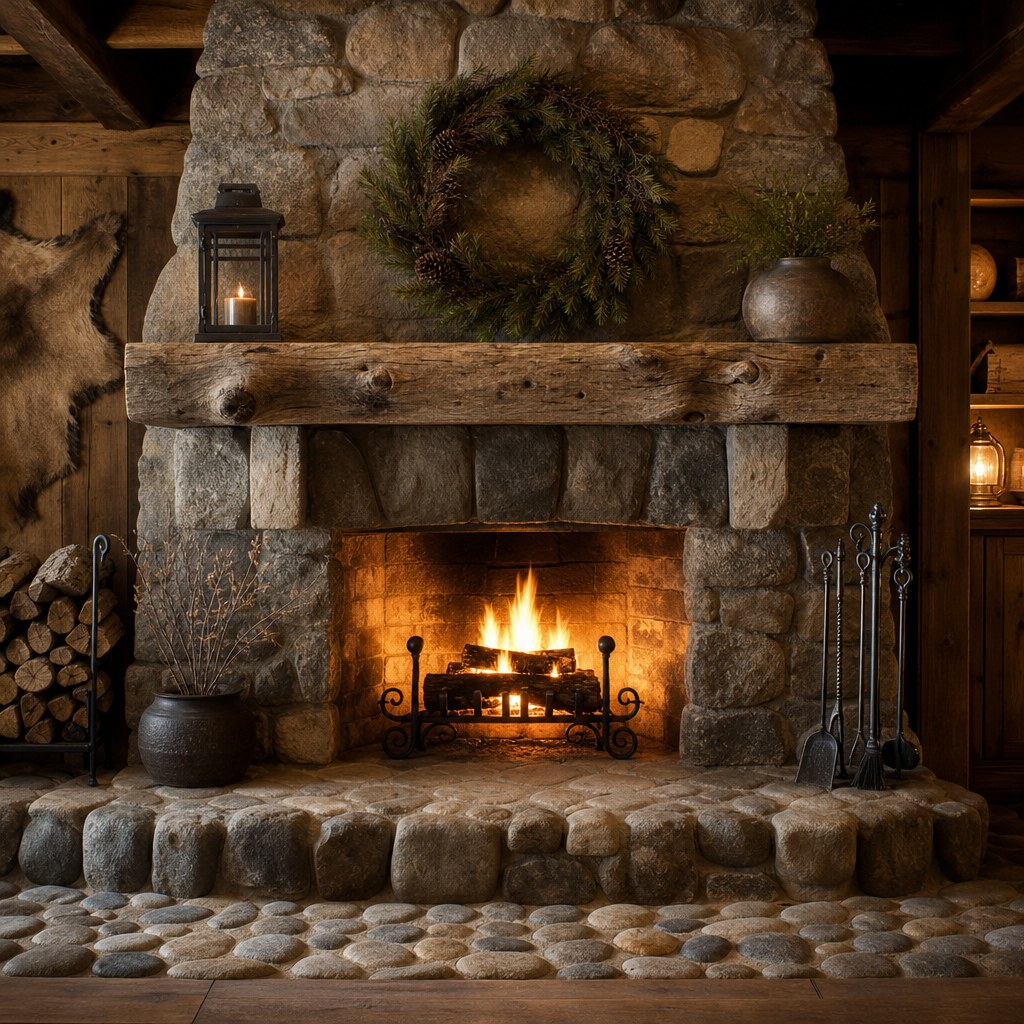
E2 Receipt - Stone Fireplace Surround
Leather Seating Core · $389.99
Leather is the rustic seating material because it shares the style's core value: it improves with age and use. Full-grain and top-grain leather develops a patina over years that synthetic and fabric upholstery cannot simulate. The worn, broken-in quality of aged leather is not a flaw to hide but a feature to display, and in a rustic room it reads as material authenticity rather than wear. Leather furniture, especially in deep browns and tans, is a hallmark of the lodge and mountain aesthetic, offering both style and practicality in a family or high-use room. The sourcing hierarchy matters here: a genuine leather sofa or armchair, sourced vintage from Chairish or estate sales, delivers authenticity at a fraction of new-leather pricing and comes with the aged patina already built in. A leather sofa with visible wear marks and settled cushions looks more rustic than a new leather sofa fresh from the box. At new pricing, mid-grain leather in cognac, saddle, or dark espresso is the entry point. The leather seating core is built around two pieces: a full leather armchair (which carries the style signal without requiring sofa replacement) and a leather-wrapped ottoman that doubles as a coffee table. Paired with a plaid throw draped over the arm, the armchair delivers the complete rustic seating signal without a full room overhaul.
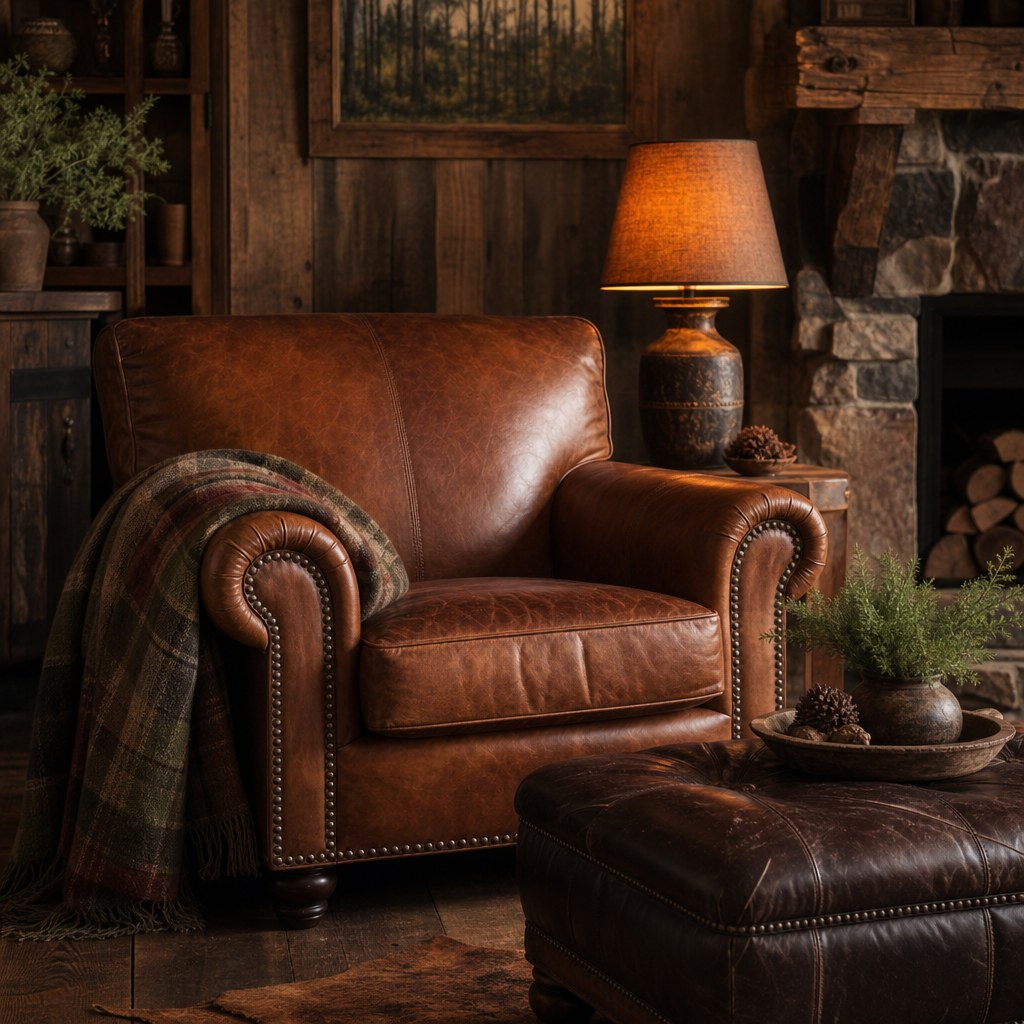
E3 Receipt - Leather Seating Core
Plaid Textile Foundation · $212.96
Plaid and buffalo check are added fourth, after the wood, stone, and leather are established, because they respond to the room's material palette rather than setting it. The textile layer's job is to soften the hard surfaces (wood, stone, leather) with warmth and pattern while staying within the earthy color family already established. Buffalo check. The bold two-color grid in red and black, green and black, or navy and cream, is the textile pattern most strongly associated with rustic and cabin design. Throw pillows in plaid or buffalo check patterns on sofas and beds; buffalo plaid with its bold checkered pattern adds a cozy, cabin-like atmosphere. The critical calibration: one bold plaid element (a wool throw or a single buffalo check pillow cover) is rustic; five plaid elements in the same room is Cracker Barrel. Balance the plaid with solid-color companions in bark brown, forest green, or cream. Both styles feature cozy textiles such as wool blankets and plaid throws, but rustic interiors favor heavier-weight fabrics, burlap, wool, cowhide, over the lighter linens more common in farmhouse design. The jute rug is the floor textile anchor: jute's natural, unbleached fiber color (warm tan verging on honey) reads immediately as rustic natural material and provides a transition surface between the wood floor and the leather seating.
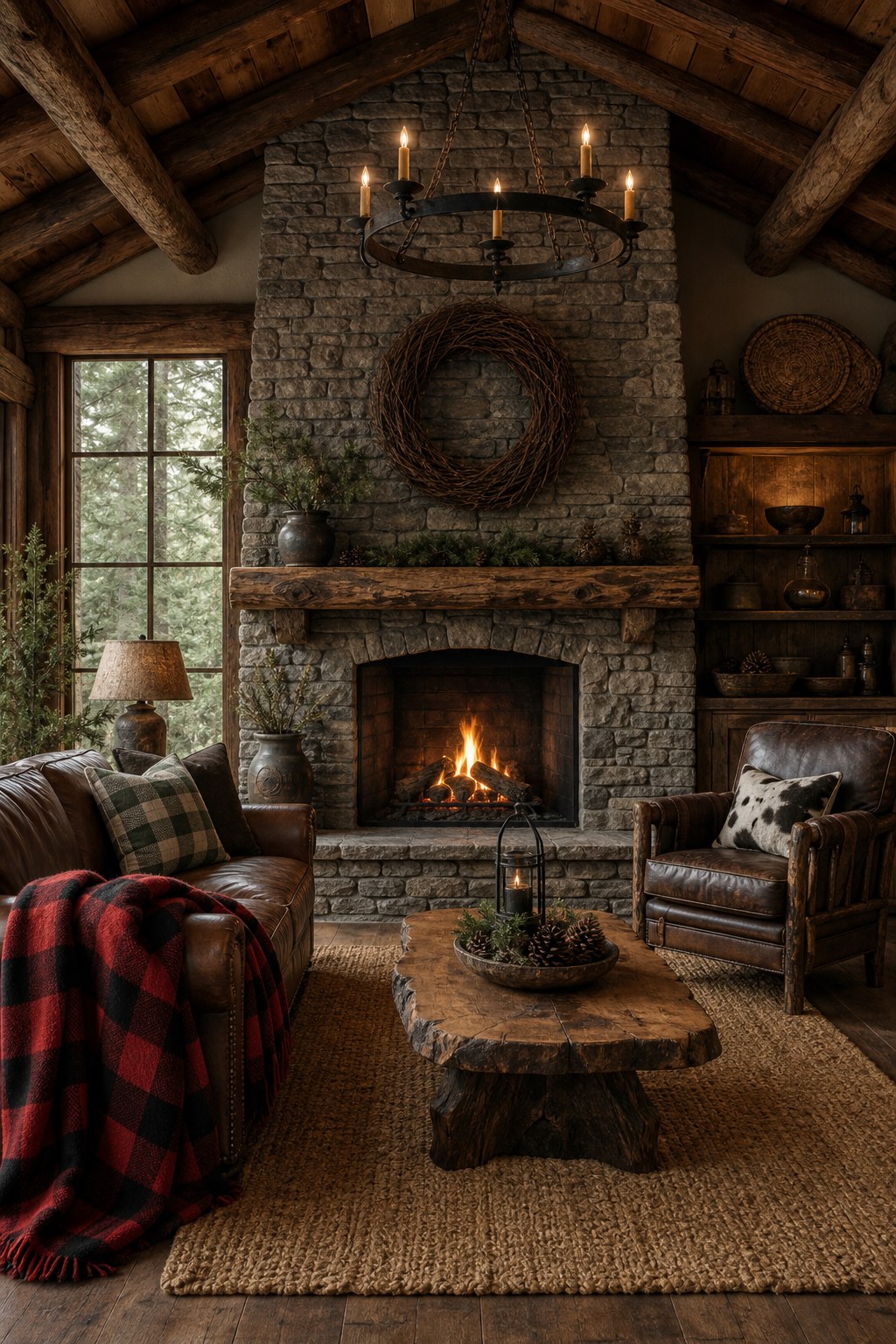
E4 Receipt - Plaid Textile Foundation
Wrought-Iron and Antler Lighting · $279.98
Lighting and accent hardware are added last because they are the style's most visible signals and carry the greatest risk of tipping the room from rustic warmth into hunting-lodge kitsch. The correct posture: wrought iron or forged black metal is the material for all hardware (door handles, cabinet pulls, lamp bases, curtain rods) and should be consistent across the room. Antler accents, whether a genuine shed-antler chandelier or a resin replica, work as a single deliberate anchor piece, not as a collection of seven different antler items scattered across the room without hierarchy. Rustic iron light fixtures, chandeliers, wall sconces, provide a warm feel, and antler chandeliers made from natural materials deliver the lodge aesthetic's most concentrated signal. The practical lighting priority for most homes is the floor lamp: a wrought-iron tripod or forge-black arc lamp with a warm Edison bulb at 2200K-2700K is the fastest single move to shift a room's ambient quality toward rustic warmth. Pair it with a table lamp on a wrought-iron or raw wood base with a linen shade. Both lamps on warm-spectrum bulbs, no cool-white LEDs, maintain the amber glow that makes reclaimed wood and leather read at their best. Shiny, sparkling metals will only contrast this style in a way that pulls you out of the warming feels of the woods. Matte black, oil-rubbed bronze, and dark pewter are the only metal finishes in a rustic room.
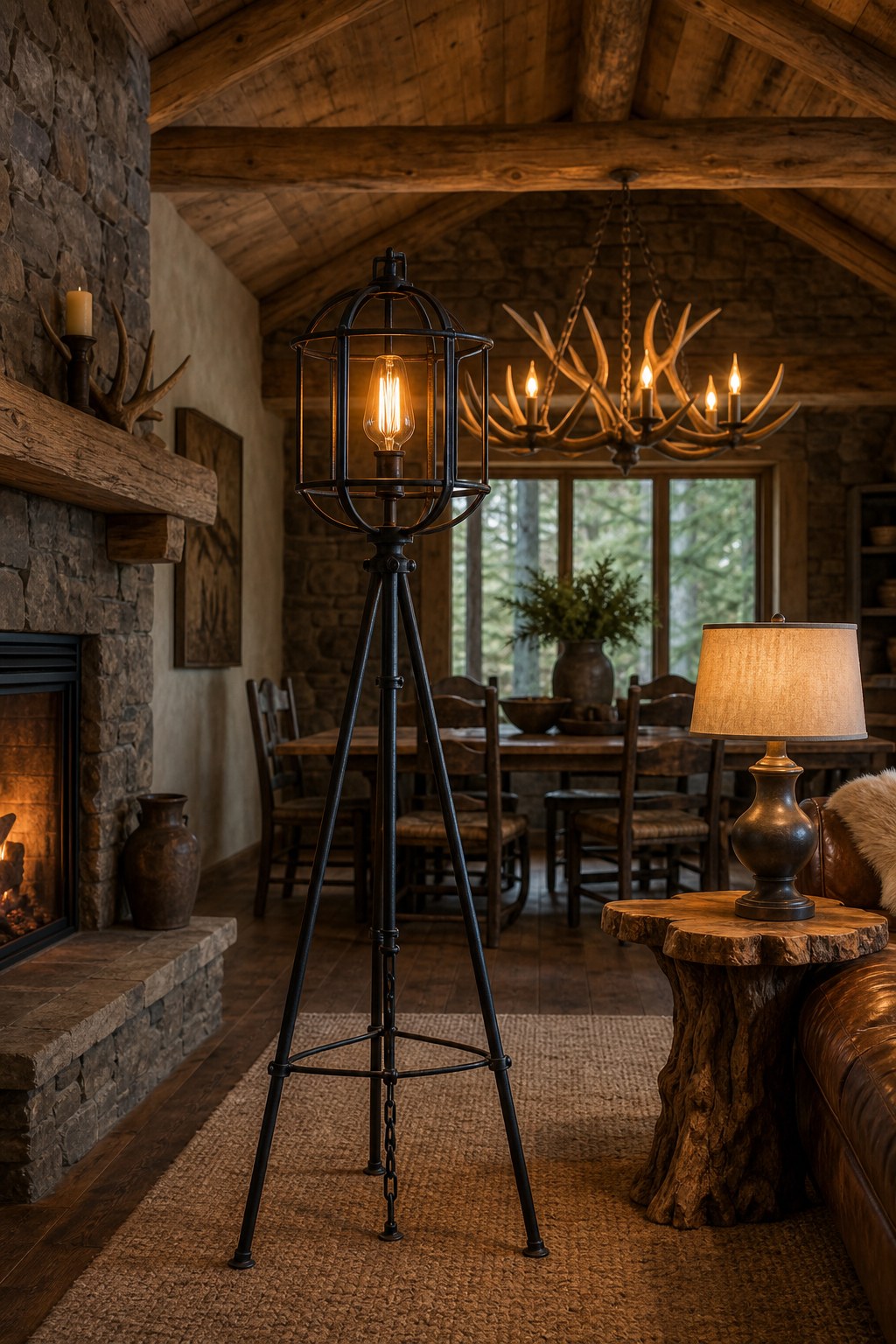
E5 Receipt - Wrought-Iron and Antler Lighting
Rustic vs. Farmhouse Interior Design.
The rustic-vs-farmhouse confusion is the most common question in the style's research data, and the distinction is real and meaningful. Both styles celebrate natural materials and a connection to traditional roots, but rustic design leans towards a rugged, natural look, and farmhouse design is more about creating a cozy, light, and welcoming space with a touch of nostalgia. Rustic elements can exist without farmhouse style, paired with contemporary finishes for "modern rustic", but farmhouse typically requires rustic components. The easiest self-test: if the room feels like a cabin that belongs to someone who hunts, fishes, or hikes, it is rustic. If it feels like a cheerful farmhouse kitchen with white shiplap and linen curtains, it is farmhouse.
| Dimension | Rustic Interior Design | Farmhouse Interior Design |
|---|---|---|
| Color temperature | Darker and moodier. Bark brown, forest green, brick red, slate gray; cream used as relief, not as the room's dominant tone | Lighter and airier. White, off-white, and soft beige dominate; color introduced through small accents only |
| Wood treatment | Reclaimed, unfinished, or rough-hewn; imperfections (nail holes, saw marks, weathered grain) are the point | Solid wood with an emphasis on craftsmanship; shiplap and barn doors are polished, not raw |
| Stone use | Fieldstone, river rock, stacked slate. Geological, uncut, used in large surfaces (fireplace, accent wall) | Subway tile, painted brick, whitewashed stone. Stone as backdrop, not primary material statement |
| Textile weight | Heavy. Wool, burlap, cowhide, leather; plaid and buffalo check in bold two-color grids | Lighter. Linen, cotton, muslin; softer gingham or ticking stripe rather than bold plaid |
| Metal finish | Wrought iron, forged black, oil-rubbed bronze, dark pewter; no polished or chrome metals | Matte black or brushed nickel; occasionally antique brass in a modern farmhouse context |
| The identification test | Feels like a mountain cabin or lodge. Earned, nature-raw, slightly rugged, intentionally imperfect | Feels like a cheerful country home. Inviting, cozy, and well-organized with vintage nostalgia accents |
The $47 entry path.
One buffalo check throw blanket and one set of plaid pillow covers change the felt temperature of any room without touching the walls, the floor, or the furniture. These two items are the entry to the rustic aesthetic. Fully reversible, no structural commitment required.
Frequently asked questions.
What is rustic interior design?
Rustic interior design is a style that celebrates raw, unfinished, and natural materials - reclaimed wood, fieldstone, leather, wool, and wrought iron - in a warm, earthy palette of bark brown, forest green, brick red, and cream. The style draws from mountain cabin, lodge, and wilderness aesthetics, and its defining principle is authenticity: imperfections like rough-hewn grain, uneven stone, and worn leather are the point, not a flaw. Rustic interior design celebrates all the quirks, curves, and natural phenomena that occur in the great outdoors. The style is distinct from farmhouse in that it leans darker, moodier, and more nature-raw, while farmhouse tilts toward lighter neutrals and more polished craftsmanship. Rustic design's emotional resonance is deeply connected to terrain and place - the aspiration to a space that looks carved from its environment rather than assembled from a catalog.
What is the difference between rustic and farmhouse design?
The core distinction is material treatment and color temperature. Rustic design embraces a broader range of influences, drawing inspiration from various rugged and weathered materials, while farmhouse decor is a subset of rustic design with a more specific focus on a charming, country-inspired atmosphere. In practice: rustic runs darker (bark brown, forest green, brick red), while farmhouse favors lighter neutrals (white, off-white, soft beige). Rustic uses reclaimed and unfinished wood in its most raw state; farmhouse favors shiplap and barn doors with an emphasis on clean craftsmanship. Rustic uses heavy textiles (wool, burlap, cowhide); farmhouse prefers lighter linens and cotton. The identification test: if the room feels like a mountain cabin belonging to someone who fishes and hikes, it is rustic. If it feels like a cheerful white-shiplap country kitchen, it is farmhouse.
What materials define rustic interior design?
Five material families define rustic interiors. Reclaimed wood - beams, planks, barn wood, shiplap - is the primary surface material, valued for weathered grain and authentic history. Stone masonry - fieldstone, stacked stone, river rock - is the fireplace and accent wall material, providing geological weight and tactile contrast. Full-grain and top-grain leather provides the primary seating upholstery, acquiring patina with age. Natural fiber textiles - wool, jute, cotton, burlap, and cowhide - build the textile layer in plaid, buffalo check, and herringbone patterns. Wrought iron and forged steel provide the hardware and lighting layer, with matte black, oil-rubbed bronze, and dark pewter as the only acceptable metal finishes. Distressed, worn-looking metals are the standard. Shiny, sparkling metals will only contrast this style in a way that pulls you out of the warming feels of the woods.
How do I get rustic style without a log cabin or stone fireplace?
The rustic aesthetic is primarily delivered through materials and textiles, not architecture. Four moves work in any home: add a reclaimed wood floating shelf above a window or doorway to introduce the rough-hewn wood signal; anchor the seating area with a jute or wool area rug in a natural color; layer plaid or buffalo check throw blankets and pillow covers on existing furniture; and replace standard hardware with wrought-iron or oil-rubbed bronze pieces. Faux stone panels or peel-and-stick ledger stone create a fireplace surround moment on any wall. The most critical move is wood tone - swapping out blonde or whitewashed wood accents for dark walnut or weathered oak finishes shifts the room's temperature toward rustic immediately. Renters who cannot modify walls or floors can deliver the full material story through textiles, lighting, and tabletop objects alone: reclaimed wood trays, slate coasters, leather throws, and a wrought-iron floor lamp on warm Edison bulbs will establish the style without touching the structure.
What is the rustic color palette?
The rustic palette is built on three layers. The neutral foundation - cream, warm white, linen, oat - keeps the earthy mid-tones from making the room feel like a cave. The signature mid-tones are bark brown, dark walnut, forest green, brick red, slate gray, and burnt sienna - the colors of the natural landscape the style references. The accent tier adds deep teal, oxblood, and warm amber through textiles, ceramics, and glass. The palette-use rule that separates the coherent rustic room from the dark-on-dark failure mode: dark tones (deep brown, charcoal, slate) belong on the floor and the fireplace surround; mid-tones (forest green, brick red) belong on textiles and accent walls; cream and linen belong on the walls and ceiling, providing the relief that makes the dark material surfaces read as warm rather than oppressive. Add a bit of cream or white to bring out the textures of the other colors - the pale background is what makes the reclaimed wood grain and stone texture visible.
More rooms like this
No spam. Unsubscribe anytime.