Table of Contents
Three Eras, One Logic.
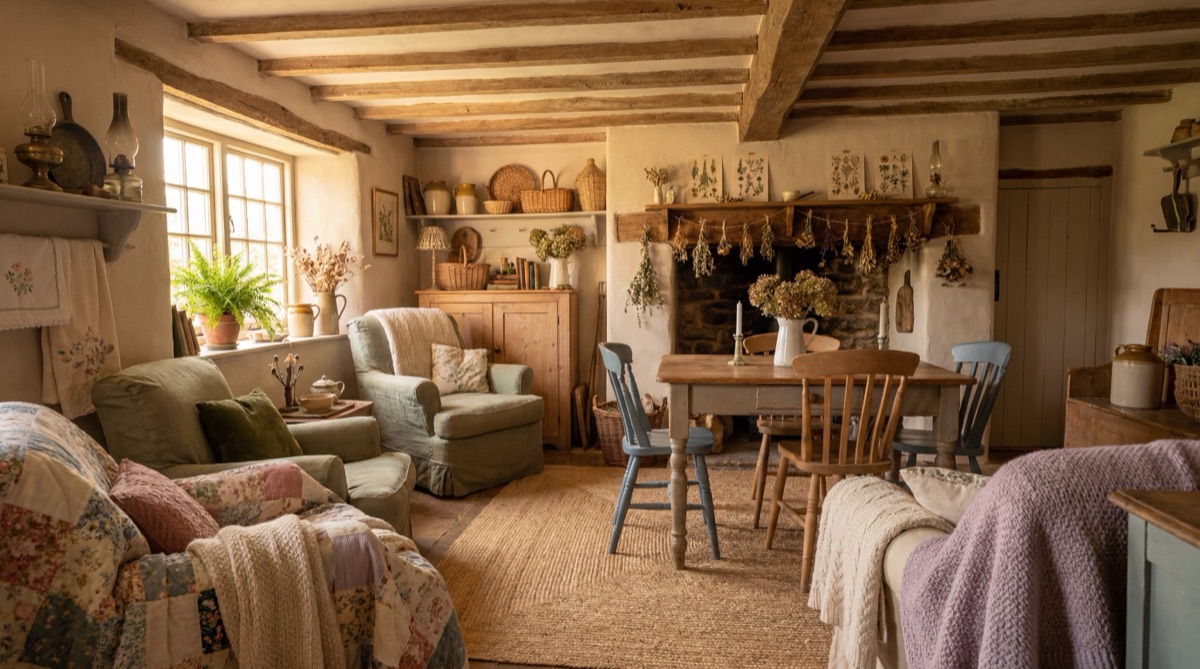
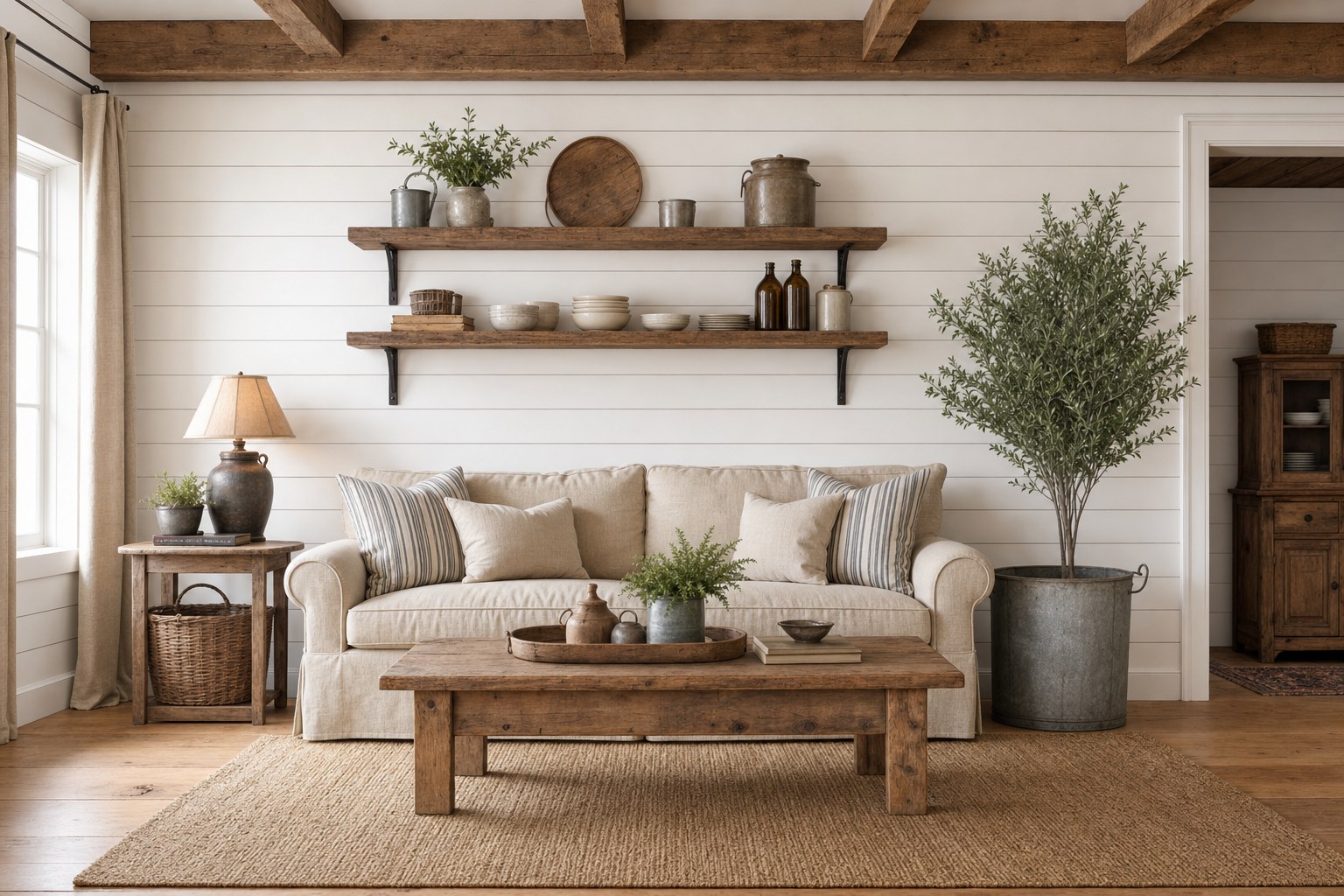
Farmhouse design has run through three distinct phases. Traditional Farmhouse is the origin: 18th and 19th century American provincial homes built from local materials, with genuine antiques, earthy muted tones, and every object carrying a working history. Modern Farmhouse is the HGTV era: bright white walls, shiplap on every surface, barn doors, matte black hardware, reproduction distressed finishes styled for photography. Neue Farmhouse 2.0 is the current evolution, now replacing the HGTV version in trend-forward design: natural materials retained, HGTV cliches stripped, Scandi minimalism layered in - softer and warmer neutrals, cleaner architectural surfaces, more space between elements. Exposed beams and apron sinks survive all three eras. Oversized clocks and painted signs belong to only one.
What stays constant across all three is the operating principle: imperfection is a feature, not a flaw. Worn floorboards, weathered metal, antiques with a hardworking history - these are design signals, not compromises. Functional objects belong on open display rather than hidden in cabinets. An absence of fussiness is the style's north star. The grandmother's house archetype - consistently the most upvoted farmhouse post in communities like r/DesignMyRoom - captures what the style is actually chasing: a home that feels lived in and loved, not staged. The five elements below build that quality in order: architectural texture first, kitchen anchor second, agricultural contrast third, natural fiber fourth, earned history last.
Sourcing priority follows a specific hierarchy. Vintage and antique objects go first - estate sales, antique markets, and thrift stores produce the genuine crocks, worn boards, and old iron clocks that new reproductions cannot match. Textiles second: linen, jute, and cotton are reliable at every price point. Metal accents last: galvanized buckets, wrought iron holders, and wire baskets are commodity items at hardware stores and HomeGoods for under $25 each. The elements with genuine age anchor the room; the elements at accessible price points build around them.
Shiplap Texture Layer · $189.96
Shiplap is horizontal wooden boarding where each plank features a rabbet joint. A notched edge that interlocks with the next board and creates a subtle, repeating shadow line between courses. Those shadow lines are what separates shiplap from painted drywall: the horizontal rhythm adds depth and warmth at the wall plane without competing with furniture or artwork. Shiplap was the signature of the HGTV Modern Farmhouse era, and its overuse on every renovation show through the 2010s and early 2020s created a backlash that is real but specific. It targets wall-to-wall shiplap as the room's dominant surface, not shiplap as a single accent element. One shiplap accent wall in a kitchen, entryway, or living area still reads as intentional when it is one element among several. The 2025 evolution moves toward board-and-batten, beadboard, and clean wood paneling as less trend-associated alternatives that carry the same horizontal-board warmth with less cultural baggage. For renters who cannot commit to wall installation: a whitewashed wood console table, a reclaimed wood floating shelf, and a natural wood ladder shelf each carry the horizontal-board material logic as furniture rather than architecture. The whitewash technique, diluted white paint applied to raw wood and partially removed, bridges the rough-hewn traditional shiplap with the cleaner, airier version that works in contemporary spaces.
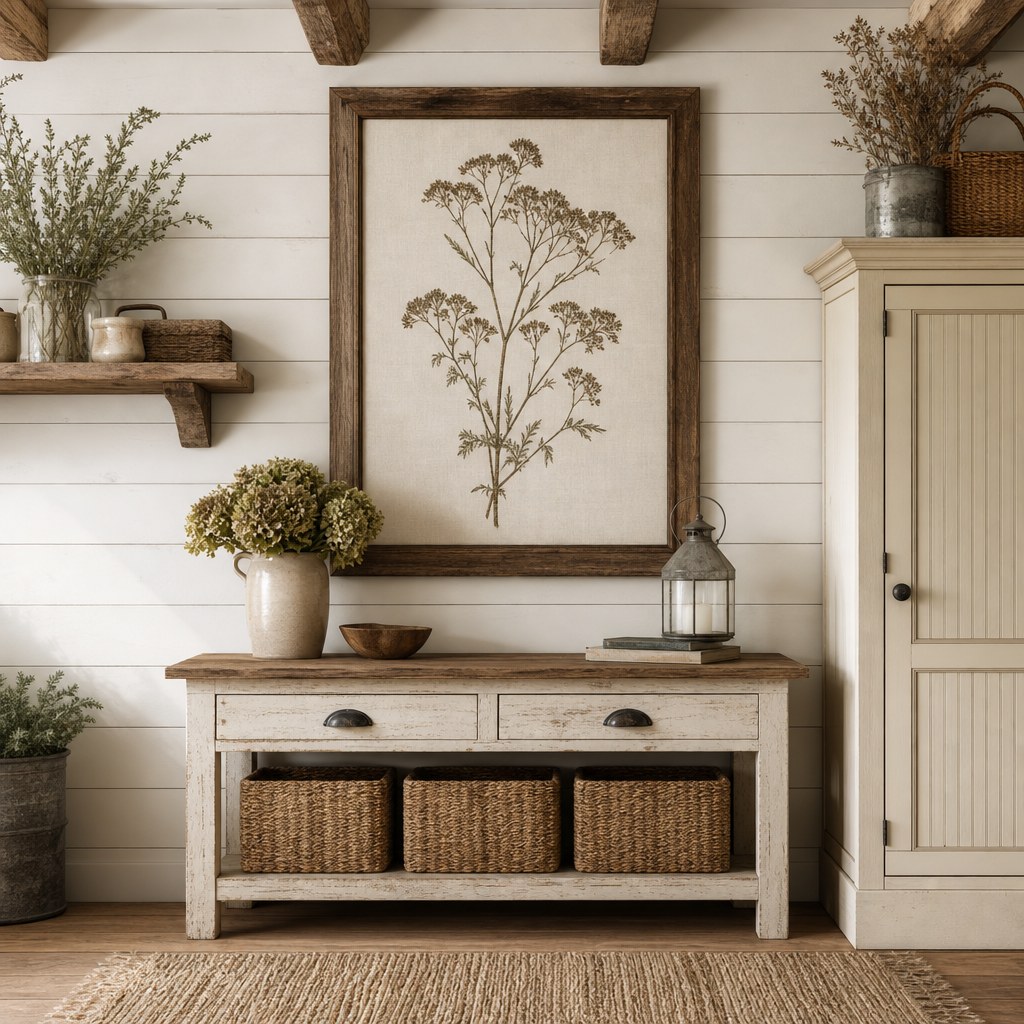
E1 Receipt - Shiplap Texture Layer
The Apron Sink Moment · $219.97
The apron-front sink is the fixture that most clearly announces the farmhouse kitchen's design philosophy: utility made beautiful. The exposed front panel, which replaces the cabinet face below the countertop edge, is an act of honest construction. There is no attempt to hide the basin's depth; the sink announces its own function, and that announcement is the room's most valuable design signal. Paired with shaker cabinets in sage, cream, or warm white, a butcher block section of countertop, and a bridge or gooseneck faucet in oil-rubbed bronze, the apron sink becomes the kitchen's anchor around which every other element is organized. For renters who cannot replace fixtures: the farmhouse kitchen philosophy is about functional objects on visible display, not just the sink itself. Open shelving stacked with everyday dishes and stoneware, a large butcher block cutting board leaned against the backsplash, and a bridge faucet in oil-rubbed bronze (many are drop-in replacements requiring no plumbing work beyond a shutoff valve) each build the same "useful and visible" signal at the kitchen level without structural changes. The three receipt items below build the kitchen vignette around any existing sink.
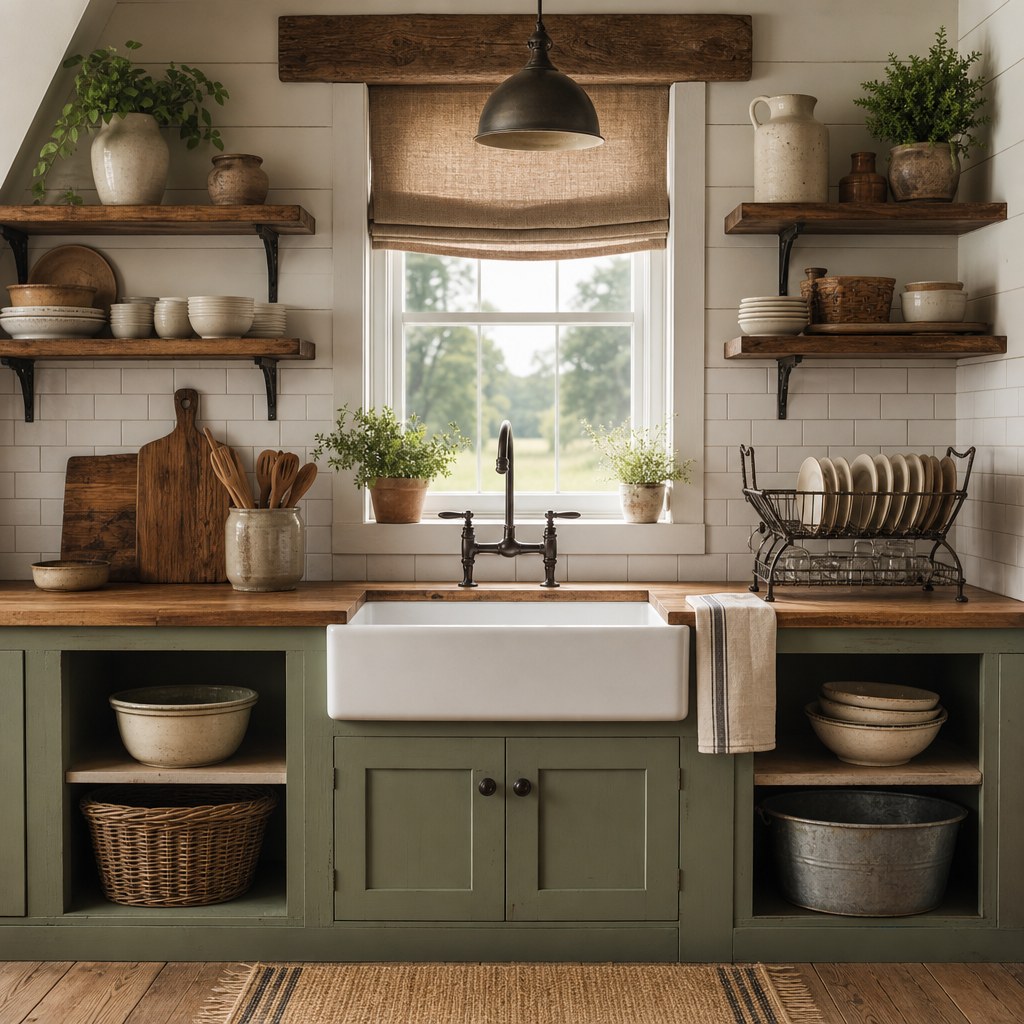
E2 Receipt - The Apron Sink Moment
Galvanized Metal Accents · $99.96
Galvanized metal, steel coated in zinc to a dull, silvery-gray matte finish, is the agricultural utility reference in the farmhouse palette. Where wood provides warmth and linen provides softness, galvanized metal and wrought iron provide the working-farm signal: water troughs, toolboxes, bucket planters, and barn hardware that give the style its functional credibility. Metal finish also signals era: galvanized steel and raw wrought iron read as Traditional Farmhouse; matte black reads as HGTV Modern Farmhouse; brushed brass and oil-rubbed bronze read as the current Neue Farmhouse 2.0 direction. All three are period-consistent with pre-1950s American hardware, which means mixing them is also correct. The ceiling for this category is three to five pieces in any single space: a galvanized bucket planter, a set of lantern candle holders, a wire mesh basket, and a set of wrought iron taper holders constitute a complete metal layer. Beyond five pieces, the metal reads as a theme rather than an accent. The "mason jar and galvanized steel" trap that farmhouse communities identify as the gift-shop version of the style.
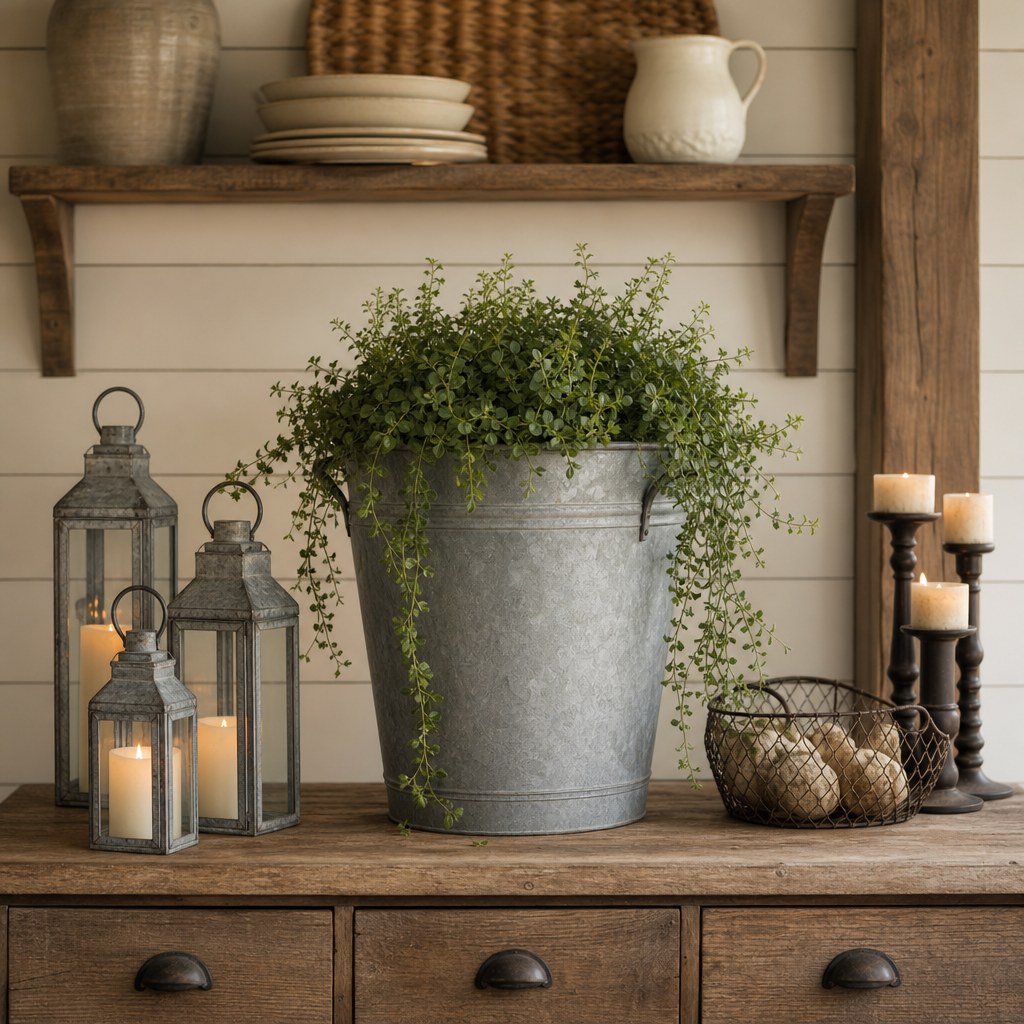
E3 Receipt - Galvanized Metal Accents
Linen and Burlap Textiles · $228.97
The natural fiber textile layer is the highest-ROI category in farmhouse design for renters and anyone working within a budget. Linen, jute, and cotton in their natural undyed states establish the warm, tactile, organic material register that separates a farmhouse room from a conventionally decorated one. And they do it without touching a wall, replacing a fixture, or committing to furniture. Linen is the primary farmhouse fabric: naturally textured, off-white, with a loose weave that catches light differently from synthetic alternatives. Simple and unlined. The texture is the design point. The jute area rug is the floor-level complement: natural plant fiber in the beige-to-camel range, woven in a braided or chunky pattern that adds organic texture underfoot that synthetic rugs cannot replicate. A single 5x8 jute rug shifts a room's material ratio substantially before any furniture changes. The cotton buffalo check throw is the pattern entry: a two-color oversized plaid in cream and any earth tone is the period-accurate farmhouse pattern. Introduce it through one throw to keep it as an accent rather than a theme. Cotton ticking stripe and grain-sack fabric, a loose cream cloth with a stripe or stencil letter, are the two additional period-accurate farmhouse patterns for cushion covers and table runners when used sparingly.
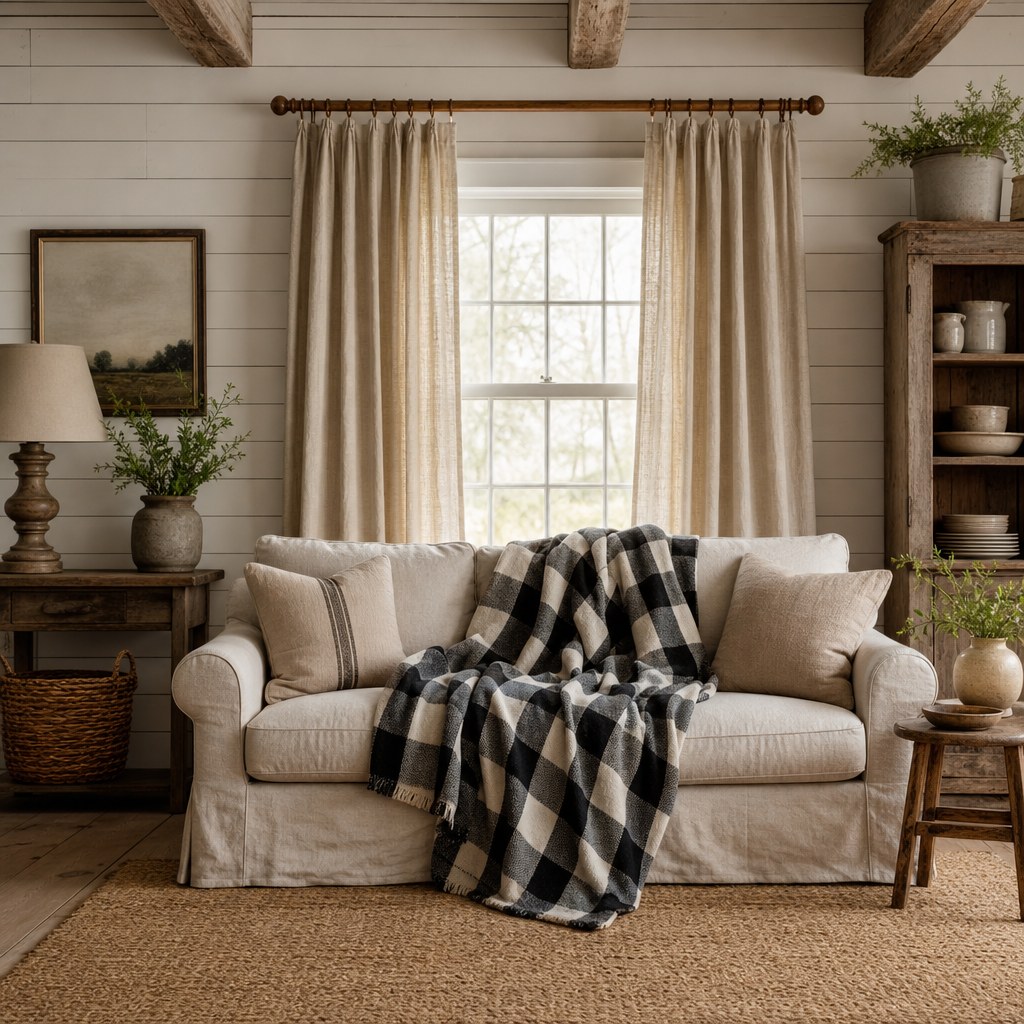
E4 Receipt - Linen and Burlap Textiles
Vintage Objects Layer · $159.96
The vintage and antique objects layer is added last because it responds to the material story already established in the room and grounds it in time. This is the element that separates a farmhouse room from a farmhouse-themed room: genuine age cannot be replicated at scale. A worn ceramic crock from an estate sale, a wooden cutting board with real knife marks and patina, a produce crate from a Saturday market. Each contributes farmhouse credibility that a new "distressed-finish" reproduction cannot match. The sourcing hierarchy is strict: estate sales, antique markets, and thrift stores first; reproduction only when the genuine article is unavailable or budget prohibits. Four object categories constitute a complete vintage layer. A stoneware crock or jug in cream with a blue salt-glaze band, the most recognizable American farmhouse antique form, belongs on an open shelf or beside the apron sink as the room's period anchor. A worn wooden dough board or cutting board with visible cut marks and patina is the kitchen's work-surface relic. A weathered wood produce or apple crate serves as storage and display simultaneously. An old clock in a wooden or iron case gives the room a sense of time and continuity that no new piece produces. Purpose-driven objects on open display, cutting boards stacked on the counter, crocks alongside the sink, are farmhouse in practice, not just in aesthetic.
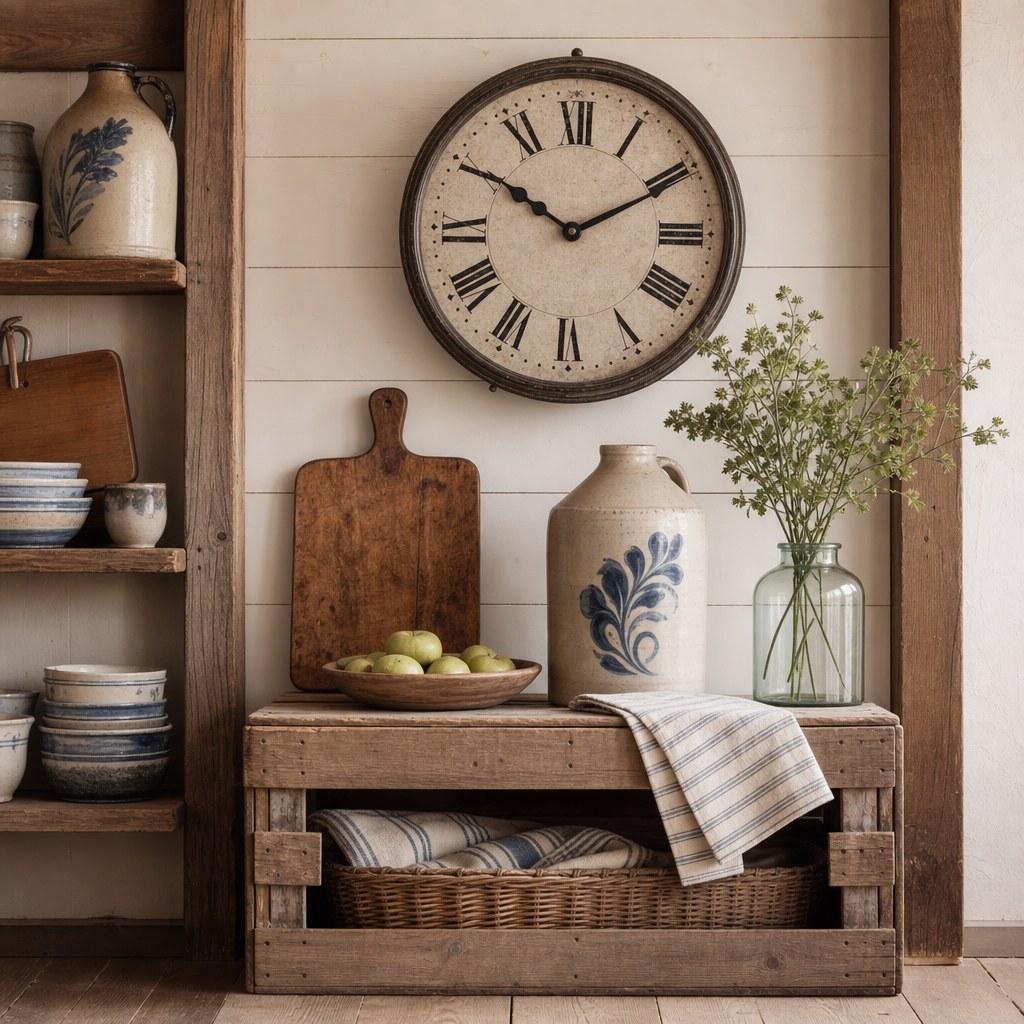
E5 Receipt - Vintage Objects Layer
Farmhouse vs. Modern Farmhouse.
Both styles share the same architectural vocabulary, shiplap, barn doors, apron sinks, and exposed beams, which is why the confusion is so persistent. The distinction is finish, curation, and color temperature. Traditional farmhouse runs on muted earthy tones with genuine antiques, worn distressed surfaces, and furniture with turned legs and spindle backs. Modern farmhouse uses bright white as the dominant base, newly distressed reproductions styled for photography, and sleeker contemporary finishes applied to the same structural cues. The easiest test: if the room feels collected and lived in across decades, it is traditional farmhouse. If it looks like a renovation show after-reveal, clean, bright, photographically composed, it is modern farmhouse. A third position now exists between and beyond both: Neue Farmhouse 2.0 retains the natural material logic of both while shedding the dominant white and the wall-to-wall shiplap, moving toward a quieter, warmer architectural shell with more space between elements.
| Dimension | Traditional Farmhouse | Modern Farmhouse |
|---|---|---|
| Color palette | Muted, earthy tones. Cream, warm beige, light gray, terracotta, muted mustard; no dominant white | Bright white as the dominant base, with blue, green, or black as accent colors; very light overall |
| Furniture detail | Charming period details. Turned legs, spindle backs, distressed finishes, and visible joinery | Cleaner lines, minimalist accessories, and contemporary silhouettes applied to traditional forms |
| Shiplap use | Natural or whitewashed wood, sometimes with visible paint history; texture over uniformity | Crisp painted white or light gray; perfectly uniform gap lines; often mixed with tile or steel |
| Object curation | Vintage and antique objects with genuine age. Crocks, boards, signs, clocks with history | Curated reproductions and new pieces with vintage-style finishes; edited and styled for photographs |
| Metal finish | Galvanized steel, wrought iron, aged bronze, raw and utilitarian | Matte black, brushed nickel, or brushed brass, finished and contemporary |
| The confusion test | Feels like a grandmother's home. Warm, lived-in, collected, imperfect in the right ways | Feels like a renovation show after-reveal. Clean, bright, photographically composed, intentionally edited |
The $99 entry path.
Three items that establish the natural-material textile foundation in any room. No furniture replacement, no paint, no structural work required. The complete E4 textile layer serves as the entry path.
Frequently asked questions.
Is farmhouse interior design still relevant in 2025?
Farmhouse is not a trend - it is a material philosophy rooted in how pre-industrial American homes were built: from local materials, for practical use, with every object earning its place. What has changed since the HGTV peak of the mid-2010s is the expression. The shiplap-on-every-wall, mason-jar-on-every-shelf version is receding. What has replaced it is a Scandi-minimal hybrid - Neue Farmhouse 2.0 - that retains reclaimed wood, natural textiles, apron sinks, and vintage objects while moving toward cleaner architectural surfaces, warmer neutrals, and more space between elements. The style is not dead; it evolved.
What is the difference between traditional farmhouse, modern farmhouse, and Neue Farmhouse 2.0?
Traditional farmhouse is the original: 18th-19th century American provincial, reclaimed materials, genuine antiques, earthy muted tones, every object with a working history. Modern farmhouse is the HGTV era: bright white walls, shiplap as the dominant surface, barn doors, matte black hardware, newly distressed reproductions styled for photography. Neue Farmhouse 2.0 is the current evolution: natural materials retained, HGTV-era cliches stripped, Scandi minimalism layered in. Softer and warmer neutrals, less shiplap, more clean board-and-batten or plaster, more space between elements. Exposed beams and apron sinks survive all three eras. Oversized clocks and painted signs belong to only one.
How do you build farmhouse style in a rental apartment?
Three categories require no structural changes. First: the textile layer. Natural linen curtains, a woven jute area rug, and a cotton buffalo check throw establish the organic material foundation immediately. These three items alone shift a room's material register. Second: one metal moment. A galvanized steel bucket planter, a set of wrought iron candle holders, or an oil-rubbed bronze faucet (many are drop-in swaps requiring no plumbing work) introduces the agricultural utility contrast that gives the style its character. Third: one genuine vintage object. An old stoneware crock, a worn wooden cutting board, or a weathered wooden clock from an estate sale or thrift store gives the room the age that reproductions cannot replicate.
What colors work for farmhouse interior design?
Traditional farmhouse runs on warm whites, cream, oat, and soft sage as the wall foundation, with muted earth tones - terracotta, faded mustard, weathered gray - introduced through textiles and objects. The 2025 direction moves back toward warmer, earthier neutrals: cream-white, warm sand, oatmeal, and soft olive, away from the cool grays and bright whites of the HGTV era. The palette rule that separates farmhouse from rustic: farmhouse stays relatively light and airy while rustic leans into darker, heavier earth tones and raw unfinished surfaces. In all versions, saturated color belongs on textiles and objects, not walls.
Where should you use barn doors - and where should you avoid them?
Barn doors work well in non-private spaces: pantries, laundry rooms, mudrooms, and open-plan living areas where the door is an aesthetic statement rather than a privacy requirement. The limitation is that a sliding barn door does not fully seal a doorway - it creates a gap at the latch edge and does not block sound. For bedrooms and bathrooms, a traditional swing door in cream or white with simple hardware is the correct farmhouse choice. The post-HGTV barn door backlash targets overuse as a universal farmhouse accessory; the underlying logic - a large, warm, textured wood element that slides - remains valid in the spaces where privacy is not the primary requirement.
More rooms like this
No spam. Unsubscribe anytime.