Table of Contents
The Regency style explained.
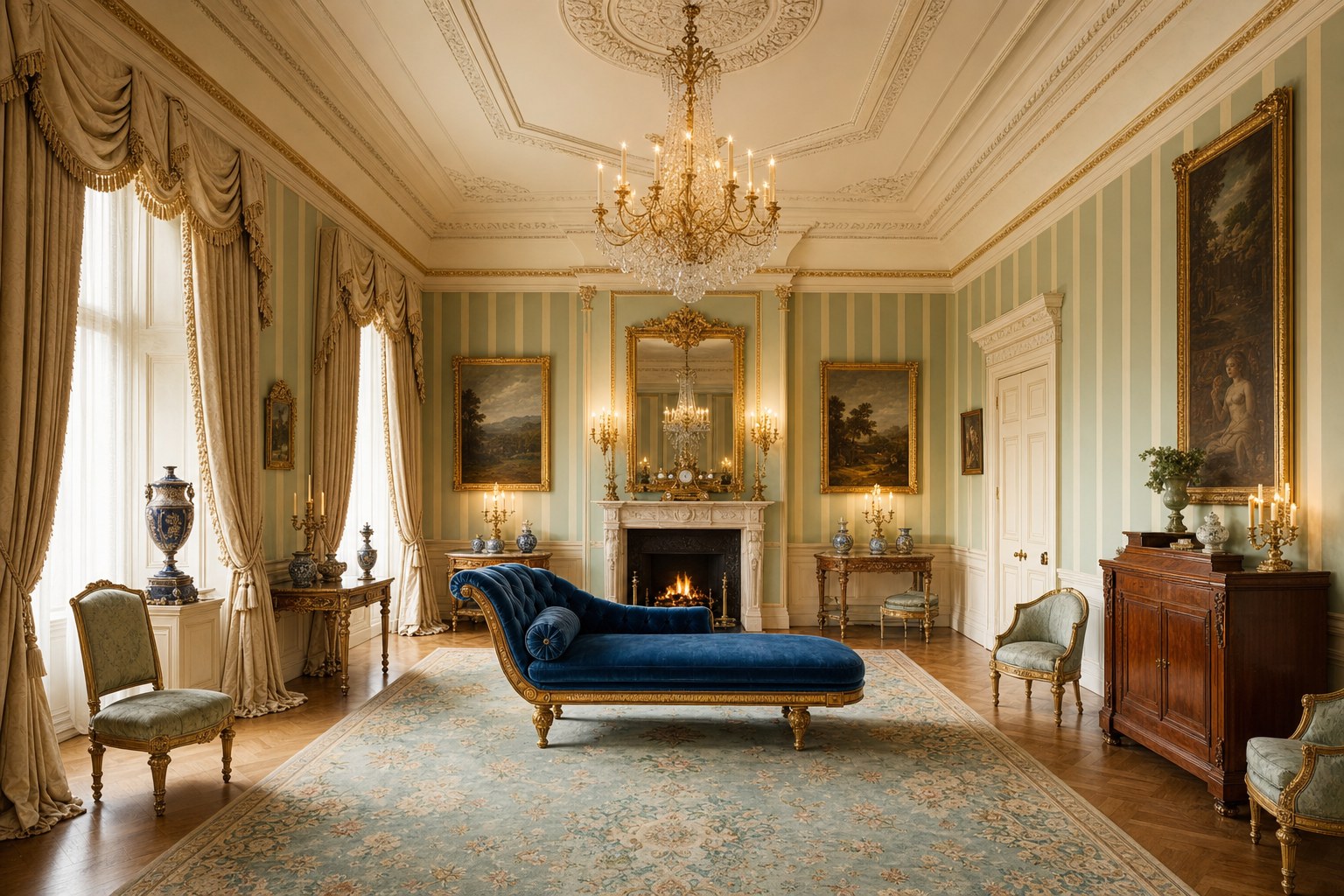
The British Regency period ran from 1811 to 1820, when King George III was deemed unfit to rule and his son, the Prince Regent - later George IV - governed in his place. The Prince Regent was an enthusiastic patron of architecture and interior design, and the interiors associated with his court reflect that: Regency style is defined by elegance with a touch of flamboyance. It is more ornate than the Georgian restraint that preceded it and more eclectic than the Victorian heaviness that followed. The period drew simultaneously from Greek and Roman antiquity, Egyptian motifs popular after Napoleon's campaigns, and chinoiserie from the Far East. A Regency room could have Roman columns, Chinese wallpaper, and Egyptian claw-foot furniture in the same space - and it would work, because the unifying logic was not historical accuracy but decorative exuberance within a framework of formal symmetry.
The Bridgerton effect on interior design has been well documented. Netflix's period drama, which premiered in 2020 and has continued through multiple seasons, placed Regency interiors in front of a global audience and made the aesthetic aspirational for a new generation of renters and homeowners. Regencycore is having a moment - and for good reason. The appeal is specific: Regency interiors feel celebratory in a way that most contemporary styles do not. They are rooms designed for social life, for gathering, for impressing guests. Striped wallpaper was considered de rigueur in the smartest Regency houses - and for the first time in English interiors, curtains and upholstery fabric matched.
The Regency palette runs to pale blues, sage greens, blush pinks, and jewel-tone accents. Sage green with ivory and gold accents is the lighter interpretation; the powder blue Bridgerton dining room - with its 4 million Pinterest saves - is the most reproduced. The Bridgerton set designers drew on Wedgwood china as a color reference - the powder blue popularized after Queen Charlotte's 1765 commission - which explains why the blue-and-cream combination reads so immediately as Regency. The five elements below build the Regency room in the order that prevents the look from tipping into costume: wallpaper pattern establishes the period, gilded mirror anchors the wall treatment, velvet seating introduces the jewel tone, chandelier provides the ornamental ceiling moment, and formal drapes complete the enclosure.
Striped or Damask Wallpaper · $197.96
Striped wallpaper was seen as de rigueur in the smartest Regency houses, and vertically striped textiles such as damask and chintz were equally fashionable in the period's drawing rooms and dining rooms. The Regency stripe runs vertically. The vertical line is architectural, it reinforces ceiling height, and it carries the formal quality the style demands. The period colors were reds, greens, and golds for the grandest rooms; cream and sage or cream and powder blue for the more intimate spaces that the Bridgerton set popularized. Chinoiserie wallpaper from brands like Fromental and de Gournay was also prominent in Regency interiors, and contemporary interpretations using peel-and-stick panels in botanical or stripe patterns make the element accessible without the cost of traditional installation. The key decision is not pattern versus stripe but colorway: the wallpaper must establish the room's dominant color register before any other element is added. A sage-and-cream stripe supports a gold-and-ivory palette; a sapphire-and-white stripe supports the richer jewel-tone direction. Choose one and commit. The wallpaper is the element that makes every subsequent decision legible. The Regency entry sequence: start with the architectural details, cornices, skirting boards, columns, and if the architecture is not available, wallpaper is the next-best signal for the period's structural ornamentation.
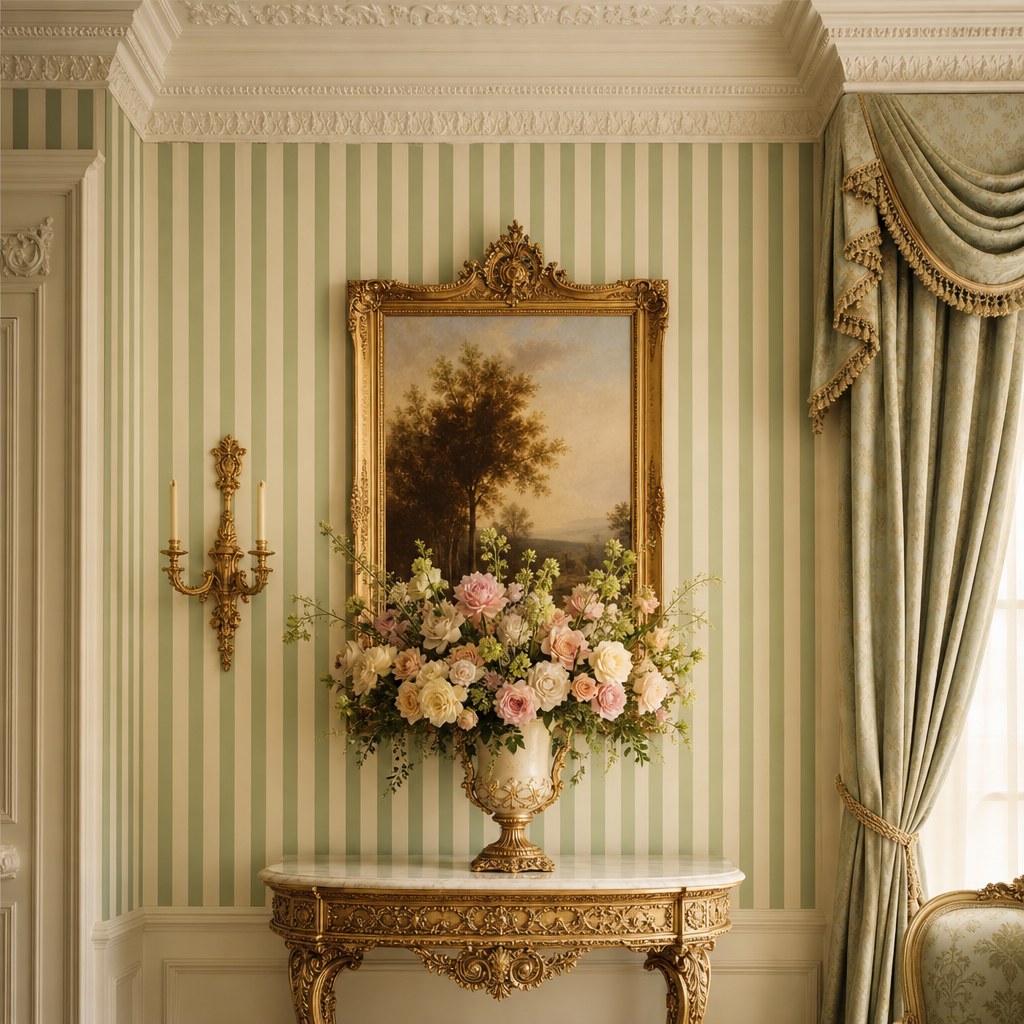
E1 Receipt - Striped or Damask Wallpaper
Gilded Mirror · $189.99
Ornate gilded mirrors were prominent in Regency-era homes, and incorporating one into a contemporary interior is widely recognized as the most effective single step toward achieving a Regencycore feel. The Regency mirror is not a minimalist frameless panel. It is an object of ornamental ambition. The frame is the point. Gilded plaster frames with scrollwork, acanthus leaf detail, or egg-and-dart molding are period-accurate; sunburst mirrors with radiating gilded rays are the Regency-adjacent interpretation that reads clearly in contemporary rooms without requiring antique sourcing. "Glass and brass. You can't go wrong" when bringing Regency style to home decorating, as Pooky's design editors note, and the same logic applies to the mirror's frame material: gold leaf, antiqued gold, or champagne gold all work within the palette. Gilding techniques. Applying thin metal layers of gold and silver to furniture and decorative objects, were central to Regency ornamental practice, as interior designers at Oliver Burns Studio observe of the period's decorative vocabulary. The gilded mirror's functional role is also structurally important: Regency rooms relied on mirror glass to multiply candlelight and sconce light in the era before electric illumination, and in a contemporary room the same physics apply. A large gilded mirror opposite or adjacent to the chandelier multiplies the warm light source and gives the room its characteristic sense of luminous depth. The second item in this element receipt. A smaller ornate gilded picture frame used to display a botanical print or portrait miniature. Extends the gilding logic to a secondary wall moment at minimal cost.
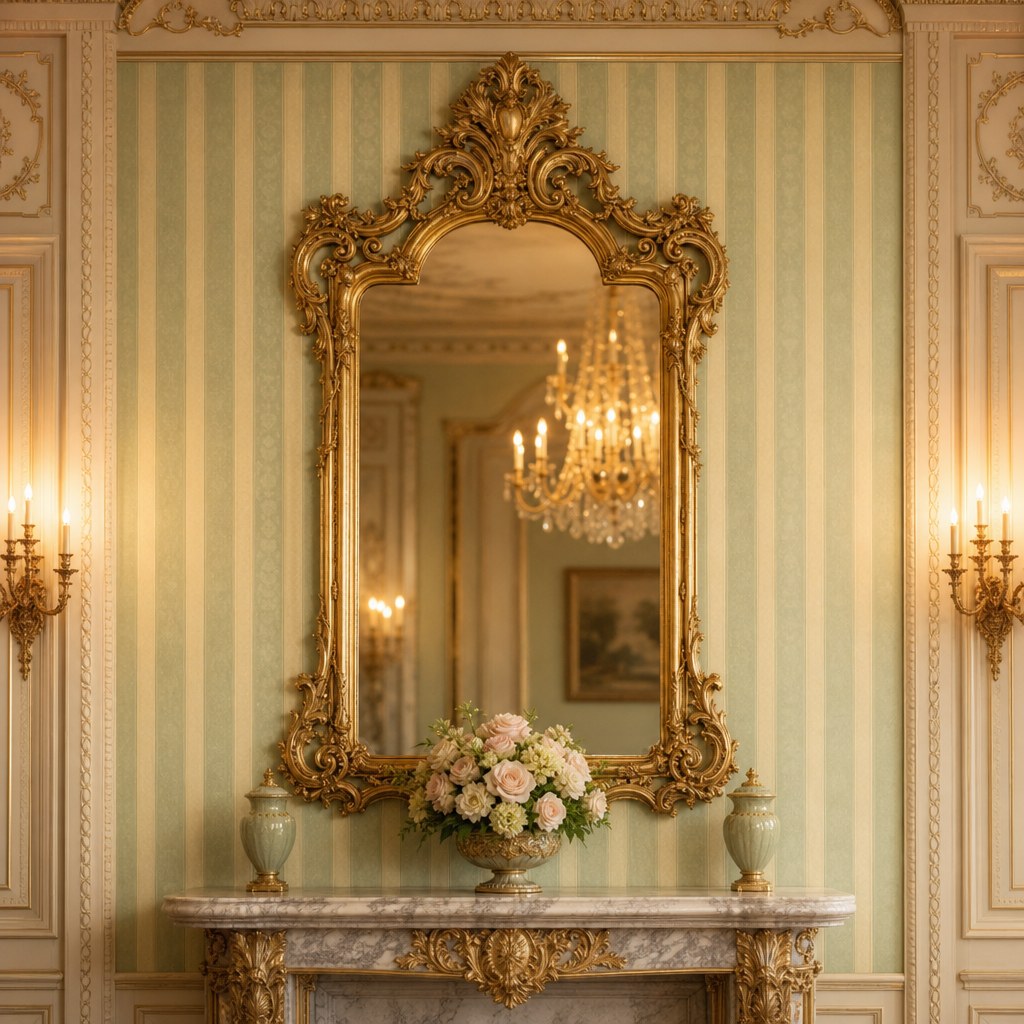
E2 Receipt - Gilded Mirror
Jewel-Tone Velvet Seating · $298.98
A velvet sofa in a deep jewel tone like emerald or sapphire can be the centerpiece of a Regency living area. Paired with silk curtains and a plush rug, it carries the room's entire color and material story in a single piece. Silk, velvet, and damask were the defining upholstery materials of Regency interiors, used for bedding, draperies, and seating to reflect the opulence of the era. Soft velvet cushions on sofas, silk curtains at windows, and sumptuous canopy fabrics added glamour that distinguished the Regency room from the more restrained Georgian interior that preceded it. The velvet seating element is built in layers. The velvet accent chair in sapphire or emerald is the anchor piece. The single jewel-tone object that anchors the color story and tells the room's palette in one gesture. The velvet throw pillow set in a complementary jewel tone (amethyst against sapphire, ruby against emerald) introduces the secondary palette note. The brass-nailhead detail on the pillow or chair back extends the gilding logic of Element 2 into the upholstery tier. Regency furniture lines were curved, the defining furniture line was curved, the sabre leg chair is the clearest example: so a curved or rolled-arm chair profile in velvet is more period-accurate than a boxy contemporary silhouette. The chaise longue, the bergere armchair, and the tufted ottoman are the three Regency seating archetypes; any one of them upholstered in jewel-tone velvet reads unambiguously as Regency style.
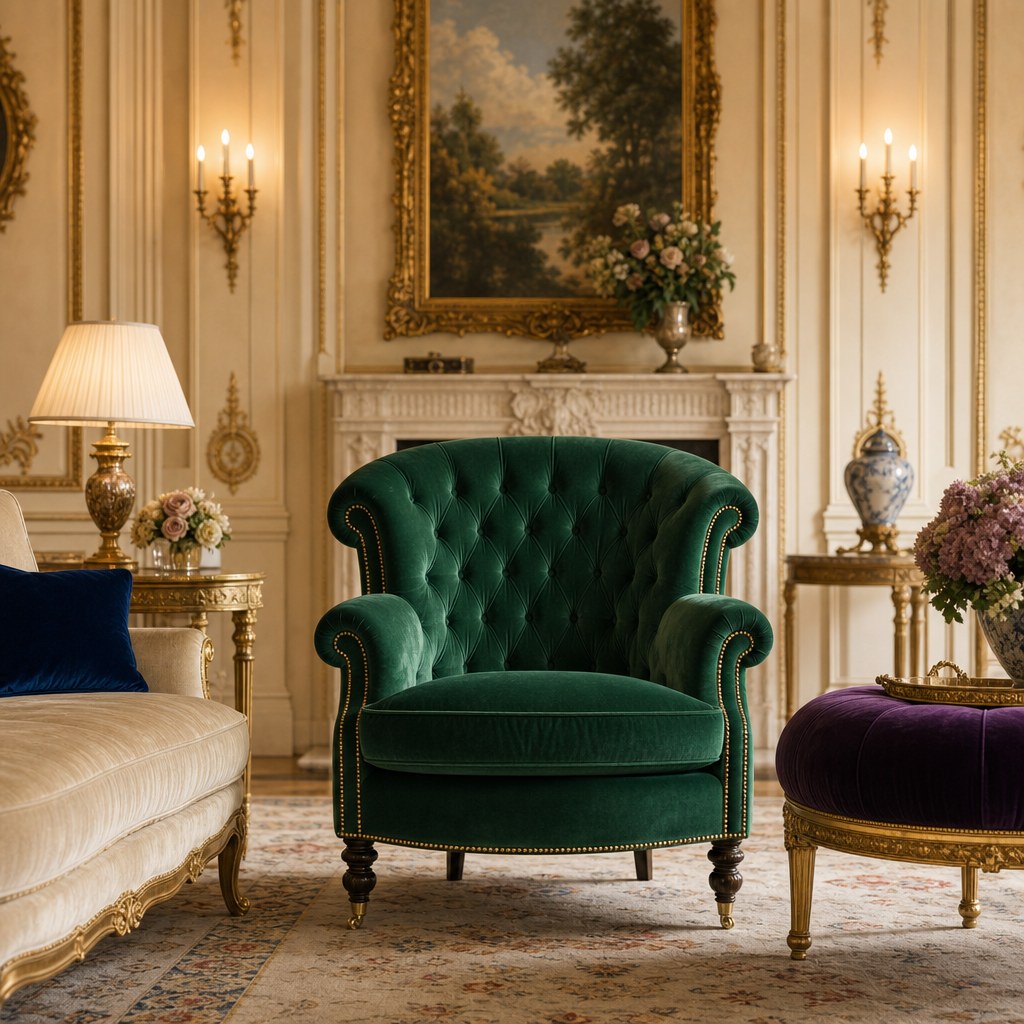
E3 Receipt - Jewel-Tone Velvet Seating
Ornate Chandelier or Candle Sconces · $219.99
Elaborate chandeliers formed a key feature of the Regency home, providing the grandeur and glamour that defined the period. And the design consensus on Regency lighting is clear: "You can't have Regency without at least one chandelier." Regency chandeliers were crystal and brass, with multiple tiers of arms supporting candles (and later gas mantles) and dripping crystal drops that caught and scattered the light. The Argand lamp, invented in 1780 and widely adopted in Regency interiors, allowed for central room lighting and encouraged the more intimate furniture arrangements that became characteristic of the period. Seating grouped around a central table rather than pushed against the walls as in earlier Georgian practice. For contemporary rooms without existing ceiling medallions or electrical roughed-in for a heavy chandelier, the candle wall sconce is the period-accurate alternative: Regency interiors used elaborate sconces to provide zone lighting along walls, and a pair of ornate brass or crystal sconces flanking the gilded mirror from Element 2 creates the wall lighting moment without ceiling work. The plug-in chandelier. A crystal or glass drop pendant with a cord and canopy that plugs into a standard outlet, is the renter-friendly version of the ceiling chandelier, available from Amazon, Wayfair, and HomeGoods in the $80 to $180 range and installable in any room with a ceiling hook. Warm filament bulbs at 2200K to 2700K are essential: the amber glow is what makes a Regency room feel like candlelight, and cool-white LEDs at 4000K or above will dissolve the atmosphere the style depends on.
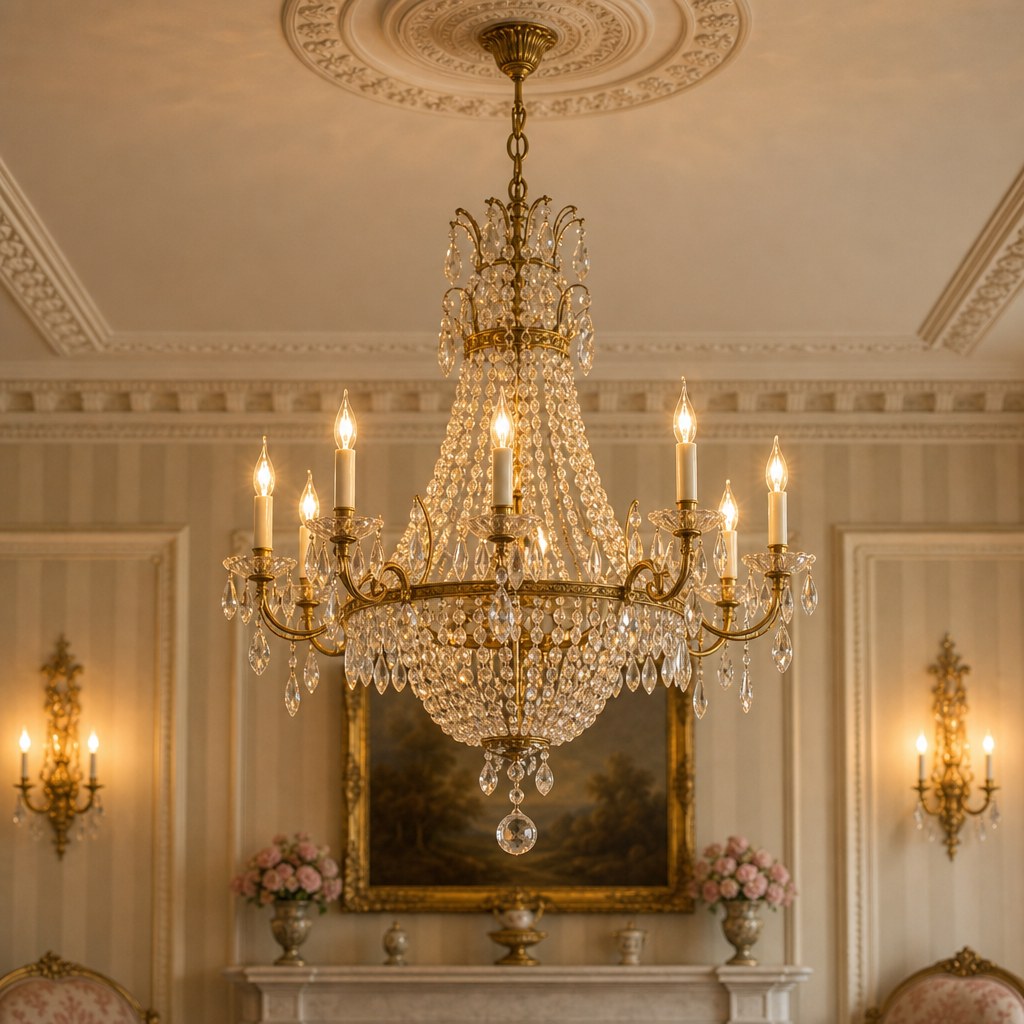
E4 Receipt - Ornate Chandelier or Candle Sconces
Formal Drapes with Tassels and Trim · $377.98
For the first time in English interior design history, Regency rooms featured matching curtains and upholstery fabric. This coordination of textiles was a period innovation that signaled sophistication and household taste. Draperies crafted from velvet or silk cascaded from ornate canopy beds and regal window frames, creating a sense of drama and grandeur that was central to the Regency room's theatrical quality. The formal drape is the element that closes the room. It is added last because it must respond to the palette and ornamental story already established by the wallpaper, the gilded mirror, the velvet seating, and the chandelier. The drape's fabric should echo the velvet of Element 3: if the accent chair is emerald, the drape is emerald or ivory with an emerald trim. If the chair is sapphire, the drape is cream with sapphire tassel trim. Tassel fringe is the period-accurate drapery finishing detail: Regency draperies were elaborately trimmed with bullion fringe, tassel tiebacks, and woven passementerie borders that matched the room's upholstery trim. The floor-to-ceiling installation is essential. Regency drapes broke at the floor or puddled slightly, never stopping at window-sill height. A ceiling-mounted rod installed close to the ceiling line, with drapes hung at 96 to 108 inches, makes any room feel taller and more formally proportioned, which is exactly what the style requires. The silk-look or velvet drape in a jewel tone at 96 inches is the key piece; the tassel tieback is what tips it from generic to Regency-specific.
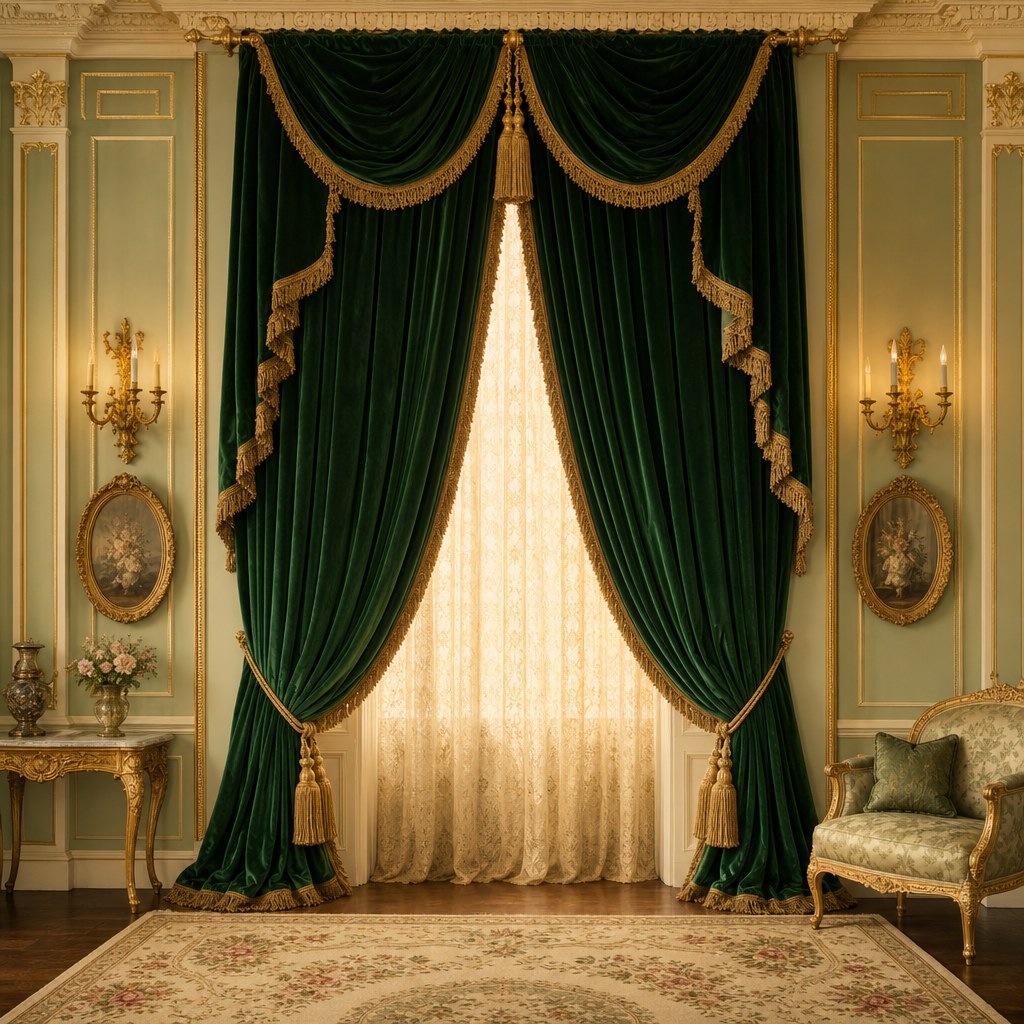
E5 Receipt - Formal Drapes with Tassels and Trim
Regency vs. Neoclassical interior design.
Both Regency and Neoclassical design draw from Greek and Roman antiquity, and the two styles are frequently confused in contemporary decor conversations. The distinction is personality. Neoclassical rooms have strict symmetry, restrained palettes (white, grey, dusty blue, gold as accent only), and architecture as the primary ornamental language. Columns, pilasters, coffered ceilings doing the work that objects do in Regency rooms. Regency rooms use the same classical vocabulary but layer it with chinoiserie wallpaper, Egyptian motifs, and jewel-tone velvet in a way that Neoclassical purists would find excessive. Regency is Neoclassical with more personality. The difference between a public building and a wealthy private house of the same era. The most useful test: a Neoclassical room reads as architectural restraint with beautiful objects; a Regency room reads as beautiful objects within an architectural frame.
| Dimension | Regency Interior Design | Neoclassical Interior Design |
|---|---|---|
| Color palette | Jewel tones (sapphire, emerald, amethyst, ruby) against cream and ivory, rich and celebratory | Pale greys, dusty blues, white, warm gold as accent, restrained and architecturally driven |
| Wall treatment | Vertically striped or damask wallpaper, chinoiserie panels, botanical prints, pattern-forward | Plain painted walls in pale tones with architectural molding as the primary wall decoration |
| Furniture silhouette | Curved saber legs, rolled arms, tufted upholstery in velvet or silk, ornate and tactile | Cleaner lines with classical references. Fluted legs, Greek key motifs, less upholstered volume |
| Cultural mixing | Deliberately eclectic. Roman columns alongside Chinese wallpaper and Egyptian motifs in one room | Historically coherent. Greek and Roman vocabulary maintained consistently throughout |
| Drapery approach | Floor-to-ceiling velvet or silk with tassel tiebacks, bullion fringe trim, matching upholstery fabric | Simpler drapery often in solid pale tones; Roman blinds acceptable; less emphasis on trim and tassel |
| The quick test | Feels like a drawing room prepared for guests. Celebratory, jewel-toned, gilded and slightly theatrical | Feels like a beautifully proportioned architectural interior. Serene, pale, geometry doing the work |
The $198 entry path.
Four items that establish the Regency gilded signal in any room. No wallpaper, no furniture replacement, no ceiling work required.
Frequently asked questions.
What is Regency interior design?
Regency interior design is a formal, ornate residential style rooted in British Regency-period aesthetics from 1811 to 1820 - the years Prince George ruled as regent in place of his father, George III. Its defining characteristics are vertically striped or damask wallpaper, gilded furniture and mirrors, jewel-tone velvet upholstery in sapphire, emerald, and amethyst, elaborate crystal chandeliers, and formal symmetry with decorative exuberance. The style is elegant, opulent, and surprisingly eclectic - more ornate than the Georgian restraint that preceded it and more eclectic than the Victorian heaviness that followed. The Netflix series Bridgerton sparked a major cultural revival of the style, now called Regencycore, making it one of the most searched interior design aesthetics of the 2020s.
What colors define Regency interior design?
Regency interiors use two parallel color registers. The foundation tier is cream, ivory, and warm white - the pale neutral that makes jewel tones legible and gives Regency rooms their light-filled, gracious quality. The jewel-tone tier runs on sapphire blue, emerald green, amethyst, ruby, and deep gold as accent colors expressed through velvet upholstery, draperies, and cushions. The Bridgerton set design popularized a third option: the powder blue dining room, a pastel mid-tone directly inspired by Wedgwood china after Queen Charlotte's 1765 commission. Sage green with ivory and gold accents is the lighter interpretation, with jewel tones reserved for upholstery and drapery. The palette rule that prevents the look from reading as costume: use jewel tones in solid velvet and silk, not in bold printed patterns at wall scale.
What furniture defines Regency period interior design?
Regency period furniture is characterized by graceful curves, saber legs, and Greco-Roman ornamentation. Key pieces include the chaise longue (a daybed for reclining, typically upholstered in silk or velvet), the bergere armchair (an enclosed upholstered chair with padded arms), and the escritoire writing desk. Materials run to mahogany, rosewood, and tulip wood with exotic hardwoods, accented with brass inlays and gilded details. The defining furniture line was curved - the sabre leg chair is the clearest example - and sofas came in pairs, often featuring bolsters at each end with cushions in coordinating velvet or damask. Marble table tops were ubiquitous, and caned seats, lion's paw feet, and brass inlays completed the Regency material vocabulary. The Regency style differs from Georgian by its greater ornamentation and willingness to mix chinoiserie, Egyptian, and classical references in a single room.
How do you achieve Regency style on a budget?
The most accessible Regency entry point is the gilded mirror, which is available at HomeGoods, TJ Maxx, and on Amazon for $60 to $150 and immediately signals the style's defining aesthetic without any wallpaper or furniture changes. Velvet throw pillows in sapphire or emerald are the second step at $30 to $50 for a set of four. Peel-and-stick striped or damask wallpaper panels for a single feature wall run $50 to $90 and establish the period's signature pattern without traditional installation cost. A pair of brass candle sconces in an ornate scrollwork design and a set of tassel tiebacks for existing curtains complete the entry path at under $100 combined. Introduce bold color in small concentrated areas first - a powder room in sapphire velvet or a reading nook in emerald - before committing to jewel tones throughout a larger room.
What is the difference between Regency and Neoclassical interior design?
Both Regency and Neoclassical design draw from Greek and Roman antiquity, but Regency applies that classical vocabulary with more decorative exuberance and cultural mixing. Neoclassical rooms tend toward strict symmetry, restrained palettes (white, grey, dusty blue, gold), and architectural clarity - columns, pilasters, and coffered ceilings as the primary ornamental language. Regency rooms layer chinoiserie wallpaper alongside Roman columns, combine damask with striped silk, and use jewel tones alongside pale pastels in a way that Neoclassical discipline would not permit. Regency is Neoclassical with more personality and less restraint - the difference between a government building and a wealthy private home of the same era. The practical test: if the room's ornamental interest comes from the architecture (moldings, columns, proportions), it is Neoclassical. If it comes from the objects, fabrics, and gilded surfaces layered within that architecture, it is Regency.
More rooms like this
No spam. Unsubscribe anytime.