Table of Contents
The Moroccan interior design blueprint.
Moroccan interior design is not a trend. It is a centuries-old material language shaped by the cultural crossroads of North Africa, Andalusia, and the Middle East - and it is one of the few global design traditions where the craftwork is so specific that the room can only be read one way. The zellige tile is hand-chiseled. The lantern is pierced metal, not cast. The rug is hand-knotted in Berber wool. The carved screen follows an Islamic geometric logic that goes back to the 10th century. This specificity is exactly what makes Moroccan design so effective as a residential style: every element is a legible signal, and the layering of those signals creates rooms that feel culturally located and deeply material rather than generically eclectic.
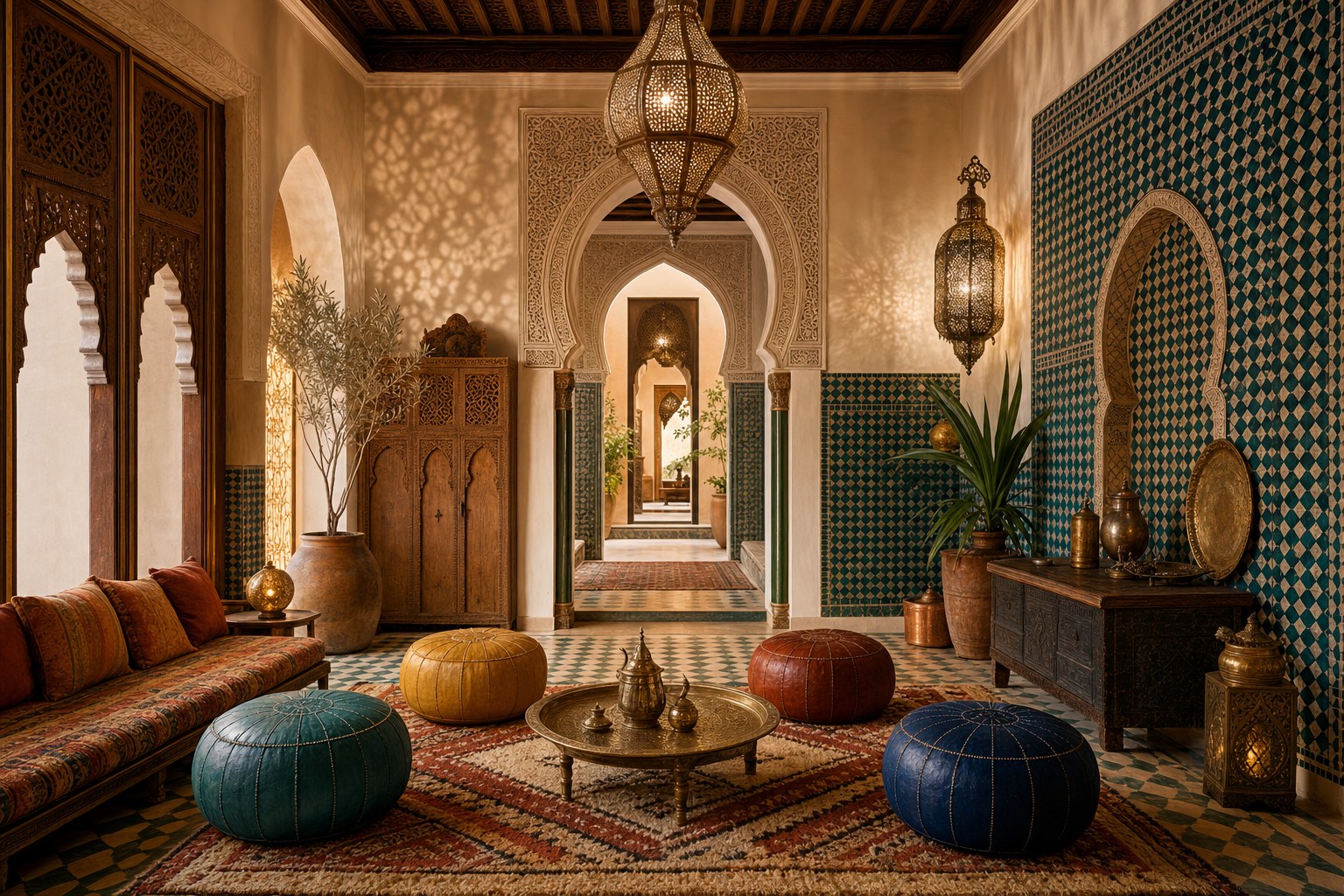
The riad - the traditional Moroccan inward-facing courtyard home - is the spatial concept the style imports into any room. Traditional Moroccan homes, called riads, are organized around a central courtyard, often with a tiled fountain or plunge pool at the center, and every room faces inward toward that private garden rather than outward to the street. The design logic that follows from this architecture is intimacy and enclosure: low furniture that keeps the eye close to the ground, lanterns hung at eye level rather than recessed into the ceiling, screens that filter light and create layered zones within a single room. The five elements below build this logic in a contemporary apartment or home without structural changes.
The sourcing hierarchy for Moroccan design is specific. Zellige tile is the single most discussed and purchased product - the imperfect glaze is exactly what makes it feel authentic, and it cannot be convincingly faked. Kilim rugs from eBay and Amazon poufs are the established budget entry points. One good kilim plus a few well-sourced poufs covers 80% of the atmospheric effect. The sourcing logic: spend on the zellige tile and the kilim rug - the two elements that can only be faked with obvious substitutes - and source the lanterns, poufs, and carved panels at accessible price points.
Zellige Tile or Mosaic Accents · $89.97
Zellige tile is the most specific signal in Moroccan interior design. And the one element where quality difference is immediately visible. Each hand-cut zellige piece is individually hand-chiseled from glazed clay fired in a traditional kiln, then assembled by artisans into interlocking geometric patterns. The characteristic imperfections, slight size variations, glaze drips, subtle surface irregularities, are not defects; they are the quality markers that distinguish authentic zellige from machine-cut ceramic tile. The imperfect glaze on zellige is exactly what makes it feel authentic. The 2025 trend direction for zellige is checkerboard patterns in contrasting jewel tones, deep teal against cream, cobalt against sandy beige, applied to kitchen backsplashes, bathroom walls, and entry foyer floors. For renters and those without renovation budgets, zellige-patterned ceramic tile sheets and peel-and-stick mosaic panels deliver the geometric visual language at a fraction of the installation cost. The mosaic panel set is the entry product: three decorative zellige-style panels in 12x12-in format that mount adhesively to a kitchen backsplash or bathroom accent wall, establishing the geometric pattern signal without grout, thinset, or a contractor.
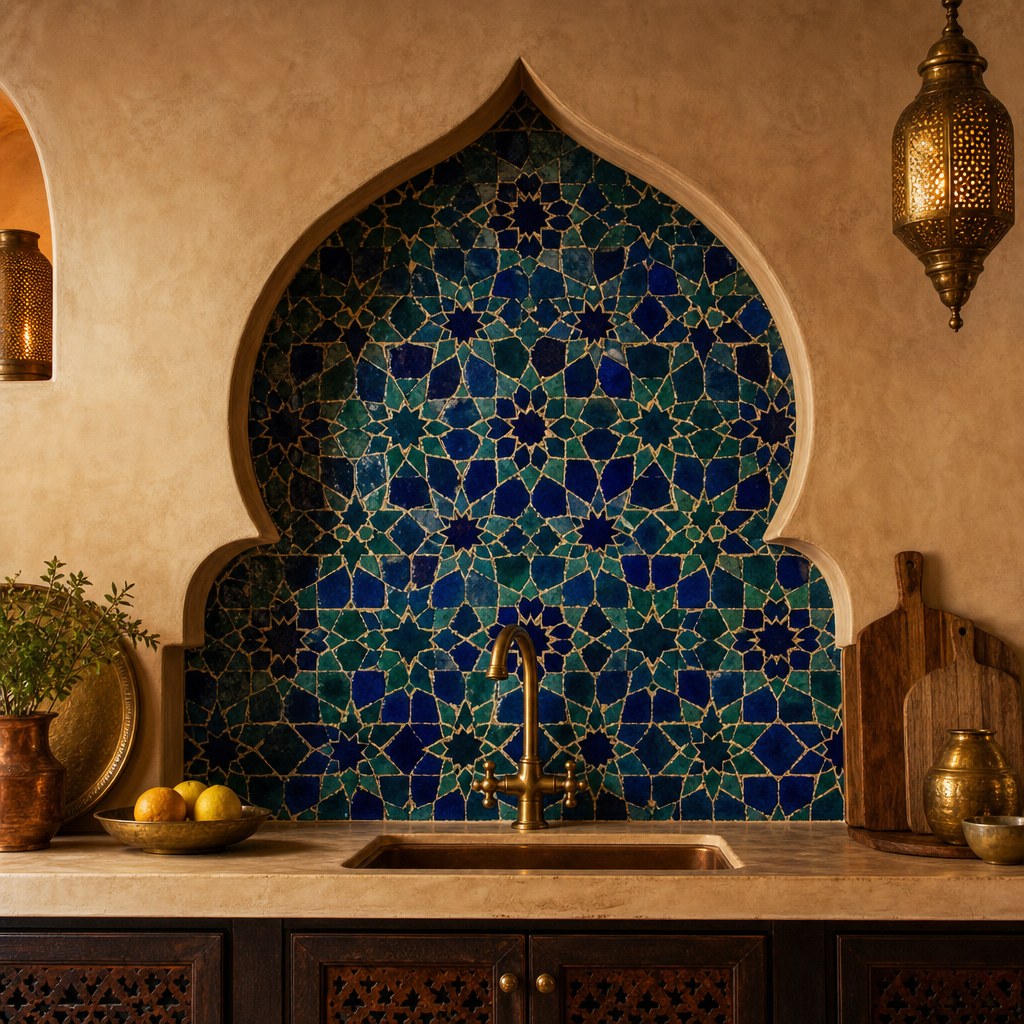
E1 Receipt - Zellige Tile or Mosaic Accents
Moroccan Lanterns and Pendant Lighting · $129.98
Moroccan lighting is the element that transforms a room into an atmosphere. Pierced metal or colored glass lanterns suspended at eye level recreate the moody, shadowy lighting effect typical of traditional Moroccan homes, where lanterns cast mesmerizing lattice shadow patterns across carved walls and layered textiles, turning the entire space into a warm cocoon. The shadow pattern is the functional effect: a pierced brass or iron lantern throws geometric cutout shadows across the ceiling and adjacent wall when lit from inside, and those moving shadows are more responsible for the Moroccan atmosphere than any other single element. The lighting logic is the inverse of Western residential practice: where a modern apartment uses recessed downlights to illuminate from above, the Moroccan approach hangs lanterns at eye level or lower, creating pools of warm directional light at the human scale rather than the ceiling plane. The Amazon lanterns are genuinely good for the price. The category has a reliable quality tier at the $50-$70 per lantern price point, with brass or aged iron finishes and authentic pierced metalwork patterns. Two lanterns, one pendant and one tabletop, create the layered lighting scheme that the style requires: overhead ambient from the pendant, intimate pool of light at table height from the tabletop lantern with a candle or tea light.
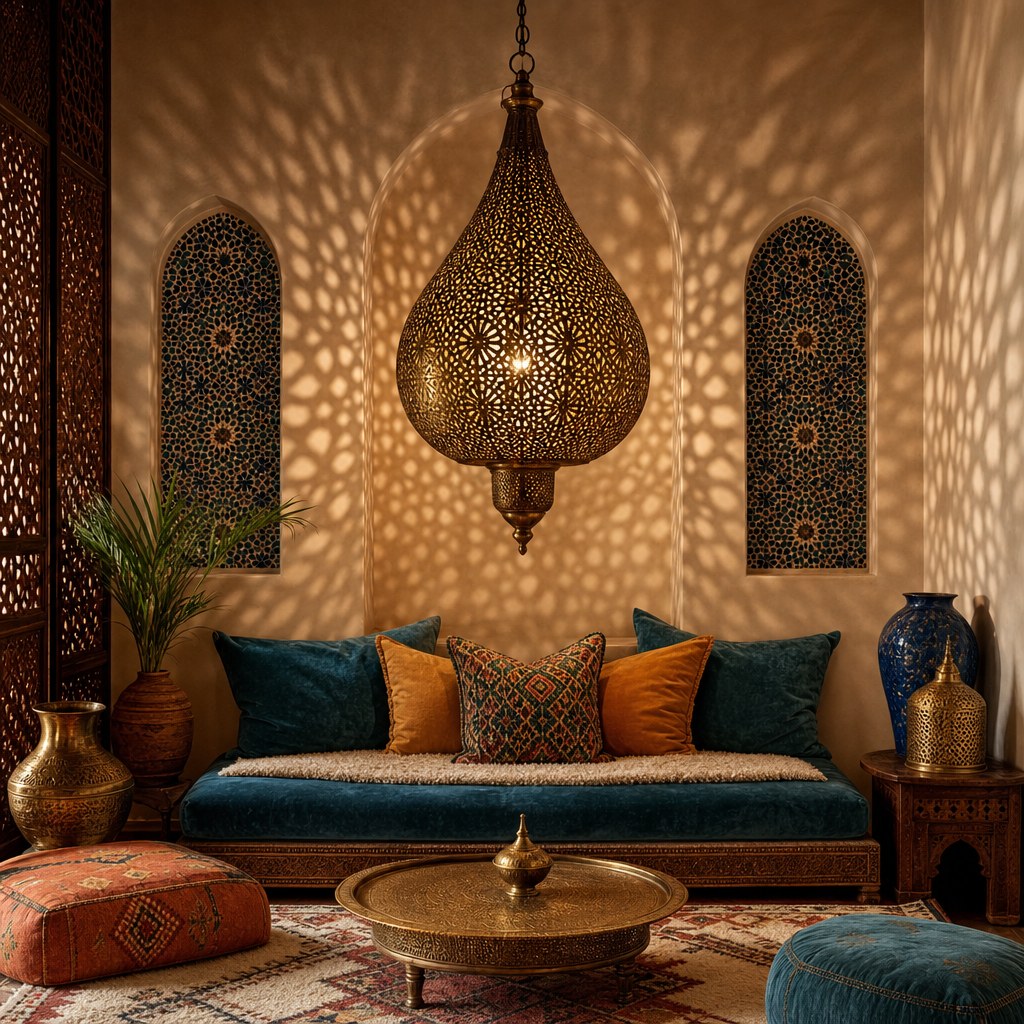
E2 Receipt - Moroccan Lanterns and Pendant Lighting
Poufs and Low Majlis Seating · $219.97
The majlis seating arrangement is the Moroccan approach to a living room: low sofas and floor cushions arranged in a circular or semi-circular layout around a central focal point, typically a hammered brass tray table or low carved wood coffee table, creating a gathering space that encourages face-to-face conversation and has no hierarchical seat. The traditional seating wrapped around the room creates an intimate, almost ceremonial space, perfect for slow tea rituals and long conversations. The leather pouf is the most accessible and versatile element of this system: it is a floor cushion, a footrest, a side table (with a tray on top), and a sculptural object in jewel-toned leather that holds its shape without a frame. The recommended composition is two to three leather or cotton poufs in complementary jewel tones (teal and burnt orange, saffron and indigo) arranged around a hammered brass tray. A low Moroccan-style platform sofa. A daybed or bench with cushions at seat height of 12 to 16 inches rather than the Western standard of 18 inches. Brings the seating plane closer to the floor and reinforces the riad interior scale. For apartments with standard-height Western sofas, adding the pouf layer in front of an existing sofa establishes the majlis visual language without replacing furniture.
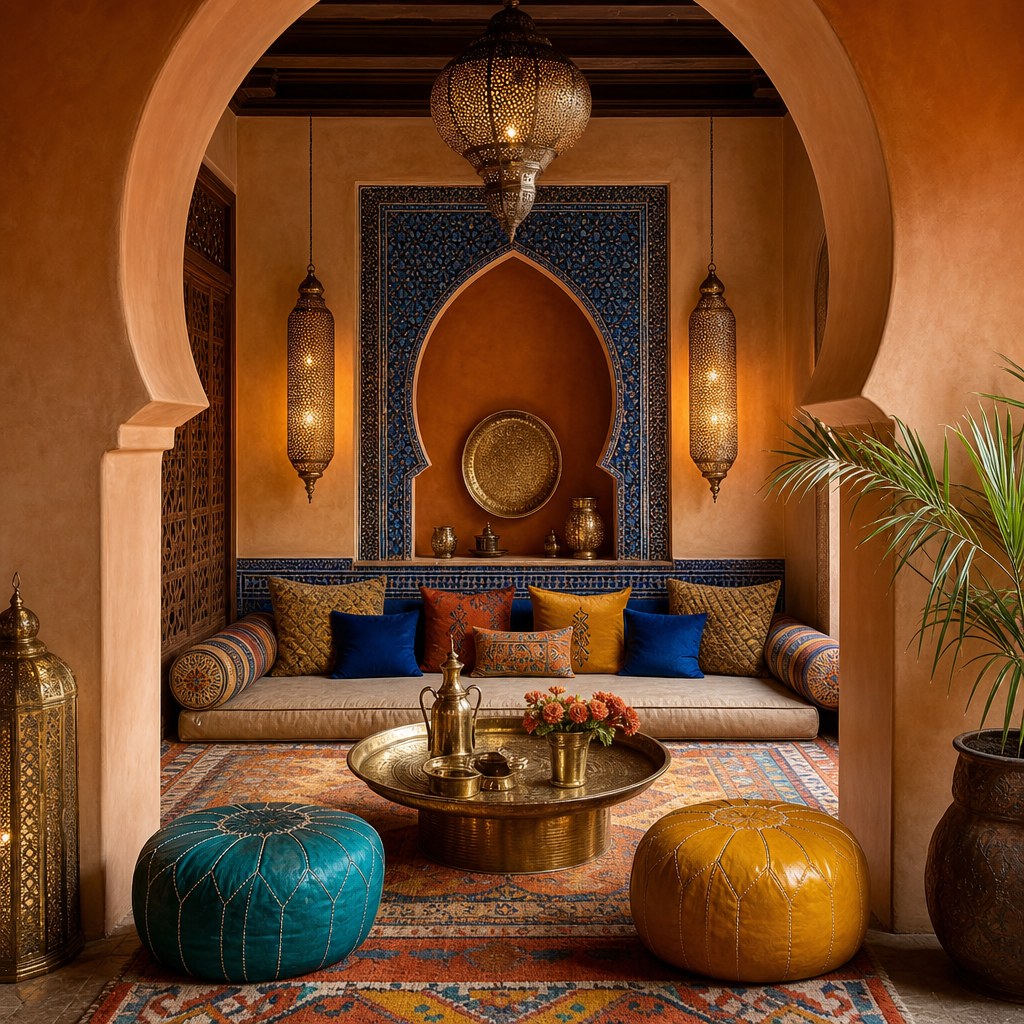
E3 Receipt - Poufs and Low Majlis Seating
Handwoven Kilim and Beni Ourain Rugs · $289.97
Handwoven textiles are where the Moroccan layering philosophy is most visibly enacted. The layering is everything. Rugs on rugs, cushions on cushions. The textile hierarchy has two levels. The kilim rug is the primary floor layer: a flat-woven wool rug in geometric patterns, typically in jewel tones (deep red, indigo, saffron, green, with ivory or camel field), that serves as the room's color anchor and pattern library simultaneously. The sourcing rule is straightforward: the rug is worth spending on. Everything else can be sourced at accessible price points. A quality kilim at 5x8 ft from a specialty rug seller or eBay vintage source ($150-$300) grounds the room in a way that no other element can substitute for. The Beni Ourain rug is the contrasting layer: a plush hand-knotted Berber wool rug in cream or natural ivory with simple geometric diamond motifs in dark natural wool, originating from the Atlas Mountains in Morocco. Where the kilim contributes jewel-tone pattern, the Beni Ourain provides tactile softness and tonal relief. The visual breathing room that prevents the jewel-tone palette from becoming overwhelming. The layered-rug technique. Kilim as base layer, smaller Beni Ourain or decorative textile layered at an angle on top, is the signature Moroccan textile composition. Add throw pillow covers in complementary jewel tones on the low seating to complete the textile story vertically.
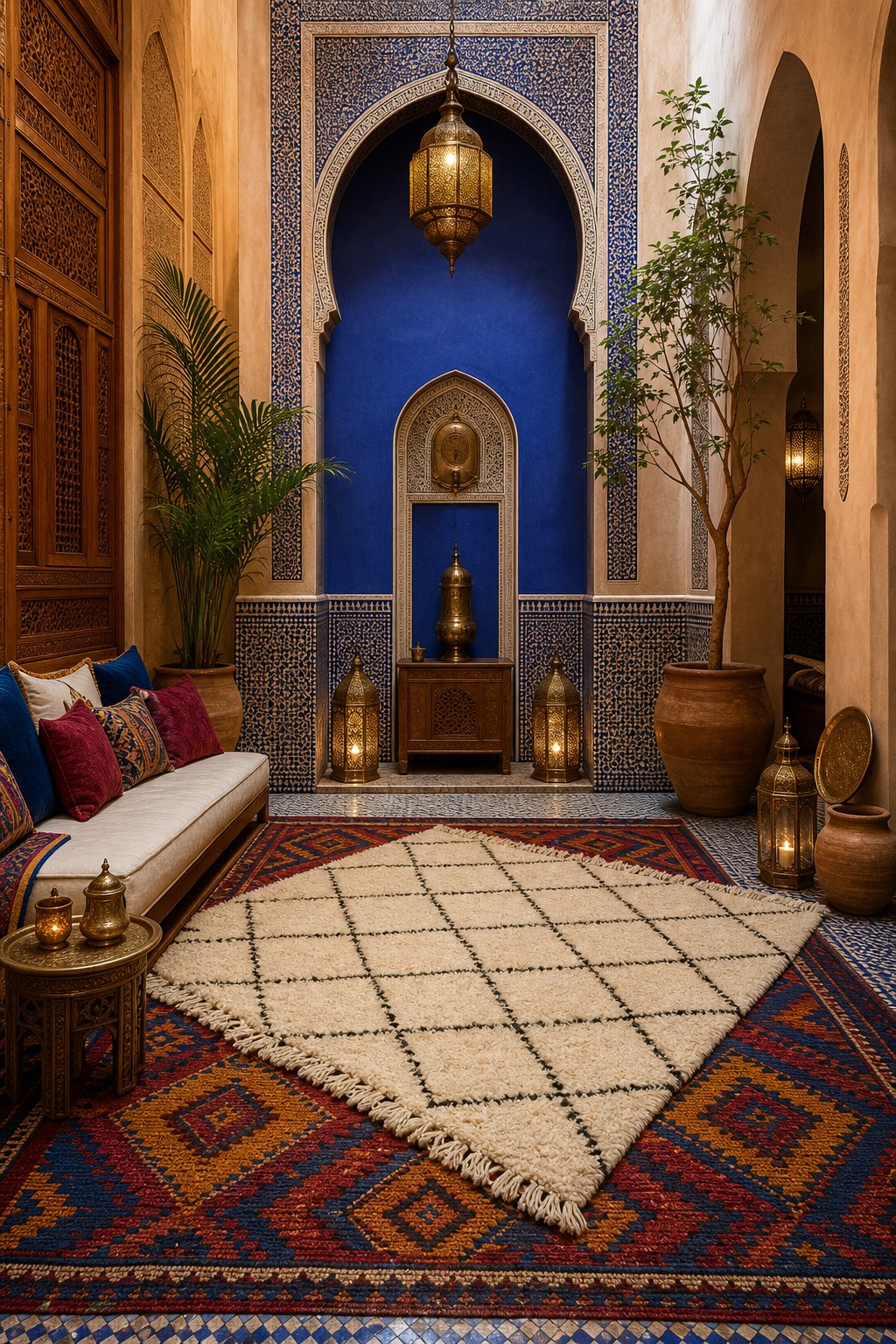
E4 Receipt - Handwoven Kilim and Beni Ourain Rugs
Carved Wood and Plaster Screens · $519.97
Carved wood and plaster screens, the mashrabiya, are the architectural element that makes Moroccan design three-dimensional. Mashrabiya screens are carved from cedar in mathematical Islamic geometric patterns, creating privacy while allowing breeze and filtered light to pass through, and their geometric patterns cast mesmerizing shadows that change throughout the day as the sun angle shifts. In traditional riad architecture, mashrabiya screens divide the courtyard from the interior rooms, the sleeping area from the shared spaces, and the private garden from the street. In a contemporary home, the same spatial logic applies: a carved wood screen as a room divider between a living area and a dining space, a carved panel as a headboard behind a low platform bed, a jali panel as a window treatment that filters light while maintaining privacy. The authentic material is hand-carved cedarwood or walnut; accessible modern versions use MDF jali panels in laser-cut geometric patterns that deliver the shadow effect at a fraction of the cost. A room-divider screen in a laser-cut geometric pattern at 72-inch height creates a dramatic zone-defining element that also functions as a lantern light diffuser when positioned near the pendant fixture. The carved wood mirror. A round or arched mirror with a carved cedarwood or walnut frame in geometric pattern, is the smaller-scale entry into the carved wood language: it delivers the Moroccan material signal at an accessible price point while serving the functional purpose of a hallway or bedroom mirror. The hammered copper or brass vase set completes the artisan metalwork layer, contributing the same hand-crafted surface treatment as the lanterns at a tabletop scale.
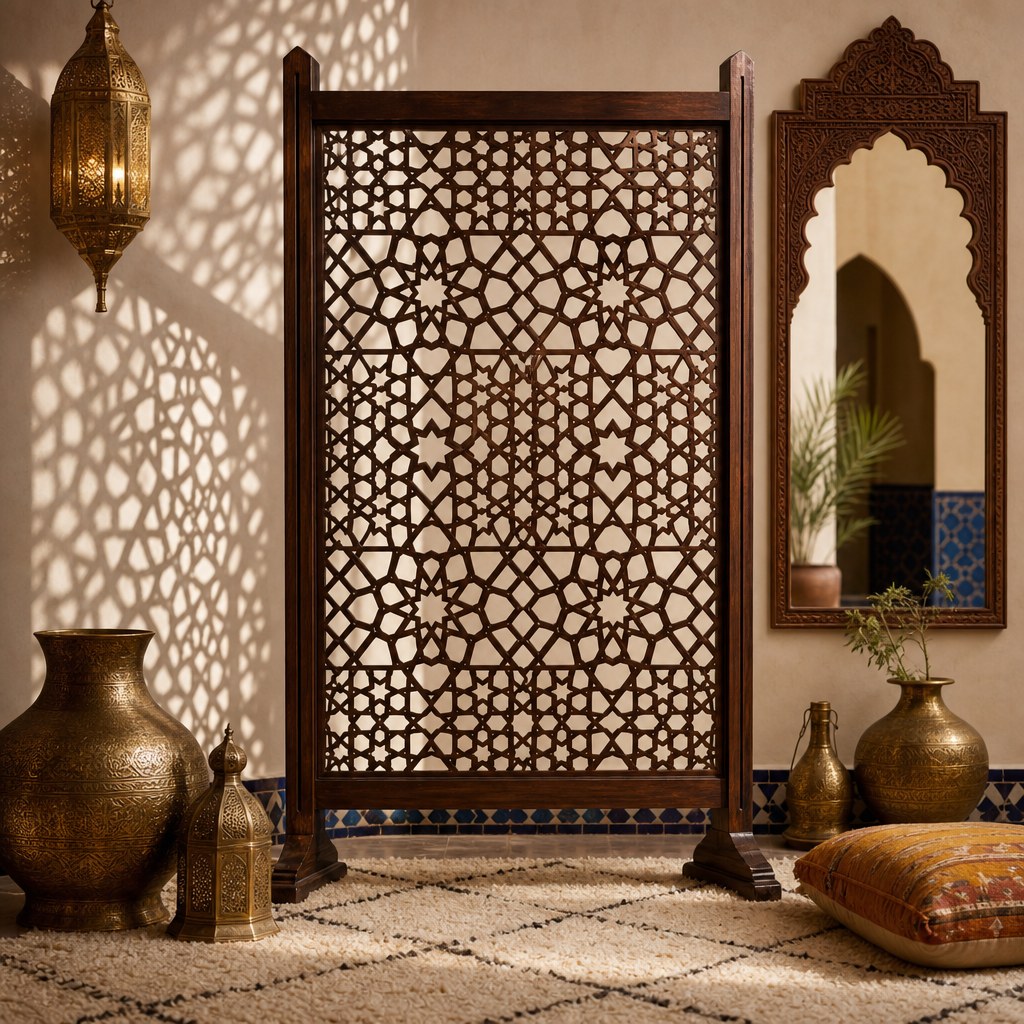
E5 Receipt - Carved Wood and Plaster Screens
Moroccan vs. Bohemian interior design.
Both styles use layered textiles, global handmade objects, and jewel-tone palettes. Which is why they are frequently placed in the same category and why the keyword "moroccan vs boho" generates consistent search volume despite having a clear answer. The distinction is structural precision. Moroccan design is governed by mathematical geometric logic: zellige tile follows Islamic geometric pattern rules, mashrabiya screens are carved to precise mathematical grids, the horseshoe arch has a specific proportional geometry. Bohemian design is governed by personal accumulation and intuitive layering: patterns mix freely, vintage and handmade pieces coexist without a governing geometry, and the room grows organically over time rather than following a structure. The practical self-test: Moroccan rooms have at least one element of artisan geometric precision. Tile, screen, or carved plaster. Bohemian rooms do not require it.
| Dimension | Moroccan Interior Design | Bohemian Interior Design |
|---|---|---|
| Pattern logic | Mathematical Islamic geometry. Zellige tile, mashrabiya screens, carved plaster follow precise geometric rules | Organic and accumulative. Patterns mix freely across global traditions without a governing geometry |
| Color palette | Jewel tones against warm plaster neutrals. Cobalt, teal, saffron, garnet on cream or terracotta ground | Broad and eclectic. Earth tones, jewel tones, and naturals coexist; no single palette rule governs |
| Seating | Majlis arrangement. Low platform seating, poufs, and floor cushions in a circular configuration around a central tray table | Mix of heights and eras. Vintage sofas, hammock chairs, floor cushions and standard furniture coexist without a seating system |
| Signature material | Hand-cut zellige tile. The one element that cannot be convincingly substituted and that most specifically signals the style | No single signature material. Macrame, rattan, vintage textiles, plants, and found objects all carry equal weight |
| Lighting approach | Pierced metal lanterns at eye level casting lattice shadow patterns. The shadow effect is the atmospheric output | Candles, string lights, rattan pendant shades. Ambient and layered but without the geometric shadow pattern logic |
| The confusion test | Feels culturally located and architecturally precise. A specific place, not a general mood | Feels personally accumulated and globally eclectic. A person's story, not a place's signature |
The $199 entry path.
Three items that establish the Moroccan atmosphere in any room. No tile work, no structural changes, no renovation required. This is the minimum viable Moroccan kit.
Frequently asked questions.
What is Moroccan interior design?
Moroccan interior design is a layered, artisan-driven residential style rooted in centuries of North African, Andalusian, and Islamic craft traditions. Its defining elements are zellige mosaic tile, pierced metal lanterns, low majlis seating with poufs and floor cushions, handwoven kilim and Beni Ourain wool rugs, and carved cedarwood or plaster screens called mashrabiya. The palette runs on jewel tones - deep teal, burnt orange, saffron, indigo, garnet - set against warm plaster neutrals. Moroccan design blends Andalusian arches, Amazigh craft, and Islamic artistry to create layered spaces distinguished by patterned zellige tiles, mashrabiya screens, and sculptural lighting. The riad - the inward-facing Moroccan courtyard home - is the spatial concept the style imports into any contemporary room: intimate, richly textured, and turned toward itself rather than outward.
What colors define Moroccan interior design?
Moroccan color runs on two tiers. The warm neutral base - sandy plaster, terracotta, warm cream, raw linen - is the canvas that makes the jewel tones readable without overwhelming the room. The jewel tier - cobalt blue, emerald green, deep teal, saffron yellow, burnt orange, and garnet red - is the palette of hand-glazed zellige tile and hand-dyed wool rugs. The practical rule: introduce jewel tones through one high-saturation anchor piece, keep surrounding walls and large upholstery in warm neutrals. The contrast between the jewel anchor and the plaster-warm surround is what makes Moroccan color atmospheric. "Jewel tones like teal, mustard, or ochre are introduced in door paints, cushions, or accent rugs to channel that Moroccan vibe," with the neutrals providing visual relief.
What is zellige tile and how is it used in Moroccan design?
Zellige is a hand-cut ceramic mosaic tile made by skilled artisans primarily in Fez, Morocco. Each piece is individually hand-chiseled from glazed clay, then fitted by hand into geometric interlocking patterns. Zellige tiles are more than just a design choice - they are an expression of artisan craftsmanship and timeless elegance, and the trend in 2025 is all about authentic imperfections: the slight glaze variations and surface irregularities that distinguish authentic zellige from machine-cut ceramic. Zellige is used on kitchen backsplashes, bathroom walls, fireplace surrounds, and fountain basins. In the modern Moroccan interior, zellige is the anchor element - the one piece that most specifically signals the style and that cannot be convincingly substituted. The 2025 trend favors checkerboard zellige in contrasting jewel tones for kitchens and entry foyers.
What is the difference between Moroccan and Bohemian interior design?
Both styles use layered textiles, global materials, and jewel-tone palettes - the distinction is structural precision. Moroccan design is governed by mathematical Islamic geometric logic: zellige tile, mashrabiya screens, and carved plaster follow precise pattern rules traceable to centuries of artisan tradition. Bohemian design is governed by personal accumulation and intuitive layering: patterns mix freely across global traditions without a governing geometry, and the room grows organically without a structural system. The practical test: Moroccan rooms have at least one element of artisan geometric precision. Bohemian rooms do not require it. Moroccan interiors feel culturally located and architecturally precise; Bohemian interiors feel personally accumulated and globally eclectic.
How do I start Moroccan interior design on a budget?
Three purchases, in order: one good kilim rug, a set of leather or cotton poufs, and a few Moroccan lanterns from Amazon or Target. The kilim rug is the one piece worth spending on - it is the room's pattern anchor and the element most responsible for the Moroccan atmosphere, and a genuine handwoven kilim at the eBay vintage price ($150-$250) delivers authenticity that no substitute matches. Poufs and tabletop lanterns can be sourced at Amazon price points ($50-$80 for a set) without compromising the overall look. The entry path is poufs, tabletop lanterns, and jewel-tone pillow covers: three purchases, under $200 total, zero installation required.
More rooms like this
No spam. Unsubscribe anytime.