Table of Contents
The Memphis Group explained.
The Memphis Group was born in Ettore Sottsass's Milan apartment on the evening of December 6, 1980, when a gathering of young architects and designers produced over 100 sketches in a single session. The group's name came from a Bob Dylan record playing on repeat that night: "Stuck Inside of Mobile with the Memphis Blues Again." On September 19, 1981, at the Salone del Mobile in Milan, 55 pieces - furniture, lamps, ceramics, textiles - were shown to a design world that did not know what to make of them. Critics loved or loathed the work in roughly equal measure. The late critic Terence Conran dismissed the style as "joke junk." The fashion designer Karl Lagerfeld furnished his Monte Carlo apartment entirely in Memphis pieces and called it "the Art Deco of the 80s."
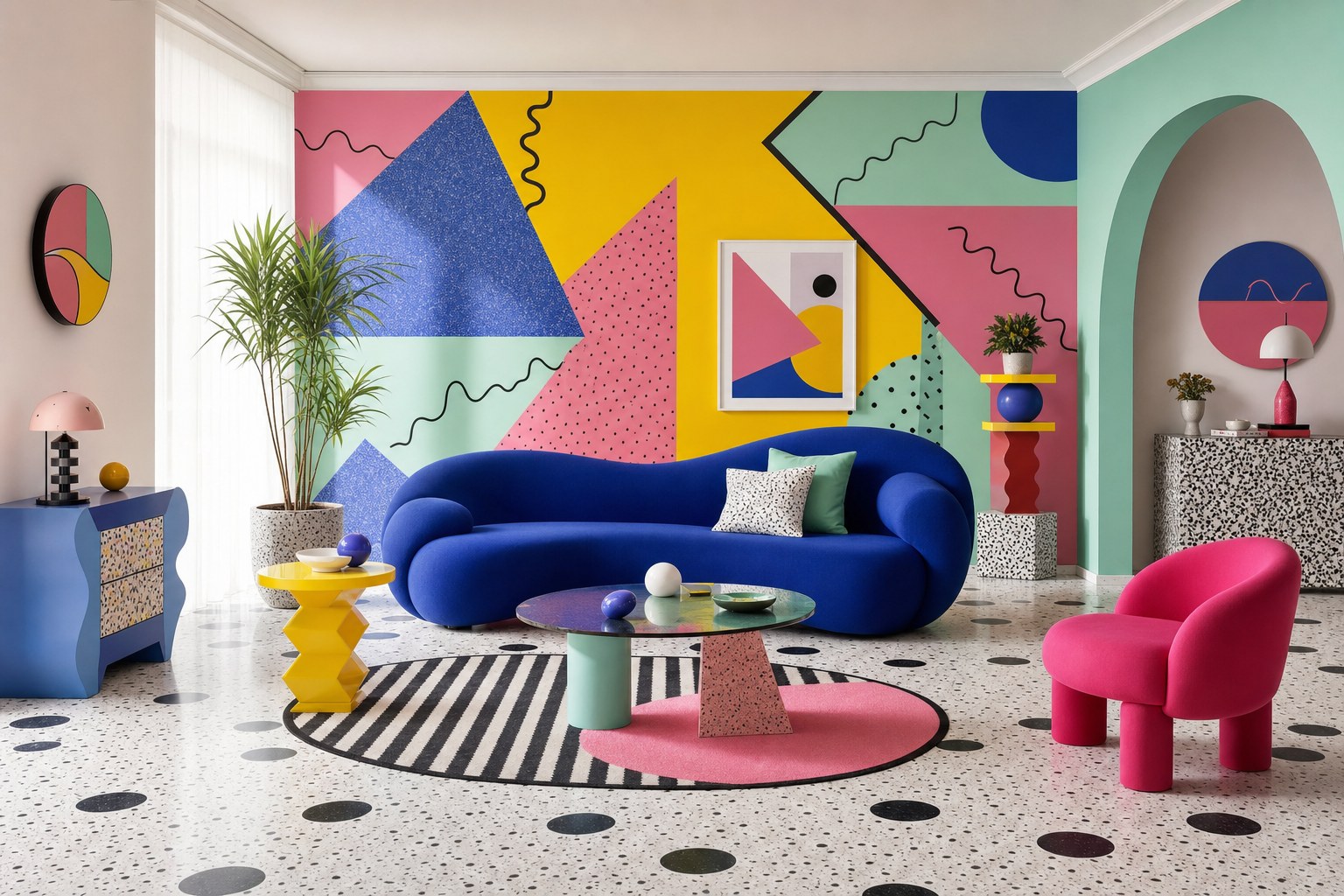
The Memphis Group was a direct assault on modernism's most sacred principle: that form should follow function. Instead, the group argued that form should follow joy, provocation, and visual delight. Plastic laminate - the cheap material of kitchen worktops - was applied to bookshelves and room dividers. Triangles and squiggles replaced the smooth geometric logic of International Style. Primary colors collided with black and white in combinations that felt like a Mondrian painting crossed with a game show set. The group's work was boldly colorful and geometric, often with loud graphic patterns - a deliberate desire to subvert the politeness of modernism.
The current revival tracks predictably. People searching for "80s interior design" and "squiggly furniture" have been circling the Memphis aesthetic for years without knowing its name - the style's commercial moment arrived when the squiggle sofa - wavy, asymmetric, high-contrast - became a social media fixture. Wayfair, Urban Outfitters, and CB2 now carry affordable Memphis-adjacent furniture at non-collector prices. The five elements below build the Memphis-style room in the order that keeps it from tipping into theme-park territory: pattern layer first, furniture second, asymmetric shapes third, primary color accents fourth, graphic flooring last.
Bold Pattern Layer · $119.97
The bold pattern layer is the first decision in the Memphis blueprint, because it is the element that signals the aesthetic intent before a single piece of furniture is introduced. The Memphis Group's textiles and surface patterns were the work of Nathalie Du Pasquier, whose abstract geometric designs, circles, squiggles, triangles, checkerboard grids, polka dots, in high-contrast primary combinations became the visual language of the entire movement. The modern entry point is geometric peel-and-stick wallpaper: a single accent panel behind a sofa or bed introduces the pattern vocabulary at a scale that is legible and removable, which matters for renters who cannot commit to full walls. The pattern layer operates on a specific rule: one large-scale geometric pattern per room, at high contrast (hot pink on white, cobalt blue on yellow, black on cream), kept to one surface so the furniture has space to read against it. A geometric throw pillow set reinforces the pattern story at the seating level, and a graphic print poster or art print gives the wall a framed, intentional version of the same language in a smaller scale. The three items together cost $119.97 and establish the Memphis visual identity in any room without touching the furniture.
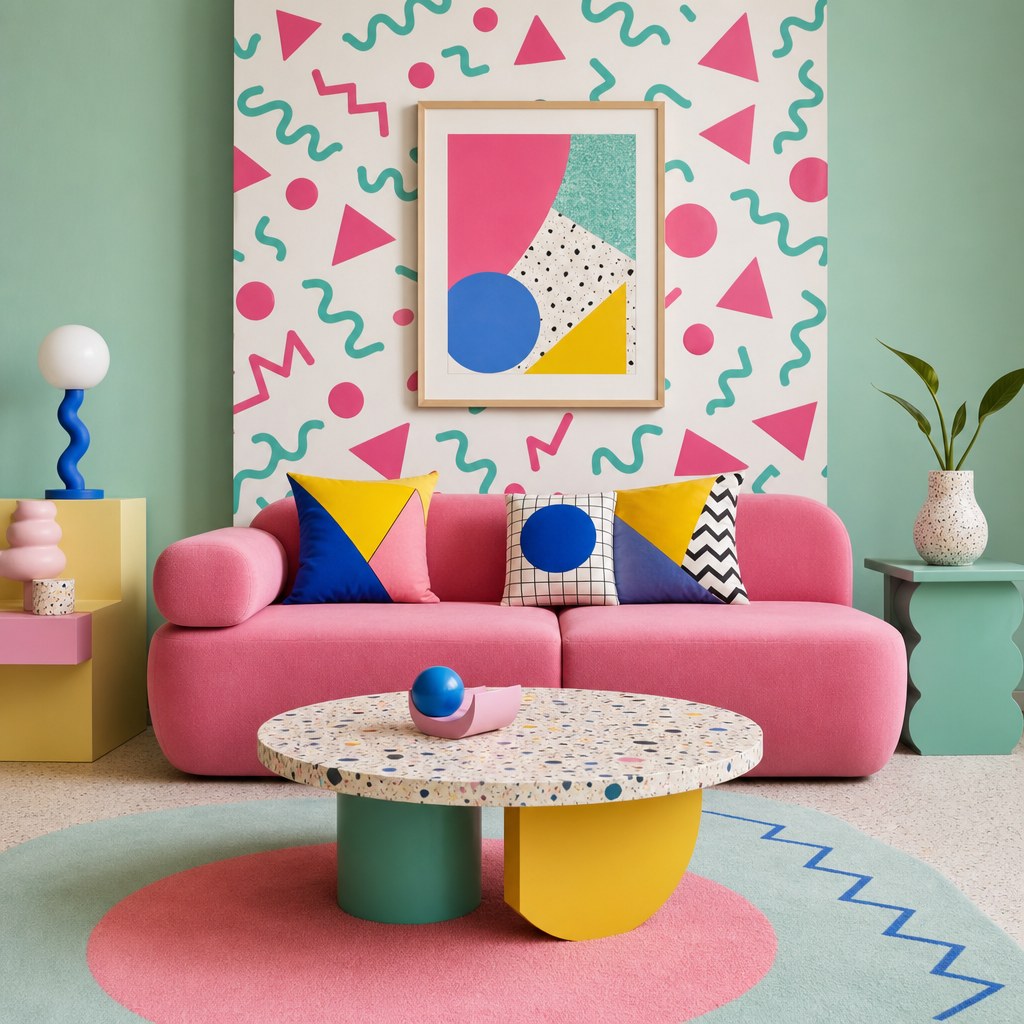
E1 Receipt - Bold Pattern Layer
Squiggle and Colorful Accent Furniture · $298.99
The squiggle sofa is the Memphis movement's single most recognizable entry point: start with the squiggle couch, and everything else follows. The Memphis Group's furniture used plastic laminate on bookshelves and asymmetric shapes on chairs because cheap, industrial materials applied with conviction were a political statement against the preciousness of good taste. The modern version of this principle is the wavy or squiggle accent sofa or loveseat: a furniture silhouette with visible curve distortion in a solid, saturated color, cobalt blue, chartreuse, coral, or red, that introduces the movement's visual vocabulary at the room's largest horizontal surface. For spaces where a full sofa replacement is not possible, the colorful laminate accent side table is the second most effective Memphis signal: a small table in a glossy solid color (yellow, teal, hot pink) with a basic geometric or step-form shape carries the material philosophy of the Memphis Group at the accessory scale and at a price under $100. Authentic Memphis furniture from the 1981-1987 period now commands collector prices, the Carlton Room Divider by Sottsass lists at over $16,000, but Wayfair and Urban Outfitters carry Memphis-adjacent squiggle and colorful pieces at accessible entry points.
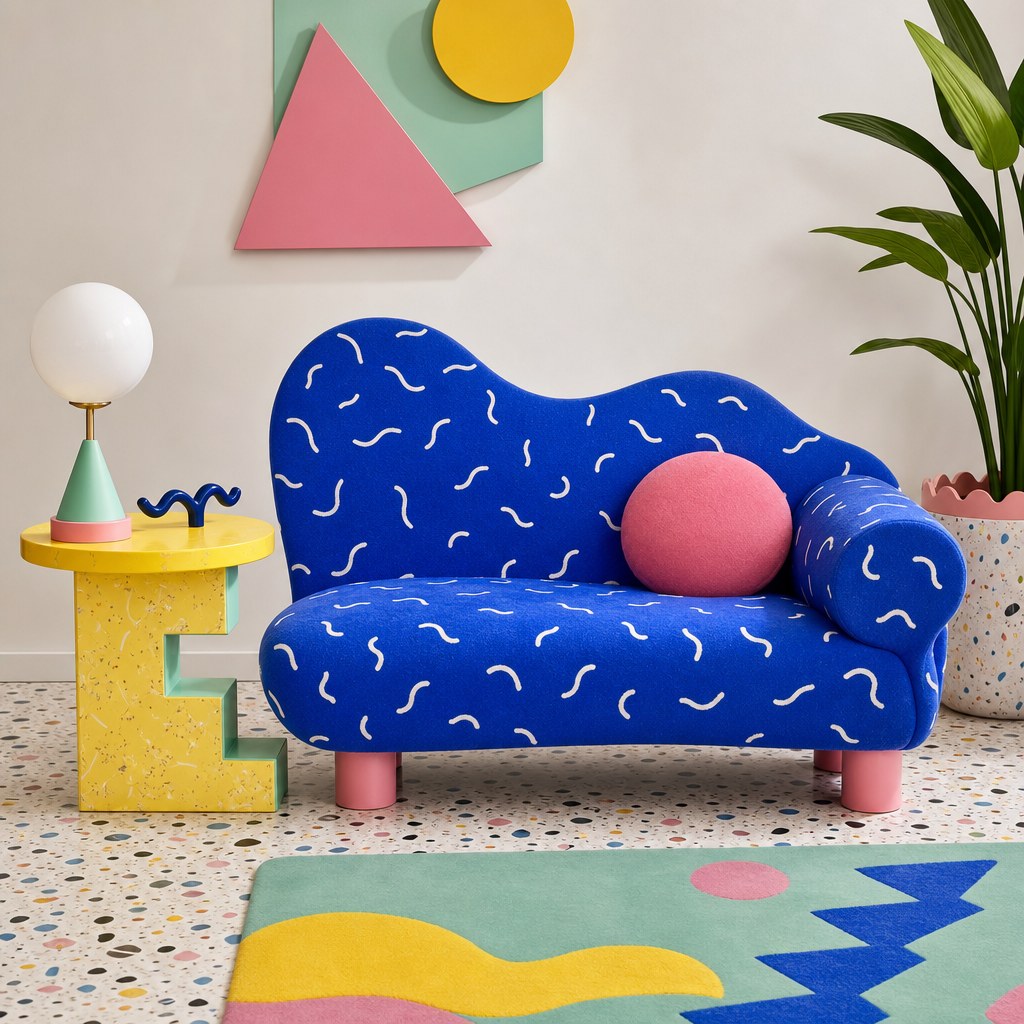
E2 Receipt - Squiggle and Colorful Accent Furniture
Asymmetric Shape Moments · $189.97
Asymmetry is the Memphis Group's structural rebellion against the bilateral symmetry that governed modernist room planning. Every major Memphis furniture piece. The Carlton Room Divider with its stepped and angled arms, the Bel Air Armchair with its bicolor split-form silhouette, the Tahiti Lamp with its bird-beak shade. Broke the expectation that objects should read the same from left and right. The accessible version of this principle operates through three object categories: asymmetric vases or sculptural objects (shapes that lean, point, or twist rather than sit in balanced symmetry), stepped or cantilevered shelving (a wall unit where the shelves do not align horizontally, which is the Memphis Group's most transferable spatial idea), and a single sculptural pendant or lamp with an unexpected form. The three items do not need to match or relate to each other by color. In Memphis, the coherence comes from the shared commitment to unexpected geometry rather than from a consistent palette. Place the sculptural vase off-center on a surface, let the stepped shelf hold objects at three different heights, and position the asymmetric lamp so its shade tilts toward a seating area rather than sitting directly overhead. Asymmetry in Memphis is not disorder: it is the deliberate refusal of predictability at every scale.
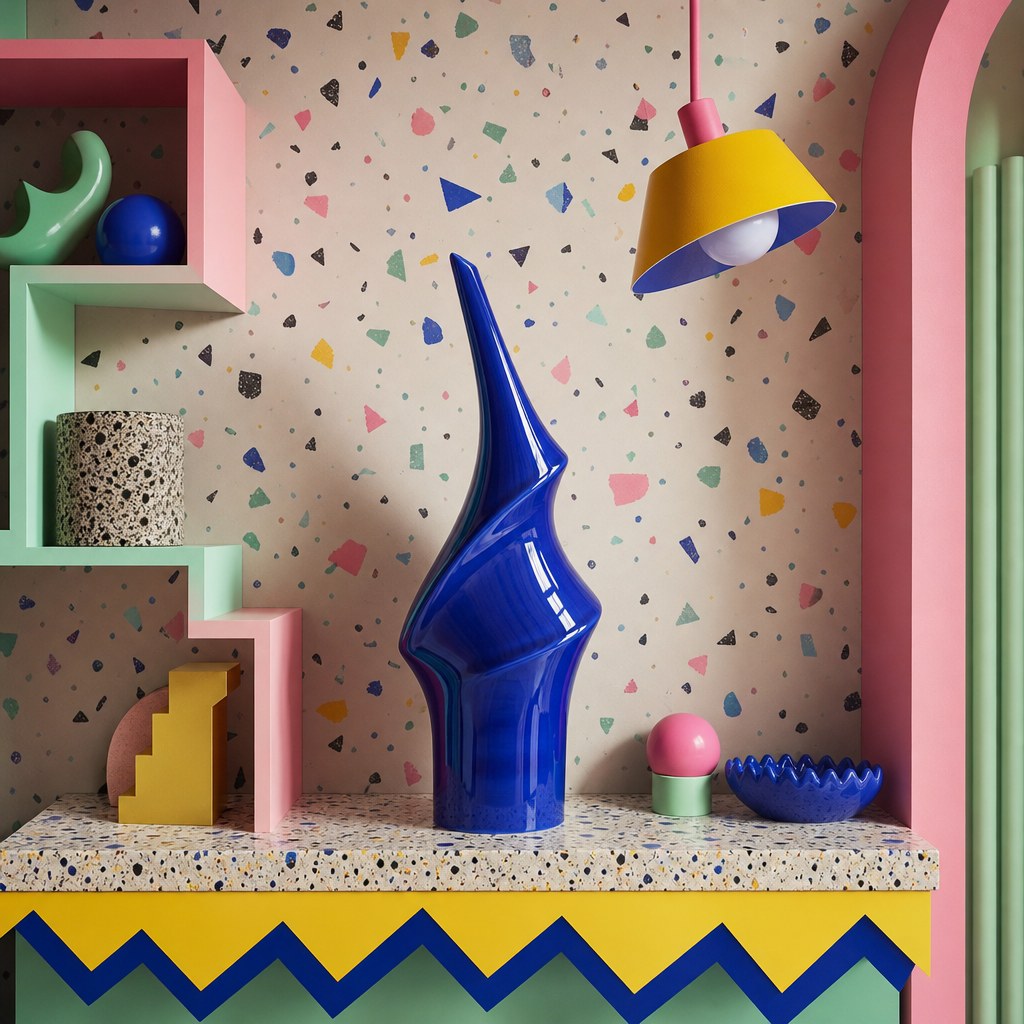
E3 Receipt - Asymmetric Shape Moments
Primary Color Accents · $164.97
Memphis color theory is the inverse of every neutral-first design principle: instead of starting with a quiet base and adding small doses of accent color, the Memphis Group started with full-saturation primary and secondary hues and used white as the visual relief space. The modern application of this principle at the accent layer means four objects in pure, unmixed colors, red, yellow, cobalt blue, and hot pink or teal, distributed across the room's surfaces and shelves as punctuation marks rather than as a coordinated collection. A red enamel tray on a side table, a yellow ceramic bowl on a shelf, a cobalt blue bookend set, and a hot pink or teal throw blanket in a solid knit: none of these objects needs to be in proximity to the others, and none should match by family. The Memphis logic is that the eye reads primary colors across a room as a deliberate system even when the objects are diverse in category. The key constraint: keep each accent object in a single unmodified primary or secondary hue. No dusty rose (use hot pink), no sage (use pure green), no slate blue (use cobalt). The saturated version is the Memphis signal; the muted version is something else entirely.
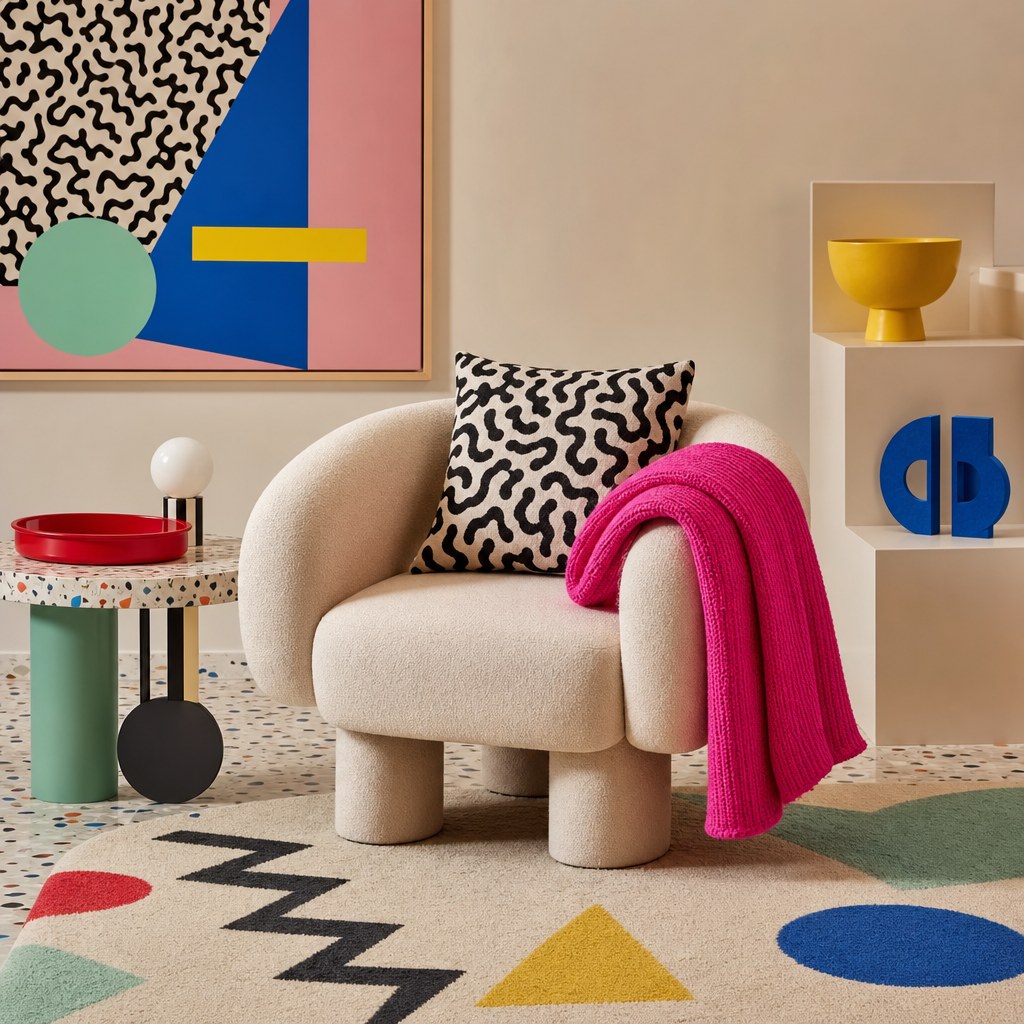
E4 Receipt - Primary Color Accents
Terrazzo and Graphic Flooring · $273.97
Terrazzo is the Memphis Group's flooring material: a composite of marble, quartz, and glass chips in a cement binder that produces a surface covered in randomized colored fragments. A floor that looks like the Memphis textile pattern compressed into the ground plane. The Memphis Group used terrazzo in exhibition spaces and high-end commissions; the material is now available in tile and slab formats at accessible retail price points for both residential installation and the renter-friendly peel-and-stick format. For renters who cannot modify flooring, the terrazzo-pattern area rug replicates the visual logic of the material: a rug with multicolor chip or confetti patterns on a white or light gray ground reads as terrazzo from standing height and introduces the Memphis flooring reference without adhesive or grout. The graphic area rug, a flat-weave rug with a bold geometric print in primary colors, is the second Memphis flooring option: stripes, checkerboard grids, or dot patterns in high contrast that flatten the floor plane into the visual pattern language already established in the walls and objects. Doormat-scale geometric pieces placed at room entries are the third flooring accent: a checkerboard or bold stripe mat signals the aesthetic at the first surface encountered in a room and at a price under $40.
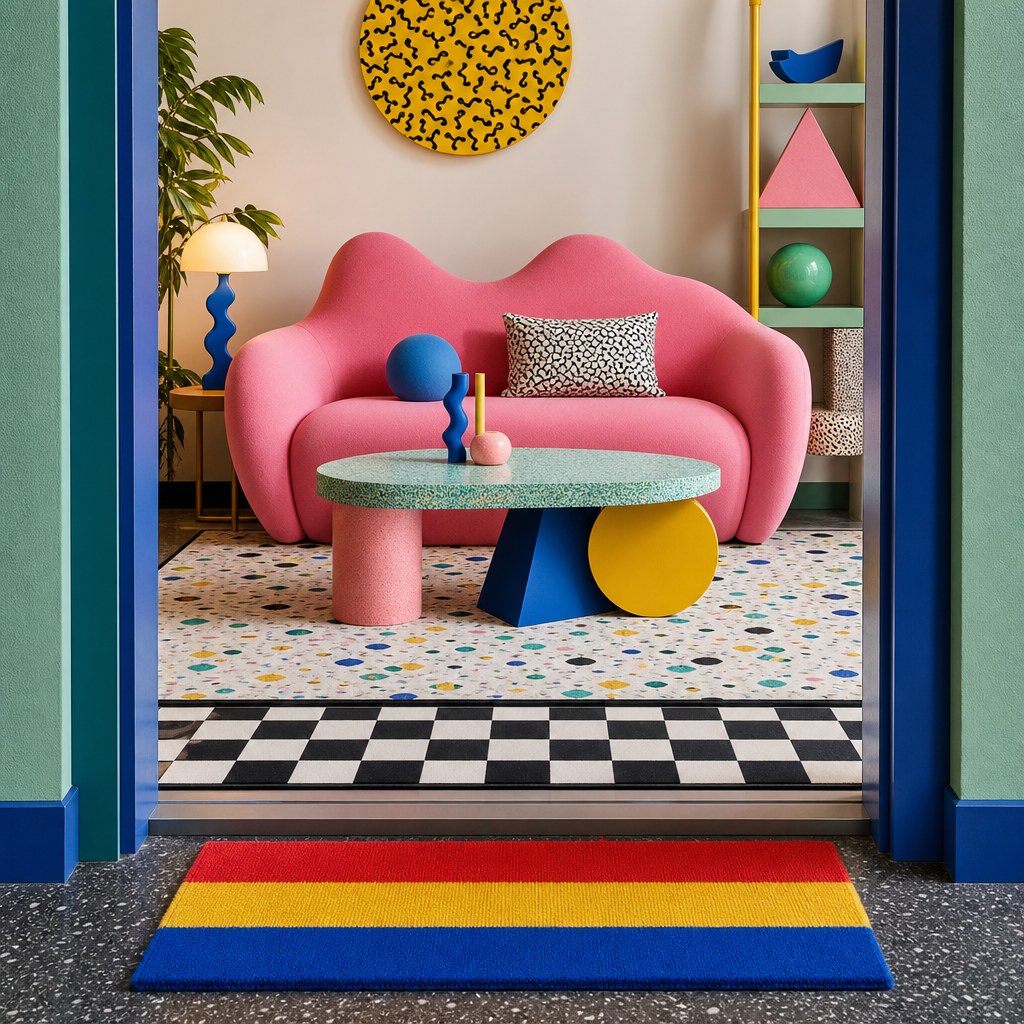
E5 Receipt - Terrazzo and Graphic Flooring
Memphis vs. Pop Art Interior Design.
Both styles deploy bold color, graphic pattern, and a deliberate cheerfulness that modernism refused. The distinction is origin and application. Pop Art interiors quote consumer culture. Warhol's soup cans, Lichtenstein's comic panels, mass-produced imagery elevated to art status. Using photography, printing, and representation. Memphis interiors are entirely abstract: squiggles, dots, triangles, and checkerboards that reference nothing outside themselves, combined with unconventional materials and asymmetric furniture that challenge the object's functional identity. The easiest test: if the pattern depicts a recognizable image (a celebrity, a product, a comic panel), it is Pop Art. If the pattern is pure geometry and color with no representational content, it is Memphis.
| Dimension | Memphis Interior Design | Pop Art Interior Design |
|---|---|---|
| Pattern source | Pure abstract geometry. Squiggles, dots, triangles, checkerboards that reference nothing representational | Consumer culture imagery. Comic panels, product graphics, celebrity photography, brand logos |
| Material philosophy | Deliberately low-brow materials elevated: plastic laminate, terrazzo, industrial finishes on furniture | Materials are conventional; the statement is in the image content, not the surface material |
| Furniture logic | Asymmetric, unconventional silhouettes that challenge functional expectations. The Carlton divider, the Bel Air chair | Furniture is conventional in form; graphic prints on upholstery or large-format art prints do the statement work |
| Color approach | Primary colors in multiple combinations simultaneously. Hot pink with teal AND yellow with black in the same room | Color follows the source image. A Warhol Marilyn palette, a Roy Lichtenstein primary scheme, not a system |
| Era and origin | 1981-1987, Milan, Italian postmodernism. Founded at the Salone del Mobile | Late 1950s-1970s, New York and London, fine art movement applied retroactively to interior decoration |
| The fast test | Looks like a Swatch watch exploded in a design museum, abstract, geometric, cheerfully anti-functional | Looks like a gallery installation moved into a living room. Recognizable images, ironic reference, art-world energy |
The $119 entry path.
Three items that establish the Memphis pattern vocabulary in any room. No furniture replacement, no paint, no structural work required. The complete E1 serves as the entry path.
Frequently asked questions.
What is Memphis interior design?
Memphis interior design is a postmodern style born from the Memphis Group, founded by Italian designer Ettore Sottsass in Milan in December 1980 and first exhibited at the Salone del Mobile in September 1981. The style is defined by bold geometric patterns - squiggles, dots, triangles, checkerboard grids - high-contrast color combinations such as hot pink and teal or yellow and black, plastic laminate surfaces, asymmetric shapes, and a deliberate rejection of modernism's form-follows-function doctrine. Karl Lagerfeld called it "the Art Deco of the 80s" and furnished his Monte Carlo apartment entirely in Memphis pieces. The 80s revival is currently trending with Gen Z and maximalists who encountered the style through the squiggle sofa and geometric furniture circulating on social media.
What colors define Memphis interior design?
Memphis interior design runs on high-contrast primary and secondary color combinations that would have been considered clashing by modernist standards. The signature pairings are hot pink with teal, yellow with black, red with cobalt blue, and lime green with white. The Memphis Group's Nathalie Du Pasquier designed abstract textile patterns using exactly these combinations. The modern revival interprets the palette with one dominant bold color against a white or cream wall, using the other hues in smaller accessories and pattern accents, which prevents the room from reading as retro costume. The critical constraint: use pure, unmodified primary and secondary hues - no dusty or muted versions, which belong to a different style vocabulary entirely.
What furniture defines the Memphis style?
Memphis furniture is defined by three qualities: asymmetric shapes that reject conventional proportion, plastic laminate surfaces in bold colors or graphic patterns, and geometric silhouettes that prioritize visual impact over ergonomic convention. Iconic original pieces include the Carlton Room Divider by Ettore Sottsass (now listed over $16,000) and the Bel Air Armchair by Peter Shire (over $6,000). The affordable modern entry point is the squiggle or wavy sofa - the gateway Memphis piece, averaging 170 monthly searches for "memphis sofa" with much broader adjacent traffic under "squiggle sofa" and "wavy furniture." Urban Outfitters, Wayfair, and CB2 carry Memphis-adjacent pieces at accessible price points for those who want the movement's visual vocabulary without the collector price.
How do I add Memphis style to a modern apartment without it looking like a theme park?
Three rules for a sophisticated Memphis revival that reads as intentional rather than costumed. First, anchor the room in white or cream walls - the Memphis Group always presented its boldest pieces against neutral backgrounds, which is what made the geometry readable rather than overwhelming. Second, commit to one hero pattern at scale - a geometric wallpaper panel, a graphic area rug, or a squiggle furniture piece - and keep the remaining surfaces solid. Third, balance every loud piece with one quiet one: a hot pink accent chair reads as editorial against a white wall; surrounded by four other pattern pieces it reads as chaos. The Memphis aesthetic is maximalist in its individual choices and disciplined in its system.
Is Memphis interior design the same as postmodern interior design?
Memphis design is the most recognizable subset of postmodern interior design, not a synonym for it. Postmodern interior design is the broader movement (roughly 1970-1990) that rejected modernism's austerity through historical reference, ornamentation, and irony. Memphis is its most vivid expression: where postmodernism in architecture used classical columns ironically, Memphis in furniture used squiggles, laminate, and electric color. The Memphis Group was active from 1981 to 1987; the postmodern interior design movement it belongs to is broader and longer. The supporting search keywords reflect this: "postmodern interior design" generates 1,300 monthly searches against "memphis interior design" at 20 monthly searches, which means most searchers discover the Memphis style by searching for the broader postmodern category first.
More rooms like this
No spam. Unsubscribe anytime.