Table of Contents
The Cycladic aesthetic.
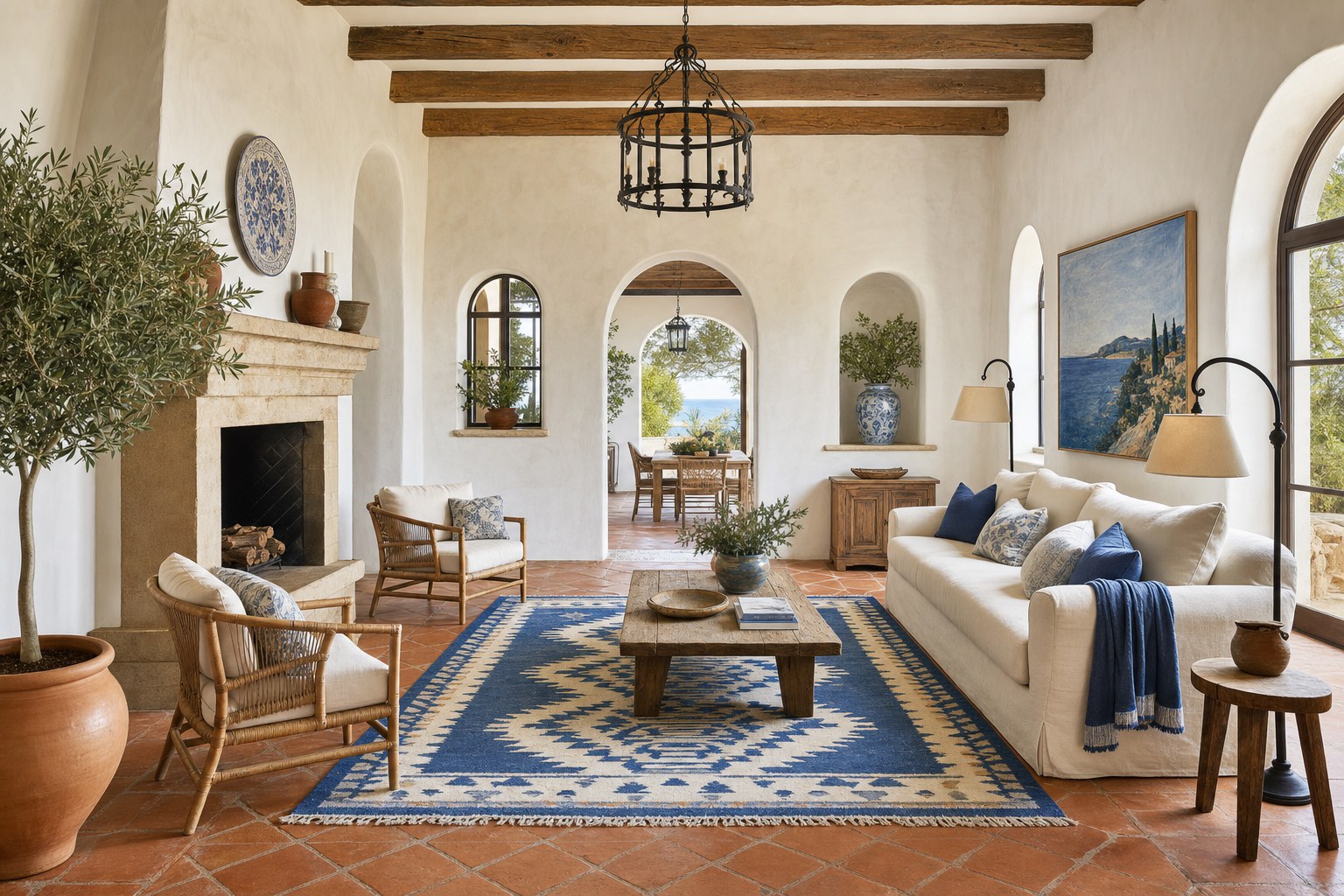
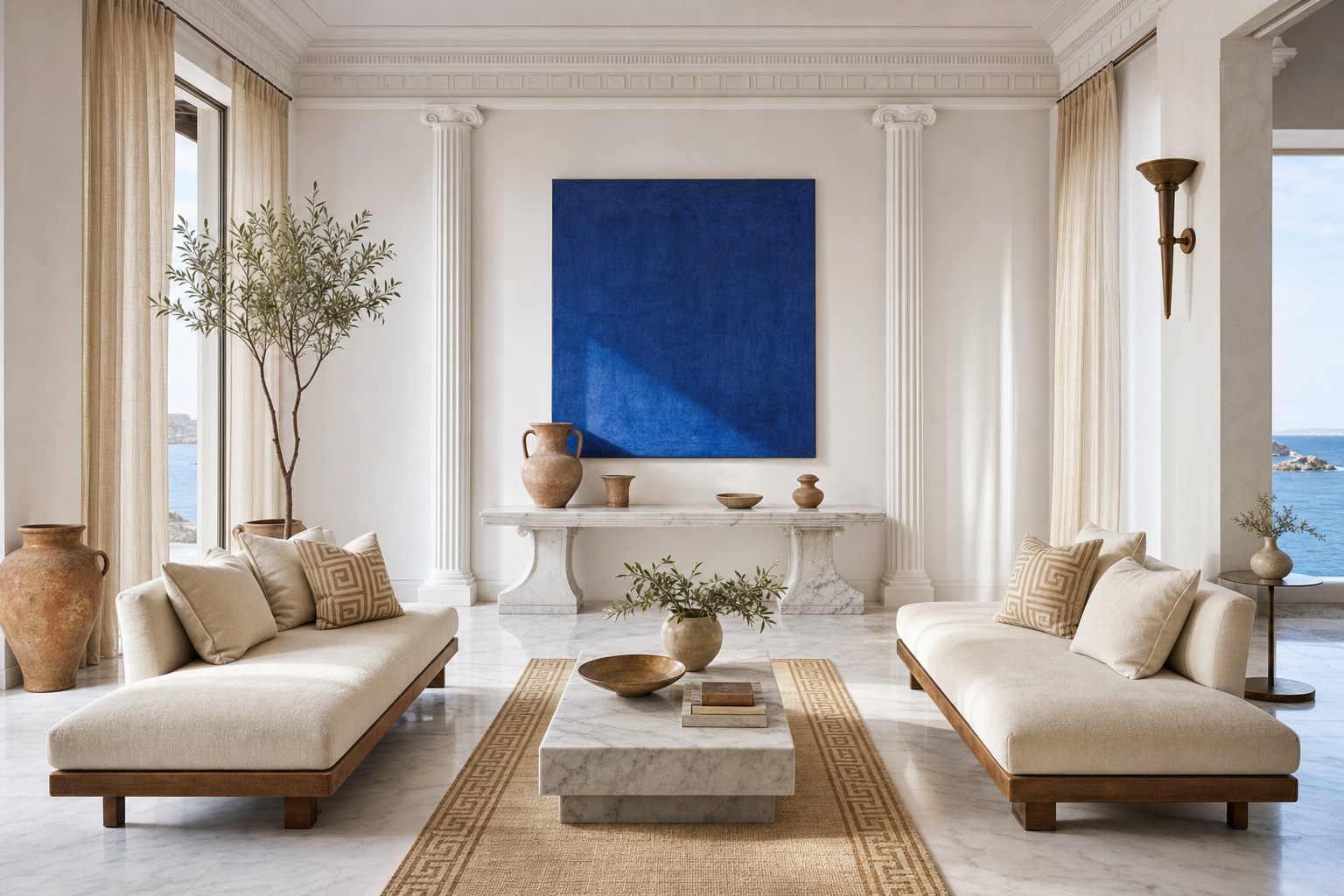
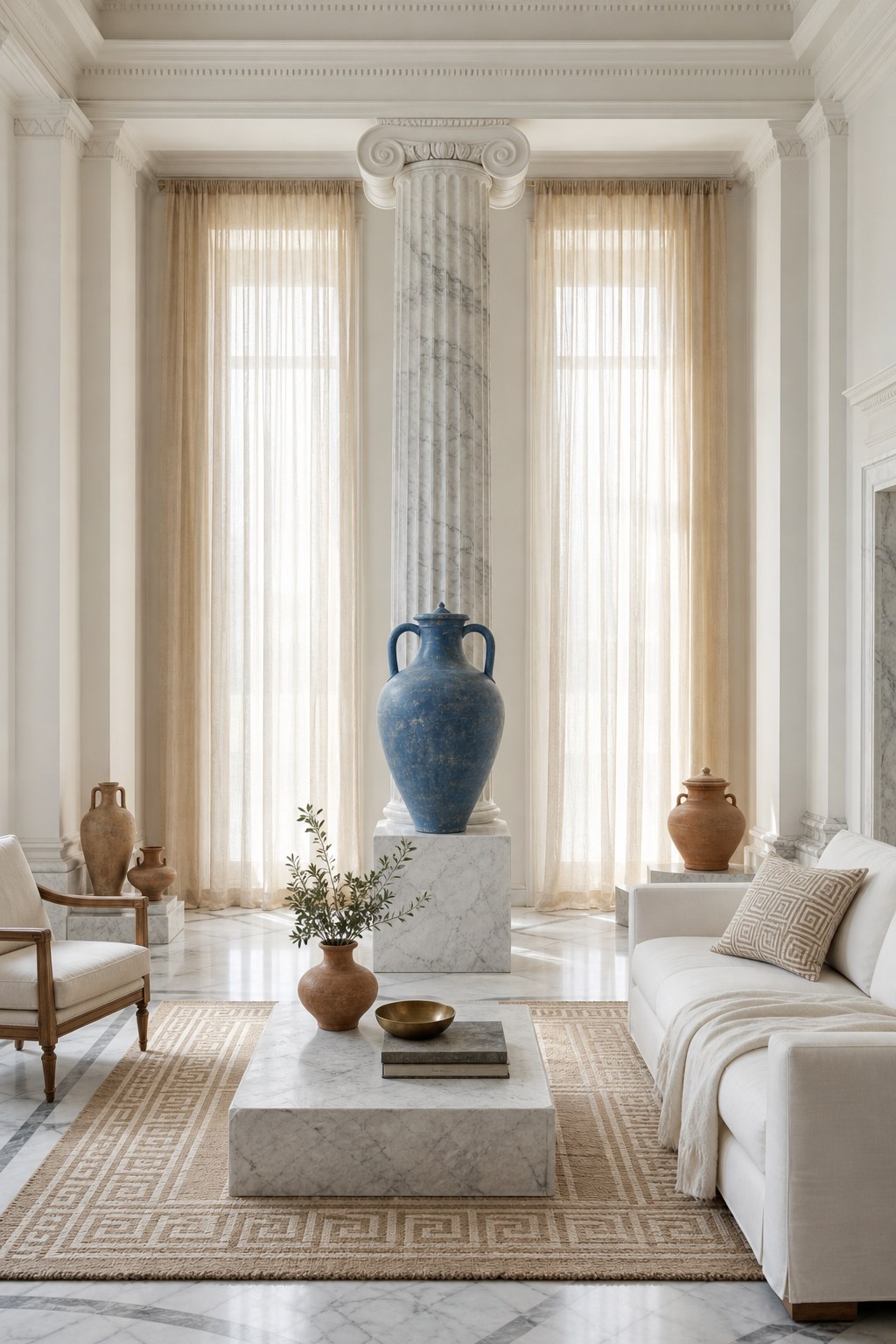
Greek interior design operates on a different logic than most aspirational styles. Where 70s revival relies on warmth accumulation and Japandi succeeds through controlled restraint, Greek design is legible through material purity. Greek homes draw from ancient architecture, sun-washed coasts, and traditional materials. The specific materials are consistent across every authentic example: lime-based plaster for walls (the whitewash that kept Cycladic houses cool in July heat and carried antibacterial properties from the lime itself), natural marble for every surface where durability and coolness matter, and terracotta as the earth-tone counterweight to all that white and blue.
The Greek design tradition runs in two parallel streams that modern interiors braid together. The classical stream - Greek Revival architecture, which flourished particularly in the United States between the 1830s and 1860s - is characterized by balanced, symmetrical layouts, with doors, windows, and furniture arranged in perfect proportion to one another. The vernacular Cycladic stream is the opposite of formal: cubic whitewashed volumes, rounded doorways, arched alcoves, and a complete absence of ornament except for the blue paint on shutters and domes. Both streams share the same material vocabulary - white plaster, natural stone, terracotta - and the same restraint principle. The guiding rule of the tradition: when in doubt, remove something. Greek interiors succeed through simplicity, not accumulation.
The kitchen is the entry room for this style in 2026. The kitchen principle is straightforward: the tile IS the design. The Greek kitchen at 9,900 monthly searches is the dominant keyword in this cluster, driven by terracotta tile, BODBYN cabinets in off-white, and handmade ceramic vessels as a complete sourcing unit. The IKEA BODBYN + terracotta tile combination is the budget-accessible version of a Cretan farmhouse kitchen. The five elements below build the full Greek-style home in order of visual impact, from the palette layer that establishes the Aegean signal to the linen foundation that softens it into a livable room.
Blue + White Palette Layer · $129.96
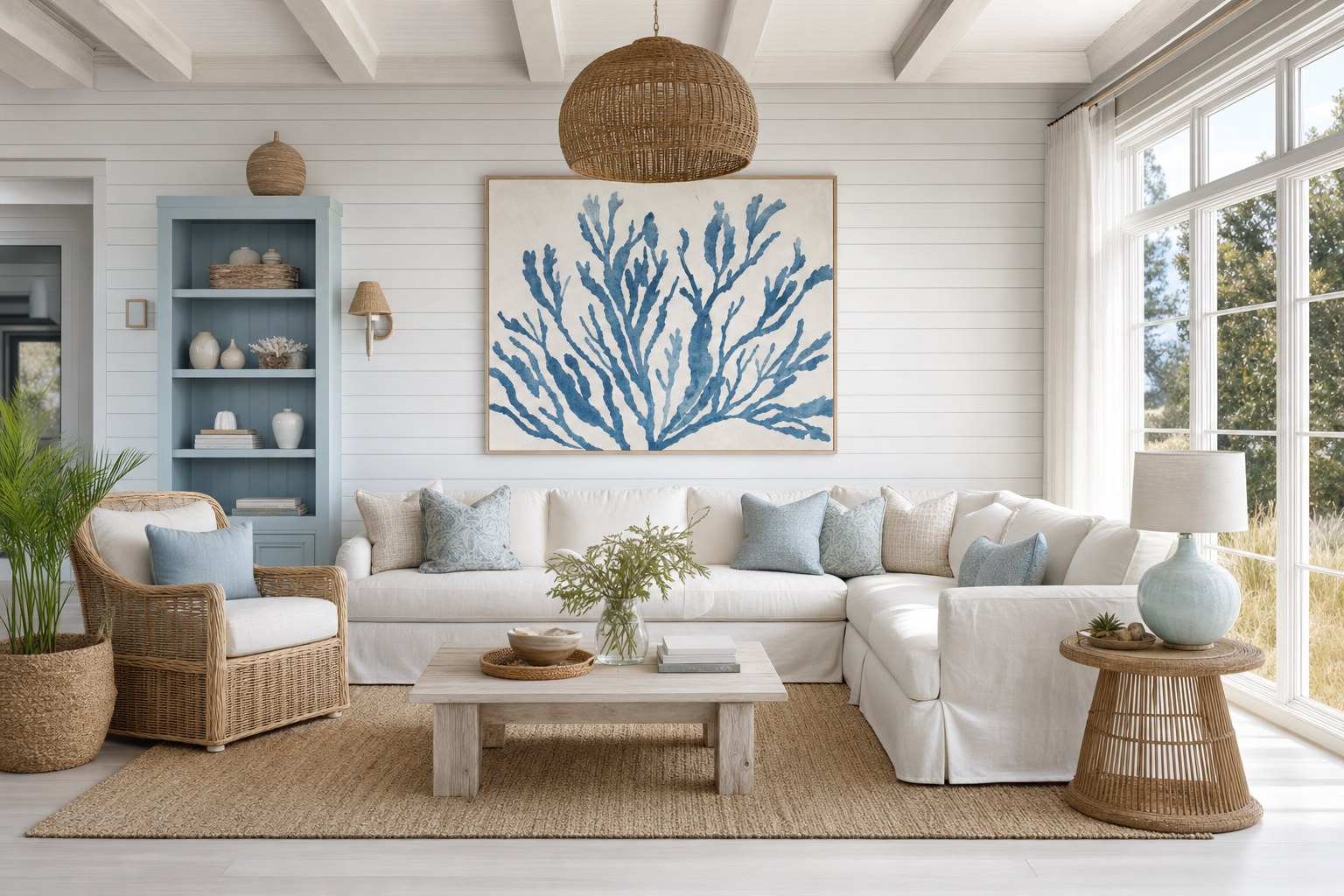
The blue and white palette is the single most recognizable signal in Greek design, and it's the element to establish first. Before any furniture purchase, before any marble surface, before any terracotta pot. The Aegean palette is binary: "White dominates. Blue punctuates." The white comes from lime-based plaster that reflected the intense Cycladic sun and kept interiors cool; the blue shutters and domes mirrored the deep Aegean Sea and sky. In a rental or apartment context, this palette is introduced through objects: cobalt blue ceramic vessels, Aegean-toned pillow covers, a Greek key-patterned throw, and a limewash candle set that evokes the chalky texture of plaster walls. Build the palette in objects first. The total is fully reversible, and it tells you immediately whether the direction works before any paint goes on a wall.
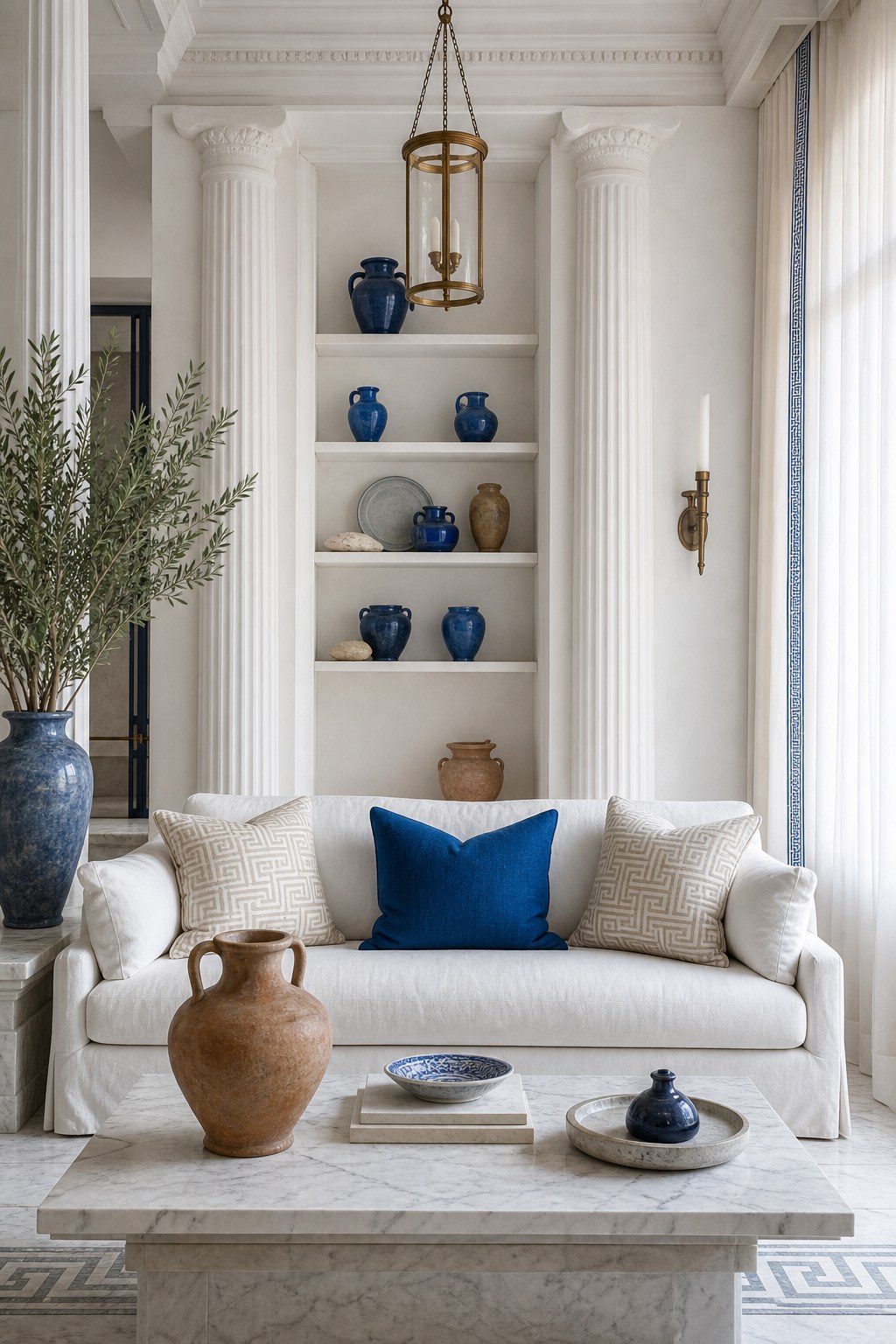
E1 Receipt - Blue + White Palette Layer
Marble Surface Layer · $249.97
Marble is the material that connects the Greek interior to its ancient source. Greece has quarried marble for thousands of years, Parian marble and Thassos marble remain prized worldwide, and the modern Greek home uses marble on every horizontal surface where durability and temperature matter: countertops, bathroom floors, coffee tables. "Tables and countertops may include marble tops or stone surfaces, hinting at ancient influences." In an apartment context, marble arrives through three accessible objects: a marble-top tray for the coffee table, a marble pastry board for the kitchen, and a set of marble coasters. These three items introduce the material without requiring a renovation. The tactile temperature of marble. Cool to the touch, a reminder of the stone floors that kept Aegean homes bearable in summer, is part of the effect. Real marble at the object scale runs $80-$150 per piece; marble-finish alternatives in quartz or sintered stone start at $30.
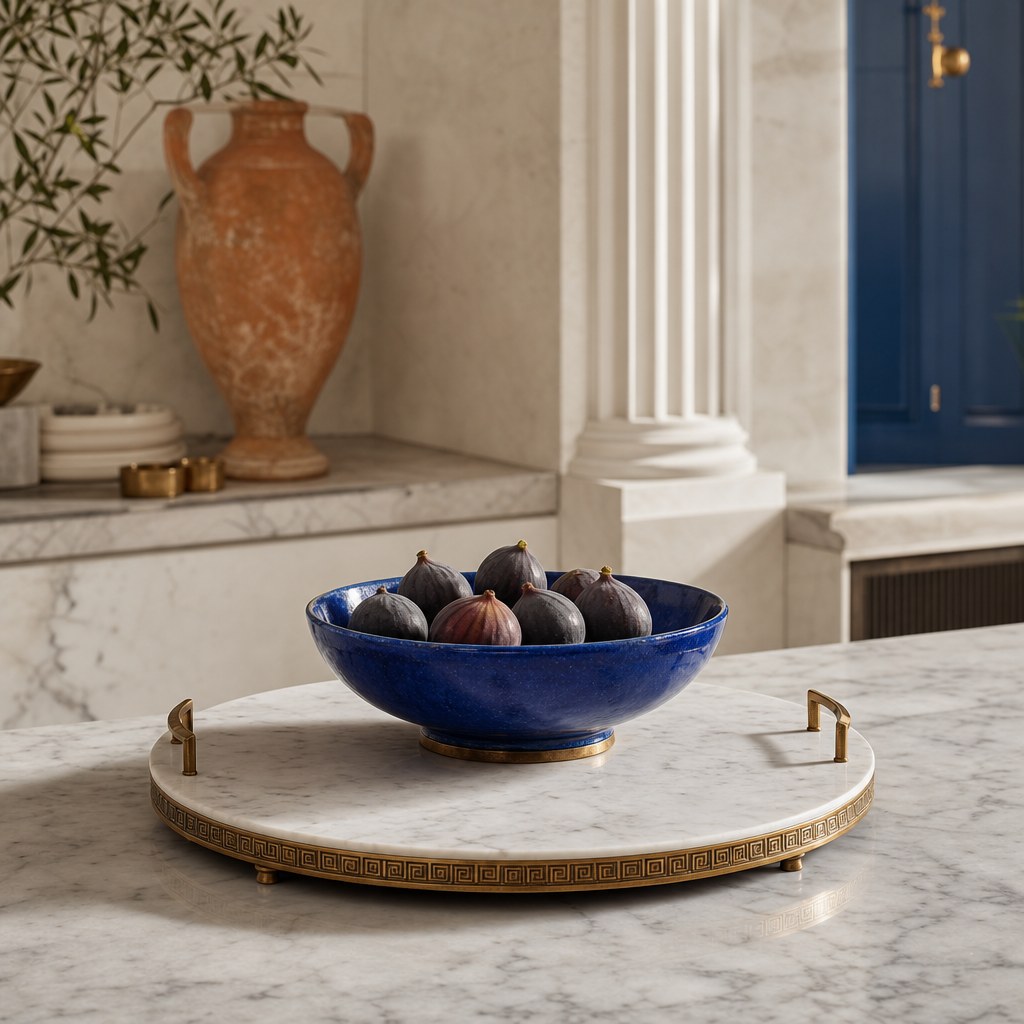
E2 Receipt - Marble Surface Layer
Column + Arch Details · $319.97
Columns and arched forms are the Greek design vocabulary that distinguishes this style from generic Mediterranean decor. The Greek Revival architectural tradition is characterized by "balanced, symmetrical layouts" with columns as the dominant structural and decorative element. Doric, Ionic, and Corinthian orders define the three tiers of classical expression. "Columns, even if purely decorative, mimic ancient temple design" and carry enough visual authority to read as a design statement at any scale. In an apartment context, the column language arrives through three objects: a pair of column-form bookends for shelving, an arched mirror that references the rounded doorways of Cycladic architecture, and a Greek key border tile sheet for the backsplash or bathroom wall. The Greek key pattern. "a decorative border built from one continuous line that runs, turns at right angles, doubles back on itself, then repeats", has run continuously in design from 8th-century BC temple friezes through Roman mosaic floors to contemporary tile borders. One row of Greek key border tile turns a plain wall into a classical reference.
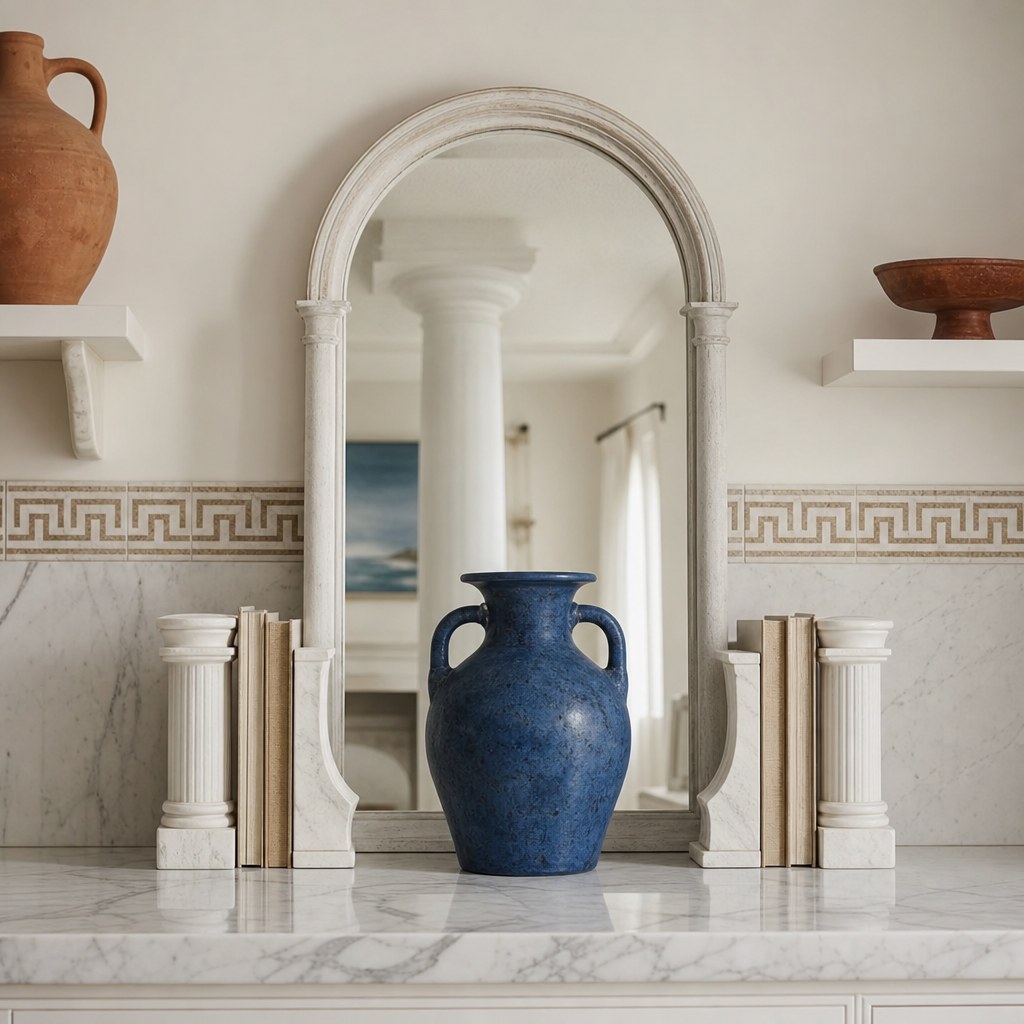
E3 Receipt - Column + Arch Details
Terracotta + Olive Wood · $189.96
Terracotta and olive wood are the earth-tone counterweight that keeps the Greek palette from reading as a corporate lobby. Terracotta jugs, whitewashed vases, or black-glazed amphorae belong on shelves and tables, and the unglazed terracotta vessel is the most authentic of these. Fired from the same Aegean clay tradition that produced ancient amphora. The sourcing hierarchy for this element: buy terracotta and olive wood as handmade or small-production pieces wherever possible. Decor in Greek interiors never overwhelms. A bowl of olives, a branch of dried oregano, an open book. The olive wood cutting board is the kitchen's material bridge, bringing the warm, silver-streaked grain of Mediterranean olive trees directly to the countertop surface. Paired with a small potted olive tree and a set of unglazed terracotta plant pots, this element grounds the white and blue palette in organic warmth. The terracotta plant pot set is the cheapest entry into Greek kitchen design at 9,900 monthly searches.
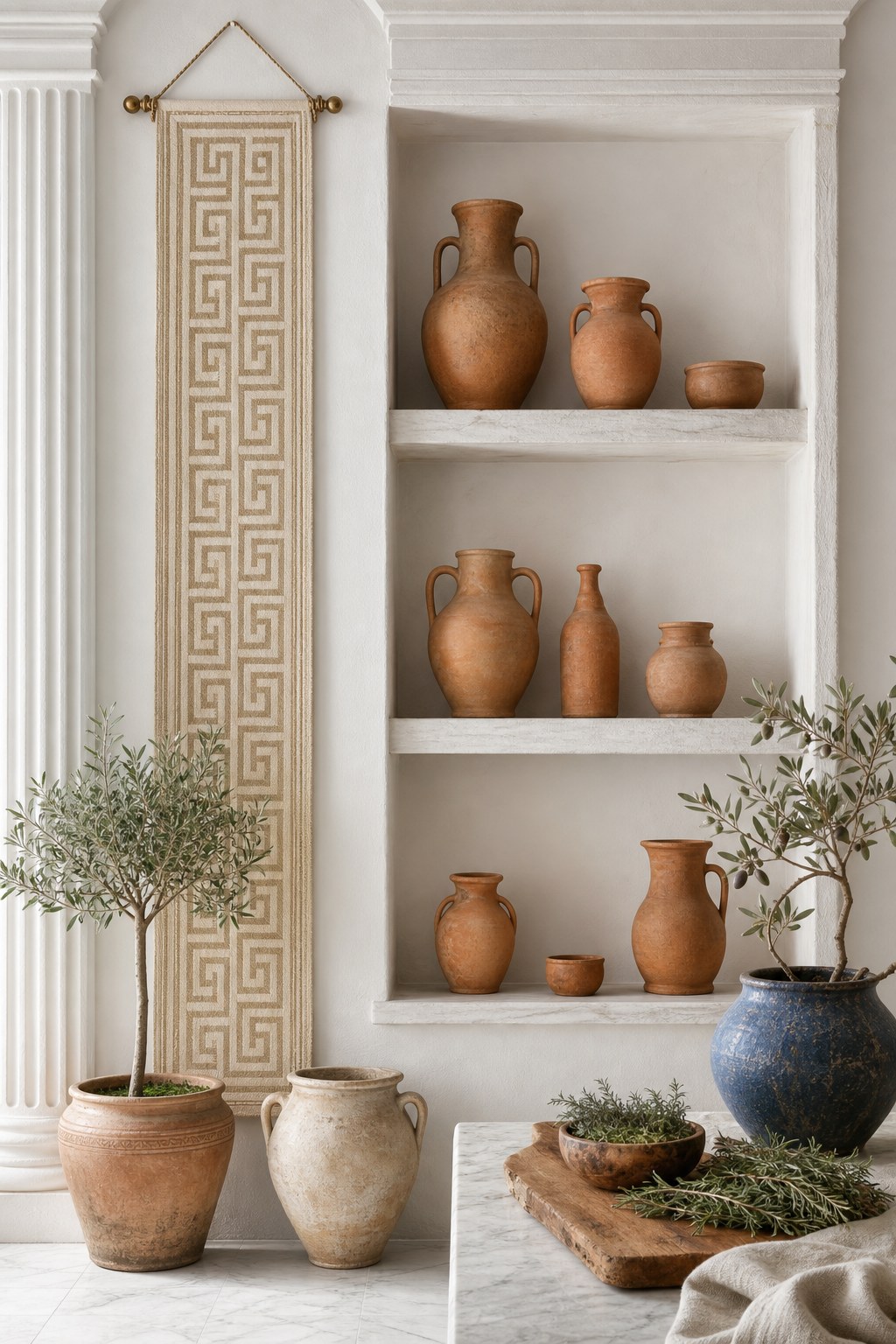
E4 Receipt - Terracotta + Olive Wood
Linen Textile Foundation · $357.97
Linen is the textile of Greek and Mediterranean interiors, and it's the element that determines whether a Greek-style room reads as airy or heavy. "Cotton, linen, and wool dominate the material selection. These fabrics feel fresh against the skin and allow air circulation, with thick drapery rarely used and sheer materials framing windows instead." The Greek textile hierarchy is specific: linen for curtains and large surfaces (sheer, natural, undyed), cotton for everyday throws and pillow covers, and handwoven wool for a single flat-weave rug as the floor's texture anchor. "Layer in textiles such as linen curtains or cotton throws in blue and white patterns, and add greenery with potted olive trees or herbs to bring the outdoors inside." The investment here is the linen panel curtains. Floor-length, slightly sheer, in a natural off-white linen. This is the piece that makes a room feel like a Greek island house regardless of what the walls say. The flat-weave rug replaces a plush pile: in Greek design, the floor should be visible, the rug should have a flat texture, and the weave pattern can carry a geometric reference (the Greek key or a diamond fret) without the rug dominating the room.
E5 Receipt - Linen Textile Foundation
Greek vs. Mediterranean.
The Aegean verdict.
Greek interior design is the most accessible Mediterranean style for renters. The palette (white and blue) is achievable without paint. The material signals (marble objects, terracotta pots, linen panels) are available at every price tier. The motifs (Greek key, column forms, arched mirrors) appear in both design-forward retailers and accessible mass-market sources. The kitchen is the room where this style has the highest search volume and the clearest sourcing path: BODBYN cabinets in off-white, terracotta tile, and handmade ceramic vessels. That combination is the Greek kitchen at $30-50 per tile sheet and $400-600 per cabinet run - the budget Cyclades.
The single most important purchase in the full Greek build is the arched mirror (Element 3, $189.99). It carries more design information than any other single item: the curved arch form references Cycladic architecture, the white plaster finish references whitewashed walls, and the large reflective surface amplifies whatever natural light the room has. The blue and white palette layer (Element 1, $129.96) is where to start - it establishes whether the direction reads as Greek or simply as "nautical," and the answer is in the cobalt ceramic vessels, not in the blue and white striping.
Start here: $129.96
Element 1 alone, four objects, establishes the Santorini color story in any apartment. Cobalt ceramic vases, Aegean blue pillow covers, a Greek key throw, and a limewash candle set. No paint. No drilling. Fully reversible. Add the marble tray from Element 2 ($89.99) and the total reaches $219.95 for a complete two-element foundation.
Shop the entry path on AmazonFrequently asked
What is Greek interior design?
Greek interior design is a Mediterranean style rooted in the architectural traditions of Ancient Greece and the coastal aesthetics of the Cycladic Islands. Its defining characteristics are whitewashed walls, natural stone and marble surfaces, a blue and white color palette inspired by the Aegean Sea, terracotta pottery, and natural linen and cotton textiles. The style prioritizes restraint over accumulation - the guiding principle is simplicity, not maximalism. The modern interpretation draws equally from the ancient classical tradition (columns, symmetry, the Greek key meander pattern) and from the vernacular Cycladic architecture of Santorini and Mykonos (cubic forms, arched openings, sun-bleached plaster).
What colors define Greek interior design?
White dominates. Blue punctuates. Earth tones, terracotta, and soft greens provide secondary warmth. The primary scheme is white walls paired with blue accents - ranging from cobalt to Aegean sky blue - drawn directly from the palette of Cycladic architecture, where the white lime-based wash reflects summer heat and the blue shutters and domes mirror the Aegean Sea. The secondary palette adds terracotta, sandy beige, olive green, and warm cream. The Santorini version is the most recognized: pure white plaster against a saturated blue, with terracotta and natural wood as grounding accents.
What is the Greek key pattern and where should it be used?
The Greek key pattern, also called the meander motif, is a decorative border built from one continuous line that runs, turns at right angles, doubles back on itself, then repeats. The name comes from the Maeander River in Asia Minor, famous in antiquity for its twisting, looping course. In ancient Greece it ran around temple friezes, vase rims, and mosaic floors; today it appears on tile borders, textiles, trim, and upholstery. In a modern Greek-inspired interior, the Greek key is best used as a border or trim element - a single row of Greek key tile around a bathroom mirror or kitchen backsplash - rather than as a full wallpaper pattern. Used selectively, it signals the classical reference without overwhelming the room.
How do you achieve the Santorini look in a Chicago or New York apartment?
Three decisions carry the Santorini palette into any apartment, regardless of climate or light. First, paint or limewash one wall in a warm white - not a cool optical white, but a chalky, slightly warm tone like Benjamin Moore White Dove or Sherwin-Williams Alabaster. Second, add blue accents through cushions, ceramic vessels, and window frames rather than wall color - this is reversible and renter-safe. Third, bring in terracotta and handmade pottery as the grounding earth tone. The Santorini aesthetic does not require a sea view; it requires the right materials. White walls, terracotta, handmade pottery: you don't need the sea view to get the feeling.
What is the difference between Greek and Mediterranean interior design?
Greek interior design is a specific subset of Mediterranean interior design with a sharper historical reference point. Mediterranean design encompasses the full coastal palette - Spanish, Italian, Moroccan, and Greek vernacular traditions - with warm terracotta roof tiles, wrought iron, and rich jewel tones as common elements. Greek design is more restrained: whitewash dominates over warm ochre, blue is the signature accent color rather than rich red or gold, marble is preferred over terracotta tile for surfaces, and the classical motifs (columns, pediments, Greek key) signal a specific Hellenic lineage. The Cycladic version is the most minimal of all - a purity of white cubic form that reads as contemporary as it does ancient.
Want a full Greek-style room plan for your city?
No spam. Unsubscribe anytime.