Table of Contents
Glam Decor Explained.
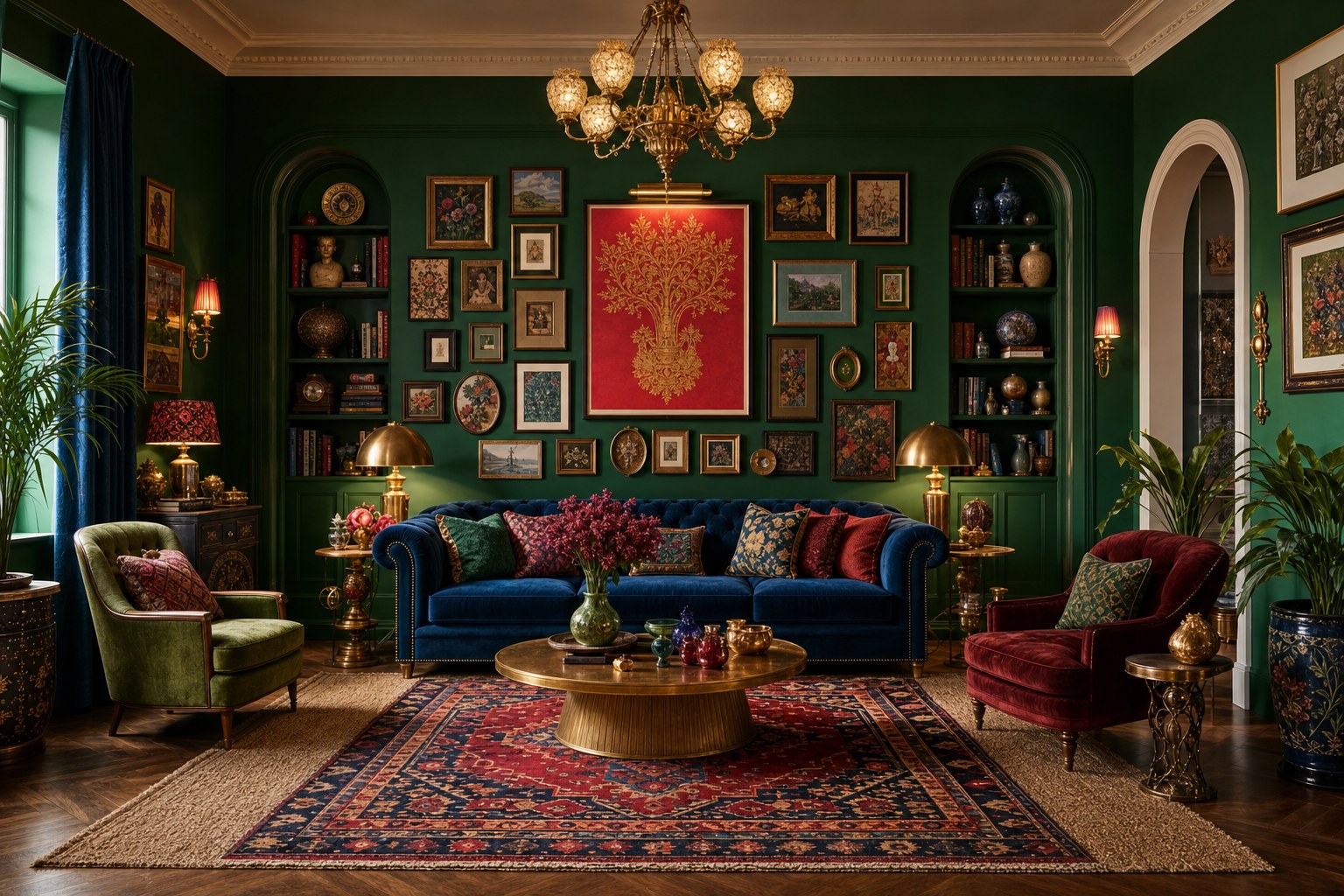
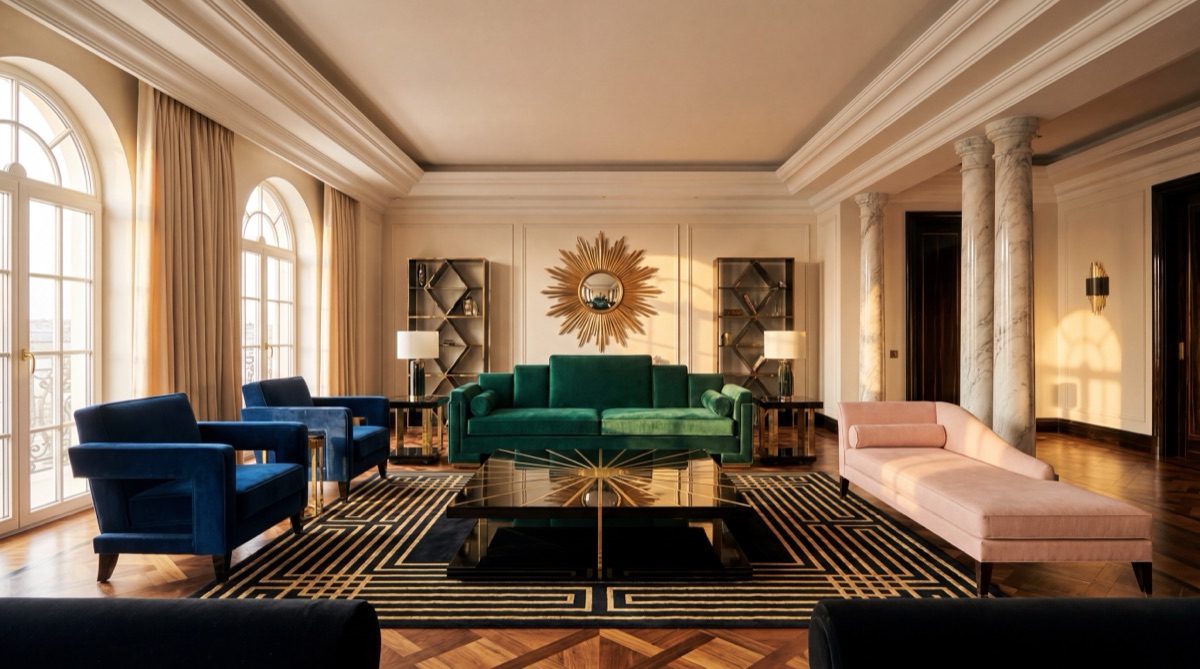
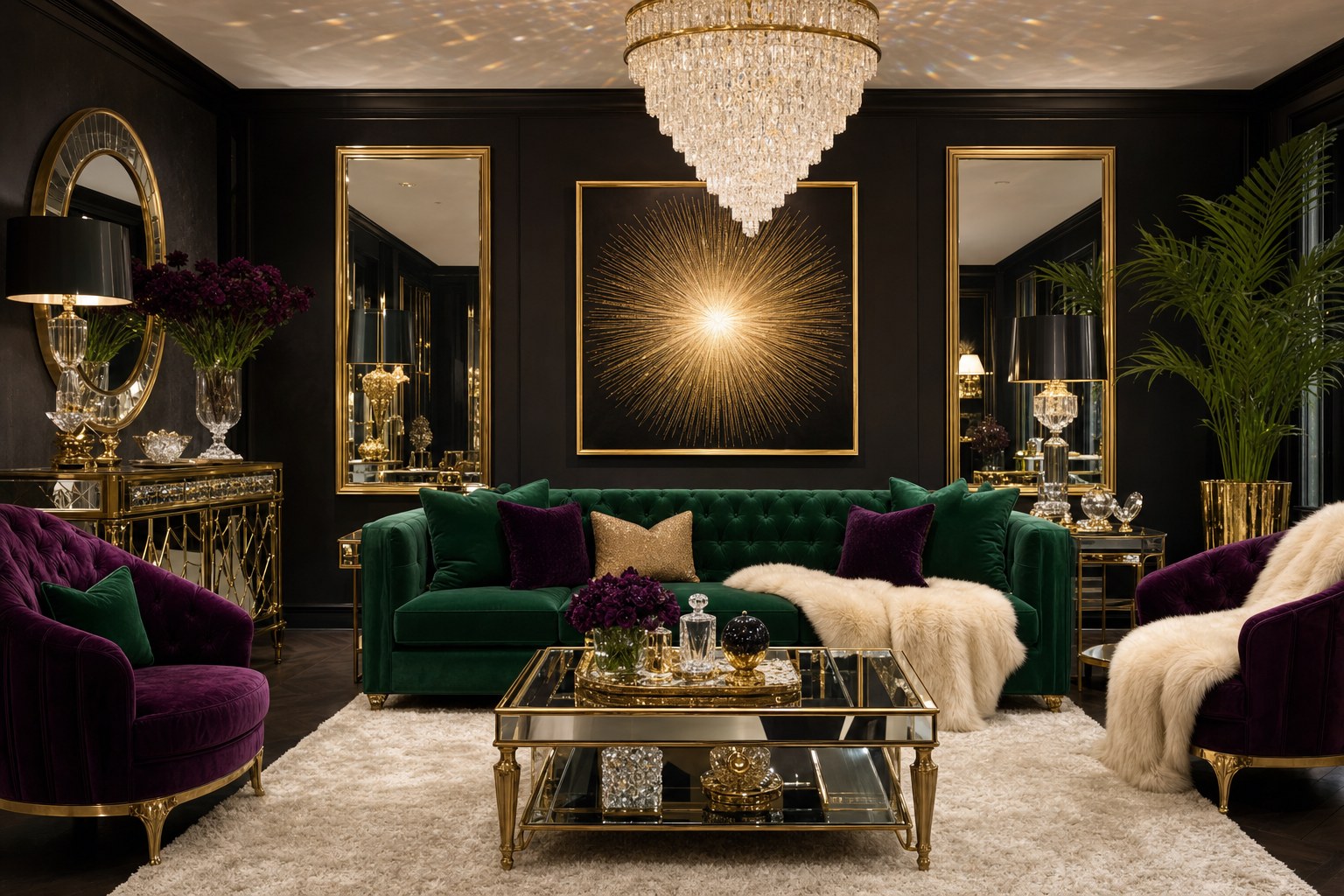
Glam interior design is not about accumulating expensive things. It is about the deliberate construction of a room that reads as luxurious - where every material decision amplifies light, every texture communicates quality, and the overall effect is a space that feels like it belongs in a film. The style's lineage runs from the golden age of Hollywood through Dorothy Draper's high-contrast interiors and into the contemporary glam decor movement, which has split into two main expressions: Hollywood Regency (maximalist, Art Deco-patterned, eclectic) and modern glam (restrained neutral foundation, one or two jewel-tone statements, metallic accents used with precision). The modern version is the more accessible and durable interpretation. Glam style balances "extravagance with elegance" through rich textures, metallic accents, bold patterns, and luxurious materials - while maintaining sophistication via clean lines and curated decor.
The most common obstacle to glam is permission. Most people who want a chandelier in their apartment feel it is "too much." Most people who want a velvet sofa in a jewel tone worry it will dominate the room or read as dated. The primary content failure of glam guides is exactly this hedging - telling the reader to add one gold candle and call it done. That is not glam. Glam requires committing to the vocabulary: velvet is structural, not a pillow accent; mirrors are architectural, not decorative; the chandelier is the room's centerpiece, not a nice-to-have. The five elements below are built in the sequence that prevents the look from tipping into chaos: upholstery establishes the color and material commitment, mirrors multiply the spatial illusion, metallics tie the hardware language together, lighting becomes the dramatic focal point, and art gives the room its personality and final layer of visual weight.
Budget logic for glam follows a clear sourcing hierarchy. Source the velvet sofa and tufted headboard from the mid-market (Amazon, Wayfair, Article) - these categories have reached reliable quality at $300 to $900, and a velvet sofa's glamorous signal is entirely in the color and pile quality, not the brand name on the frame. Source the crystal chandelier new at mid-market rather than vintage - reproduction crystal chandeliers at $150 to $400 are indistinguishable from the originals at 10 feet. Source the gold hardware and decorative accessories wherever they appear - TJ Maxx, HomeGoods, and CB2 all carry legitimate brass and gold-tone pieces for under $60, and the category rewards hunting. Source statement art as large-format prints rather than originals - a 24x36-inch abstract in a gold gallery frame lands the same visual impact as the original at a fraction of the cost.
Velvet Upholstery in Jewel Tones · $298.97
Velvet is the material that makes glam decor immediately legible. No other fabric carries the combination of visual weight, tactile richness, and light-catching behavior that velvet delivers. Its pile catches light directionally, so the same emerald velvet sofa reads as a deep forest at one angle and a bright jewel at another. The glam palette assigns velvet the work that paint does in other styles: it establishes the room's primary chromatic statement through upholstery rather than walls. Jewel tones are the signature glam upholstery family, emerald green, sapphire blue, ruby red, and deep plum, deployed against a neutral foundation of cream, warm white, soft gray, or black. The two-tone contrast between a saturated jewel-tone sofa and a light neutral wall is the visual engine of glam decor; strip it away and the room becomes a different style. The velvet accent chair is the entry-level commitment. At $179 to $299 it delivers the full jewel-tone velvet signal in a footprint that works in any room size, including the small apartments where glam is most aspirationally desired. The tufted ottoman is the secondary piece: its button-tufting detail is one of glam's signature decorative techniques, borrowed from the French chesterfield tradition and redeployed in jewel-tone velvet as a dual-function accent piece and coffee table. Velvet throw pillows in a contrasting jewel tone complete the upholstery layer: mixing sapphire pillows on an emerald chair, or plum pillows on a ruby sofa, creates the layered richness that separates finished glam rooms from one-note statements. One quality note: performance velvet (solution-dyed acrylic or a high-thread-count polyester-cotton blend) holds pile depth and sheen over time; flat-woven polyester velvet goes limp quickly and is the most common reason mid-market glam rooms look cheap within six months.
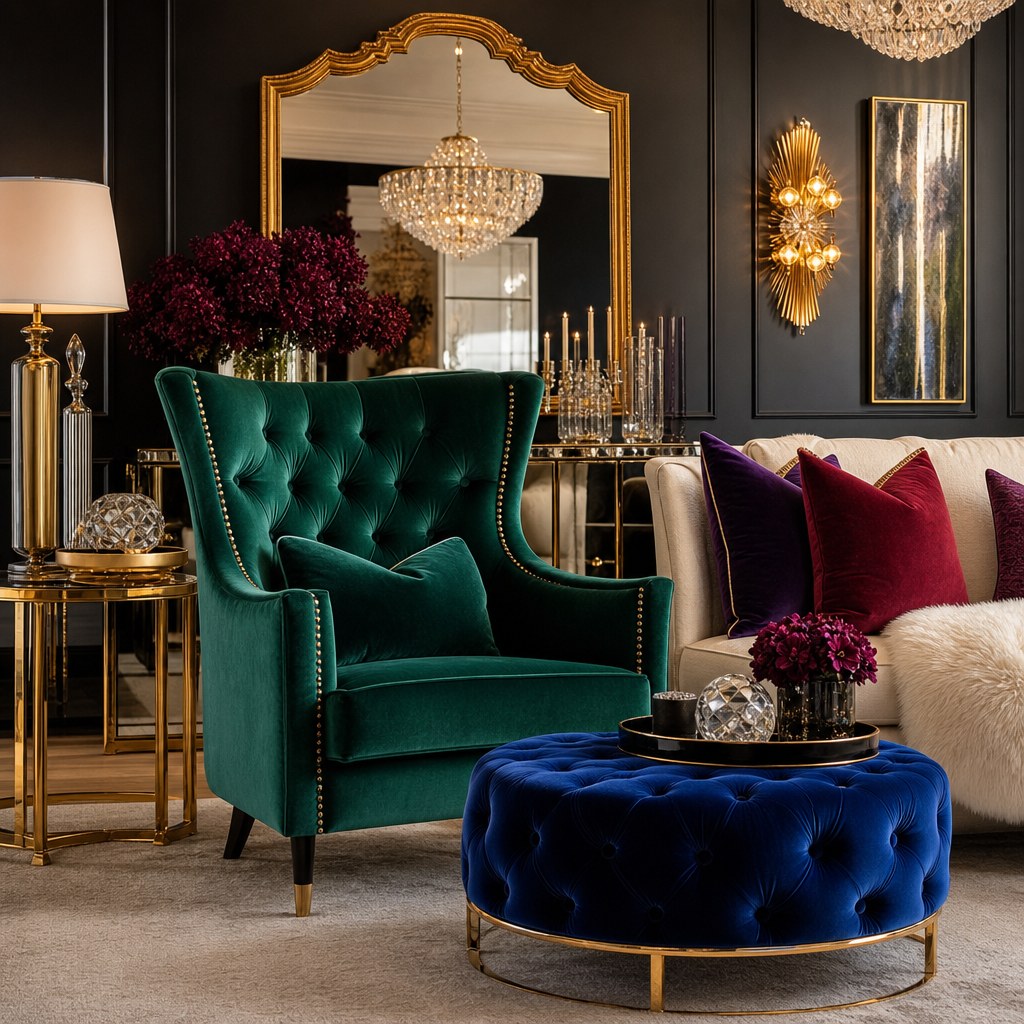
E1 Receipt - Velvet Upholstery in Jewel Tones
Mirrored Surfaces · $189.98
Mirrors are not decorative in glam interior design. They are architectural. They function as key design elements that enhance spatial illusion, multiply light sources, and create the dazzling reflective atmosphere that distinguishes glam from every other residential style. A mirrored console table in an entryway doubles the perceived depth of the space; a full-length leaning mirror on a narrow living room wall reads as a second window. Strategically placed mirrors, opposite a chandelier, beside a window, or framing a doorway, amplify the glam lighting effect by bouncing crystal and metallic light across every surface in the room. The mirrored console is the most functionally versatile glam furniture piece: it serves as an entryway surface, a bar cart alternative in a living room, or a bedroom vanity surface depending on placement. Its mirrored panels do triple duty. Reflecting the chandelier above, the art beside it, and the window across the room simultaneously. The large decorative wall mirror, framed in gold, antiqued brass, or beveled without a frame, is the second mirrored element, and it introduces a fixed architectural point of reflection that anchors the room's visual center. The pairing rule: place the decorative mirror where it reflects something beautiful (the chandelier, the velvet sofa, a window view), not where it reflects a blank wall or a television. Glam's mirror failure mode is placement without intention: a mirror that reflects another mirror, or a mirror that simply shows the doorway, wastes the spatial illusion entirely. The two pieces below establish the mirrored surface system at a price point accessible to renters and apartment dwellers, the style's primary audience.
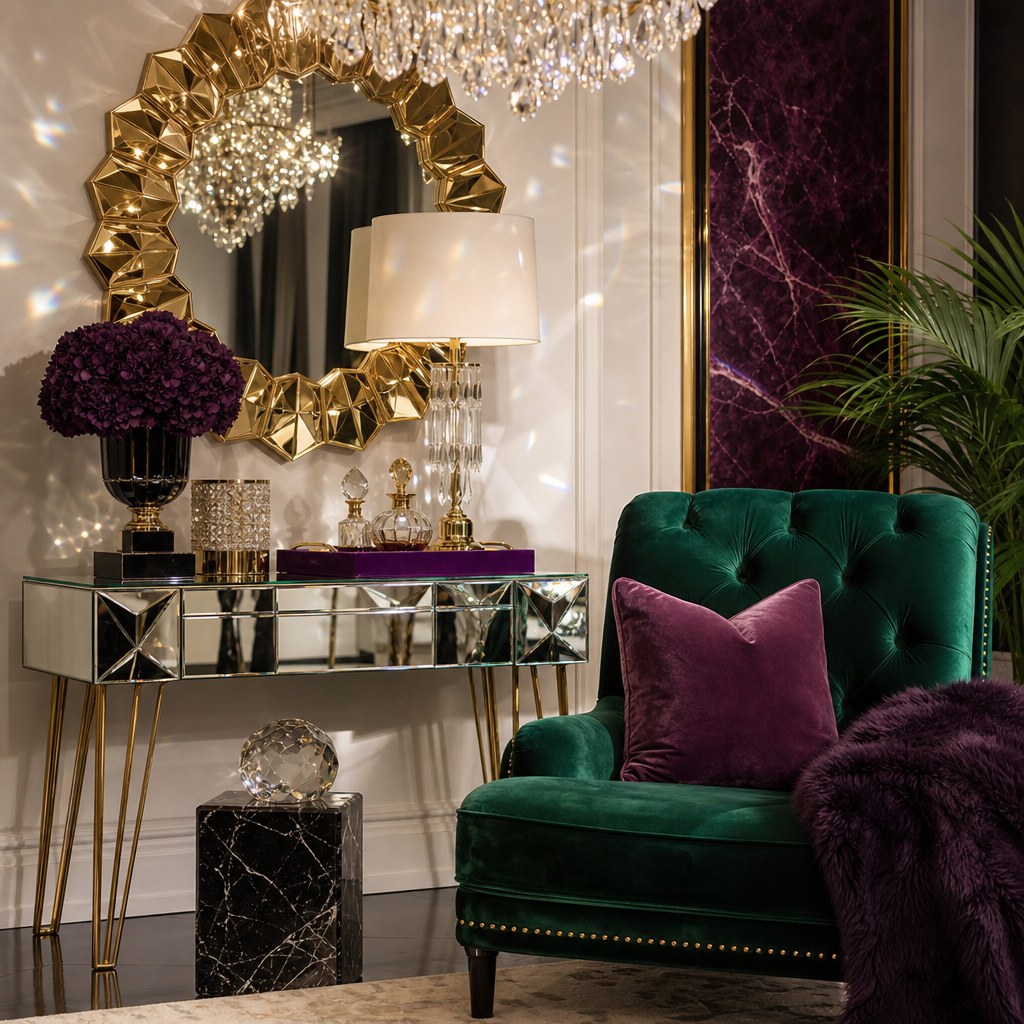
E2 Receipt - Mirrored Surfaces
Metallic Finishes and Gold Hardware · $174.96
Metallic finishes are glam's connective tissue. The element that unifies the jewel-tone velvet, the mirrored surfaces, and the crystal chandelier into a single coherent visual language. Gold and brass are the primary glam metals; silver and rose gold are the secondary options for rooms where the dominant color story leans cooler (sapphire or plum velvet against gray walls reads better with silver hardware than gold). The "play of light on these metallic surfaces" is not accidental. It is the mechanism by which glam creates its signature dazzling atmosphere. The metallic layer is built in four categories. Decorative trays and bowls in gold or brass establish the metallic surface vocabulary on coffee tables and consoles. They organize accessories while adding metallic surface area. Gold-tone candleholders or pillar candle pedestals add vertical metallic presence at mid-height, bridging the surface-level accessories and the overhead chandelier. Brass or gold picture and gallery frames convert any art print into a glam statement and unify the wall surfaces with the hardware language below. Gold or brass cabinet hardware, drawer pulls, door handles, is the most permanent metallic element and the one most worth investing in, since good-quality solid-brass hardware (not plated, which tarnishes) lasts indefinitely and is the detail that separates a finished glam room from a staged one. The overuse rule: metallics should complement, not dominate. The gold-overload failure mode, every surface metallic, no neutral foundation, makes a room look like a casino rather than a residence. Choose one primary metal family per room and use it consistently across trays, frames, lighting, and hardware.
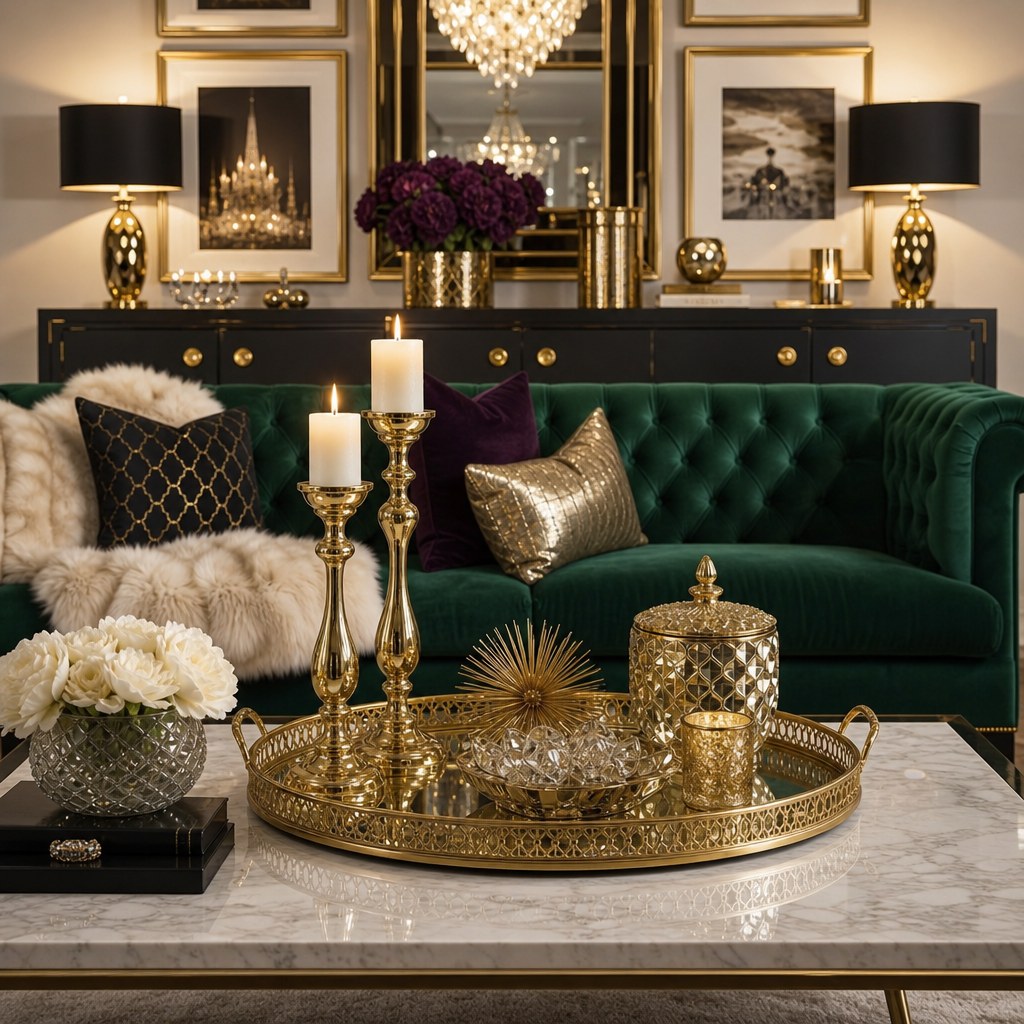
E3 Receipt - Metallic Finishes and Gold Hardware
Crystal and Statement Lighting · $249.99
The chandelier is the room's most important single purchase in a glam interior. Crystal chandeliers and dramatic statement lighting serve as key elements in creating a dazzling atmosphere. They are the only lighting form that simultaneously functions as art, architecture, and light source. A crystal chandelier's prismatic drops scatter light across every mirrored and metallic surface in the room, creating the layered, directional shimmer that no recessed downlight or flush mount can approximate. Sputnik-style fixtures, the starburst pendant with brass or gold arms, are the mid-century alternative for rooms where the traditional crystal form reads as too formal; they deliver the glam statement silhouette without the Victorian association. For renters who cannot modify ceiling wiring, a plug-in pendant chandelier is the solution: hang it from a ceiling hook, plug into the wall outlet, and the effect is architecturally identical to a hardwired installation from across the room. The one specification that matters most: choose a chandelier that hangs at 7 feet or below the ceiling in rooms with 8-foot ceilings, so the crystal drops are within the eye line and the prismatic effect is visible rather than overhead. A chandelier that hangs too high turns into a ceiling ornament; one that hangs at the right height becomes the room's focal point. The $249.99 piece below is a mid-market crystal chandelier that delivers the full glam lighting effect, 18 crystal drops, gold-tone frame, plug-in compatible, at a price point that represents approximately one quarter of what a comparable designer piece costs at retail.
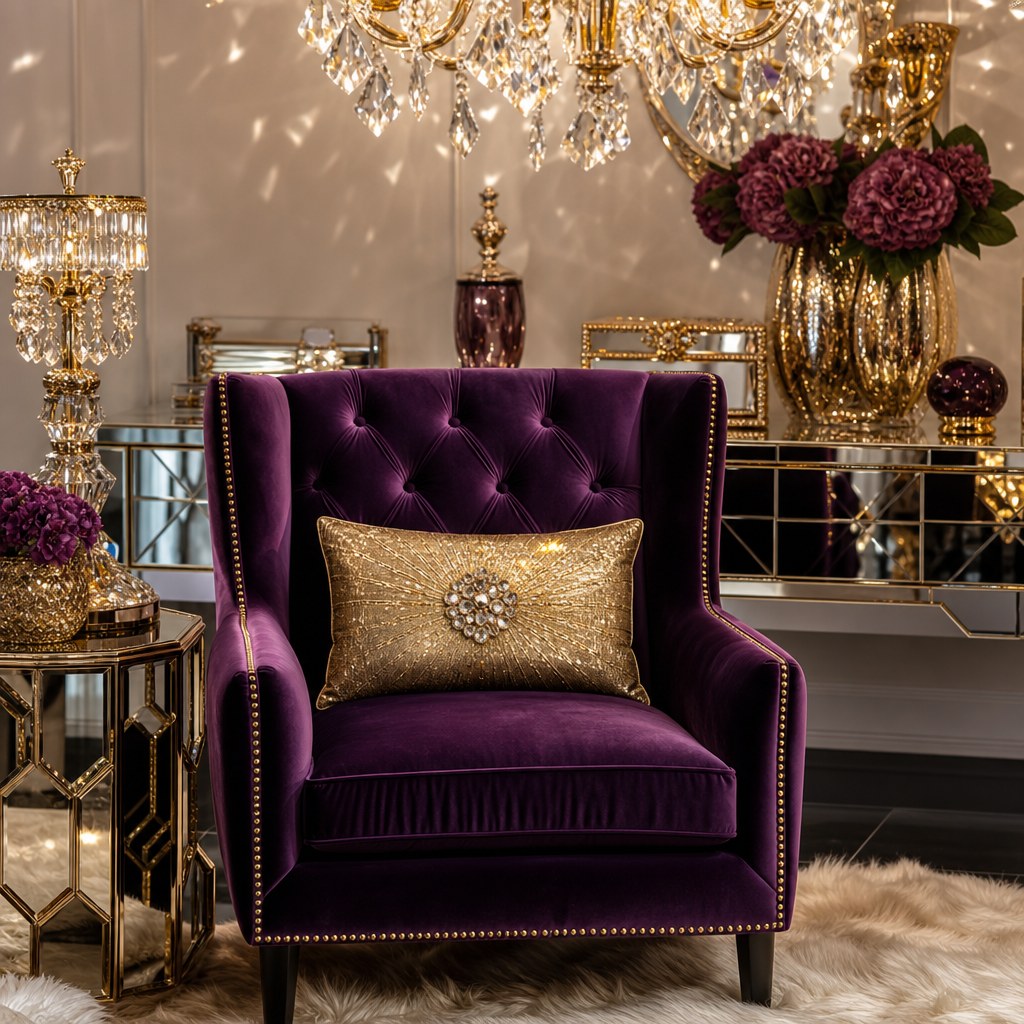
E4 Receipt - Crystal and Statement Lighting
Statement Art and Sculpture · $333.97
Statement art and sculpture is the element that keeps a glam room from reading as a showroom. The first four elements, velvet, mirrors, metallics, chandelier, establish the glam visual language fluently. The fifth element is what makes the room feel inhabited, opinionated, and personal rather than hotel-lobby anonymous. The hotel lobby problem is glam's most common terminal failure mode: all luxury, no personality, and nothing to look at that reveals who lives there. Art solves this. A large-format abstract in jewel tones (a 24x36 or 36x48-inch canvas print in emerald, sapphire, or gold on a dark field) establishes the room's statement wall and extends the jewel-tone palette upward into the vertical plane. Gold gallery frames, already established in Element 3, tie the art's perimeter to the hardware language throughout the room; an art print that floats against the wall without a frame loses its connection to the metallic vocabulary. Sculpture at table scale. A marble or resin abstract form, a geometric brass object, a sculptural bowl in an organic silhouette. Introduces three-dimensional visual interest at the coffee table or console level and provides the hand-crafted material weight that the velvet and crystal deliver tactilely on the other surfaces. The sourcing rule: large-format art does not need to be original to function as a glam statement. A high-quality print on gallery-wrapped canvas in a gold frame at 36x48 inches is indistinguishable from an original at normal viewing distance. And the jewel-tone abstract category has a deep, affordable catalog on Amazon, Society6, and Minted for $60 to $180.
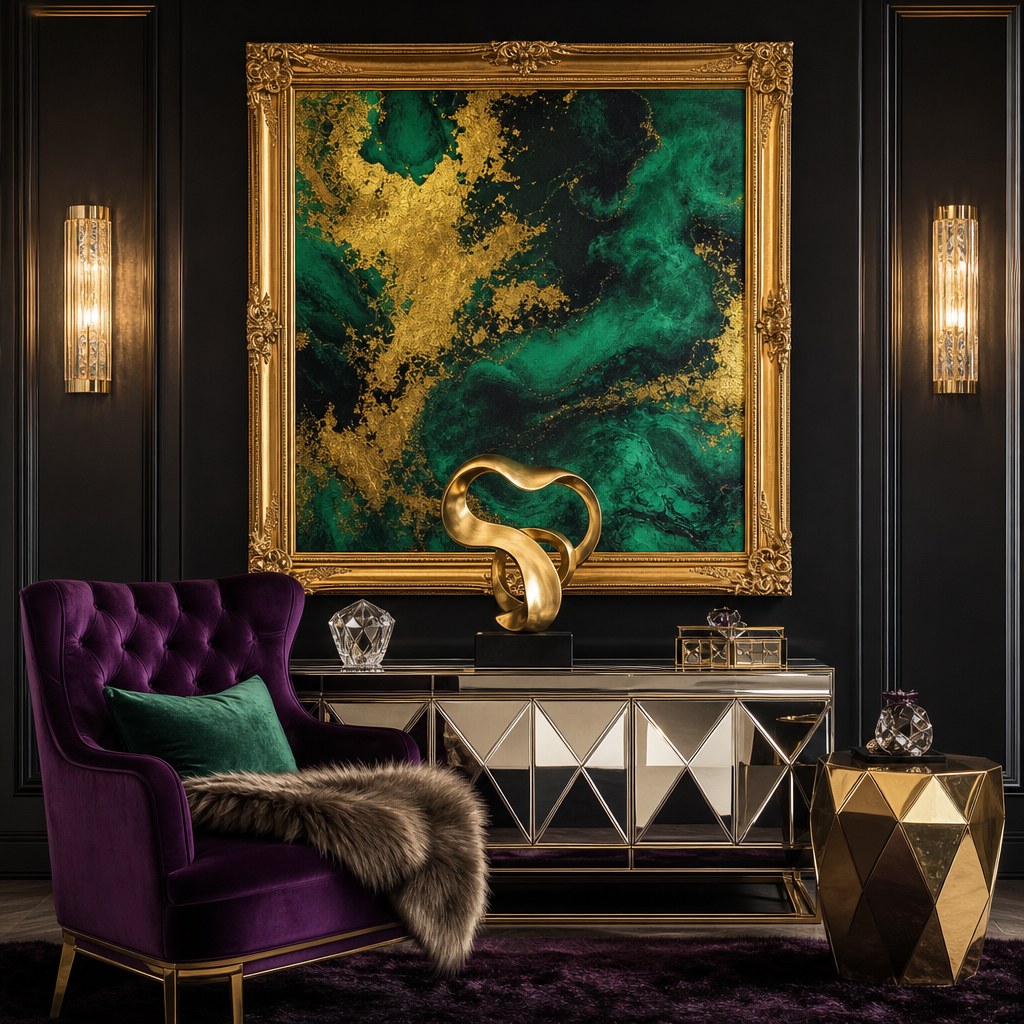
E5 Receipt - Statement Art and Sculpture
Glam vs. Hollywood Regency.
Both styles share the same origin story, Hollywood's Golden Age, and the same material vocabulary: velvet, mirrors, metallics, and crystal. The distinction is intensity and commitment. Hollywood Regency is maximalist, eclectic, and borderline theatrical: bold Art Deco patterns, lacquered surfaces, high-contrast color, ornate detailing on every surface simultaneously. Modern glam is restrained by comparison: a neutral foundation does most of the visual heavy lifting, and one or two jewel-tone statements and metallic accents do the rest. The clearest practical test: Hollywood Regency requires redesigning the whole room to read as coherent; modern glam can be introduced through a single velvet sofa, a mirrored console, and a chandelier without touching anything else. The modern trend is toward glam over Hollywood Regency. The former pairs with contemporary furniture lines and works in smaller spaces; the latter demands more room and more commitment to a period-specific vocabulary.
| Dimension | Modern Glam Interior Design | Hollywood Regency Interior Design |
|---|---|---|
| Color commitment | Neutral foundation (cream, white, gray, black) with one jewel-tone accent doing the signature work | Bold, saturated color on multiple surfaces simultaneously. Walls, upholstery, curtains all in play |
| Pattern use | Pattern restrained to Art Deco-inspired rugs or accent pillows; large surfaces stay solid | Bold Art Deco patterns (quatrefoils, chevrons, zebra) at wallpaper and upholstery scale |
| Furniture lines | Pairs with contemporary and minimalist furniture; glam comes from accessories and materials, not silhouette | Period-specific furniture shapes required. Curvy chesterfields, lacquered cabinets, ornate carved frames |
| Room commitment | Partial-room introduction works. One velvet piece, a chandelier, and mirrored tray signals the style | Whole-room redesign is required for coherence; partial Hollywood Regency reads as mixed and unfinished |
| Budget floor | $99 entry path. Velvet accent chair, mirrored tray, one gold accessory establishes the look | Higher floor. Period furniture and lacquered surfaces require larger investment to read as intentional |
| The vibe test | Feels like a well-curated luxury hotel suite. Elevated, intentional, modern bones with glamorous detail | Feels like a 1940s film star's residence. Theatrical, eclectic, overtly period-specific in every detail |
The $99 entry path.
Two items that establish the glam vocabulary in any room. No chandelier installation, no furniture replacement, no wall paint required. The velvet chair and the mirrored tray are the glam room's first sentence.
Frequently asked questions.
What is glam interior design?
Glam interior design is a high-drama residential style defined by luxurious materials, reflective surfaces, and a deliberate sense of theater. Its five core elements are velvet upholstery in jewel tones, mirrored furniture, metallic finishes and gold hardware, crystal or statement chandelier lighting, and bold art or sculpture. The style traces back to Hollywood's Golden Age (1920s to 1960s) and was pioneered by designers like William Haines and Dorothy Draper. The modern interpretation balances extravagance with elegance - using glam elements against a neutral foundation so the room reads as intentional rather than chaotic. Glam ranges from minimalist-contemporary to ornate-traditional, allowing for personal interpretation while maintaining sophistication. The win condition: the space should feel like a scene - deliberate, elevated, and utterly non-neutral.
What is the difference between glam and Hollywood Regency interior design?
Hollywood Regency is the maximalist ancestor of modern glam: over-the-top luxury, bold Art Deco patterns, lacquered surfaces, eclectic color, and ornate detailing on every surface simultaneously. Modern glam is more accessible and deliberately restraint-forward - color is often kept simple and neutral, with one or two jewel-tone accents doing the work that a full Hollywood Regency palette would assign to every surface. The key practical difference: Hollywood Regency tends to require a complete room commitment; modern glam can be introduced through a single velvet sofa, a mirrored console, and a statement chandelier without redesigning the whole room. Hollywood glam also "pairs beautifully with modern pieces - try a modern sofa with glam lighting or glam mirrors with minimalist furniture," which is precisely the hybrid approach modern glam practitioners favor.
What colors work best in a glam interior?
Glam color strategy runs on two tracks. Track one is the neutral foundation: cream, warm white, soft gray, and black create the high-contrast backdrop that makes metallics and jewel tones read at their most luminous. Track two is the jewel-tone accent layer: emerald green, sapphire blue, ruby red, and deep plum are the signature glam upholstery colors - introduced through velvet sofas, accent chairs, or tufted headboards. Metallics - gold, brass, rose gold, and silver - bridge the neutral base and jewel-tone accents and appear on hardware, lighting, frames, and decorative accessories. The restraint rule: choose one jewel tone per room and let it be the room's single chromatic statement. Rooms that layer emerald and ruby and sapphire simultaneously lose the high-contrast impact that makes a single jewel tone read as intentional glam rather than maximalist accumulation.
Can glam interior design work in a small apartment?
Glam is particularly well-suited to small apartments because its core tools - mirrors and metallics - create spatial illusion. A full-length leaning mirror on a narrow wall reads as a window; a mirrored console in a small entryway doubles the perceived depth of the room. The practical entry path for a small space: start with one velvet accent chair in a jewel tone, add a mirrored tray on the coffee table, and hang one dramatic pendant or swap in a small crystal chandelier. Three additions that change the room's read entirely. Avoid velvet sectionals in spaces under 500 square feet - the scale overwhelms - and keep the neutral base clean so the glam accents land against something light. Even small apartments can "rock this style - use mirrors to open up the space and keep furniture pieces sleek but statement-worthy."
What is the biggest mistake people make with glam decor?
The most common glam failure mode is gold overload - every surface metallic, every accessory shining, with no neutral base to rest the eye against. The result looks like someone threw a bag of gold confetti at the room. The fix is a strict ratio: glam accents should occupy 20 to 30 percent of the room's visual field, with the remaining 70 to 80 percent held by a clean neutral foundation. The second failure mode is cheap velvet - polyester velvet goes flat and loses its pile quickly, while performance velvet holds its sheen and depth over time. The third failure is mirror overkill: more than two or three mirrored surfaces in a single room creates a funhouse effect rather than an elegant spatial expansion. The fourth failure is the hotel lobby problem: a room that achieves all the glam material signals but has no art, no sculpture, and no personal objects ends up feeling staged rather than inhabited. Statement art is what closes that gap.
More rooms like this
No spam. Unsubscribe anytime.