Table of Contents
The Provencal Elegance Blueprint.
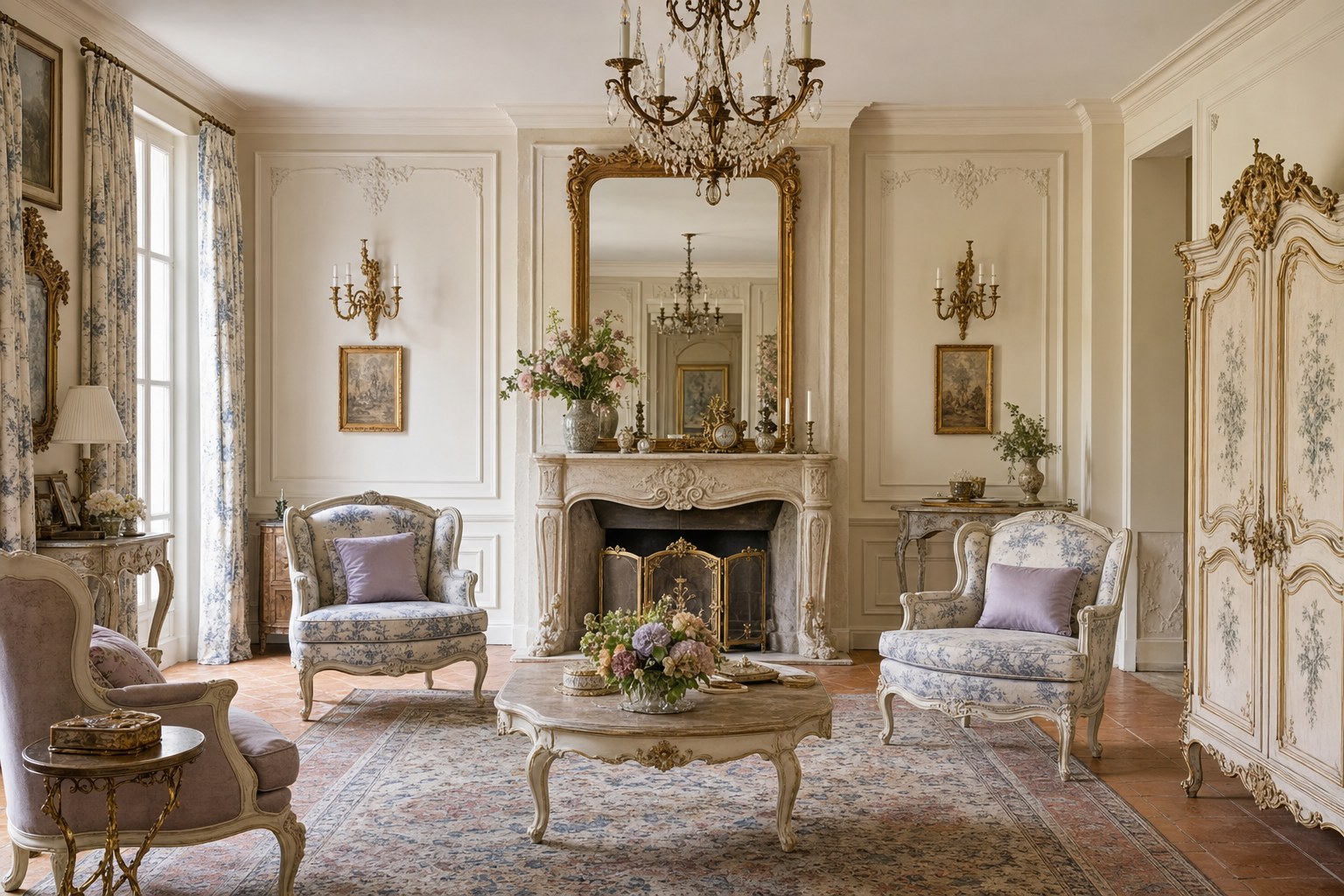
French Provincial is not a style built on a single dominant element - it is built on layered authenticity. The carved wood furniture, the toile fabric, the faded lavender palette, the gilded mirror, the terracotta floor: each is independently recognizable, and each reinforces the others. The style originated in southern France's rural provinces during the 17th and 18th centuries, when local craftsmen adapted the formal Parisian court furniture style using what was available - regional oak, walnut, cherry, and beechwood - producing pieces that were carved and elegant but more robust and practical than their Versailles-era counterparts. The result was an amalgam of country and cosmopolitan style - formal enough to signal aristocratic aspiration, durable enough for daily rural use.
The furniture is the style: the cabriole leg, with its outward-curving knee and inward-curving ankle terminating in a scroll or pad foot, is the single most identifiable French Provincial furniture feature - a detail that appears on sofas, armchairs, side tables, and beds. Carved wood detailing cannot be faked or substituted. The sofa sourcing gap is the category's central challenge: the Restoration Hardware version is aspirational at $8,000; accessible carved-leg alternatives from Wayfair and Belle Escape exist in the $400-$900 range and represent the highest-conversion product category for this cluster.
The five elements below build the French Provincial room in the order that prevents the look from becoming a period costume: the carved wood furniture establishes the historical anchor, the toile and Provencal fabric introduces the pastoral narrative, the Provencal palette layers the landscape color story, the gilded mirrors bring the aristocratic formality, and the terracotta floor grounds the whole composition in the actual material language of southern France. Build it in this order, and every addition reinforces the one before it.
Carved Wood Furniture · $289.97
Carved wood is the irreducible foundation of French Provincial decor. The one element the community agrees cannot be faked or substituted. The ornamentation language is specific: shells, acanthus leaves, floral scrollwork, and vine motifs carved into chair backs, drawer fronts, headboards, and cabinet rails. The cabriole leg. A gracefully S-curved leg where the knee curves outward and the ankle curves inward, terminating in a scroll, pad, or hoof foot, is the defining structural detail that immediately identifies a piece as French Provincial. Traditional woods are oak, walnut, cherry, and beechwood, typically "left exposed or lightly painted" in cream, ivory, or soft grey distressed finishes rather than the dark stains of formal period furniture. The armoire, a freestanding carved wardrobe with paneled doors, is the style's most iconic statement piece: in the original Provence context, closets were taxed as rooms by the French government, so freestanding armoires became the standard storage solution and were accordingly made with great care and ornamentation. The three carved wood entry pieces below establish the style's DNA at a price point that is accessible without sacrificing the carved detail that is the whole point: a carved wood bedside table with cabriole legs, a carved-leg accent chair, and a carved wood console with apron detail. Source the larger carved pieces, armoires, carved-leg sofas, carved headboards, vintage from Chairish, 1stDibs, or estate sales, where authentic period or period-reproduction pieces are available at $200-$800 and carry the genuine patina that makes the style's "lived-in elegance" feel earned rather than assembled.
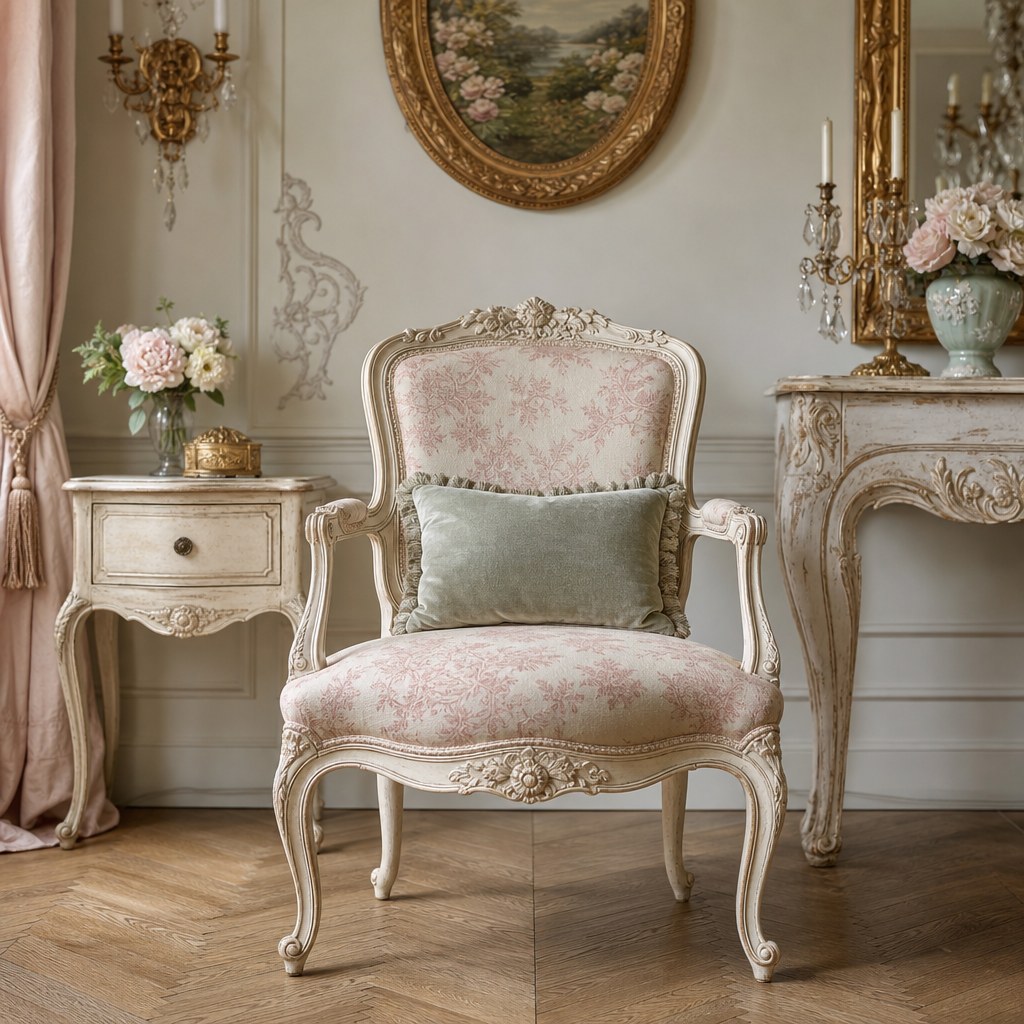
E1 Receipt - Carved Wood Furniture
Toile and Provencal Fabric · $119.96
Toile de Jouy is the signature fabric of French Provincial style. And the most immediately recognizable signal a room can carry. Named after the town of Jouy-en-Josas near Versailles where the fabric was first printed in the 18th century, toile features pastoral scenes, shepherds, farm animals, rural landscapes, country houses, printed in a single ink color (typically blue, red, or black) on a cream or white cotton or linen ground. The scale and subject matter of the toile print matters: large-scale pastoral scenes read as formal and period-authentic; small-scale repeating motifs read as more contemporary and versatile. The classic French Provincial combination is blue-on-cream toile (blue ink, cream ground) used on pillow covers, a curtain panel, or a chair seat, against cream painted walls and natural linen. Provencal fabric, the second major textile category, refers to the bold, small-scale geometric and floral prints (sometimes called "Souleiado prints" after the famous Provencal textile company) that appear on tablecloths, napkins, chair seat pads, and kitchen curtains throughout southern France. These prints use the landscape palette: dusty lavender, olive green, dusty ochre, and terracotta on a cream ground, and they introduce the warmth and informality that prevents the style from becoming too formal or museum-like. The textile rule for French Provincial: toile provides the formal pastoral narrative; Provencal prints provide the warmth and color; natural linen provides the breathing room between the two. Do not combine toile and Provencal print at the same scale in the same room. One should lead and one should accent.
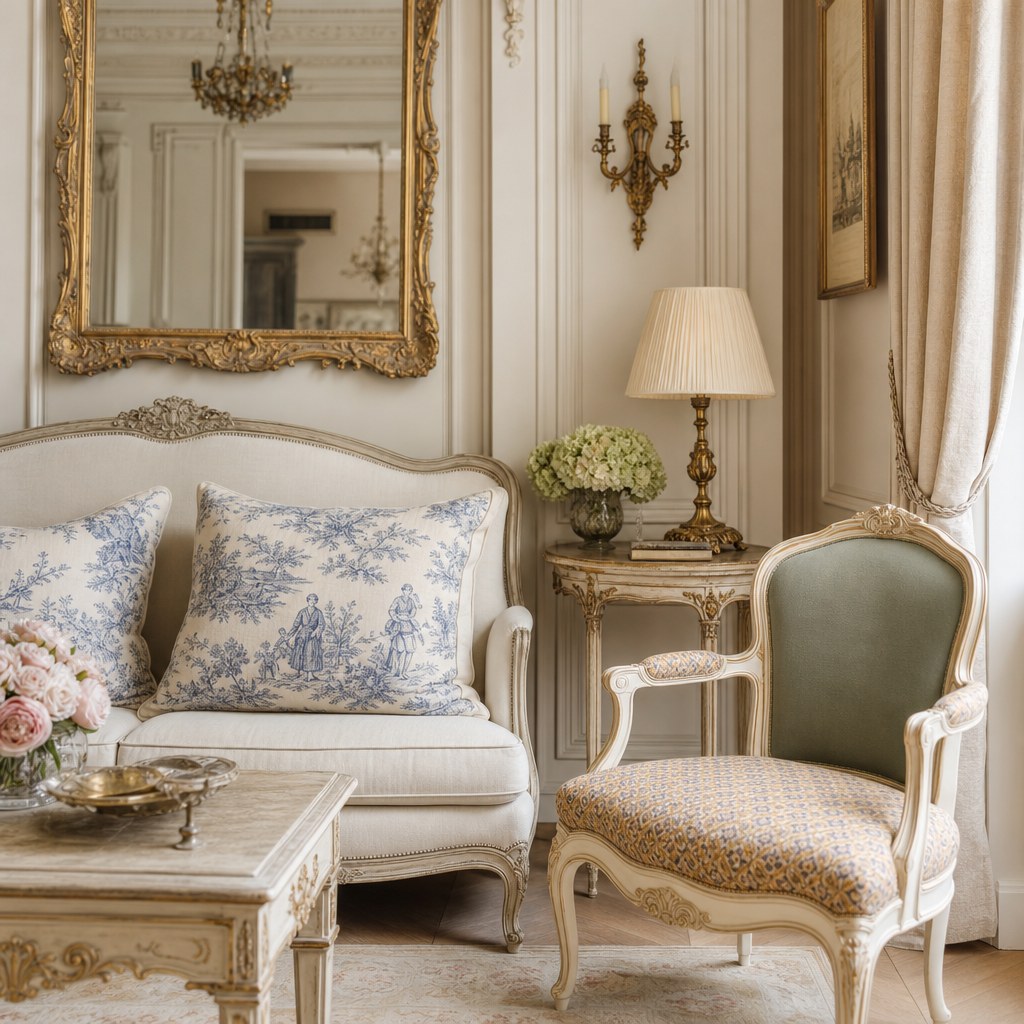
E2 Receipt - Toile and Provencal Fabric
Lavender and Provencal Palette · $119.97
The French Provincial palette is a direct translation of the Provencal landscape into interior color: lavender fields, dusty stone walls, sun-bleached terracotta roofs, silver-green olive groves, and golden wheat are the source materials, and the interior palette reflects each. The base tier is cream, ivory, and warm linen white. The background that makes the Provencal accent colors legible without competing with them. The signature mid-tones are dusty lavender, soft sage green, dusty ochre (a muted golden yellow that reads as warm rather than bright), faded terracotta, and pale powder blue. The accent tier adds gilded gold (from mirror frames), deep walnut brown (from exposed wood), and soft blush. The critical palette rule: every color should feel sun-bleached and slightly faded, as if it has spent decades in the southern French light. Saturated, modern versions of lavender, sage, or ochre read as Mediterranean or boho rather than French Provincial. The muted, dusty quality is what distinguishes the style. Build the palette in objects before committing to wall paint: four palette layer items. Dusty lavender pillow covers, a sage ceramic vase, a dusty ochre wool throw, and a set of lavender-blue ceramic bowls. Establish the color story across every surface at a fully reversible entry price point. The dusty lavender pillow is the room's fastest palette signal: hold it against the proposed wall color, and the resulting harmony (or clash) tells you whether the color direction is correct before any paint is purchased.
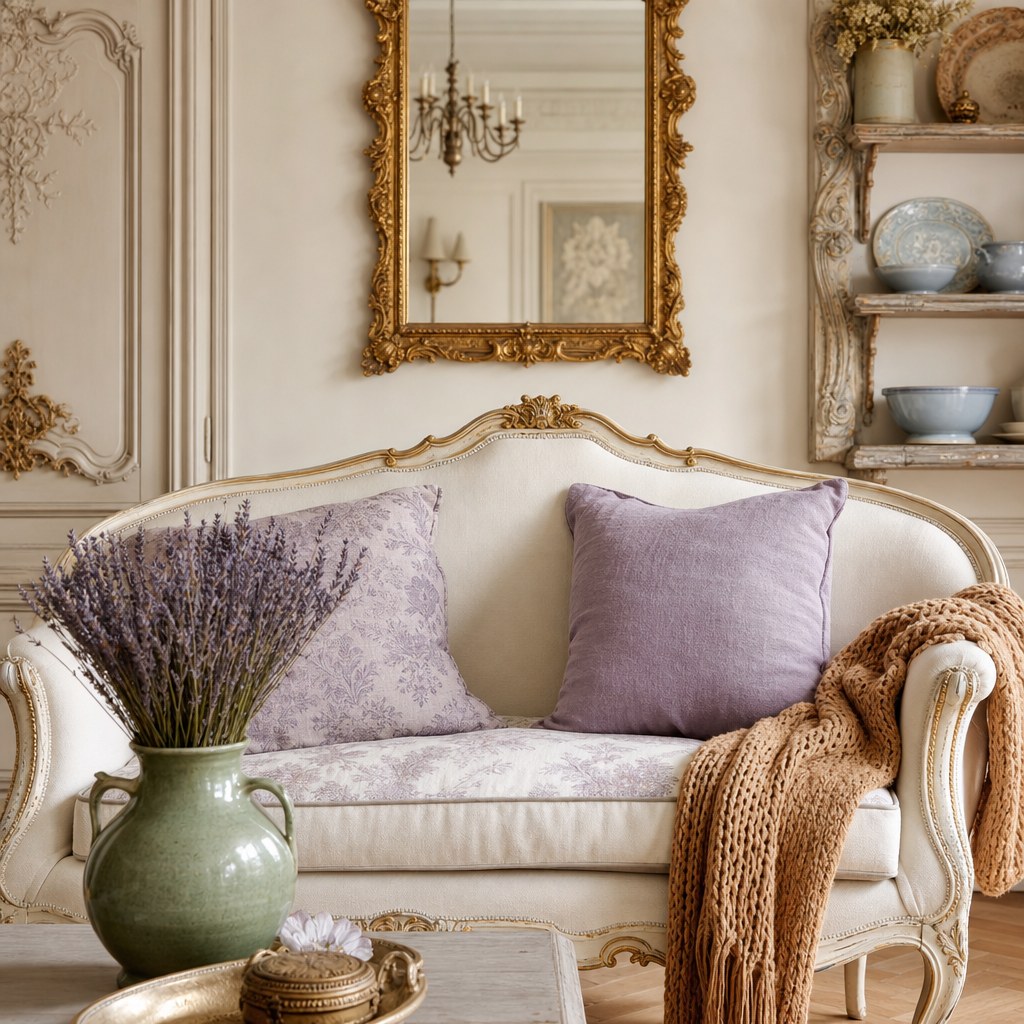
E3 Receipt - Lavender and Provencal Palette
Antique Mirrors and Gilded Frames · $189.98
Antique mirrors and gilded frames are the element that distinguishes French Provincial from plain French Country: the gilded frame is the style's Parisian influence, the echo of the formal court aesthetic that provincial craftsmen were adapting and softening for rural use. A French Provincial room without a gilded mirror reads as French Country or Scandinavian farmhouse. Pleasant but missing the aristocratic formality that makes the style distinctive. The gilded ornate mirror is the most powerful single piece in the French Provincial wall arrangement: an arched or rectangular mirror with a carved or cast gilded frame, hung above a fireplace, console, or carved wood dresser, establishes the room's aspirational reference and makes the carved wood furniture around it read as intentional rather than eclectic. The frame material and condition matter: genuine antique gold patina (slightly darkened, with tonal variation) reads as period-authentic; bright, uniform gold reads as costume. The best source for authentic gilded mirrors at accessible prices is estate sales and Chairish, where Louis XV and Louis XVI-style mirrors in carved wood or plaster with genuine gold-leaf or gold-foil finish appear regularly in the $80-$300 range. The gilded picture frames serve a second function: hang a set of three frames in graduated sizes above a console or stair landing with botanical prints or sepia maps inside, and the grouped gallery wall creates the layered, collected quality that French Provincial rooms are known for. The wrought iron chandelier or candelabra is the third wall-and-ceiling moment: iron with a slightly aged or patinated finish is the provincial alternative to formal crystal chandeliers. It adds the vertical ornamental moment without the formality.
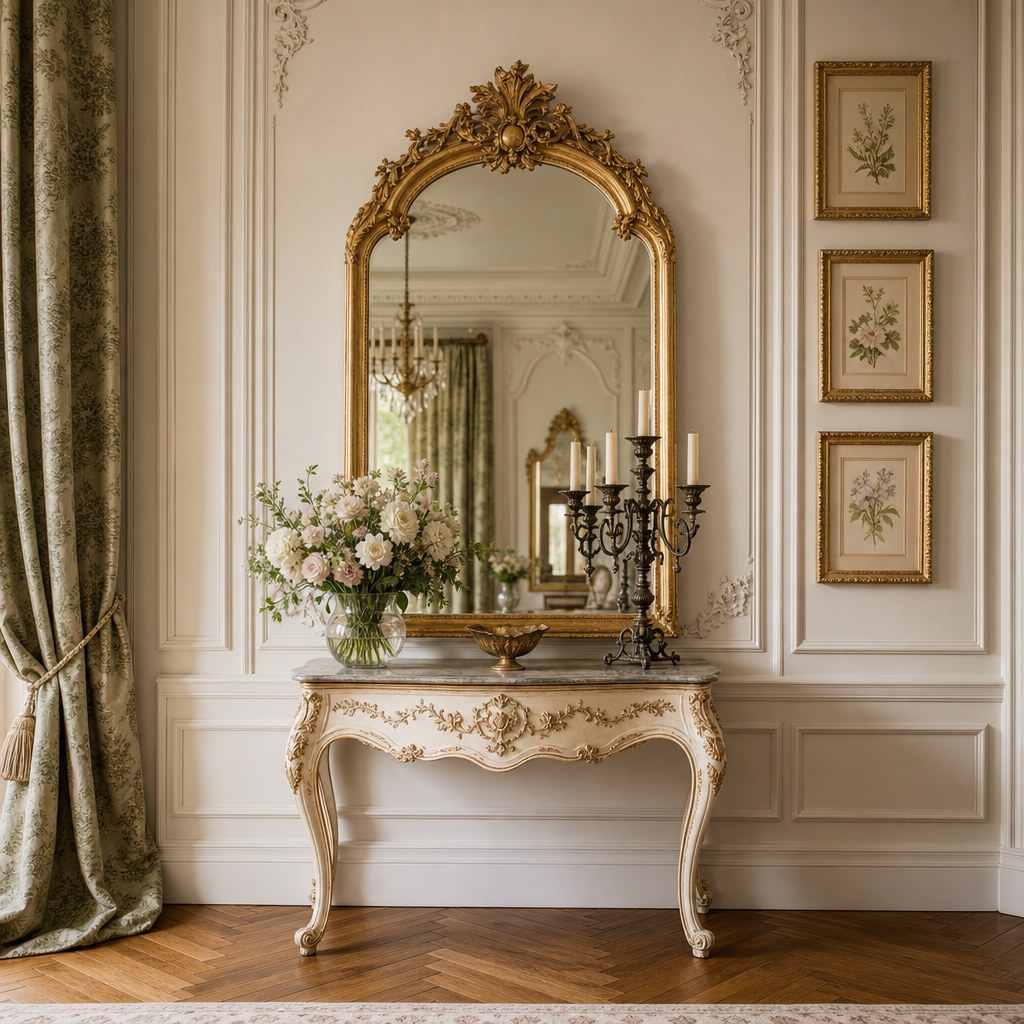
E4 Receipt - Antique Mirrors and Gilded Frames
Terracotta and Stone Floor Layer · $249.97
The terracotta and stone floor layer is added last because it grounds the entire palette story already established by the furniture, fabric, and mirrors. And because, for most renters and homeowners who cannot replace actual flooring, it is best approached through layering rather than installation. Authentic French Provincial interiors in southern France traditionally feature unglazed terracotta hexagonal or square tiles known as "tomette" tiles, often worn smooth over centuries and left unsealed to breathe. The warm reddish-brown floor that appears in virtually every Provence mas or bastide. The contemporary approach layers the terracotta color and material logic over existing floors through three pieces: a large terracotta-toned jute or wool area rug (which introduces the warm earth tone at floor scale without installation), a set of unglazed terracotta plant pots (which extend the terracotta color from floor level to surface level in the corner vignettes), and a natural stone or travertine-finish trivet or tray set (which introduces the stone material of Provencal walls and floors at the accessory scale). For renters or those with dark hardwood or carpet, the terracotta-toned area rug is the single highest-impact floor layer: a 5x8 rug in faded terracotta or warm rust tones transforms the floor zone of the room and anchors the carved wood furniture above it in the correct material register. The travertine tray set serves the vignette function: placed on the carved wood console or dining table under the gilded mirror, natural stone objects bring the outdoor stone material of Provencal architecture inside at no installation cost and complete the material story the five-element build has been constructing.
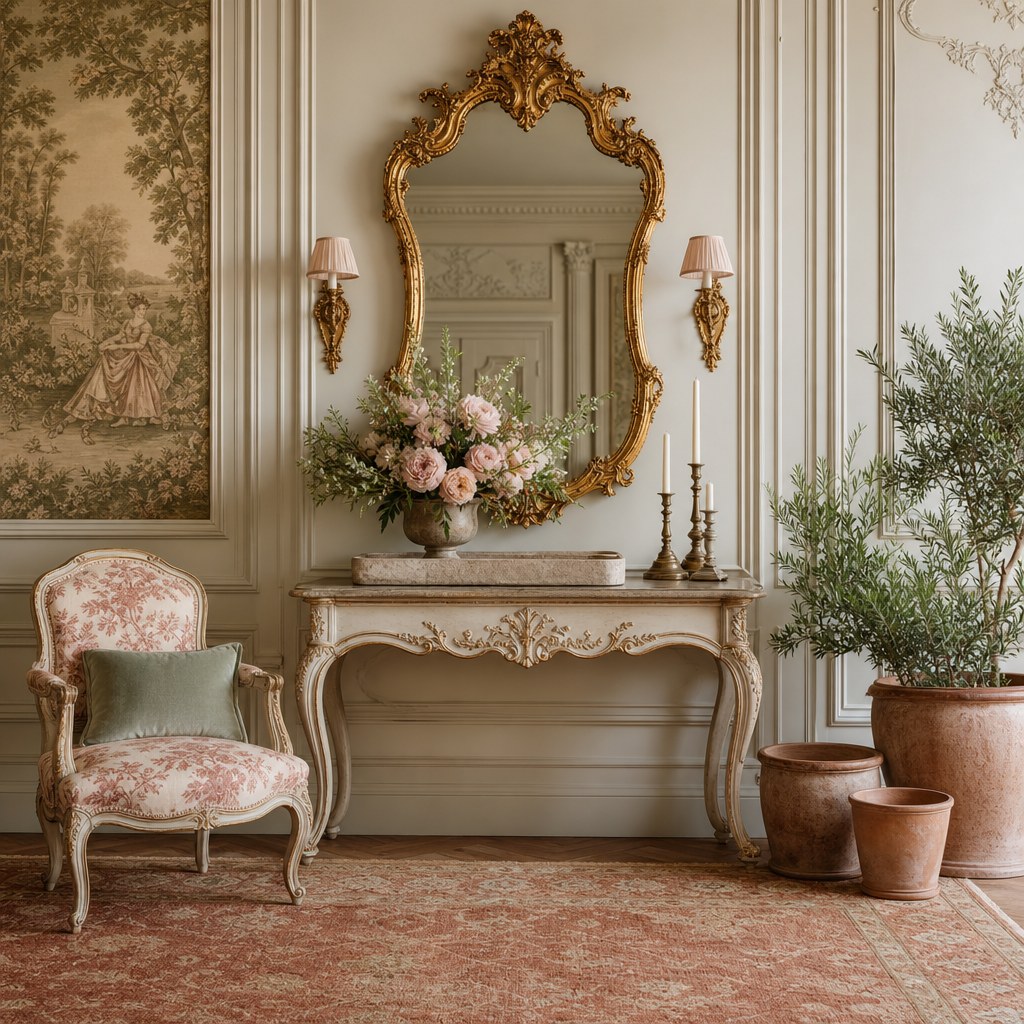
E5 Receipt - Terracotta and Stone Floor Layer
French Provincial vs. French Country.
Both styles draw from the same southern French aesthetic heritage, which creates persistent confusion. The distinction is specificity and formality: French Provincial is the historically grounded term for the furniture and design traditions of the southern French provinces, particularly Provence, from the 17th and 18th centuries, where craftsmen adapted the formal Parisian court style using local materials. French Country is the broader, more romantic category that encompasses the kitchen-centric warmth, checked linens, copper cookware, and relaxed country informality associated with the French countryside without being anchored to a specific region or historical period. The clearest diagnostic: if the room's most prominent piece is a carved-leg armoire or a cabriole-leg sofa with toile upholstery, it is French Provincial. If the most prominent piece is a farmhouse dining table with rush-seat chairs and a copper pot rack, it is French Country.
| Dimension | French Provincial Interior Design | French Country Interior Design |
|---|---|---|
| Historical anchor | Specific: 17th-18th century Provence craftsmen adapting Parisian court furniture with regional wood and carving | Broad: romantic interpretation of the French countryside without a specific regional or historical anchor |
| Formality level | More formal. Carved cabriole legs, gilded mirrors, toile de Jouy, armoires with paneled doors; aristocratic aspiration | More relaxed. Farmhouse tables, rush-seat chairs, checked linens, copper cookware; kitchen-centric warmth |
| Signature piece | Carved-leg armoire or cabriole-leg upholstered sofa with toile fabric; gilded ornate mirror | Farmhouse dining table with rush or painted chairs; exposed stone fireplace; copper pot rack |
| Fabric approach | Toile de Jouy (pastoral scene prints) as primary; Provencal geometric-floral print as secondary; natural linen as base | Checked gingham, ticking stripe, floral cotton, slipcover linen; less formal pattern hierarchy |
| Palette temperature | Cooler pastels with warm accents. Dusty lavender, pale blue, sage, dusty ochre against cream and warm ivory | Warmer, more golden tones. Sunflower yellow, warm rust, terracotta, deep barn red against natural linen |
| The confusion test | Feels like a Provence mas owned by someone with aristocratic heritage, formal, carved, collected | Feels like a French farmhouse kitchen. Warm, informal, built around food and family |
The $119 entry path.
Four items that establish the Provencal palette in any room. No furniture replacement, no paint, no structural work required. The complete E3 serves as the entry path.
Frequently asked questions.
What is French Provincial interior design?
French Provincial interior design is a style that originated in the rural provinces of southern France - primarily Provence - during the 17th and 18th centuries. Local craftsmen adapted the formal furniture styles of the Parisian court using regional materials like oak, walnut, and cherry, producing pieces that were elegant but less ornate and more durable than their Parisian counterparts. The result is a style defined by carved wood furniture with cabriole legs, toile de Jouy fabric in pastoral scenes, a soft palette of dusty lavender, dusty ochre, and sage, antique mirrors with gilded frames, and terracotta tile floors. The modern appeal is the combination of aristocratic formality with genuine rural warmth - a room that feels both elevated and lived-in. The highest-search-volume entry point is French provincial furniture specifically, at 6,600 monthly searches.
What is the French Provincial color palette?
The French Provincial palette draws directly from the Provencal landscape: the soft lavender fields, dusty stone walls, sun-bleached terracotta roofs, and silver-green olive groves of southern France are the source materials. The base tier is cream, ivory, and warm linen white - the background that makes the Provencal accent colors legible without competing with them. The signature mid-tones are dusty lavender, soft sage green, dusty ochre (a muted golden yellow), faded terracotta, and pale powder blue. The accent tier adds gilded gold from mirror and picture frames, deep walnut brown from exposed wood, and soft blush. The critical rule: every color should feel sun-bleached and slightly faded, as if it has spent decades in the southern French light. Saturated, modern versions of lavender, sage, or ochre read as Mediterranean or bohemian rather than French Provincial - the muted, dusty quality is what distinguishes the style. The easiest self-test: if the lavender looks bright and modern, mute it by two steps toward grey.
What furniture defines French Provincial style?
French Provincial furniture is defined by three identifying characteristics. First, carved wood ornamentation: shells, acanthus leaves, floral scrollwork, and vine motifs appear on chair backs, drawer fronts, headboards, and cabinet doors. Second, the cabriole leg - a gracefully curved leg where the knee curves outward and the ankle curves inward, terminating in a scroll, pad, or hoof foot - is the single most recognizable French Provincial furniture detail, appearing on sofas, armchairs, side tables, and beds. Third, painted or lightly finished wood: unlike dark-stained formal furniture, French Provincial pieces are often painted in cream, ivory, or soft grey, or left in a distressed natural finish that shows the grain. The armoire - a freestanding wardrobe with paneled doors and carved detailing - is the defining statement piece. The defining upholstery patterns are checks, plaids, stripes, or toile, with botanical motifs including beetles, grapes, lavender, olives, roosters, and sunflowers.
What is the difference between French Provincial and French Country?
French Provincial is the more specific and historically grounded term: it refers specifically to the furniture and design traditions of the southern French provinces, particularly Provence, from the 17th and 18th centuries. The furniture tends to be more formally constructed, with carved detail and cabriole legs that reflect the influence of Parisian court style filtered through rural craftsmanship. French Country is a broader, more romantic interpretation of the same general aesthetic - it encompasses the kitchen-garden warmth, checked linens, copper cookware, and relaxed informality associated with the French countryside without being anchored to a specific region or historical period. In practice: French Provincial reads slightly more aristocratic and formal; French Country reads more relaxed and kitchen-centric. The clearest distinction: Provincial specifically refers to southern France and Provence; Country covers the broader romantic French aesthetic. Both are valid room directions; the choice depends on whether the goal is Provencal formal elegance or French farmhouse warmth.
How do I add French Provincial style to a modern home?
Three rules for a sophisticated French Provincial room that reads as intentional rather than costumed. First, anchor with one carved wood piece: a French Provincial bedside table, an armoire-style cabinet, or a console with cabriole legs establishes the style's DNA immediately - one carved piece signals the whole direction, and everything softer (toile pillows, lavender throws, gilded mirrors) reads as intentional beside it. Second, introduce toile in a contained surface: a toile pillow cover set or a single toile curtain panel is more legible and less overwhelming than toile wallpaper; the pastoral scene print needs breathing room against solid linen or cream walls to read as elegant rather than busy. Third, hang the gilded mirror: an antique or antique-finish mirror with a carved gilded frame is the style's signature wall moment - it distinguishes French Provincial from plain French Country, and it works in any room size. Source the mirror vintage from estate sales or Chairish for authentic patina at accessible prices. The $119 entry path - four Provencal palette items - is the reversible starting point that establishes the color direction before any furniture investment is made.
More rooms like this
No spam. Unsubscribe anytime.