Table of Contents
The Heritage Style.
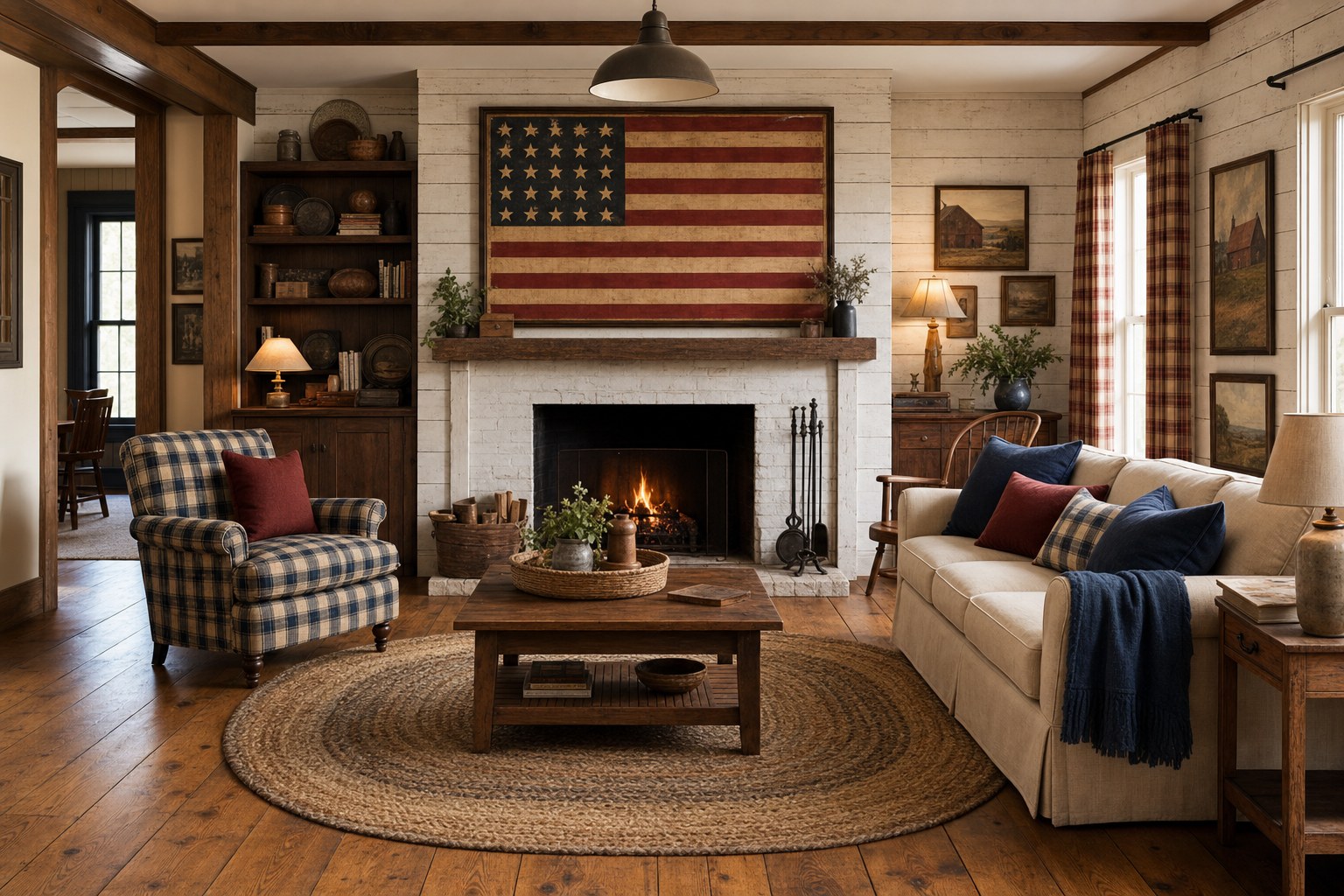
Americana interior design is not a trend that emerged in the last few years. It is a design language rooted in the colonial era, shaped by Shaker craftspeople, farmhouse builders, and the patriotic visual culture that ran through the 19th and 20th centuries of American life. What makes the modern version work - and what separates the Pottery Barn Americana catalog shot from the party-supply tent - is restraint in how that heritage is applied. The operative design principle: one key patriotic accent piece per room prevents the style from tipping into kitsch. One vintage flag. One eagle-motif ceramic. One star-patterned textile. Not all three in the same sightline. The Americana room tells a story through objects that carry genuine weight - an antique map, a grandmother's quilt, a cast iron skillet on open shelving - rather than through patriotic saturation.
The style's core categories are well-established: furniture in oak, pine, cherry, and walnut with Shaker-style simplicity and craft detail; a red, white, and blue palette grounded in earthy neutrals including beige, taupe, warm cream, and wheat; buffalo check and plaid textiles as the dominant pattern system; open shelving in the kitchen displaying mason jars, vintage signage, and functional objects; and reclaimed or barn wood surfaces that carry patina and age as design assets rather than flaws. The kitchen at 1,600 monthly searches is the anchor room for this style, and the guide below treats it as such - Element 2 builds the open shelving Americana kitchen specifically, because that is the room the design community and the design communities both identify as the place where Americana reads most clearly. The five elements below build the Americana room in the order that keeps it elevated: palette first, kitchen second, furniture core third, textiles fourth, art and wood last.
Budget logic for Americana follows a clear sourcing hierarchy. Source the antique and vintage finds - the flag art, the cast iron, the grandfather-clock-style case goods - through estate sales, thrift stores, and platforms like Chairish and Facebook Marketplace. These categories carry legitimate age and patina that cannot be faked at new price points. Source the buffalo check textiles, the braided jute rugs, and the mason jar sets new - Amazon, Target, and HomeGoods carry these categories at reliable quality for accessible prices. Source the barn wood shelving and reclaimed wood accents wherever you find them - the reclaimed wood market has expanded significantly and Etsy sellers, Wayfair, and local salvage yards all carry genuine reclaimed pieces at a range of price points.
Heritage Palette Layer · $129.96
The heritage palette is the first decision in the Americana blueprint and it operates on two tiers that must be calibrated before anything else goes into the room. The signature tier is the flag triad: barn red (not fire-engine red. A muted, aged version), colonial navy blue, and antique linen or crisp white. The grounding tier is earthy neutrals that prevent the flag colors from reading as decoration: beige, taupe, warm cream, wheat, and muted sage green that echoes rural and agricultural aesthetics. The palette rule that separates heritage from kitsch: the neutrals should dominate wall space and large upholstery surfaces; the barn red and navy arrive as accent layers through textiles, ceramics, and art. Four palette layer items establish this color story in any room before any furniture commitment: barn red pillow covers in a linen-cotton blend, a navy blue woven throw, cream-and-red buffalo check table runner, and a set of glazed stoneware mugs in navy and cream that seed the palette across the kitchen counter. These four items cost under $130 and are fully reversible if the direction shifts. Build the palette in objects first, paint the wall only when the palette is confirmed.
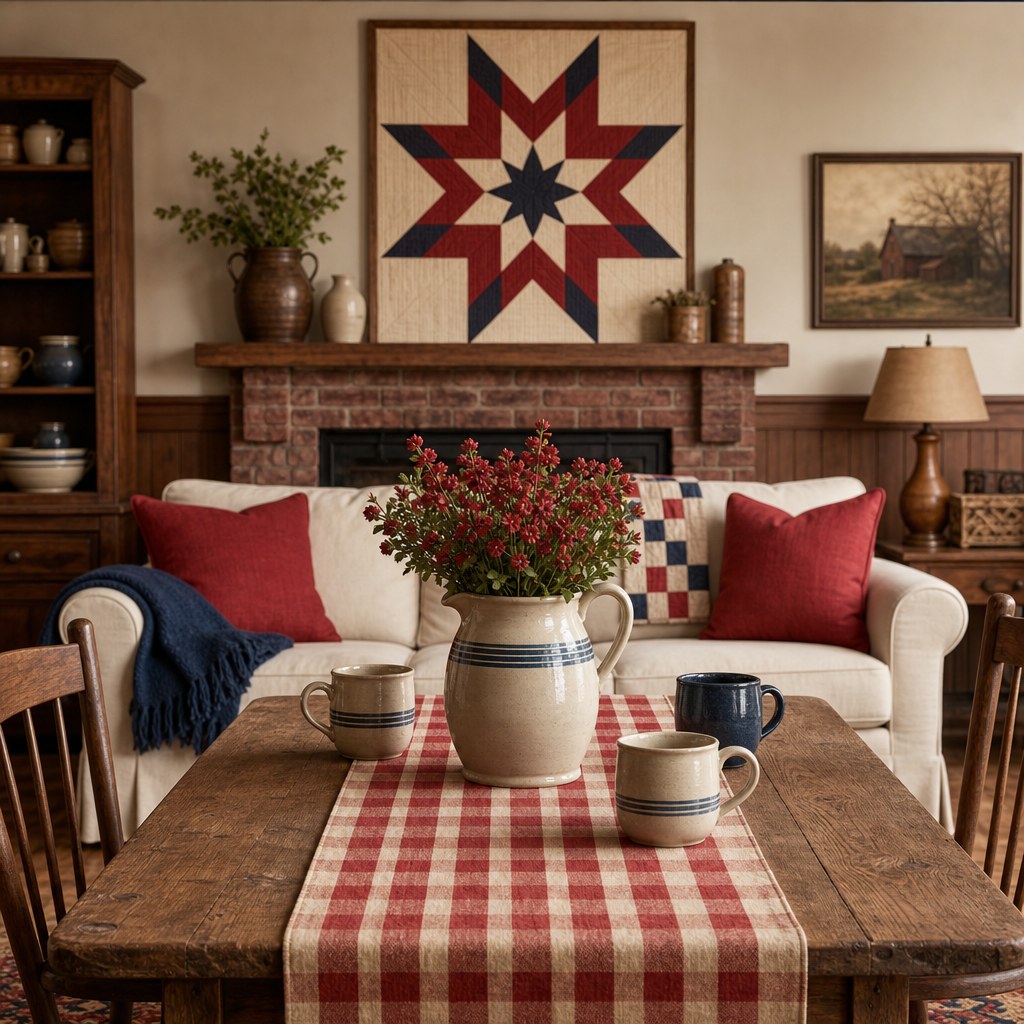
E1 Receipt - Heritage Palette Layer
Open Shelving Kitchen · $214.96
The Americana kitchen is the anchor room for this style. It commands 1,600 monthly searches on its own and dominates the search and community signal for this design category. The reason is structural: the kitchen in an Americana home is a working room that displays its function openly, and open shelving is the mechanism that makes that display intentional rather than accidental. Open shelving in the Americana kitchen showcases dishes, mason jars, eclectic antiques, and functional objects that reflect the household. The display is heritage, not decoration. The display logic follows a consistent hierarchy: mason jars for dry storage and utensils at center height, cast iron cookware on lower shelves, vintage Americana signage at eye level, and seasonal arrangements at the top. The barn wood floating shelf set is the structural element that carries all of this and doubles as a wall-material signal. Raw-edge reclaimed wood shelves on a white or shiplap wall communicate the rustic-heritage design intent before a single object is placed on them. The farmhouse sink (or a farmhouse-style apron front if full replacement is not an option) is the kitchen's single most impactful Americana statement piece, commanding attention as the room's functional anchor and completing the room's heritage display once the open shelving is in place.
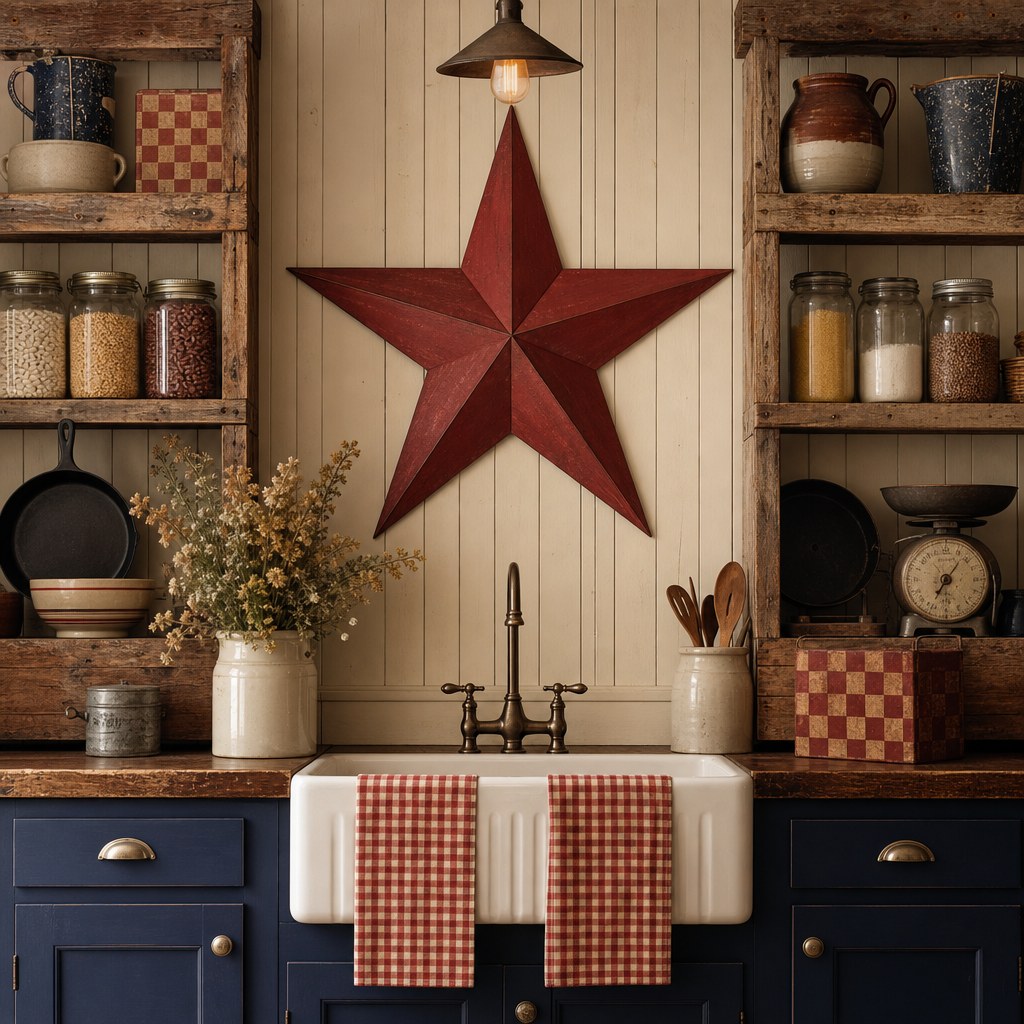
E2 Receipt - Open Shelving Kitchen
Shaker Furniture Core · $298.97
The Americana furniture core is built on a principle of craft and function. Furniture that was made to be used and shows the evidence of good making in its construction. Shaker-style pieces define this: ladder-back chairs with clean lines and natural wood rails, case goods with the distinctive Shaker detail of "graduated drawers when the drawers get bigger as they get lower," surfaces in oak, pine, cherry, or walnut that are finished simply to show the wood's natural character rather than hide it. The farmhouse dining table is the room's functional anchor. A plank-construction table in distressed pine or oak, designed for family meals and capable of taking visible use as a design asset rather than a flaw. Windsor armchairs are the period-accurate seating complement: their spindle backs and turned legs carry colonial and early-American craft signal without looking like museum reproductions. The overstuffed accent chair in a neutral linen or cotton upholstery, solid cream or wheat rather than check pattern at this scale, adds the soft seating layer that Americana rooms need to keep the hard craft surfaces from feeling cold. Soft, inviting upholstery with throw blankets and quilts is how the style transitions from workshop to home, and the oversized chair is where that transition happens most visibly. Source the Shaker case goods vintage when possible. The proportions and joinery of genuine period Shaker furniture are difficult to replicate at new price points, and the age patina is the whole point.
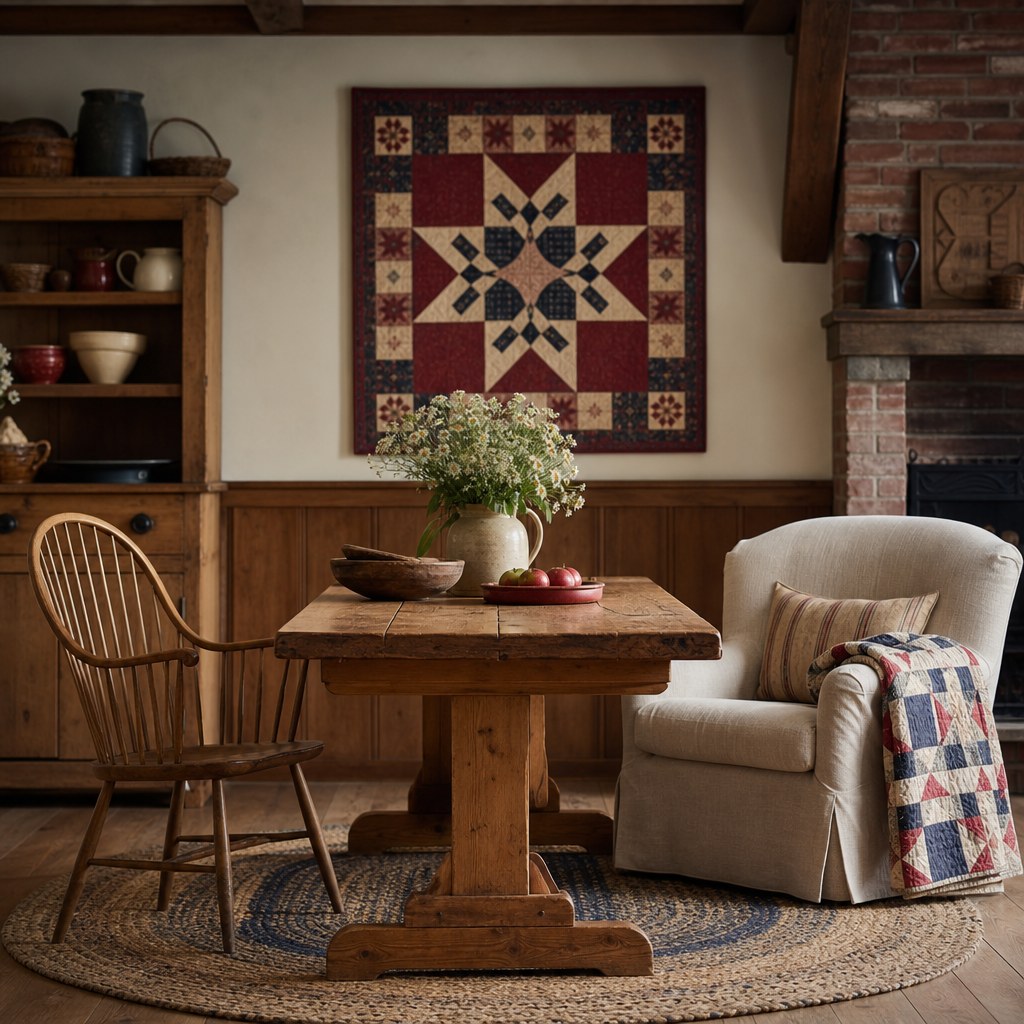
E3 Receipt - Shaker Furniture Core
Buffalo Check Textile Layer · $189.97
Buffalo check. The bold, two-color large-scale plaid that originated in British mills and became a signature American textile through workwear and outdoor culture, is the most recognizable pattern signal in Americana interior design. It reads simultaneously as heritage, comfort, and American craft, which is why it appears in every Americana room category from kitchens to bedrooms to living rooms. The textile layer is where the Americana room picks up its warmth, and the pattern system here. Buffalo check primary, solid neutrals secondary, small plaid or gingham as accent. Prevents the room from tipping into a pattern-mixing problem. The braided jute rug is the floor anchor for the Americana textile story: hand-braided jute in natural tones, round or oval, placed under the seating core, delivers the woven natural material that the style requires without competing with the check pattern above it. A buffalo check wool or wool-blend throw in red and black or navy and cream, sized 50x60 inches and draped over the sofa arm, is the textile layer's most visible and portable signal. It can move between rooms and serves as a room-temperature test of the palette before any larger commitments are made. The curtain pair in a solid navy or warm cream linen, not check at curtain scale, which reads as overwhelming, frames the window and gives the room its vertical textile panel without adding a competing pattern to the check layer already established in the rug and throw.
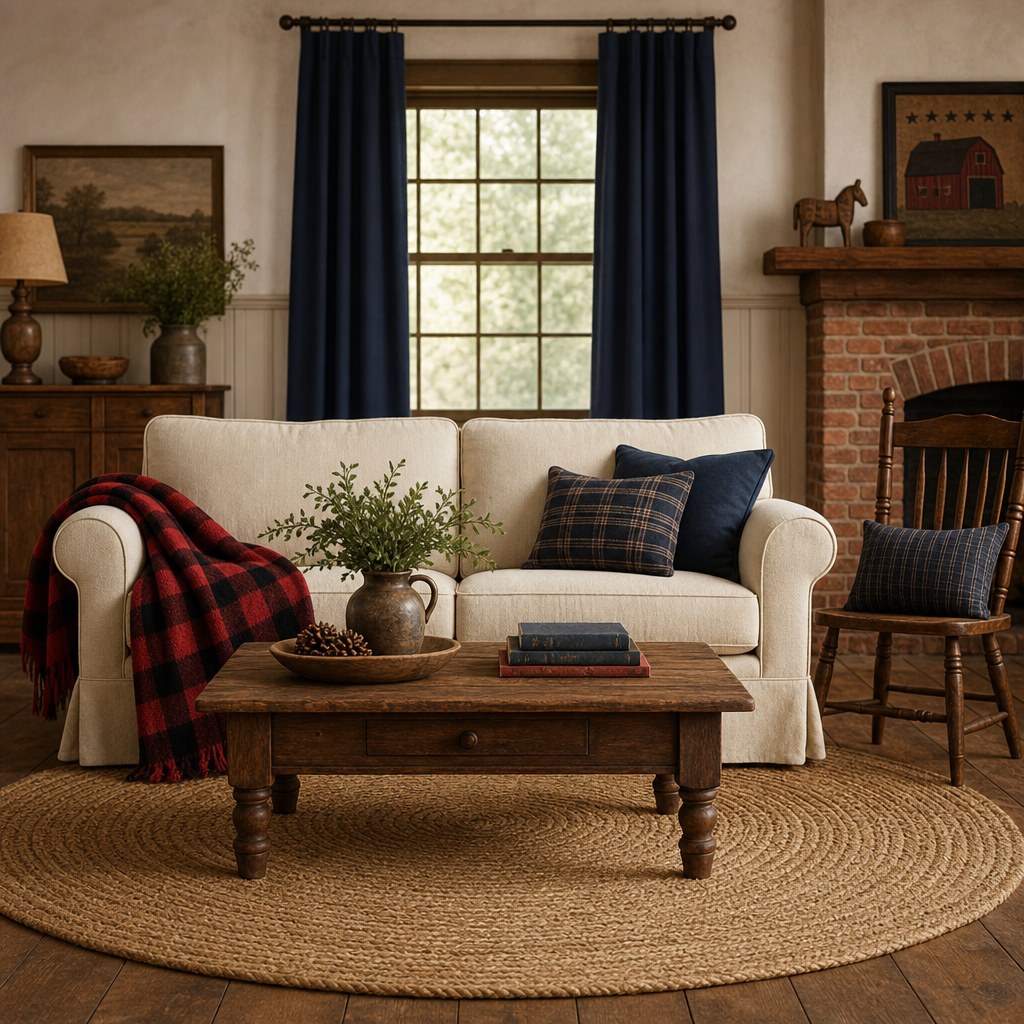
E4 Receipt - Buffalo Check Textile Layer
Barn Wood and Vintage Art · $272.96
Barn wood and vintage art are added last because they respond to the room's palette and material story rather than establishing it. They are the room's storytelling layer, and the story only makes sense once the foundation is in place. The vintage or reproduction American flag. Linen or cotton, not polyester, folded or hung as a textile art object rather than a banner, is the single most cited Americana design element across the design community. The rule is consistent: a linen or cotton vintage-style flag hung with care reads as heritage; a polyester pennant reads as seasonal. The vintage flag above the sink is the single most mentioned item in the Americana discussion. By wide margin. The wide-plank barn wood console or entry table is the room's reclaimed wood surface anchor, distressed, knot-showing, warm in tone, and carries the same design logic as the reclaimed shelving in the kitchen: the imperfections are the point. Woven baskets in natural rattan or seagrass, stacked or nested on the console surface or tucked under a bench, add the textural depth and functional storage that Americana rooms use to connect making to daily life. The antique map or topographic print, an American state, a city, a coastline, provides the intellectual heritage layer that elevates Americana past decoration into storytelling, and it is the room's easiest point of personalization.
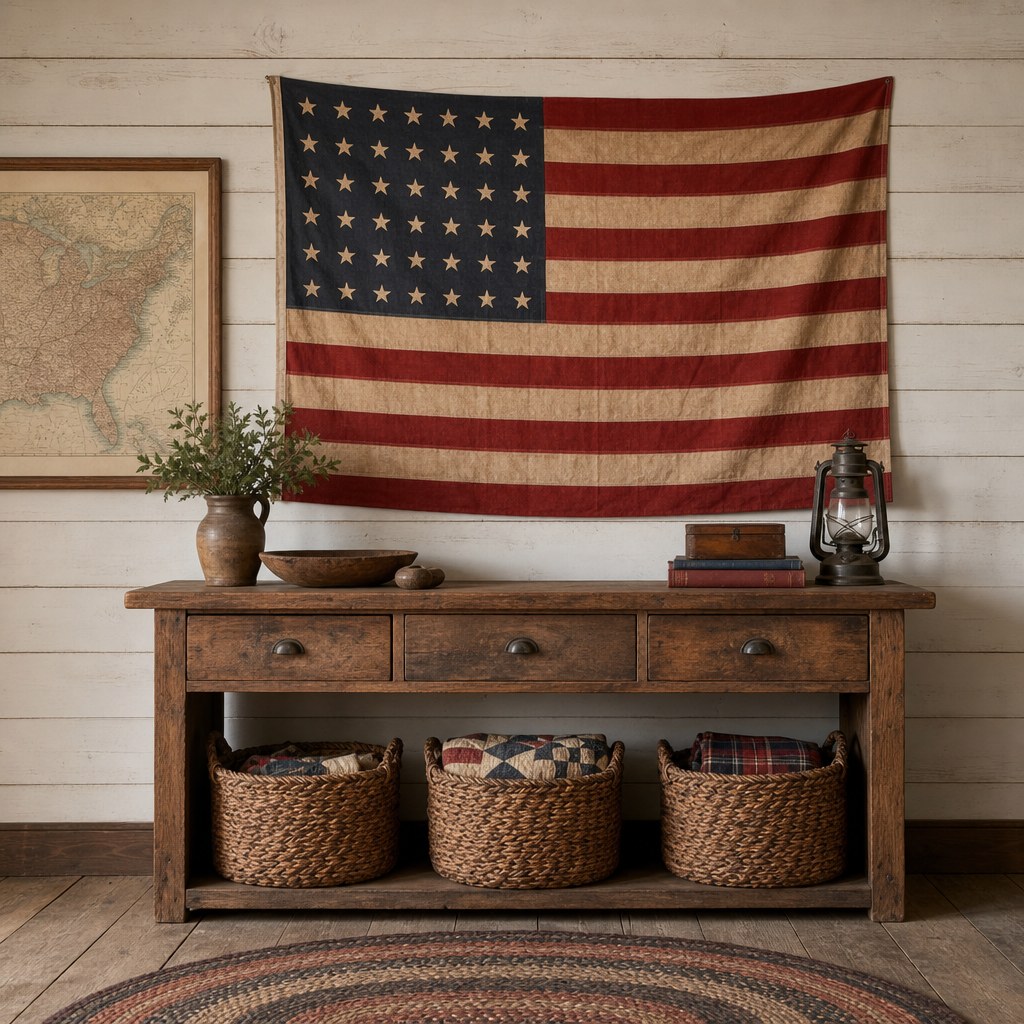
E5 Receipt - Barn Wood and Vintage Art
Americana vs. Modern Farmhouse.
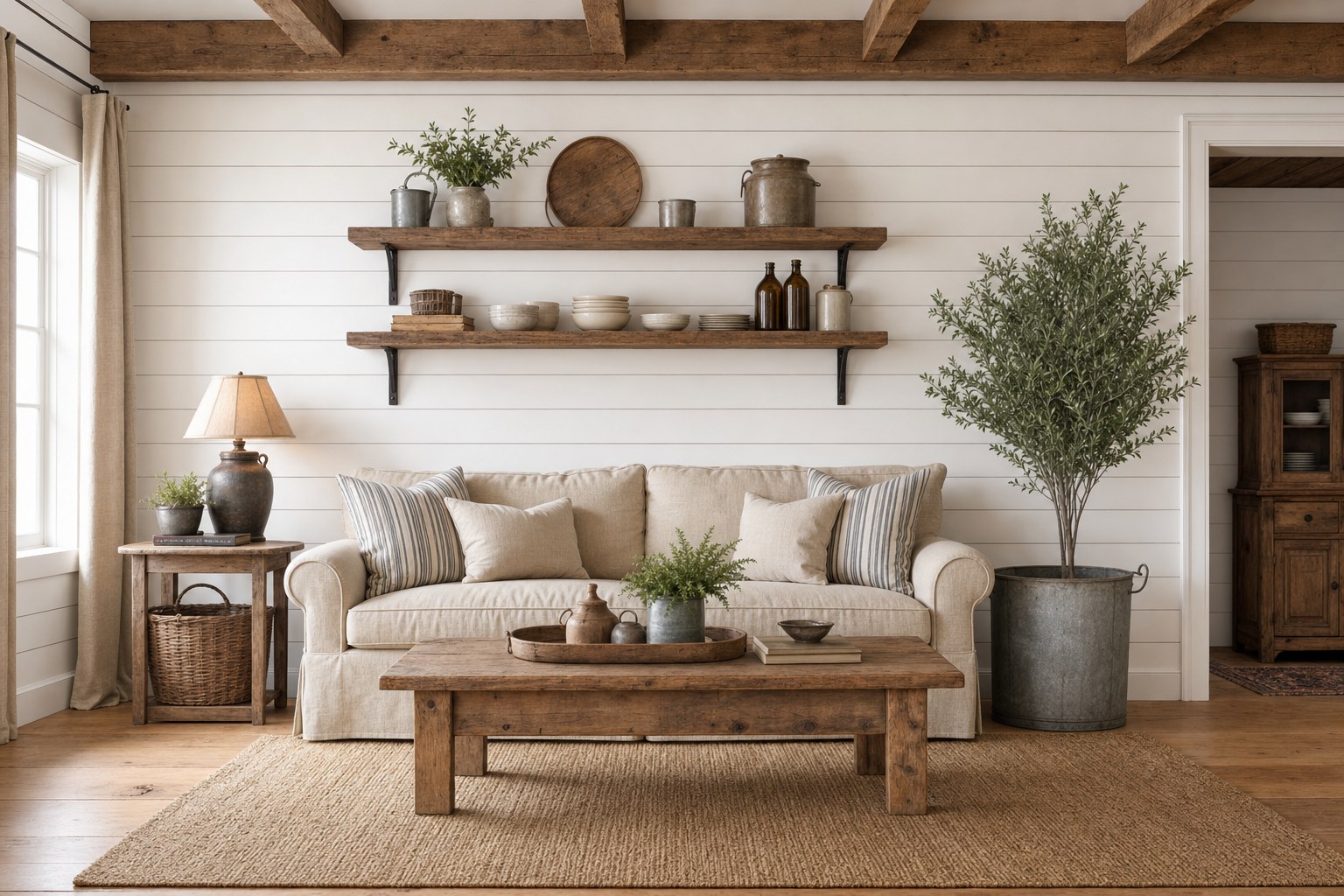
This is the most common confusion in the design category and design communities surface it constantly: "Americana is just farmhouse with a flag. Change my mind." The distinction is real, though the overlap is genuine. Modern farmhouse grew out of nostalgia for early American farm life and evolved toward light, clean, minimal interiors. Black-and-white palette, shiplap, quartz counters, comfort over storytelling. Americana is the broader category that farmhouse belongs to, but it skews toward patriotic iconography, heritage symbolism, deeper color, and deliberate nostalgia for American cultural history. The simplest test: the farmhouse room clears the slate and lets the architecture breathe; the Americana room fills the room with objects that carry story and asks those objects to do the design work. Both can share barn wood and open shelving. What separates them is whether a vintage flag, an eagle motif, or a star-pattern quilt appears anywhere in the sightline.
| Dimension | Americana Interior Design | Modern Farmhouse Interior Design |
|---|---|---|
| Color palette | Barn red, colonial navy, antique white. Deep heritage colors grounded in earthy neutrals | Black and white primary, with shades of warm gray and cream, minimal color saturation throughout |
| Iconography | Vintage flag art, star and eagle motifs, antique maps, deliberate patriotic and heritage storytelling | No patriotic symbols; architectural details (shiplap, board-and-batten) carry the visual interest |
| Pattern system | Buffalo check and plaid as dominant pattern; layered with solid and small gingham as accents | Minimal pattern; stripes and grid occasionally; overall visual approach tends toward clean and quiet |
| Emotional goal | Storytelling and nostalgia. The room should feel like it accumulated over time and belongs to someone | Comfort and familiarity. The room should feel open, easy, light-filled, and uncomplicated |
| Kitchen signal | Open shelving with mason jars, cast iron, vintage signs, and barn wood, functional display as heritage | White cabinets, farmhouse sink, quartz counters. Clean and functional, no display emphasis |
| The confusion test | If there is a vintage flag, an antique map, or a star-pattern quilt anywhere in the room, it is Americana | If the room is all shiplap, white cabinets, and black hardware with no patriotic element, it is farmhouse |
The $129 entry path.
Four items that establish the heritage palette in any room. No furniture replacement, no paint, no structural work required. The complete E1 serves as the entry path.
Frequently asked questions.
What is Americana interior design?
Americana interior design is a warm, heritage-rooted residential style that blends rural, patriotic, traditional, and nostalgic elements shaped by American history from the colonial era through the post-WWII decades. Its signature visual language includes a red, white, and blue palette grounded by earthy neutrals, Shaker-style and farmhouse furniture in oak and pine, buffalo check and plaid textiles, open shelving with mason jars, vintage flag art, and reclaimed wood or barn wood surfaces. The aspiration: heritage and elevated, never party-store kitschy. The Americana room tells a story through objects that carry genuine weight, and that storytelling is what distinguishes it from a seasonal display.
What is the difference between Americana and farmhouse style?
Farmhouse style is best understood as a subset of the broader Americana aesthetic rather than a competing style. Modern farmhouse skews lighter and more minimal - black-and-white palette, shiplap, quartz counters, emotional goal of comfort over storytelling. Americana skews toward patriotic iconography, heritage symbolism, and deliberate nostalgia: vintage flag art, star-and-stripe motifs, antique finds, and a color palette that runs deeper red and navy blue alongside the neutrals. The Americana room tells a story; the farmhouse room clears the slate. The confusion is genuine - "Americana is farmhouse with a flag. Change my mind." - but the overlap is the architecture, not the decor. The decor is the distinction.
What colors define Americana interior design?
The Americana palette operates on two tiers. The signature tier is the flag triad: barn red (muted and aged, not fire-engine red), colonial navy blue, and crisp white or antique linen. The grounding tier is earthy neutrals that prevent the flag colors from reading as decoration rather than heritage: beige, taupe, warm cream, wheat, and muted sage green that echoes agricultural aesthetics. The palette works best when the neutrals dominate wall space and large upholstery surfaces, and the red-white-blue arrives as accent layers through textiles, ceramics, and art. Muted greens and yellows echo the rural terrain; browns and tans underline the rustic essence. The palette-use rule that separates heritage from kitschy: the neutrals do the heavy lifting, and the flag colors show up in supporting roles.
What furniture defines Americana interior design?
Three furniture families define the Americana room. Shaker-style pieces - ladder-back chairs, clean-lined case goods with graduated drawers, natural wood in oak, pine, cherry, or walnut - provide the backbone of form and function. Windsor armchairs and plank-construction farmhouse tables built for durability complete the seating and dining core with colonial and early-American period signal. Distressed and reclaimed wood pieces - weathered finishes, visible knots, plank-construction tables - add the heritage patina that separates Americana from generic traditional. The unifying principle is practicality: Americana furniture is made to be used, and the evidence of use is a design asset rather than a flaw. Soft overstuffed seating in neutral or buffalo check upholstery layers comfort over the hardwood bones.
How do I make Americana decor look elevated instead of kitschy?
Three rules prevent Americana from tipping into party-store territory. First, limit patriotic iconography to one key accent piece per room. One vintage flag, one eagle ceramic, one star-pattern textile - not all three in the same sightline. Second, choose quality over novelty: a vintage flag print on linen or a quality reproduction reads as heritage; plastic buntings and mass novelty pieces do not. Third, ground the palette in earthy neutrals - let barn red and navy blue play supporting roles to warm cream, wheat, and natural wood. The neutrals are what make the flag colors feel historical rather than seasonal. The Americana rooms that stop the scroll are restrained in iconography and generous in quality materials: barn wood, braided jute, hand-thrown stoneware, and linen textiles that age well.
More rooms like this
No spam. Unsubscribe anytime.