Table of Contents
The Neo-Industrial Blueprint.
Modern industrial interior design did not originate as a design movement. It originated as a housing solution. In 1971, New York State passed a law legalizing residential living for certified artists in manufacturing buildings - and the aesthetic of those first loft conversions in SoHo, where exposed brick walls, concrete floors, steel beams, and raw ductwork became the bones of a home, became the template that every industrial interior draws on today. The first residents, including artists like Nam June Paik and Chuck Close, paid as little as $50 to $125 per month for spaces that were structurally raw by necessity, not design intention. What they created - unintentionally - was the most imitated residential aesthetic of the next fifty years.
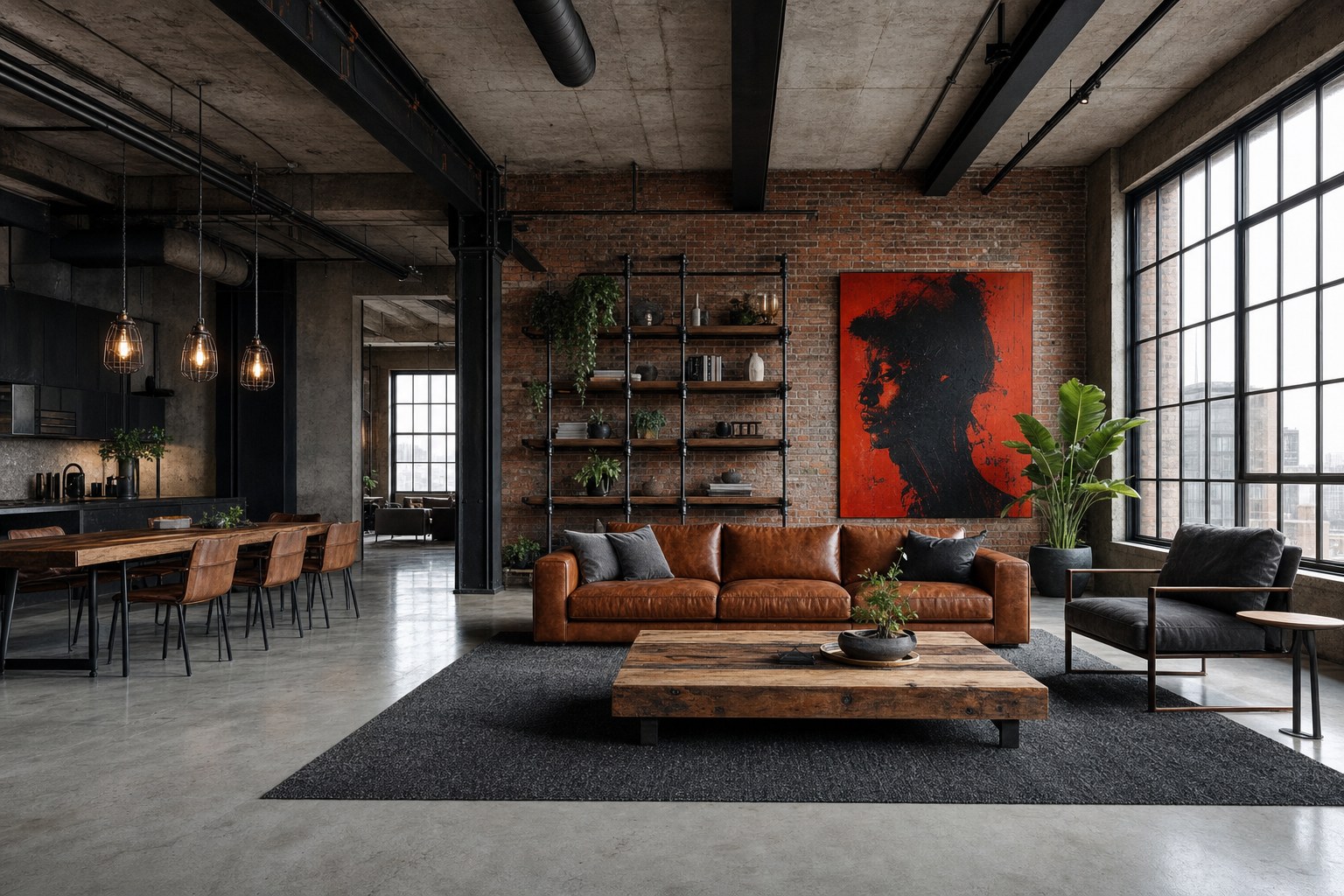
The neo-industrial - or modern industrial - version of that aesthetic makes one decisive upgrade to the original: it adds warmth. Modern industrial interior design has evolved far beyond its gritty, warehouse roots. It is a style that confidently wears its imperfections, celebrating structure and function without sacrificing comfort or personality. The raw, unfinished materials remain - the exposed brick is still exposed, the concrete still concrete, the steel still steel. What changes is the warmth layer that prevents those materials from reading as cold: reclaimed wood stops the room from feeling like a factory floor, cognac leather ages into its surroundings rather than competing with them, and warm-toned Edison bulb lighting transforms a concrete ceiling from oppressive to atmospheric.
The operational vocabulary of the style runs on three material contrasts: black steel against warm wood, raw concrete against soft leather, exposed brick against natural linen. The two rules that define what the style actually does: warm wood stops the room from feeling like a factory, and metal accents work only when nothing reads as cold. The five elements below build the modern industrial room in the sequence that establishes those contrasts correctly: exposed structural surface first, metal system second, warm wood third, lighting fourth, seating last.
Exposed Accent Wall · $179.97
Exposed structural surfaces, brick, concrete, reclaimed shiplap, are the foundational signal of modern industrial design, and the accent wall is the renter-accessible version of what loft conversions do architecturally. "Exposed brick walls, ever-present ceiling ductwork, and steel beams" are the defining characteristics that establish the industrial vocabulary in any residential space. For renters who cannot expose actual brick or concrete, three alternatives recreate the same visual language without structural modification: peel-and-stick brick tile panels in warm terracotta or charcoal finish, concrete-look wallpaper panels in a raw grey tone, or reclaimed shiplap-style wood planks in a weathered grey wash. The brick panel option is the most period-accurate for the style, the concrete wallpaper is the most apartment-friendly (no adhesive damage), and the shiplap planks produce the warmest version of the exposed wall. Which is the correct choice when the metal system in Element 2 is the room's dominant cold material. The exposed wall is always the backdrop, never the focal point: its job is to make everything placed in front of it, shelving, leather seating, pendant lights, read as curated rather than accidental.
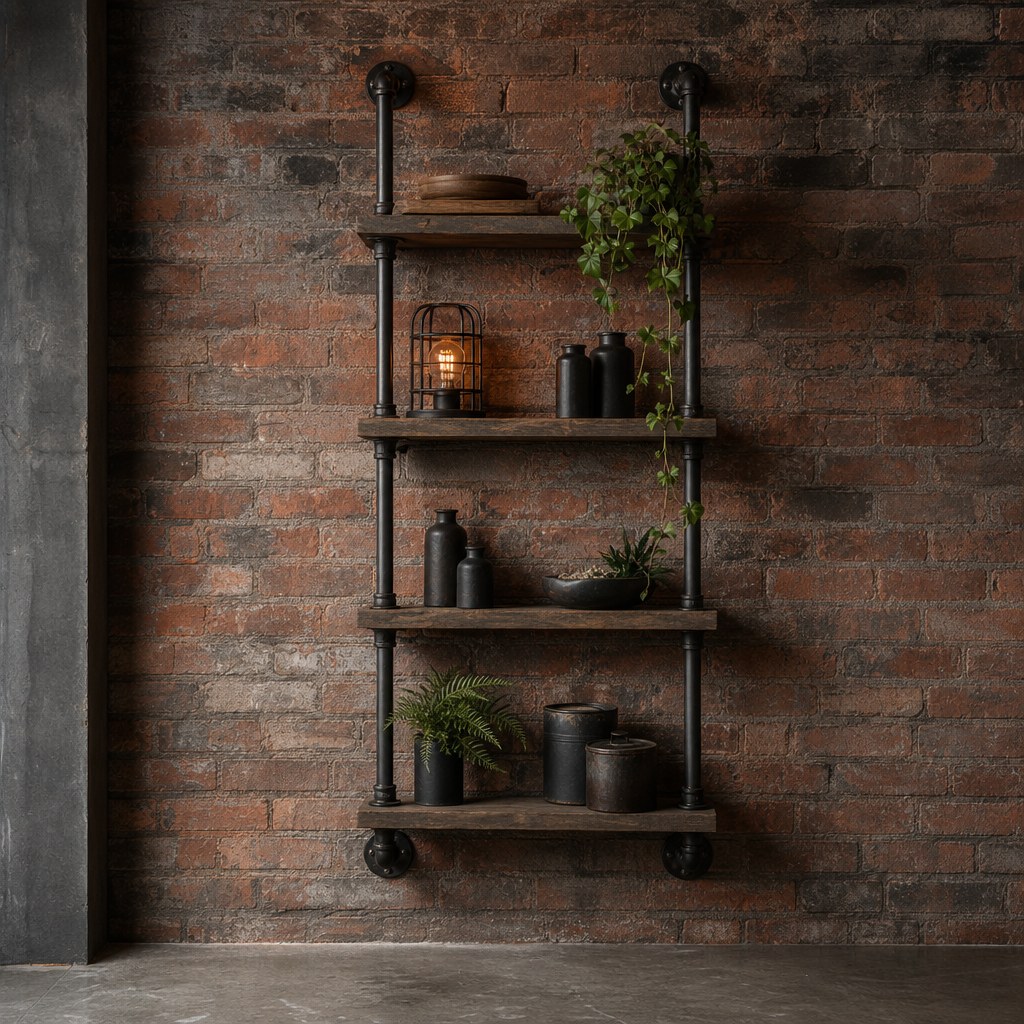
E1 Receipt - Exposed Accent Wall
Matte Black Metal System · $249.96
Matte black is the accent color of modern industrial design. The material decision that appears across fixtures, hardware, shelving brackets, curtain rods, and framed windows, and ties every surface in the room into one intentional system. For an industrial look, matte black is the most natural hardware finish. It reads as utilitarian and deliberate rather than decorative. The pipe-bracket shelving system is the most structurally expressive application of the matte black metal element: industrial plumbing pipe (1-inch diameter, flanged at wall and shelf points) combined with reclaimed or solid wood planks makes visible the structural logic of the style. It is literally the building's pipe infrastructure repurposed as furniture. Black steel shelf brackets and walnut shelves are the single modification that most efficiently transforms a room into the modern industrial aesthetic. Beyond shelving, the matte black system extends to curtain rods, cabinet and drawer hardware, and, critically, light switch plates and outlet covers, where the visual consistency at the smallest scale is what signals intentional design rather than assembled-by-default furniture. The reclaimed lumber market reached $62.2 billion in 2024, confirming that the pairing of matte black metal hardware with solid or reclaimed wood surfaces is now a mainstream commercial category, not a boutique installation.
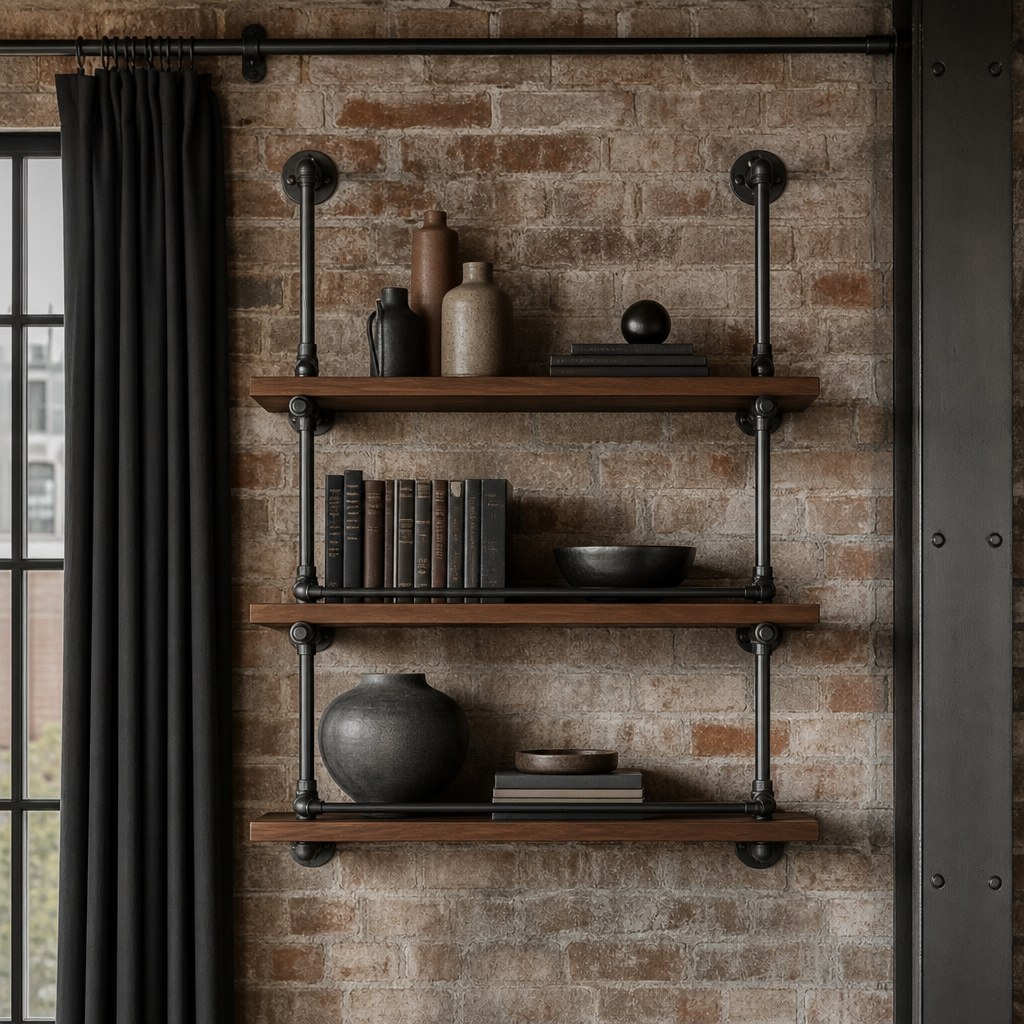
E2 Receipt - Matte Black Metal System
The Reclaimed Wood Warmth Layer · $234.96
Reclaimed wood is the thermal layer of modern industrial design. The material that prevents the style from reading as cold, sterile, or purely industrial. Reclaimed wood is the perfect bridge between the rustic warmth of the past and the modern edge of industrial design. The imperfections, scratches, uneven tones, knots, make it feel real and grounded. More than 45% of upscale remodeling projects used reclaimed wood in 2023, confirming that the warm-material counterpoint to industrial hard surfaces is now a mainstream renovation decision rather than a specialty sourcing challenge. The reclaimed wood warmth layer is built from four pieces that introduce wood grain across multiple surfaces and scales. The live-edge or reclaimed coffee table is the room's central warm material statement. Placed directly in front of the leather sofa, its irregular natural edge and visible grain form the counterpoint to the matte black pipe shelving overhead. The solid wood console or media unit grounds the television wall without requiring built-ins. The two floating walnut shelves (independent of the pipe bracket system in Element 2) create a separate, quieter wood-on-wall moment that confirms the material logic is intentional. The raw-edge wood serving board completes the system at the smallest scale, as a tray or display surface on the coffee table. Polished concrete plus warm wood: concrete or brick as the raw foundation, wood as the warmth signal on top of it.
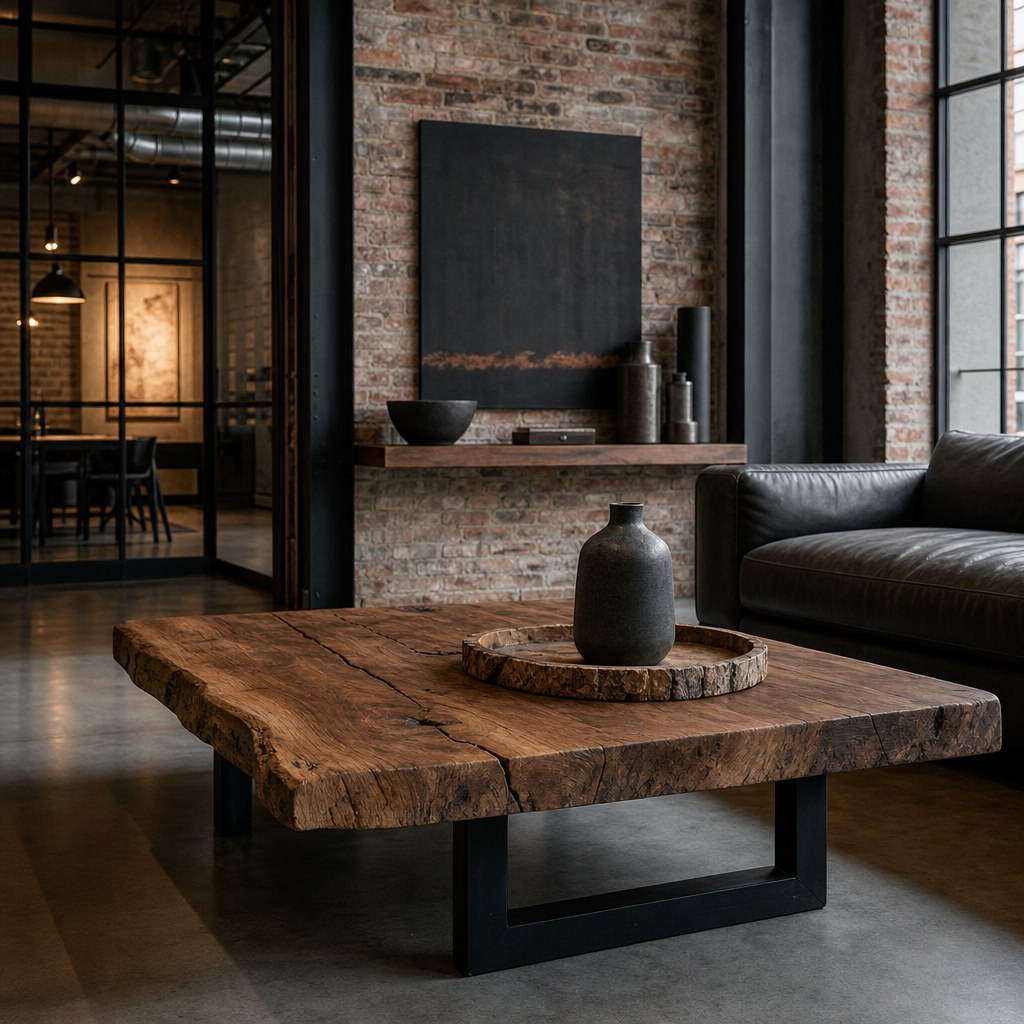
E3 Receipt - The Reclaimed Wood Warmth Layer
Statement Pendant Lighting · $199.98
Lighting is the transformation tool of modern industrial design, and the material logic is straightforward. Three lighting forms define the style, each serving a different functional zone. The cage-style Edison pendant, a bare filament bulb suspended in a wire cage shade on a black cord, is the most structurally honest industrial lighting form: it makes no attempt to conceal the bulb, the cord, or the ceiling mounting hardware, which is precisely what the style values in all its material choices. A cluster of three cage pendants over a dining table or kitchen island is the style's signature overhead statement. The black rail track lighting system is the renter-compatible alternative for open-plan living areas where a single pendant cannot cover the space: a single track with adjustable black-finish spotlights covers the full room with directional warm light from one ceiling junction box. The lighting philosophy: fewer sources, more intention. The industrial room uses two or three high-quality, properly positioned light sources rather than filling every fixture. All bulbs should be warm white at 2700K or lower; the amber glow of warm-white filament LEDs is what transforms exposed concrete and raw brick from industrial cold to atmospheric warmth.
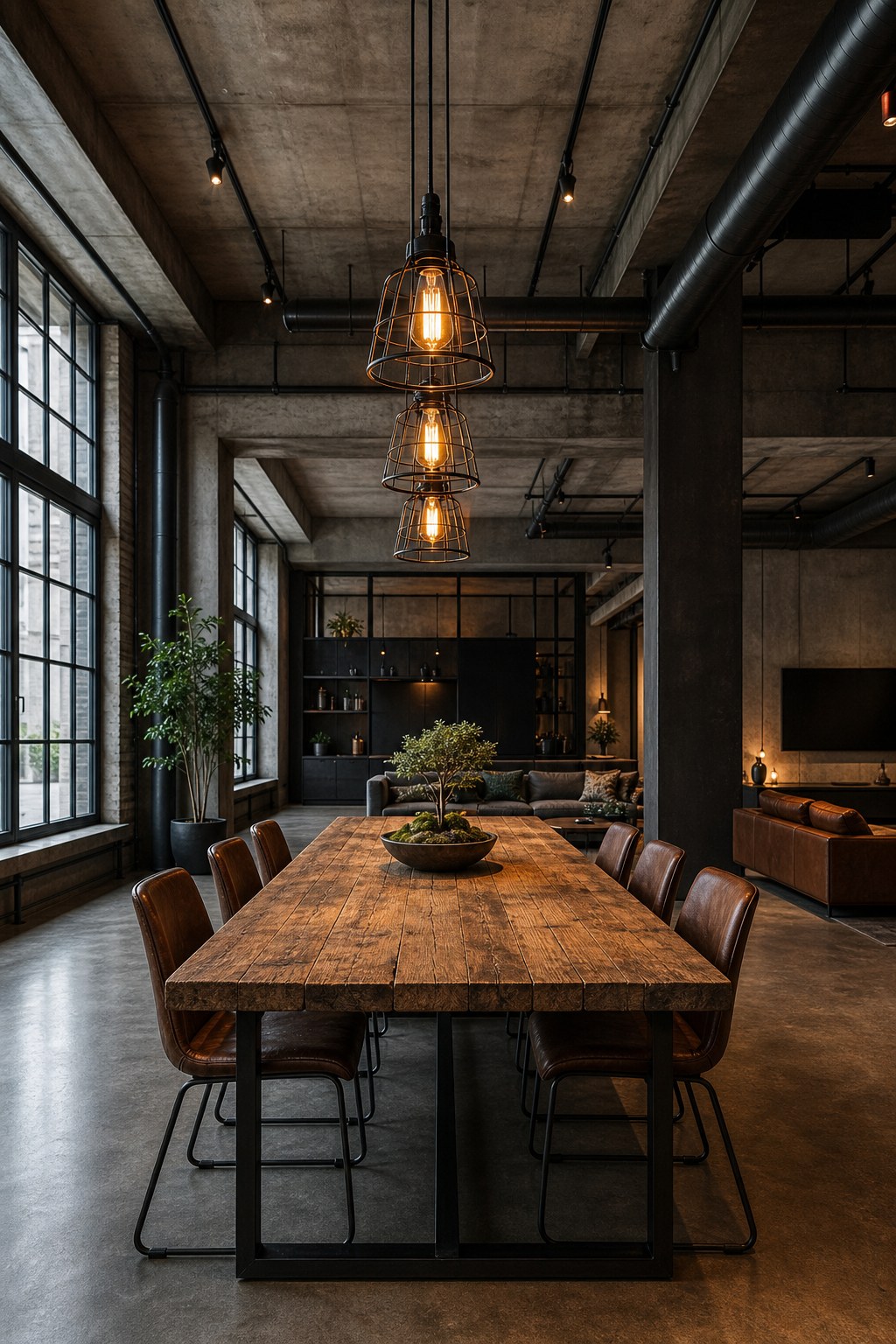
E4 Receipt - Statement Pendant Lighting
Leather and Canvas Seating · $419.98
The seating layer is added last because it is the most expensive element and the one that responds to everything already established. The exposed wall defines the backdrop scale, the matte black metal sets the hardware tone, the reclaimed wood establishes the warmth level, and the lighting sets the ambient temperature. Only after those four decisions are made does the seating choice become clear. Cognac and deep chocolate brown leather are the dominant industrial seating materials for specific reasons: leather contrasts directly against concrete and brick by being visibly biological in a room of mineral and metal materials, and it improves with age in the same way the building's raw surfaces do. The patina accumulates rather than degrading. A statement leather sofa in cognac or deep chocolate brown anchors industrial spaces and adds warmth against exposed brick or concrete. The cognac leather accent chair is the entry-level version of this material decision for renters who cannot commit to a full leather sofa. The natural canvas or linen accent chair serves as the softer material complement. Lighter in weight, lighter in color, and positioned to break the leather-and-metal register before the room feels too masculine or uniform. The charcoal or warm grey area rug placed under the seating core does for the floor what reclaimed wood does for the shelving: it introduces softness and warmth against the hard industrial surface below it, and defines the seating zone in an open-plan loft where no architectural boundary separates living from dining or kitchen.
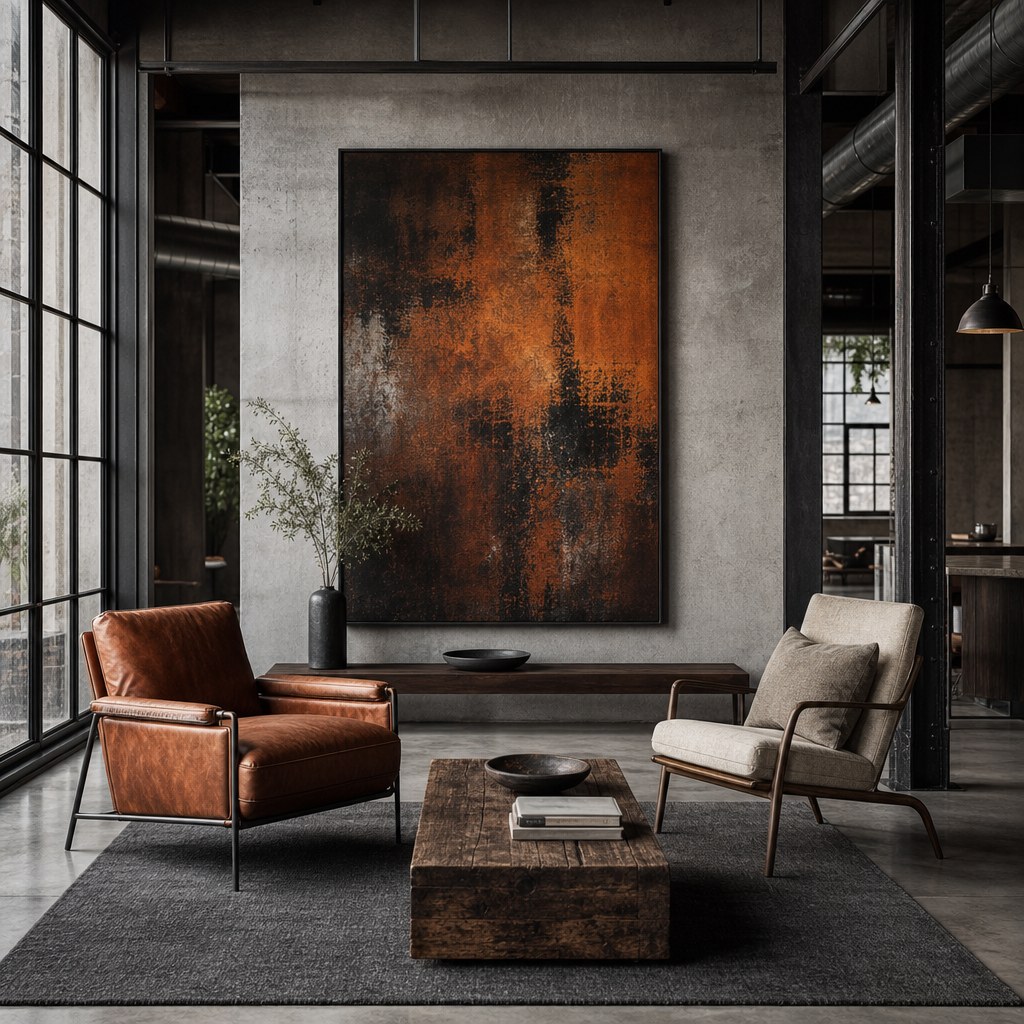
E5 Receipt - Leather and Canvas Seating
Neo-Industrial vs. Raw Industrial.
Both styles start from the same building. The converted warehouse, the urban loft, the factory floor repurposed as home. The difference is what the occupant adds. Raw industrial keeps everything stripped: exposed pipes and wiring left visible, concrete floor unfinished, furniture functional rather than decorative, lighting harsh and overhead. Neo-industrial, modern industrial, makes four targeted interventions: warm wood against the cold hard surfaces, leather or canvas seating that ages into the room, Edison-and-cage pendant lighting that shifts the ambient quality from warehouse to dwelling, and a matte black hardware system that makes the raw elements look chosen rather than inherited. The easiest test: if the room would function as a photography studio or a startup office without any modification, it is raw industrial. If removing the reclaimed wood coffee table and the leather chair would make the room feel uninhabitable, it is neo-industrial.
| Dimension | Neo-Industrial (Modern Industrial) | Raw Industrial (Unmodified Loft) |
|---|---|---|
| Warmth level | Intentionally warm. Reclaimed wood, cognac leather, Edison bulb glow at 2700K, natural linen as material softener | Cool and neutral. Grey concrete, raw steel, white or cool overhead lighting, minimal textile presence |
| Metal finish | Matte black. Intentional, consistent across shelving, hardware, curtain rods, lighting; reads as curated system | Raw or mixed. Galvanized pipe, brushed steel, whatever the building installed; metals are structural, not decorative |
| Seating material | Cognac or chocolate leather; natural canvas or linen; soft materials that contrast and warm the hard surfaces around them | Utilitarian. Metal-frame chairs, canvas stools, industrial seating designed for durability not comfort |
| Lighting approach | Edison and cage pendants, black rail track lighting. Warm-white 2700K, layered and directional, creates zones | Overhead fluorescent or recessed downlights. Bright, even, functional; lighting serves visibility not atmosphere |
| Floor treatment | Concrete, polished hardwood, or concrete-look luxury vinyl tile. With a charcoal or warm grey area rug defining the seating zone | Bare concrete or raw hardwood. No rug, no softening; the floor material is the statement |
| The feel test | Feels like a loft someone lives in. Grounded, warm, materially honest, with personality layered over raw structure | Feels like a building before someone moves in. Structurally interesting, but not yet a home |
The $179 entry path.
Three accent wall options that establish the modern industrial surface vocabulary in any apartment. No structural work, no landlord permission, no permanent installation required.
Frequently asked questions.
What is modern industrial interior design?
Modern industrial interior design - also called neo-industrial - is a residential style that takes the raw structural vocabulary of converted warehouses and lofts (exposed brick, concrete, steel beams, visible ductwork) and softens it with warm materials: reclaimed wood, cognac leather, natural linen, and warm-toned Edison bulb lighting. It originated in New York's SoHo district in 1971, when New York State passed a law legalizing residential living for certified artists in manufacturing buildings - and the aesthetic of those first loft conversions became the template the style draws on today. The neo-industrial version adds warmth and intention to that raw foundation without sanitizing it. Modern industrial interior design has evolved far beyond its gritty, warehouse roots - spaces can be both raw and refined, minimal yet full of personality.
What colors define modern industrial interior design?
Modern industrial interiors run on a neutral base of charcoal, warm grey, raw concrete tone, and off-white, with warmth introduced through material accents: cognac and chocolate leather, honey-toned reclaimed wood, warm brick red from exposed masonry, and natural linen upholstery. Matte black is the consistent accent color that appears across fixtures, hardware, framed windows, and pipe shelving - "matte black is the most natural hardware finish for the industrial look; it reads as utilitarian and deliberate rather than decorative," as Evan Christensen of The Barn Door Hardware Store put it. The neo-industrial version avoids the cold all-grey monochrome of raw industrial spaces by ensuring at least one warm material - wood, leather, or linen canvas - is present in every zone of the room.
What furniture defines modern industrial interior design?
Four furniture categories define the modern industrial room. First, the leather or canvas seating anchor - a cognac or deep brown leather chair or sofa that contrasts directly against brick or concrete: "A statement leather sofa in cognac or deep chocolate brown anchors industrial spaces and adds warmth against exposed brick or concrete." Second, matte black metal pipe shelving that makes the room's structural logic visible. Third, a reclaimed wood coffee or dining table showing grain, knots, and age - more than 45% of upscale remodeling projects used reclaimed wood in 2023. Fourth, a natural linen or canvas accent chair that bridges hard industrial materials with the neo-industrial warmth layer. The unifying rule: visible material honesty - no veneer, no faux finishes.
What lighting defines modern industrial interior design?
Three lighting forms define the style. Edison bulb cage pendants - bare filament bulbs in a wire cage shade on a black cord - are the most structurally honest industrial lighting form, making no attempt to conceal bulb, cord, or hardware. A cluster of three cage pendants over a dining or kitchen area is the signature overhead statement. Matte black rail track lighting is the renter shortcut: one ceiling junction box covers an open-plan room with directional warm light from adjustable black-finish spotlights. All sources should run at 2700K or lower - the amber glow of warm-white filament LEDs transforms concrete and brick from cold to atmospheric. The lighting philosophy: fewer sources, more intention. Edison bulbs at $12 can take a room from generic to loft aesthetic in a single swap.
How do you add modern industrial style to an apartment without structural work?
Four moves that establish the modern industrial look with zero structural modification. First, install peel-and-stick brick tile or concrete wallpaper panels on one accent wall - these require only flat wall surface and establish the raw material vocabulary immediately. Second, replace every metal fixture and hardware piece with matte black: light switch plates, curtain rods, cabinet pulls, outlet covers - this creates the visual consistency at small scale that signals intentional design. Third, add a cage pendant on a plug-in cord - no ceiling work required, and it establishes the lighting vocabulary immediately. Fourth, introduce reclaimed or live-edge wood through a coffee table - the grain, knots, and natural imperfections of real wood provide the warmth layer that separates neo-industrial from cold raw industrial: "The trick is warm wood to stop it feeling like a factory."
More rooms like this
No spam. Unsubscribe anytime.