Table of Contents
What hygge interior design actually means.
The concept of hygge can be traced to the early 1800s in Denmark, though the term derives from a Norwegian word, hugga, which loosely means "to comfort" and is also related to the English word "hug." The interior design translation of hygge is simpler than most lifestyle writing suggests: it is the practice of making warmth structural. Not decorative. Not seasonal. Structural. A hygge room works the same way in October as it does in February, because the warmth is baked into the materials - natural wood, wool, linen, sheepskin - rather than applied as a seasonal layer of pine cones and orange throw pillows.
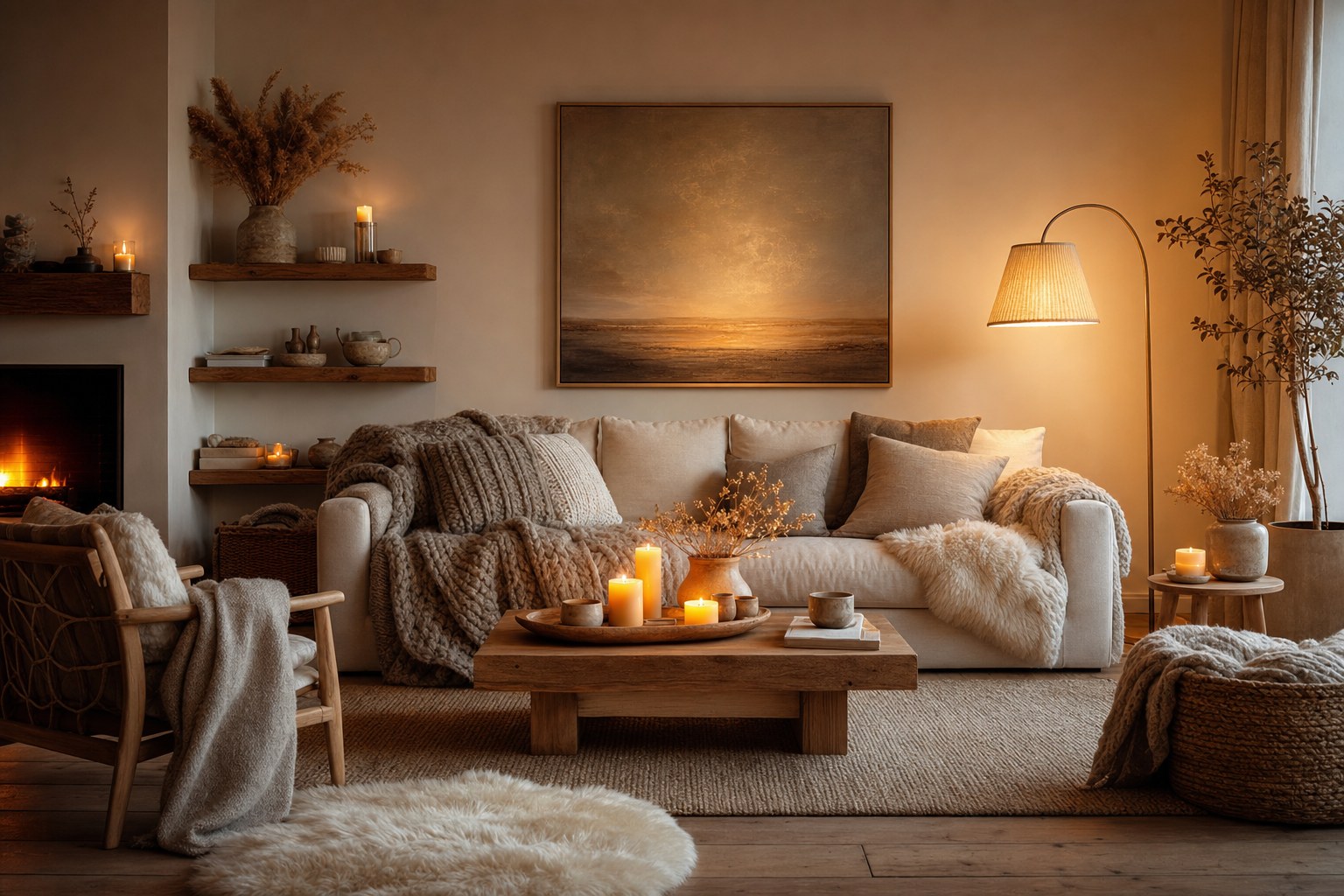
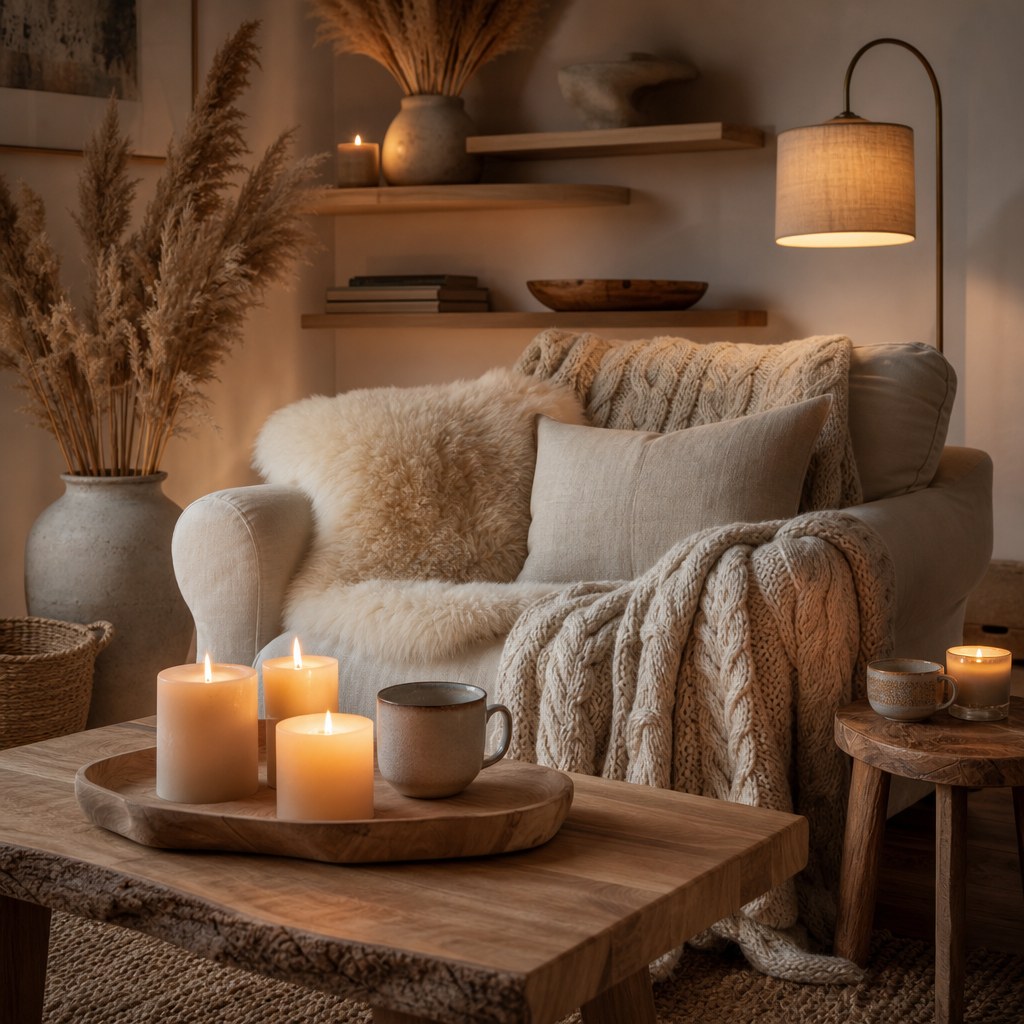
What separates hygge interior design from adjacent Scandinavian minimalism is its relationship to texture and layering. Texture is more important than pattern in hygge design: how fabrics feel against the skin is a central factor in how hygge they are. A hygge room accumulates texture - multiple textiles, a layered rug situation, candlelight flickering against unfinished wood surfaces - in a way that a minimal Scandinavian room deliberately avoids. The philosophy is additive, not subtractive. The curation principle is simple: every object in the room should earn its place either by contributing warmth (a candle, a throw), natural material beauty (a wood tray, a ceramic mug), or personal meaning (a book, a photograph). Objects that do none of these three things are edits, not additions.
Nature is a central driver of the hygge aesthetic. It manifests practically through light woods - beech, pine, and ash are the most common Scandinavian choices, preferred in their natural color, without paint, stain, or gloss varnish, because they are easy on the eye, just like a forest. It also manifests through dried botanicals, wool from sheep, linen from flax - materials that retain a memory of origin. The five elements below build the hygge room in the order that makes each addition feel cumulative rather than arbitrary: candlelight establishes the ambient quality first, textiles respond to it second, rugs ground the zone third, supplemental lighting reinforces the warmth fourth, and natural wood closes the material story last.
Candlelight Kit · $79.96
Candlelight is not optional in hygge interior design. It is the definition. "There is one essential ingredient: candles," as the Scandinavia Standard puts it plainly. Denmark burns more candles per capita than any country in Europe, with 28% of Danes lighting a candle every single day. The practical principle: multiple light sources at low height, distributed across a room, replace the single overhead light that makes a space feel institutional rather than intimate. The hygge candlelight kit runs on four items. Unscented pillar candles in cream and warm white are the workhorse. Placed on a wood tray or stone plate in a cluster of three to five, they create the central glow point of the room without competing scents. Taper candles in brass holders add vertical light at the table or mantle level. A beeswax pillar candle brings the warmest natural amber tone of any wax, significantly warmer than paraffin, and a subtle honey scent that reads as hygge without being aggressive. Unscented tea lights in small glass holders distribute ambient glow across shelves, window ledges, and corners, establishing the room's secondary light points. The self-test: stand in the room at dusk with only candles lit, no overhead lights. If the room feels warm and enclosed, the candlelight placement is working. If it feels like a power outage, add more clusters and lower the flame height to shelf level.
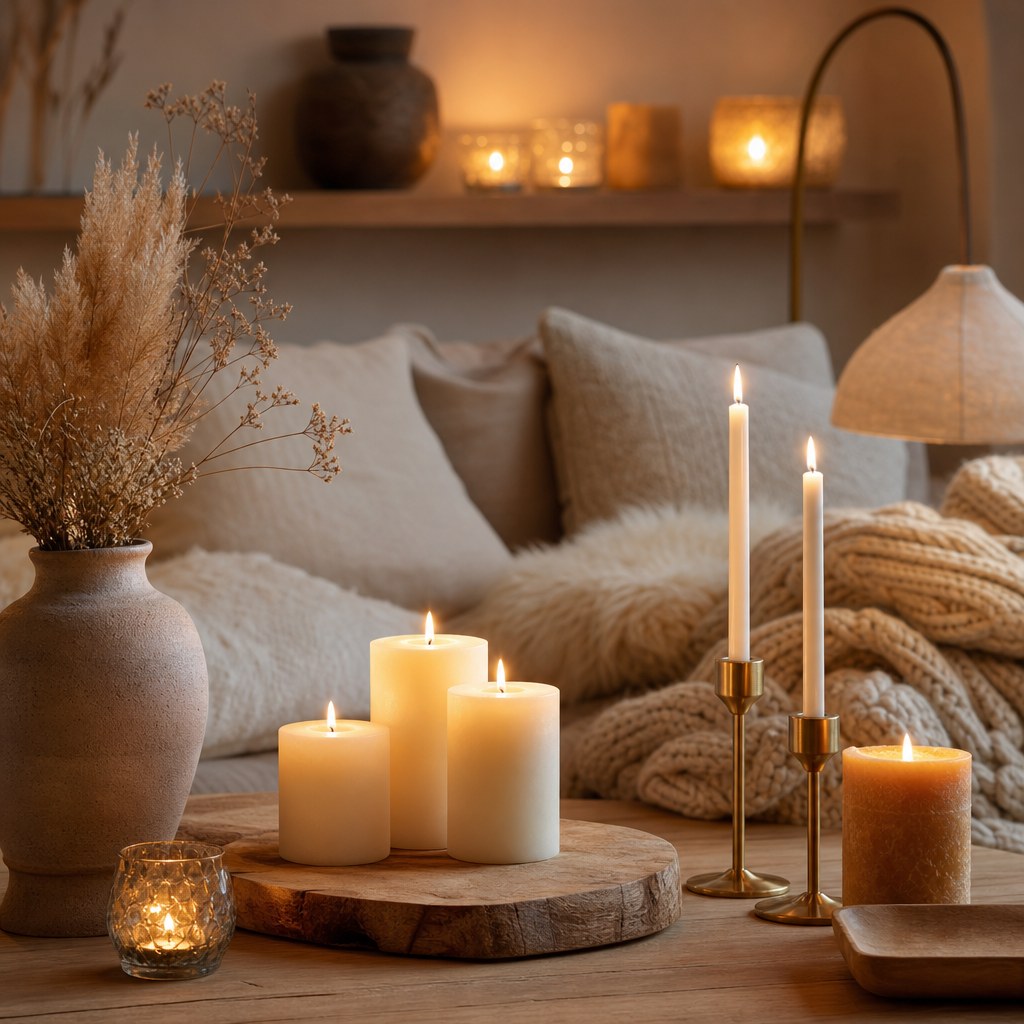
E1 Receipt - Candlelight Kit
Chunky Knit Textiles · $149.97
Textiles are the most accessible and highest-impact entry point into hygge home decor. Layers of different textures, wool, linen, fur, that is the hygge formula, and the data confirms the signal: the chunky knit throw is the single most searched hygge product at 110 monthly searches for "hygge blanket" alone. The layering principle is specific: different weights, different weaves, different materials placed so they read as accumulated comfort rather than a coordinated set. A chunky cable-knit throw in oatmeal or warm ivory over a sofa arm signals hygge immediately. A chunky knit throw at $30 changes the whole vibe of a sofa. The sheepskin accent piece is the second layer: a genuine or high-quality faux sheepskin draped over a chair seat or floor cushion brings the animal-warmth tactile dimension that wool alone cannot replicate. A set of linen throw pillow covers closes the textile story with a fabric that, unlike velvet or polyester, becomes softer with every wash. Linen covers get softer over time, as each wash dissolves more of the naturally occurring pectin that gives linen its characteristic creases. The palette across all three textile pieces should stay in the warm neutral range: oatmeal, cream, warm grey, dusty blush. Avoid cool greys and cold whites. They flatten in candlelight rather than glowing.
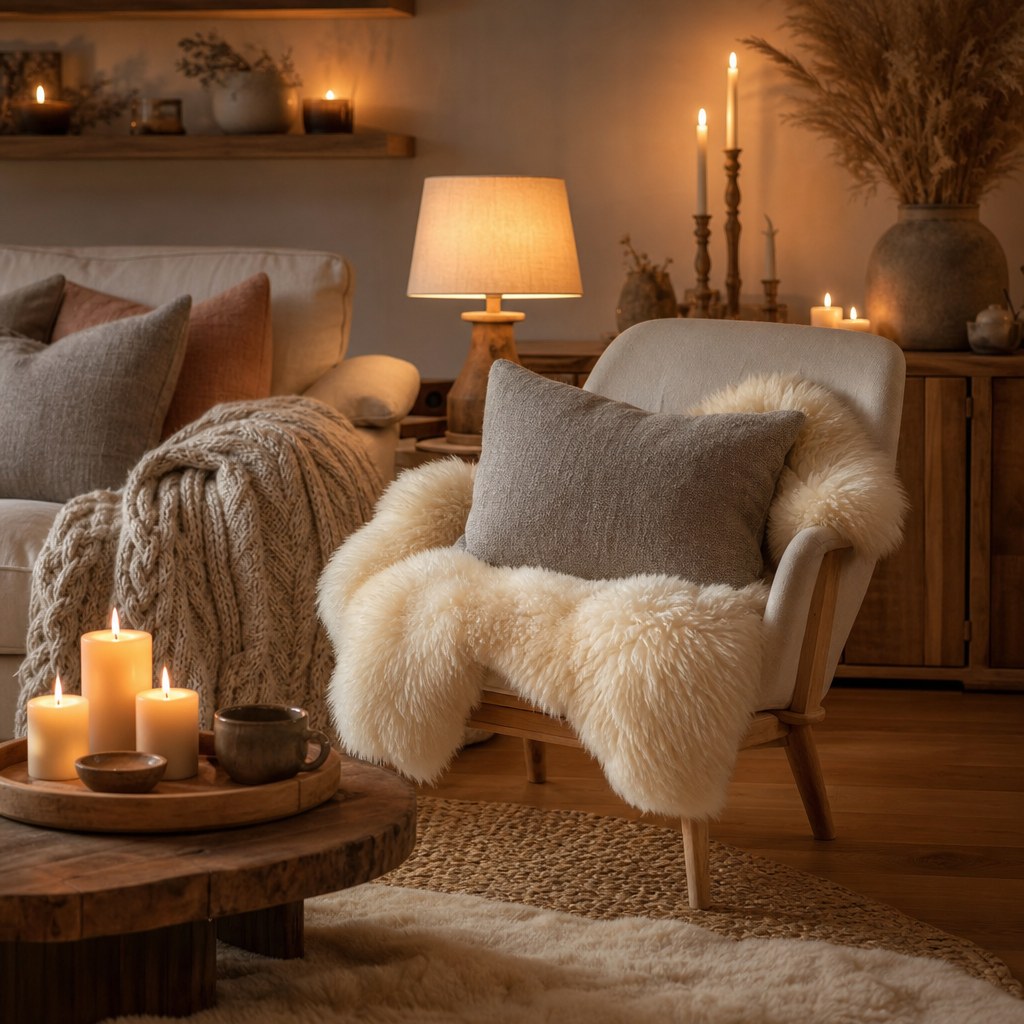
E2 Receipt - Chunky Knit Textiles
Layered Rug Foundation · $199.98
The floor is where hygge interior design diverges most sharply from Scandinavian minimalism. Where a minimal Scandinavian room might use one perfectly chosen flat-weave rug, a hygge room layers: a natural fiber or wool base rug that covers the seating zone, with a plush or sheepskin layer placed over it directly where feet land most. In front of the sofa, beside the armchair, under the reading nook seat. The tactile standard for a hygge rug: a sweater for your floor. The braided or flat-weave jute or wool base rug provides the natural material foundation. Its texture and warm oat or sand tone bring the floor into the warm neutral palette without the visual weight of a patterned rug. The layered plush top rug, a smaller 2x3 or 3x4 piece in ivory, cream, or warm grey, is placed at an angle over the base rug or centered within a specific zone, creating the underfoot softness that makes a hygge room feel literally warm to walk through. The sheepskin accent from Element 2 can reinforce this layer beside a chair. The two-rug layering technique is the fastest way to make hardwood or laminate floors read as hygge rather than minimalist.
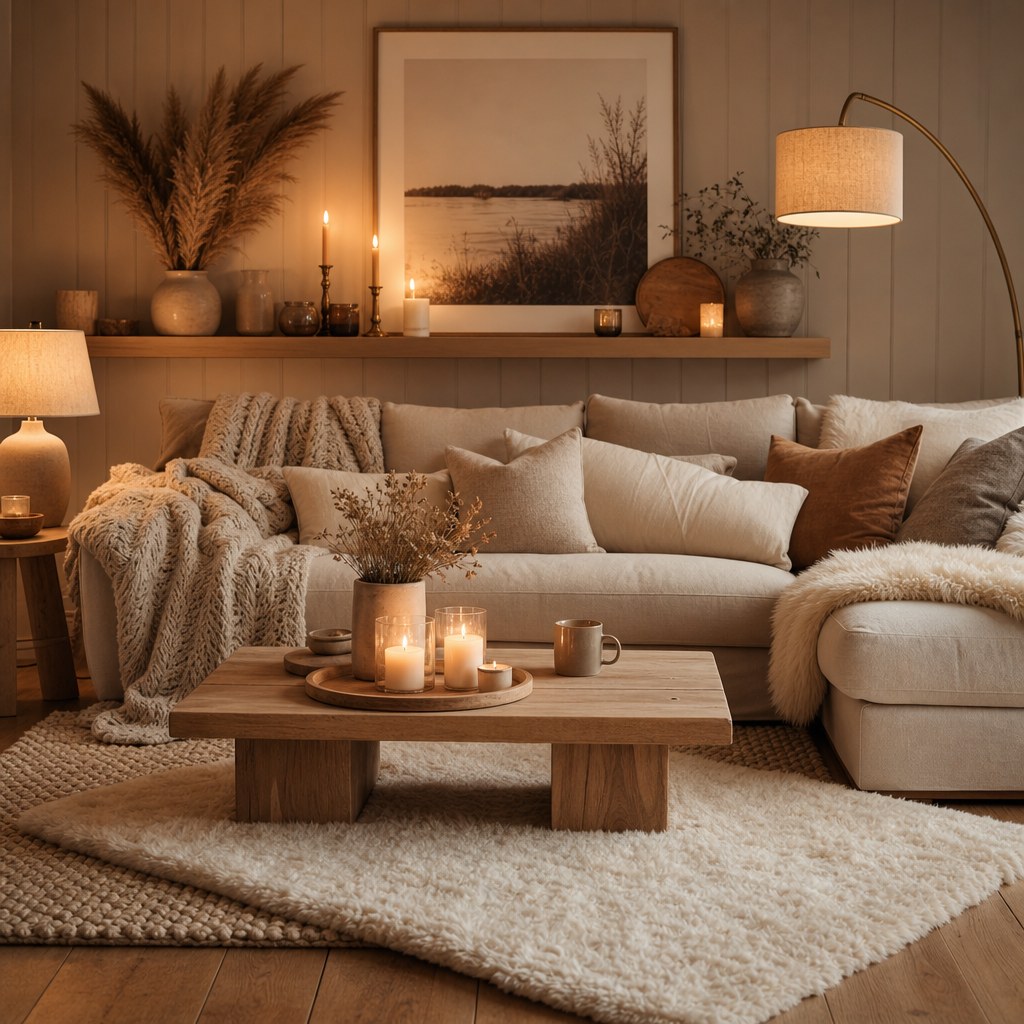
E3 Receipt - Layered Rug Foundation
Warm Ambient Lighting · $219.97
Candlelight establishes the hygge ambient quality; supplemental electric lighting must reinforce it rather than compete with it. The operative rule: multiple low light sources at lamp height replace the single overhead fixture. Creating a warm, welcoming glow with candles is an important element of hygge, and sconces and table lamps are the electric equivalent. A great option for adding focused, intentional light while still maintaining a sense of relaxation. The warm ambient lighting kit is built from three pieces in ascending scale. A table lamp with a linen or cotton shade, placed on a side table beside the primary seating piece, delivers a warm downward pool of light that mirrors the direction of candlelight. The shade material matters: fabric shades diffuse the bulb's glow so the lamp itself glows warmly rather than spotlighting. A floor lamp with a frosted or fabric shade placed in a corner or behind a reading chair creates the room's secondary vertical light source. Smart bulbs set to 2700K or warmer are the single most impactful renter-accessible upgrade. The difference between a 5000K daylight LED and a 2700K warm LED in a hygge room is the difference between a hospital waiting room and a Scandinavian cabin. The automated schedule, lights coming on automatically around 4pm in winter, is the modern shortcut to making the ambient lighting ritual automatic rather than manual.
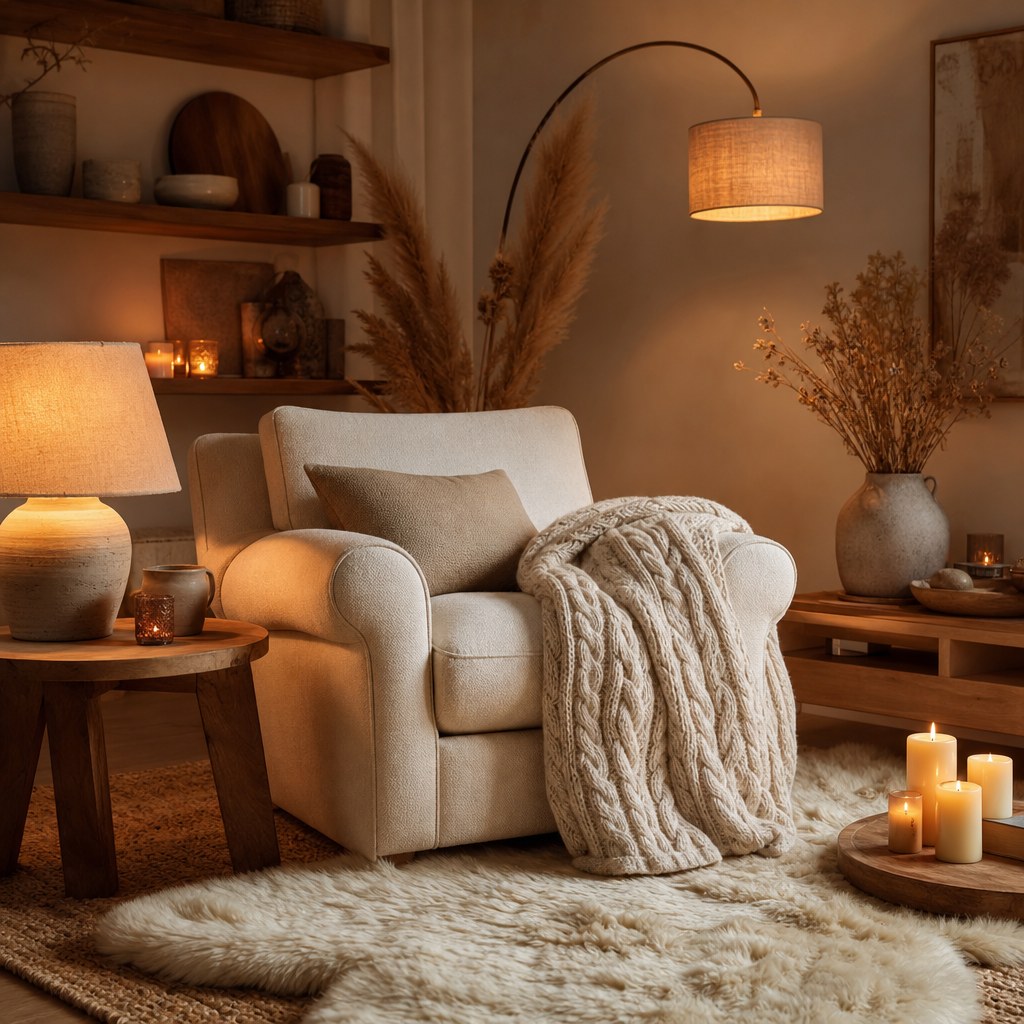
E4 Receipt - Warm Ambient Lighting
Natural Wood Layer · $247.96
Natural wood is the material backbone of hygge interior design, and its role is specifically to bring the outdoors in. "Nature is a huge part of Scandinavian life," and closeness to nature was identified as one of the four key drivers of hygge as a design philosophy. The Scandinavian preference runs to light woods. Beech, pine, and ash are the most characteristic choices, preferred in their natural color without stain, gloss, or varnish because they read "easy on the eye, just like a forest." The natural wood layer is added last in the hygge build because it responds to and grounds the warmth already established by candlelight, textiles, and rugs, rather than competing with them. A raw wood tray or serving board on the coffee table serves as the candle staging platform, connecting Elements 1 and 5 into a single material vignette. A set of wood floating shelves at low height. Carrying candles, ceramic mugs, dried botanicals, and a small stack of books. Creates the wall-level display moment that pulls the room's hygge objects into a coherent composition. Natural materials "won't need to be replaced often" and "wear well" with age, developing patina that reinforces the lived-in, gathered quality that hygge rooms are meant to embody. A simple pinewood side table beside the primary reading or seating position completes the material story: wood at floor level (rugs), wood at surface level (tray, table), wood at wall level (shelves), all in the same natural, unfinished tone family.
E5 Receipt - Natural Wood Layer
Hygge vs. Scandinavian Minimalism.
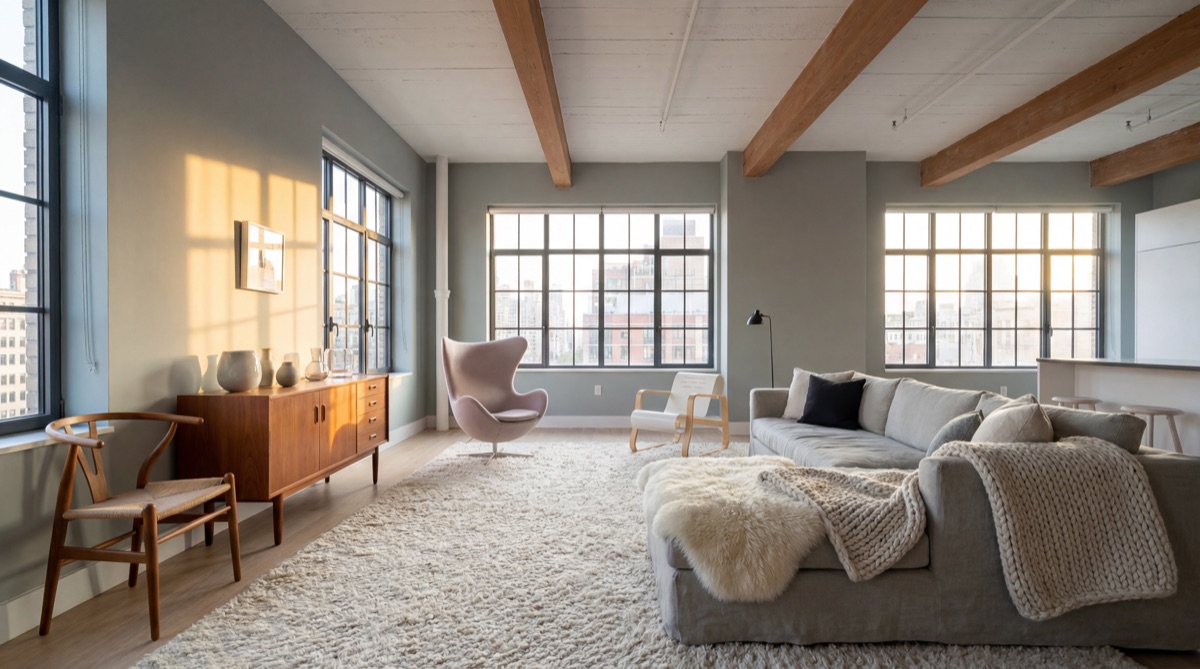
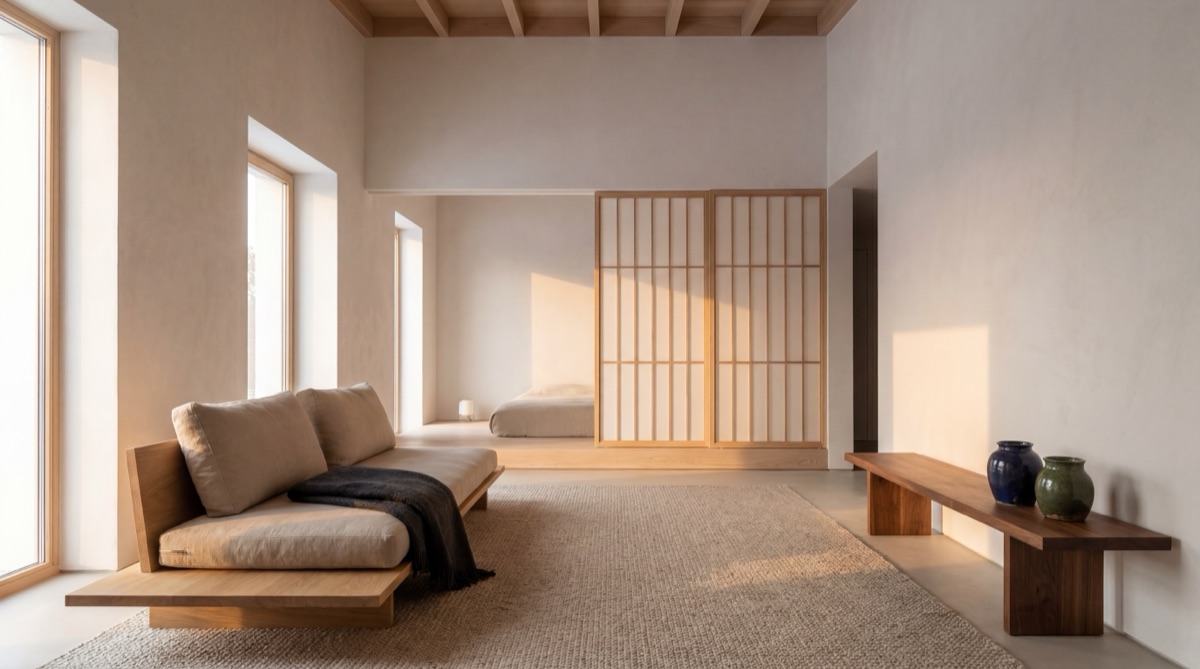
Both styles use natural materials, light wood, and warm neutral palettes. Which is why they are consistently conflated. The distinction is intention. Scandinavian design is a visual philosophy rooted in clean lines, functionality, and restraint. Hygge is a felt experience rooted in warmth, togetherness, and layered texture. A Scandinavian room is beautiful to look at; a hygge room is difficult to leave. "While hygge-inspired homes are all about cosy things around, Lagom styled interiors introduce a bit more sophisticated approach," as one cross-cultural design comparison frames the spectrum. The practical test: a Scandinavian room has one perfect throw; a hygge room has three throws and the sheepskin, all within arm's reach.
| Dimension | Hygge Interior Design | Scandinavian Minimalism |
|---|---|---|
| Primary goal | Felt warmth. Creating a room that is emotionally cozy, hard to leave, and tactile-rich | Visual clarity. Creating a room that is beautiful, functional, and uncluttered |
| Textile approach | Layered. Multiple throws, sheepskin, linen pillows, stacked rugs; texture over pattern | Restrained. One quality wool throw, one area rug; textiles subordinate to form |
| Lighting logic | Candlelight primary; multiple low electric sources at 2700K; overhead avoided | Natural light maximized; statement lighting fixtures as art objects; overhead acceptable |
| Wood tone | Light naturals (beech, pine, ash) in unfinished or oiled state. "easy on the eye, just like a forest" | Light to medium naturals, often in cleaner lacquered or lightly stained finishes for furniture |
| Object curation | Meaningful accumulation. Candles, books, ceramics, botanical finds, each carrying warmth or memory | Intentional editing. Fewer objects, each selected for function and form; Danes "select practical items that serve a purpose" |
| The read test | Feels like a Danish cabin at dusk. Warm, enclosed, layered, impossible to leave | Feels like a Copenhagen design showroom. Airy, purposeful, every object earning its place visually |
The $79 entry path.
Four candle items that establish the hygge ambient quality in any room. No furniture replacement, no paint, no structural work. The complete Element 1 serves as the entry path.
Frequently asked questions.
What is hygge interior design?
Hygge (pronounced hoo-gah) is a Danish and Norwegian concept that translates roughly as cozy togetherness or the contentment found in simple, warm moments. As an interior design philosophy, hygge means creating an atmosphere of physical and emotional comfort through soft lighting, natural materials, layered textiles, and decluttered spaces filled only with meaningful objects. Hygge appeared on the Oxford Word of the Year shortlist in 2016, and its "primary principles" are described by Meik Wiking, founder of Copenhagen's Happiness Research Institute, as "atmosphere, presence, pleasure, gratitude, comfort, and togetherness." The interior design translation: multiple warm light sources (candles first), natural wood, wool and linen textiles, and cozy reading nooks that invite stillness.
What are the key elements of a hygge home?
Five elements build a hygge home in order: (1) Candlelight and ambient lighting - Denmark burns more candles per capita than any other country in Europe, with 28% of Danes lighting a candle every single day; (2) Chunky knit throws and layered textiles - wool, linen, and sheepskin layered across sofas and chairs for tactile warmth; (3) Layered rugs - a natural fiber base rug with a plush layer on top creates the soft underfoot surface that defines hygge floors; (4) Warm, natural lighting - table lamps and floor lamps at 2700K or warmer replace harsh overhead lighting; (5) Natural wood - light Scandinavian woods like beech, pine, and ash in furniture, trays, and shelving bring nature inside and ground the warm palette.
What colors define hygge interior design?
Hygge interior design runs on a warm neutral palette: cream, oatmeal, warm grey, blush, and soft white. These are not cold architectural whites but warm, slightly yellow-toned neutrals that absorb and glow in candlelight. Accent tones are gentle - dusty rose, muted sage, pale wheat - introduced through textiles and ceramics rather than paint. The palette logic is intentional: warm neutrals read as inviting in low light, while cool greys and stark whites flatten under candles. The key test is to hold a paint chip next to a lit candle - hygge-correct colors warm up; incorrect colors go grey or greenish. "Hygge emphasizes creating a warm and inviting atmosphere, often achieved through soft lighting, candles, and natural elements," as the Scandinavia Standard summarizes the material-color relationship.
What is the difference between hygge and Scandinavian interior design?
Scandinavian interior design is a broader philosophy defined by clean lines, natural materials, and functional minimalism. Hygge is a subset - or more accurately a feeling - that prioritizes coziness and emotional warmth over visual restraint. A Scandinavian room is often airy, light-flooded, and deliberately spare; a hygge room is layered, candlelit, and intentionally cocoon-like. Texture matters more than pattern in hygge, and how fabrics feel against the skin is a central factor in how hygge they are. The practical difference: a Scandinavian room might have one perfect wool throw; a hygge room has three layered throws, a sheepskin, and a chunky knit blanket within arm's reach.
How do I create a hygge reading nook?
A hygge reading nook requires four decisions in order: location, seating, light, and textiles. Location: a window corner, alcove, or underused wall segment - the smaller and more enclosed, the more hygge it reads. Seating: a deep armchair or floor cushion with an ottoman, positioned so a side table sits within arm's reach for a candle and a drink. Light: one table lamp or clip reading light at 2700K or warmer, placed so it pools downward over the reading surface. Textiles: one chunky knit throw draped over the chair back, one sheepskin on the seat, and a small rug underfoot to define the zone. The nook should feel separated from the rest of the room - a curtain, a bookshelf-divider, or simply a pendant hung lower than the room standard creates the enclosure that makes the hygge reading nook feel like a destination rather than just a chair in a corner.
More rooms like this
No spam. Unsubscribe anytime.