Table of Contents
The Ma Blueprint.
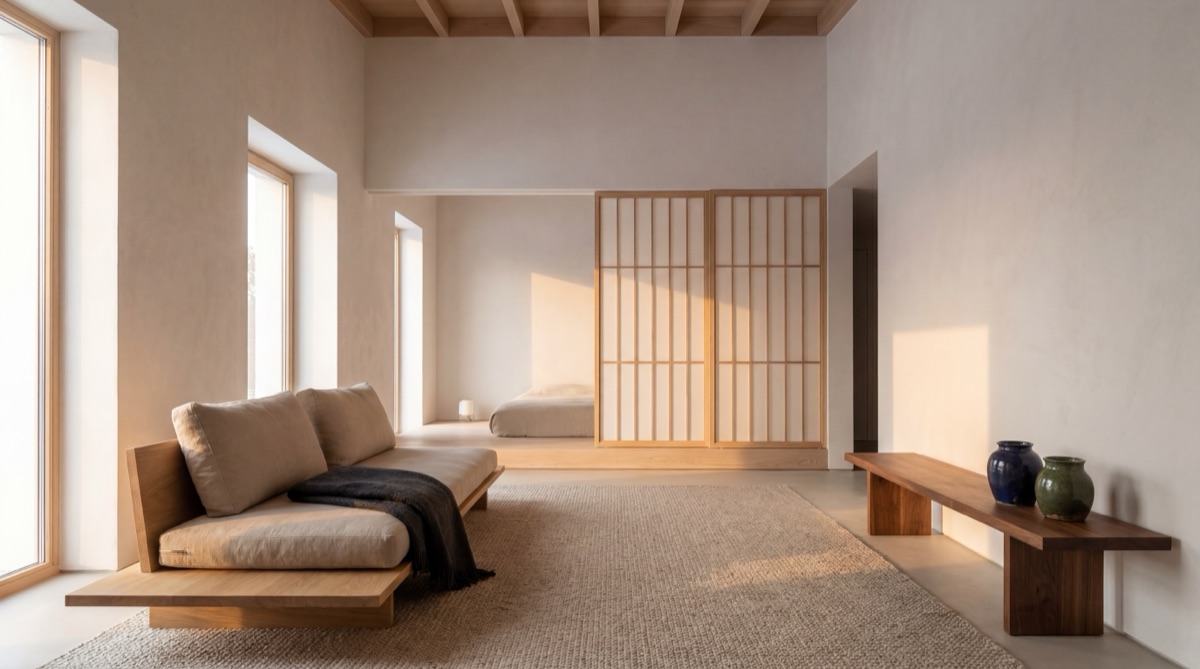
Japanese interior design is not minimalism. That distinction matters because minimalism is a visual discipline - remove until the room is spare. Japanese design is a spatial philosophy - keep only what is chosen, and treat the resulting emptiness as an active element. The concept of ma (間) encapsulates this: ma emphasizes "the importance of minimalism and having negative space and voids in design to create peace, clarity, and an indoor sanctuary," where voids "represent a pause between objects" that allows the nothingness to work. The five or fewer neutral colors rule in Japanese interior palettes exists precisely to give ma room to breathe - every additional color competes with the emptiness, and the emptiness always wins when the philosophy is intact.
Wabi-sabi (侘寂) is the material philosophy that pairs with ma's spatial one. The concept splits into wabi (simplicity and quiet) and sabi (beauty accumulated with age). American artist Leonard Koren, whose 1994 book introduced the concept to Western design, defined it as "a beauty of all things imperfect, impermanent, and incomplete" and instructed designers to "pare down to the essence, but don't remove the poetry." In practical terms: a cracked ceramic bowl repaired with gold - kintsugi - is more beautiful than a perfect one. A cedar plank with visible grain is more beautiful than a lacquered surface. A shoji screen with slight irregularities in its rice paper is more beautiful than a smooth white wall. Wabi-sabi interiors "favor natural materials like stone, wood, and clay for their inherent qualities and ability to evolve over time."
The third guiding concept is shakkei (borrowed scenery) - the practice of incorporating nature into the interior by "incorporating plants around the room, having a bonsai tree, or having huge windows that look onto a view of nature." In a Japanese interior, a single bonsai on a shelf is not decoration; it is the room's botanical axis. One ikebana arrangement in an asymmetric vase does more work than a dozen stems in a bunch, because it applies ma's logic to plant material - the negative space around and within the arrangement is as composed as the flowers themselves. The five elements below build the Japanese interior kit in this philosophical order: spatial structure first (shoji), floor layer second (tatami), seating logic third (low furniture), material character fourth (ceramics), nature integration last (bamboo and naturals).
Shoji Screens and Room Dividers · $189.97
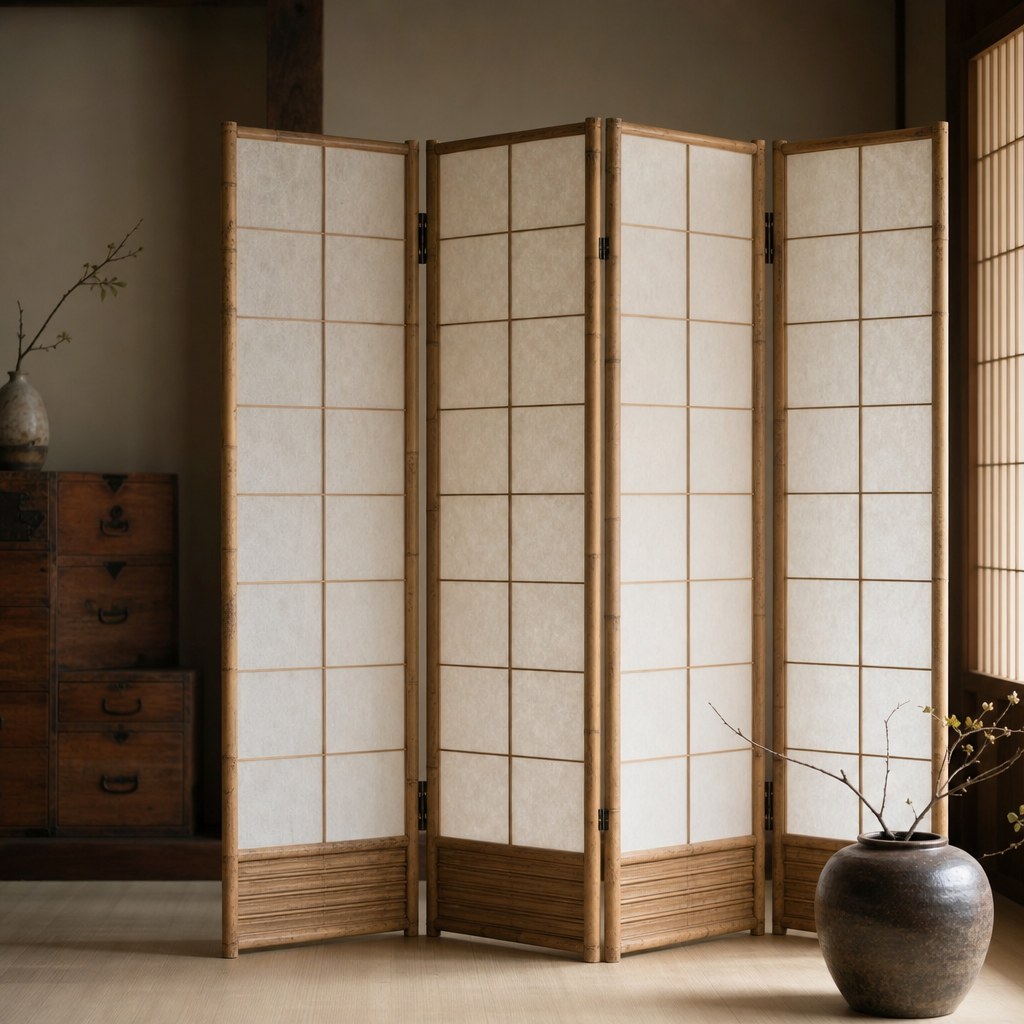
Shoji screens are the first decision in the Japanese interior blueprint because they establish the spatial logic that every other element serves. Traditional shoji are "sliding doors or room dividers made of a wooden frame filled with translucent paper, which allow soft, diffused light to filter through, creating a gentle and serene atmosphere, while providing privacy while maintaining a sense of openness and connection to the surroundings." In a Western apartment or home, freestanding shoji-style dividers perform the same function without structural installation: they zone space, diffuse window light into the warm scattered glow that Japanese interior design prizes, and establish the visual signal that the space is operating under a different spatial philosophy than the rooms around it. The community's most common failure with shoji in Western homes is sourcing cheap bamboo-and-fabric panels that read as a Japanese restaurant entrance rather than a Japanese residential interior. The material test: solid natural bamboo or pine frames with genuine rice paper or washi-panel inserts, not vinyl or plastic. A four-panel folding divider at 72 inches creates a generous privacy screen or reading alcove; the two-panel sliding track version suits a bedroom window treatment where sheer curtains previously lived. Add a small rice paper pendant light to complete the shoji light-diffusion effect in a corner that natural light does not reach.
E1 Receipt - Shoji Screens and Room Dividers
Tatami and Floor Cushion Layer · $164.97
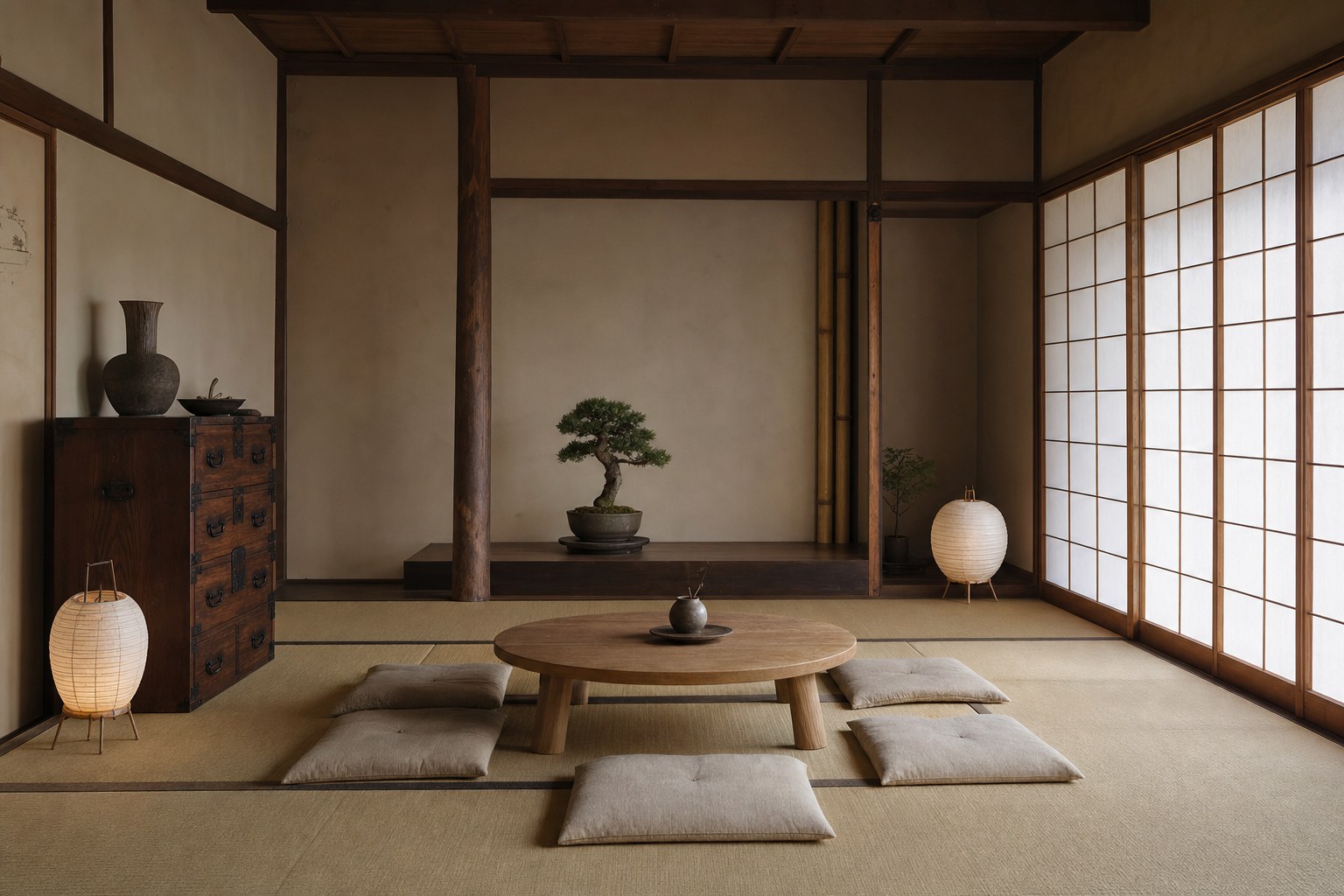
The floor is the seating in Japanese interior design, which is the single most structurally different decision from any Western design style. Traditional tatami mats, woven igusa rush grass over rice straw cores, are "not only comfortable but also steeped in tradition, offering a connection to nature and a calming aesthetic." Seventy percent of Japanese homes still incorporate tatami, and the Tokyo standard tatami dimension of 1.76m x 0.88m (approximately 5.8 x 2.9 feet) reflects a room-planning system that measures space in mat units rather than square footage. For Western renters, authentic structural tatami installation is not viable. But modern igusa-weave tatami mats and tatami-style area rugs replicate both the material and the floor-level living logic at a fraction of the commitment. The key decision is pairing the tatami layer with zabuton floor cushions (flat square meditation cushions, 26-inch square, in natural linen or undyed cotton) and at least one zafu round meditation cushion for upright seated positions. The floor cushion system is the element that most clearly separates Japanese interior design from Japanese aesthetic: anyone can put a shoji screen in a room, but committing to floor-level seating is a genuine spatial philosophy commitment. The community's consistent finding is that even a partial tatami moment. One tatami mat in a corner with two zabuton cushions and a chabudai table. Creates more authentic Japanese atmosphere than a full room of Japanese-adjacent accessories arranged at Western furniture height.
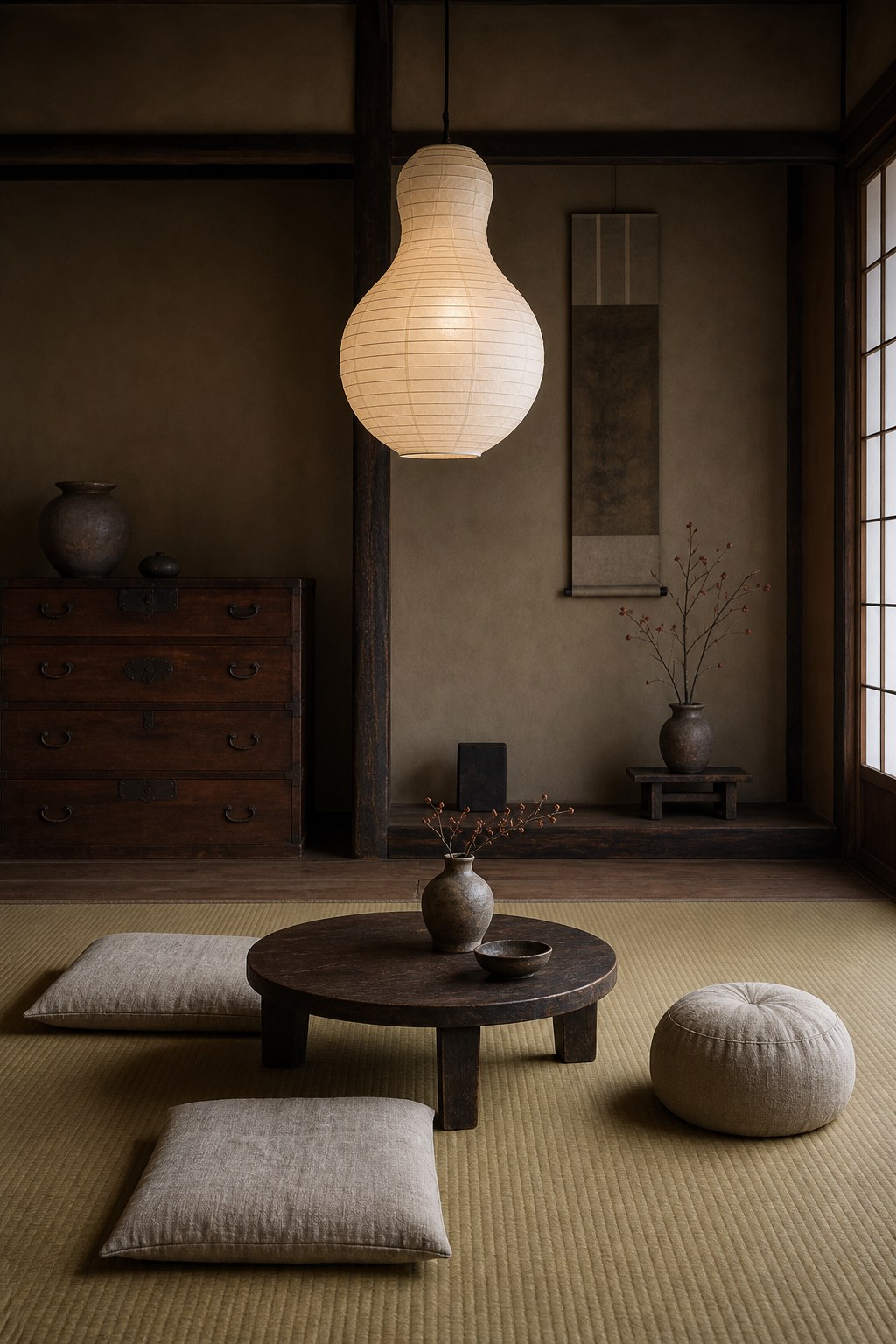
E2 Receipt - Tatami and Floor Cushion Layer
Low Profile Furniture · $249.97
Low profile furniture is the commitment that completes the floor-level logic established by the tatami layer. The chabudai. A low Japanese dining and tea table, typically 12 to 14 inches in height, is the room's activity anchor. At floor level, with zabuton cushions arranged around it, a chabudai creates the Japanese residential atmosphere that no amount of shoji screening or ceramic arrangement can achieve from a Western furniture height. The traditional washitsu (Japanese-style room) "features tatami flooring, shoji sliding doors, and a tokonoma alcove for displaying treasured items or art," and the room's beauty "lies in its adaptability: a room with no fixed purpose that evolves with your needs." That adaptability is built into the furniture height. A chabudai converts from dining table to work surface to tea station without moving anything because everything is already at the same elevation. The low platform bed frame is the bedroom expression of this logic: solid ash or pale pine at 6 to 8 inches off the floor, with a simple mattress on slatted supports and no headboard, creates the Japanese bedroom (22,200 monthly searches) that is both one of the most aspired-to aesthetics and one of the most under-served in authentic furniture content. A low-profile media console, 14 to 18 inches tall, ash or natural wood finish, completes the living space furniture kit, keeping the television at a seated floor-level viewing angle that reinforces the room's spatial grammar rather than contradicting it.
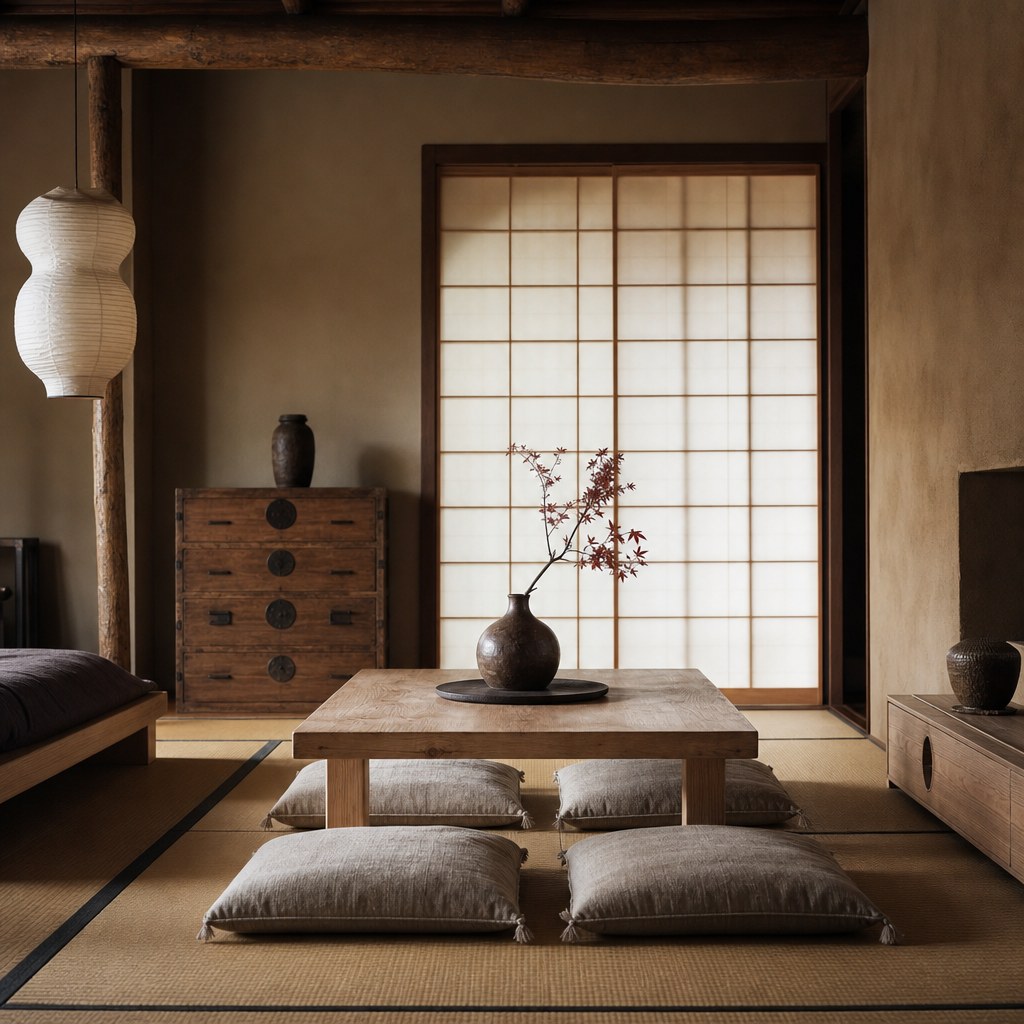
E3 Receipt - Low Profile Furniture
Wabi-Sabi Ceramics · $89.97
Wabi-sabi ceramics are the material character of the Japanese interior. And the highest-leverage entry point for anyone who cannot yet commit to floor-level furniture or structural shoji screening. The philosophy is precise: "cracks, irregularities, and signs of wear are a testament to the passage of time" and these imperfections "enhance the beauty of an object or space." In Japanese ceramic tradition, this produces Mino ware, Bizen ware, and the wider family of unglazed or partially-glazed stoneware where the kiln process itself creates one-of-a-kind surface variations. The kintsugi bowl. A ceramic repaired with gold-dusted lacquer so the break line becomes the object's most beautiful feature, is the purest expression of wabi-sabi in object form. For the Japanese interior kit, three ceramic pieces establish the full wabi-sabi material story: a matte unglazed stoneware vase (7-9 inches, irregular organic form, natural clay or ash glaze) for the ikebana arrangement or single stem; a set of four handthrown stoneware tea cups with visible throwing lines and slightly uneven rims; and one kintsugi-style decorative bowl (10 inches, matte black or natural clay, gold repair line) as the tokonoma shelf or chabudai centrepiece. The community's common sourcing mistake is buying uniform, mass-produced ceramics at a price point that signals their production context. Japanese ceramic design requires visible evidence of handwork, which is now widely available on Etsy from Japanese potters, and increasingly on Amazon through specialty importers at $25-$45 per piece.
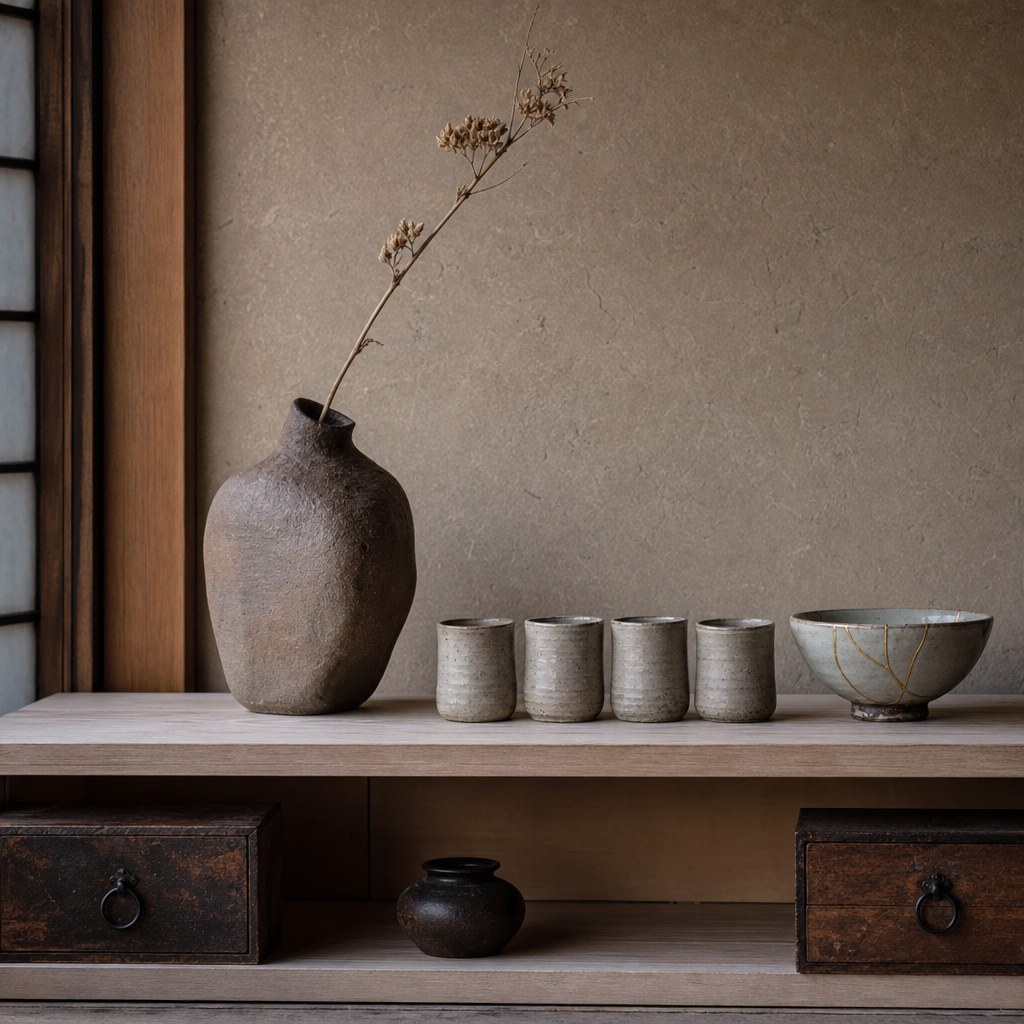
E4 Receipt - Wabi-Sabi Ceramics
Bamboo and Natural Materials · $129.97
Bamboo and natural materials are added last because they respond to the spatial and material story already established. They are the room's botanical and textural punctuation, not its grammar. The shakkei principle ("borrowed scenery") instructs that nature is incorporated through "having a bonsai tree" or large windows that frame an outdoor view. A single bonsai on a shelf is not a plant styling choice; it is a philosophical statement about time, patience, and the beauty accumulated with age. Which makes it the most direct wabi-sabi object available in plant form. Natural materials in Japanese design are specifically chosen for their capacity to "evolve over time" rather than maintain perfection: hinoki cypress (Japanese bathing wood, fragrant and pale), bamboo (hollow, light, and structurally elegant in both stems and woven weaves), cedar, rice paper, and unpolished stone. In a Western apartment context, the bamboo element kit consists of four pieces: a solid bamboo plant stand or display pedestal (12-18 inches) for the bonsai, a bundle of dried bamboo or pampas grass in the matte stoneware vase, a washi paper table lamp shade (replacing any synthetic shade in the room), and a natural stone tray or river rock set for the chabudai or bathroom shelf as a grounding material contrast to the bamboo's lightness. The material test for all five pieces: no plastic, no synthetic weaves, no chrome. The room should be possible to identify by material alone, wood, stone, grass, clay, paper, before a single Japanese motif is visible.
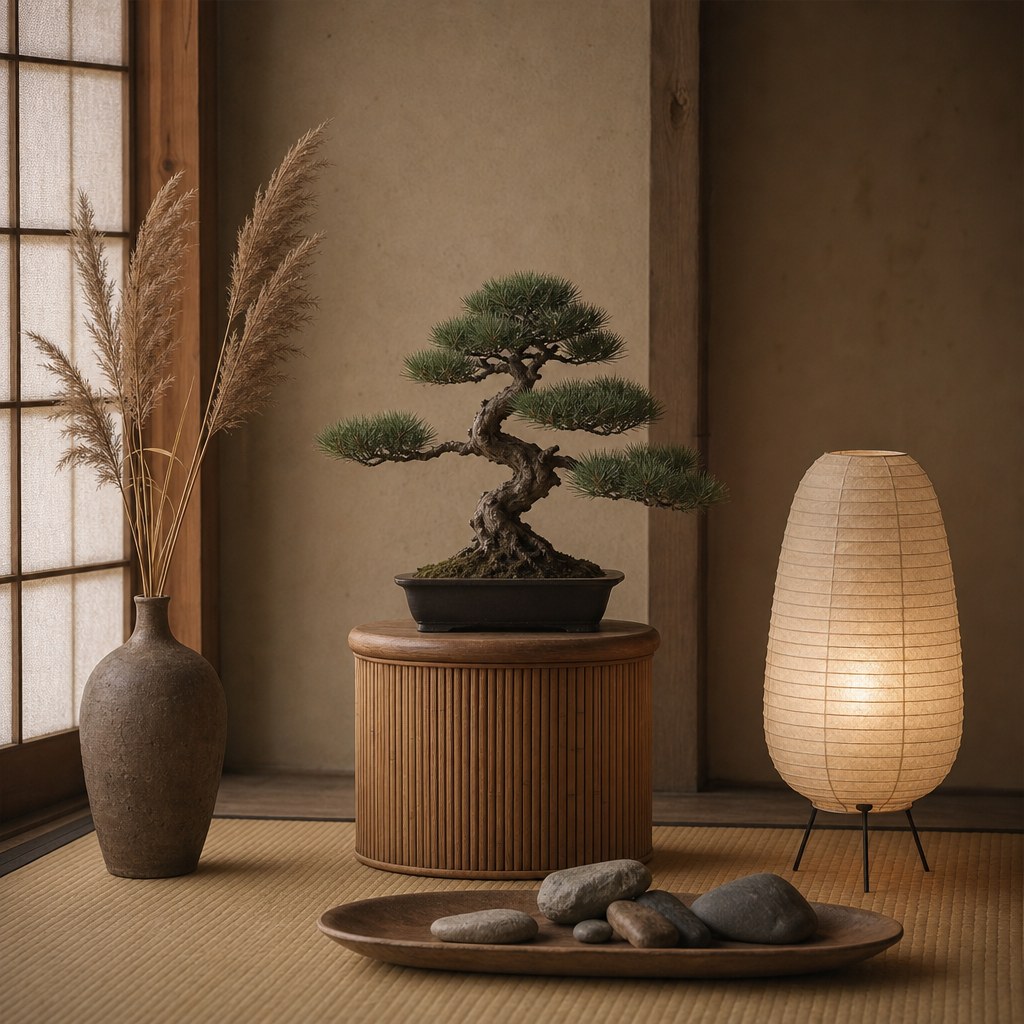
E5 Receipt - Bamboo and Natural Materials
Japanese vs. Japandi Interior Design.
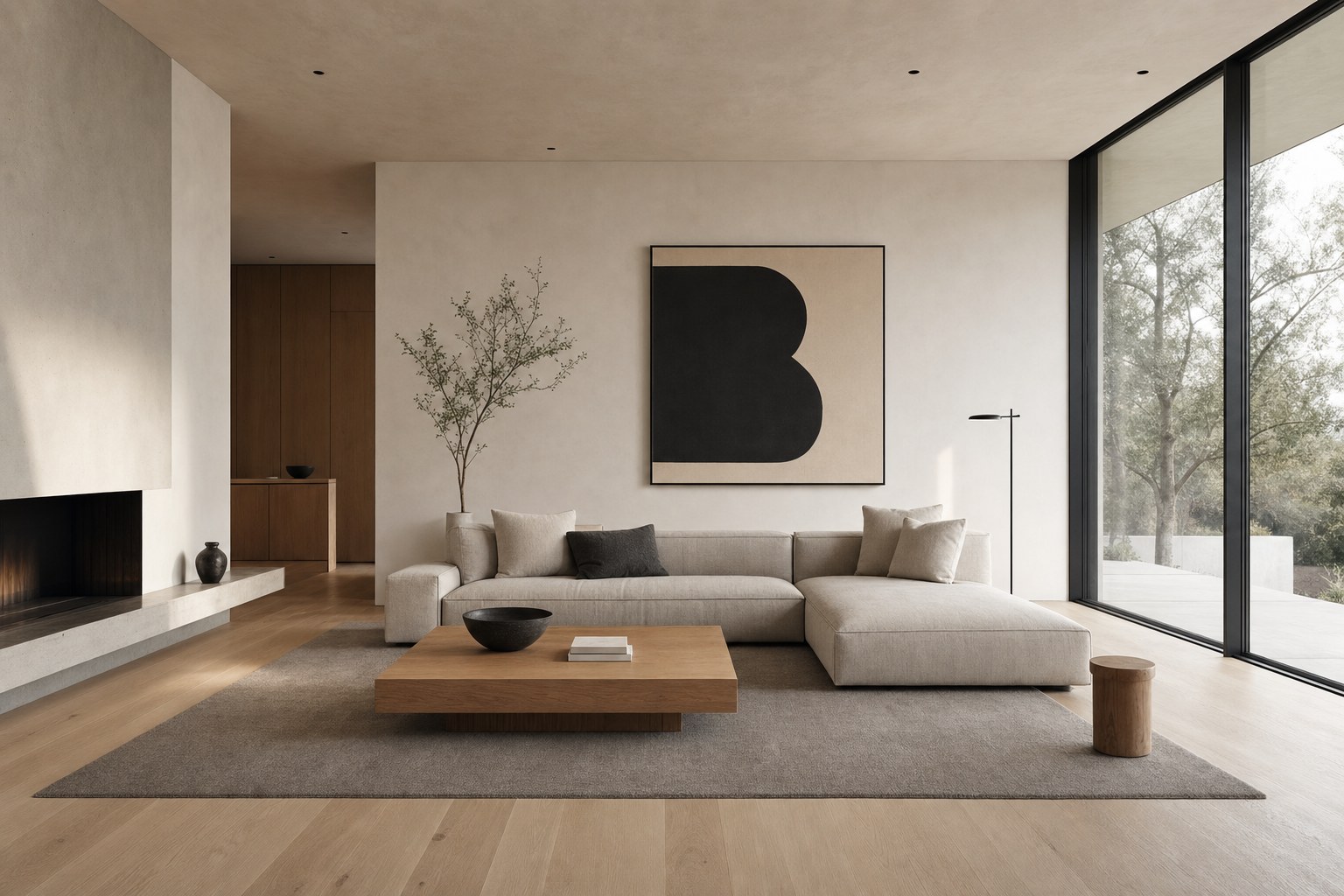
Both styles claim natural materials, neutral palettes, and spatial restraint. Which is why they are consistently confused. The distinction is philosophical rigor and material specificity. Japanese interior design is the authentic source: tatami mats, shoji screens, chabudai tables, tokonoma alcoves, and the hard spatial philosophy of ma and wabi-sabi applied without compromise. Japandi is a Western hybrid that softens Japanese austerity with Scandinavian hygge warmth, adding slightly more textile layering, warmer wood tones like white oak and ash, and a slightly higher furniture profile. Japanese minimalism emphasizes attention through emptiness; Scandinavian minimalism emphasizes comfort as refuge. And Japandi is where those two values meet without either fully winning. The easiest test: a Japanese interior room should be identifiable by material alone (wood, stone, clay, grass, paper) before a single Japanese motif is visible. A Japandi room typically adds one Scandinavian comfort signal. A knit throw, a more upholstered seat pad, a slightly warmer white wall tone. That a strict Japanese interior would edit out as unnecessary.
| Dimension | Japanese Interior Design | Japandi Interior Design |
|---|---|---|
| Philosophy | Ma (intentional negative space) + wabi-sabi (beauty in imperfection) as structural rules, not stylistic preferences | Japanese spatial restraint + Scandinavian hygge warmth; neither philosophy wins fully |
| Floor level | Tatami mats and zabuton floor cushions as primary seating; chabudai at 12-14 inches; futon or very low platform bed | Low-profile furniture but not floor-level; platform beds at 12-18 inches; seats with legs |
| Wood palette | Hinoki, cedar, bamboo, pale ash. Chosen for fragrance and the capacity to age with visible character | White oak, birch, light ash. Warmer and softer tones; Scandinavian wood comfort overlays Japanese restraint |
| Textile approach | Minimal; natural linen zabuton cushions and one linen futon cover; textiles subordinate to the floor and material logic | More layering; linen throws, knit cushion covers, sheepskin accents; Scandinavian comfort adds warmth |
| Ceramics | Wabi-sabi stoneware with visible throwing lines, uneven glazes, kintsugi repairs; imperfection is the material goal | Clean-lined handmade ceramics in matte neutrals; Scandinavian pottery sensibility with Japanese material palette |
| Clarity test | The room is identifiable by material alone before any Japanese motif is visible; every object is chosen, none is leftover | The room feels calm, warm, and livable; not as austere as pure Japanese design, not as personal as pure Scandinavian |
The $89 entry path.
Three wabi-sabi ceramic pieces that establish the Japanese material language in any room. No furniture replacement, no structural work, no renovation required. The complete E4 serves as the entry path.
Frequently asked questions.
What is Japanese interior design?
Japanese interior design is a philosophy-driven residential style grounded in three core concepts: ma (the intentional use of negative space as a design element), wabi-sabi (the beauty of imperfection and impermanence), and shakkei (borrowed scenery from nature). The style is characterized by low-profile furniture, natural materials including hinoki wood, bamboo, washi paper and stone, neutral earth-tone palettes, and the principle that the absence of objects can be as intentional as their presence. It is one of the most precisely defined design vocabularies in interior design - people use the Japanese-language terms correctly, distinguishing tatami, shoji, tokonoma, and chabudai, because authenticity in material and spatial logic is the entire point.
What is the concept of ma in Japanese interior design?
Ma (間) is the Japanese concept of negative space - or more precisely, the meaningful pause. In interior design, ma treats empty space as purposeful rather than merely absent. It is "the meaningful pause. The empty corner your eye keeps returning to" - described as potential rather than mere absence. Japanese interior design keeps color palettes of five or fewer neutral tones specifically to honor ma principles - every object competes with that emptiness, so only the chosen few pass the test. The concept is closest to what Western designers mean when they say "let the room breathe," but in Japanese design it is a structural rule rather than a stylistic preference. Ma explains why the most-praised Japanese-inspired rooms on social platforms are described as spaces where "you could film a movie here" - every visible object has earned its place.
What is the difference between Japanese and Japandi interior design?
Japanese interior design is the authentic source: tatami mats, shoji screens, chabudai low tables, tokonoma alcoves for displaying art, and the strict spatial philosophies of ma and wabi-sabi. Japandi is a Western hybrid that fuses Japanese minimalism with Scandinavian hygge warmth - it retains low profiles and natural materials but softens the austerity of pure Japanese design with warmer wood tones (ash, oak) and slightly more textile layering. The easiest test: a Japanese-inspired room could appear in an authentic Japanese home; a Japandi room is a Western interpretation that borrows the spatial logic while increasing comfort and warmth. Shoji screens appear in both; tatami mats and floor-level chabudai seating belong primarily to the Japanese source. Japanese minimalism emphasizes attention through emptiness; Japandi adds the Scandinavian emphasis on comfort as refuge.
What plants are used in Japanese interior design?
Japanese interior design incorporates nature through the shakkei (borrowed scenery) principle using three main channels: bonsai (miniature trained trees that embody the wabi-sabi aesthetic of age and imperfection), ikebana floral arrangements (the Japanese art of intentional flower arrangement that applies ma - negative space - to the display of plant material), and the shakkei principle of borrowed scenery, which uses large windows or sliding panels to frame and incorporate outdoor nature as a living element of the interior. Unlike Western interior plant styling, Japanese design avoids abundance. One bonsai on a tokonoma shelf or one ikebana arrangement is the full botanical statement. The goal is an edited conversation with nature - which is why a bonsai on a bamboo pedestal at $25 does more Japanese interior design work than twenty plants arranged decoratively.
How do you add Japanese elements to a Western home without a full renovation?
Four non-structural moves establish the Japanese interior signal. First, add wabi-sabi ceramics: a matte stoneware vase, handthrown tea cups, and a kintsugi bowl establish the material philosophy at under $90 total and work in any existing room. Second, add a shoji-style room divider: freestanding bamboo-frame or rice-paper-panel screens are widely available and create the translucent light diffusion that shoji provides without structural installation. Third, create one floor-level moment: even a single tatami mat with two zabuton cushions and a chabudai table in a corner creates more authentic Japanese atmosphere than a full room of Japanese-adjacent accessories at Western furniture height. Fourth, edit ruthlessly: the community consensus is that "it looks empty, not minimal" is the most common Japanese design failure - people remove clutter but do not understand what to keep. Keep what is chosen, not what is leftover.
More rooms like this
No spam. Unsubscribe anytime.